Tag: reveals

  • A look at Google Pixel’s sensor reveals potential HDR video tech

    Example of a sensor pattern with spatially varying exposure, in which pixels of the same color receive differing amounts of light. (From the Computer Vision Laboratory at Columbia University.)

    Steven Zimmerman over at XDA Developers has just published an article with some insights into the Sony IMX378 sensor used in Google’s recently announced Pixel smartphones. Although he covers a number of technologies likely familiar to DPReview readers, such as stacked BSI-CMOS technology and on-sensor phase detect autofocus, there’s an interesting section on Spatially Multiplexed Exposure (SME-HDR) which has the potential to provide improved HDR video capture. It’s an interesting read, and one worth taking a look at if you’re interested in sensor technology.

    Articles: Digital Photography Review (dpreview.com)

  • Teardown reveals Sony image sensors in iPhone 7

    Patent and technology consultancy Chipworks has published its iPhone 7 teardown and reveals that front and rear image sensors on the new Apple models are supplied by market leader Sony. This is not too much of a surprise as earlier iPhone models used Sony sensors as well. In its report Chipworks doesn’t say which exact sensor model has been deployed in the rear camera but we know the 12MP chip uses the Exmor RS technology platform, a Bayer RGB color filter array and on-sensor phase detection. Its die size is 5.16 mm x 6.25 mm (32.3 mm2) as measured from the edges of the die stack. 

    On the FaceTime front camera the resolution has been increased to 7MP. The Sensor is also a second generation Sony Exmor RS model and measures 5.05 mm x 3.72 mm (18.8 mm2). Chipworks has not treated the larger iPhone 7 Plus model with its dual-camera to the teardown procedure yet, but we would expect both sensors in the dual-camera to come from Sony as well. For now you can find more technical detail in the iPhone 7 teardown on the Chipworks blog.

    Articles: Digital Photography Review (dpreview.com)

  • White House photographer Pete Souza reveals what’s in his bag

     ‘The Situation Room’, photo by Pete Souza. President Barack Obama and Vice President Joe Biden, along with members of the national security team, receive an update on the mission against Osama bin Laden in the Situation Room of the White House, May 1, 2011. 

    There’s no photographer in the world with a job quite like Pete Souza’s. As Official White House photographer, Souza has to be ready to move at a moment’s notice. Familiarity with and trust in his gear is essential. So what’s in his photo bag? Surprisingly little, which actually makes a lot of sense.

    Souza uses two Canon EOS 5D Mark III bodies. Introduced in 2012, it’s a full-frame 22MP DSLR that earned a gold award for its excellent image quality and versatility when we reviewed it.

    Popular Science recently got a look at Souza’s kit and found two Canon 5D Mark III bodies and a trio of L-series lenses: a 135mm F2, 35mm F1.4 and a 24-70mm F2.8 II. Souza also keeps it simple when he isn’t shooting visiting dignitaries and state dinners: he uses a Fujifilm X100S in his downtime. 

    You can keep up with Souza and the POTUS on Flickr and Instagram. 

    Articles: Digital Photography Review (dpreview.com)

  • Swing of Things: Framed Furniture Reveals Hidden Potential

    [ By WebUrbanist in Design & Furniture & Decor. ]

    furniture trace

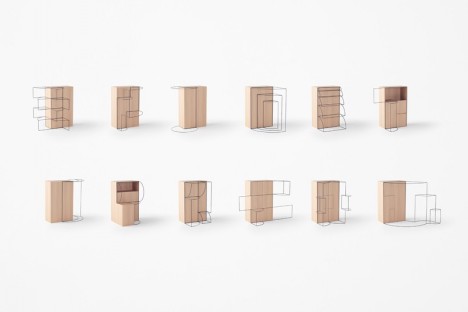
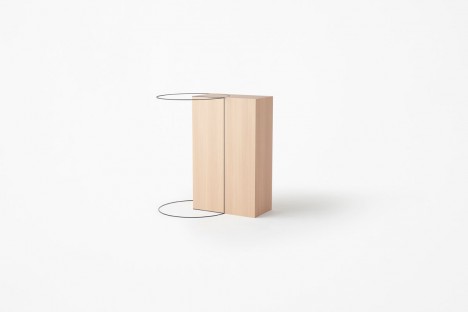
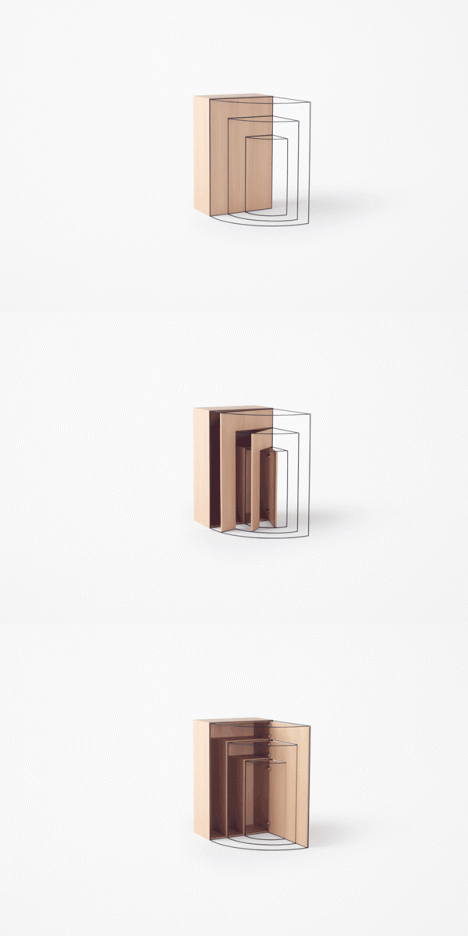
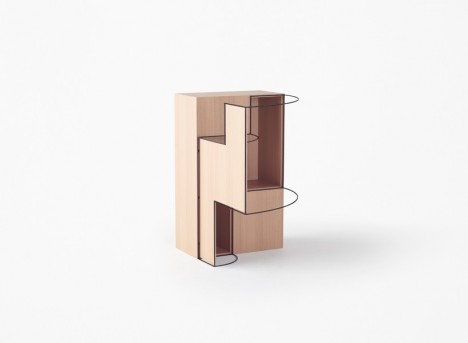
    Like door swings on architectural blueprints come to life, these works of metal-framed wood furniture express their embedded potential in physical space.

    slideout

    furnitureswing

    flipdown

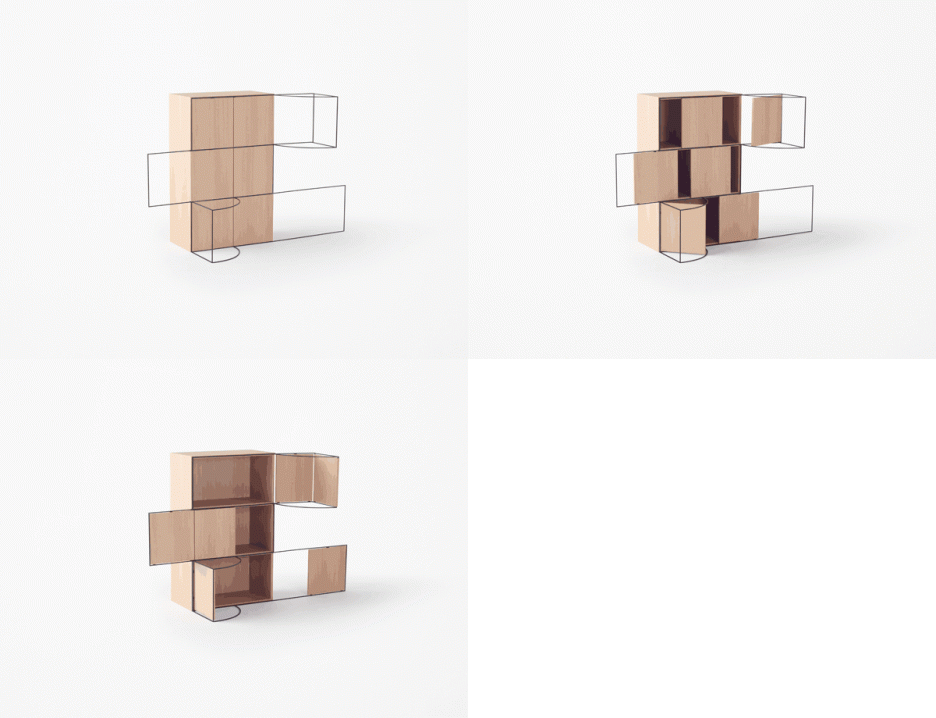
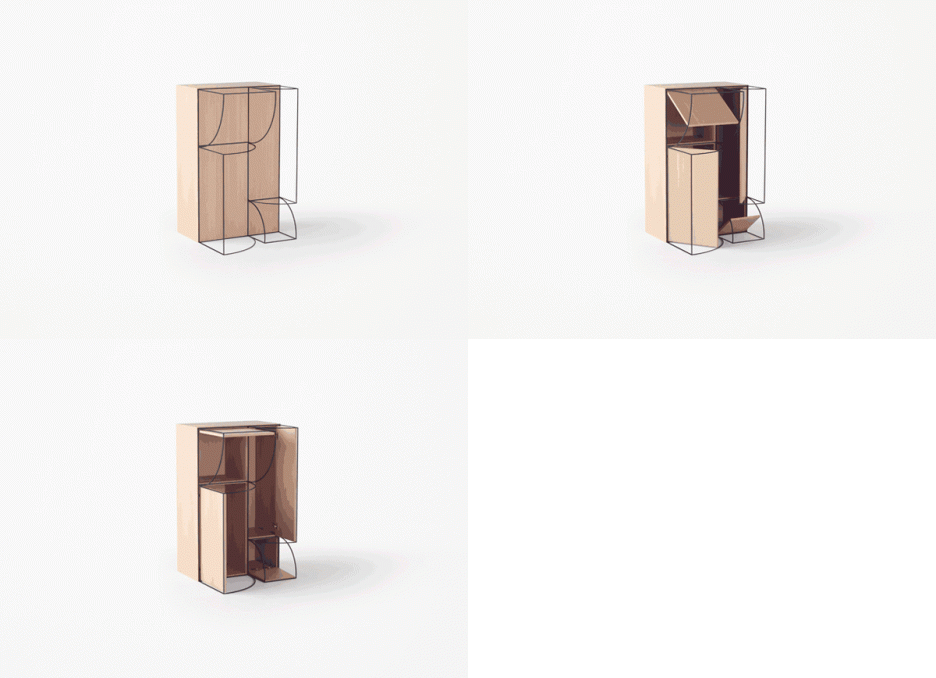
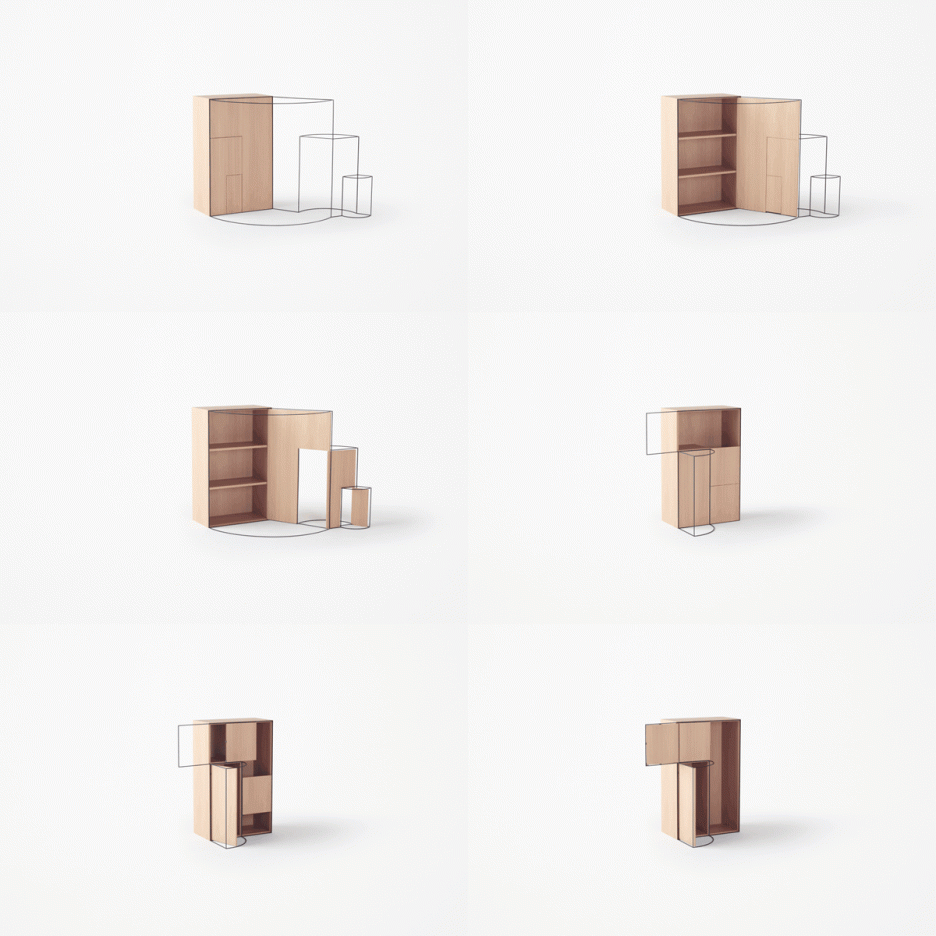
    The new Trace Collection from Nendo takes the architect’s approach to the next level, physically representing the movements of furniture doors and drawers via three-dimensional frameworks. Their installation was recently featured at the Collective Design Fair in New York.

    doubleswing

    furniture twist

    “Although they may not be visible, we are subconsciously aware of the ‘traces’ of their movements every day,” explains designer Oki Sato. For example, because of that, we do not put a vase in front of a door. It is essential for a person who specializes in space design to be even more aware of this, as they have to portray these ‘traces’ onto drawings.”

    swing in motion

    furnitureart

    furniture swing collection

    The visualized actions speak volumes about potential options for opening the various swing, flip and sliding doors in each piece. While the results may not be the most practical furniture, they do cause one to think a bit more about the embedded possibilities of everyday furnishings.

    Share on Facebook


    [ By WebUrbanist in Design & Furniture & Decor. ]

    [ WebUrbanist | Archives | Galleries | Privacy | TOS ]


    WebUrbanist

  • Meizu reveals PRO 6 with 21MP camera and 10-LED flash

    Chinese mobile device manufacturer Meizu has launched the PRO 6. It will be sold alongside the PRO 5 with the same 21MP 1/2.4-inch sensor and F2.2 aperture, but updates its dual-tone flash with 10 LEDs arranged in a circular pattern on the back plate. Read more

    Articles: Digital Photography Review (dpreview.com)

  • Samsung Galaxy S7 teardown reveals Sony IMX260 Dual-pixel sensor

    At the launch of the Samsung Galaxy S7 and S7 edge the Korean manufacturer did not provide any official information about the makers of the the new devices’ camera module. However, now a teardown from Chipworks has confirmed rumors that the S7 captures its images on a Sony IMX260 sensor with 12MP resolution, 1.4um pixel size and dual pixel AF across the entire sensor. Read more

    Articles: Digital Photography Review (dpreview.com)

  • Olympus reveals faux-leather-wrapped limited edition E-M10 II

    Along with the launch of the new PEN-F, Olympus has announced a limited edition OM-D E-M10 II. Wrapped in a tan faux leather, it comes with a matching leather neck strap and a collapsible 14-42mm EZ electronic zoom. In the inside, the limited edition E-M10 II is still offers the 16MP sensor, 5-axis image stabilization and 2.36 Million-dot OLED EVF that earned it a silver award when we reviewed it in August 2015.

    The limited edition Olympus OM-D E-M10 II will cost $ 899.99 when it arrives in February.

    Olympus OM-D E-M10 II Specifications

    Price
    MSRP $ 799
    Body type
    Body type SLR-style mirrorless
    Sensor
    Max resolution 4608 x 3456
    Image ratio w:h 1:1, 4:3, 3:2, 16:9
    Effective pixels 16 megapixels
    Sensor photo detectors 17 megapixels
    Sensor size Four Thirds (17.3 x 13 mm)
    Sensor type CMOS
    Processor TruePic VII
    Color space sRGB, AdobeRGB
    Color filter array Primary color filter
    Image
    ISO Auto, 200 – 25600, expands to 100-25600
    Boosted ISO (minimum) 100
    White balance presets 7
    Custom white balance Yes (4 slots)
    Image stabilization Sensor-shift
    Image stabilization notes 5-axis image stabilization (yaw/pitch/roll/vertical/horizontal)
    Uncompressed format RAW
    JPEG quality levels Super fine, fine, normal, basic
    File format
    • JPEG
    • RAW
    • MPO
    Optics & Focus
    Autofocus
    • Contrast Detect (sensor)
    • Multi-area
    • Center
    • Selective single-point
    • Tracking
    • Single
    • Continuous
    • Touch
    • Face Detection
    • Live View
    Autofocus assist lamp Yes
    Manual focus Yes
    Number of focus points 81
    Lens mount Micro Four Thirds
    Focal length multiplier 2×
    Screen / viewfinder
    Articulated LCD Tilting
    Screen size 3
    Screen dots 1,040,000
    Touch screen Yes (Focus, shutter release, AF point selection, menus, image playback)
    Screen type TFT LCD
    Live view Yes
    Viewfinder type Electronic
    Viewfinder coverage 100%
    Viewfinder magnification 1.23×
    Viewfinder resolution 2,360,000
    Photography features
    Minimum shutter speed 60 sec
    Maximum shutter speed 1/4000 sec
    Maximum shutter speed (electronic) 1/16000 sec
    Exposure modes
    • Program AE
    • Aperture priority
    • Shutter priority
    • Manual
    Scene modes
    • Portrait
    • e-Portrait
    • Landscape
    • Landscape + Portrait
    • Sport
    • Hand-held Starlight
    • Night scene
    • Night + Portrait
    • Children
    • High Key
    • Low Key
    • DIS mode
    • Macro
    • Nature Macro
    • Candle
    • Sunset
    • Documents
    • Panorama
    • Fireworks
    • Beach & Snow
    • Fisheye Conv.
    • Wide Conv.
    • Macro Conv.
    • Panning
    • 3D
    Built-in flash Yes (Olympus Wireless RC Flash system compatible)
    Flash range 5.80 m (ISO 100)
    External flash Yes (via hot shoe or wirelessly)
    Flash modes Auto, redeye reduction, fill flash, flash off, 1st-curtain slow sync w/redeye, 1st-curtain slow sync, 2nd-curtain slow sync, manual
    Flash X sync speed 1/250 sec
    Continuous drive 8.0 fps
    Self-timer Yes (12 sec., 2 sec, custom)
    Metering modes
    • Multi
    • Center-weighted
    • Spot
    Exposure compensation ±5 (at 1/3 EV, 1/2 EV, 1 EV steps)
    AE Bracketing ±5 (2, 3, 5, 7 frames at 1/3 EV, 2/3 EV, 1 EV steps)
    WB Bracketing Yes
    Videography features
    Resolutions 1920 x 1080 (60p/30p/24p), 1280 x 720 (60p/30p/24p), 640 x 480 (30 fps)
    Format H.264, Motion JPEG
    Microphone Stereo
    Speaker Mono
    Storage
    Storage types SD/SDHC/SDXC
    Connectivity
    USB USB 2.0 (480 Mbit/sec)
    HDMI Yes (micro-HDMI)
    Microphone port No
    Headphone port No
    Wireless Built-In
    Wireless notes 802.11b/g/n with smartphone app
    Remote control Yes (Optional Remote cable RM-UC1)
    Physical
    Environmentally sealed No
    Battery Battery Pack
    Battery description BLS-50 lithium-ion battery & charger
    Battery Life (CIPA) 320
    Weight (inc. batteries) 390 g (0.86 lb / 13.76 oz)
    Dimensions 120 x 83 x 47 mm (4.72 x 3.27 x 1.85)
    Other features
    Orientation sensor Yes
    Timelapse recording Yes (Up to 999 shots. Can create 4K / 5 fps video)
    GPS None
    GPS notes via smartphone

    Articles: Digital Photography Review (dpreview.com)

  • Dust on the lens or a new planet? NASA reveals some of its inter-galactic Photoshop tricks

    In an interview for Adobe’s blog, NASA has revealed some of the processes its scientists use to transform technical data into images that the rest of the world can appreciate and understand. From simple tasks, such as straightening and cropping, to compositing multiple layers of scientifically calculated color, the agency uses programs including Adobe Photoshop to interpret the sometimes quite abstract images sent back to Earth from devices such as the Hubble Space Telescope and the Mars rover. Read more

    Articles: Digital Photography Review (dpreview.com)

  • HTC reveals camera-focused Butterfly 3 and One M9+ ‘Supreme Camera’

    Just when you thought HTC’s smarpthone line-up couldn’t get any more confusing, the Taiwanese manufacturer has launched two new models, both with a focus on camera capabilities and performance. Read more

    Articles: Digital Photography Review (dpreview.com)

  • Amazon reveals thinner Fire HD tablets

    Amazon has today updated its Fire tablet line and announced three new models, the Fire HD, Fire and Fire Kids. Not only are the new models lighter and thinner than the previous generation, but with their introduction the Kindle name is dropped from the Amazon tablet lineup. Read more

    Articles: Digital Photography Review (dpreview.com)