Tag: Farm

  • Farm to table with Becca Skinner and the Canon EOS R6

    In this video we travel to Montana to meet photographer Becca Skinner. Using the Canon EOS R6 Becca documents her permaculture garden and teaches us about homesteading alongside her husband and professional chef Eduardo Garcia.

    The Canon EOS R6 features a 20MP full-frame sensor and the latest version of Canon’s Dual Pixel CMOS autofocus, with human and animal face and eye detection. It also offers in-body stabilization up to eight stops with some lenses, the option for silent shooting at up to 20 fps, and a fully articulated touchscreen. The EOS R6 also has a lot to offer video shooters, including 4K/60p capture and HD up to 120 fps.

    Canon EOS R6 sample images by Becca Skinner

    $ (document).ready(function() { SampleGalleryV2({“containerId”:”embeddedSampleGallery_6007135101″,”galleryId”:”6007135101″,”isEmbeddedWidget”:true,”selectedImageIndex”:0,”isMobile”:false}) });


    This is sponsored content, created with the support of Amazon and Canon. What does this mean?

    Articles: Digital Photography Review (dpreview.com)

  • Samsung’s Galaxy S10 #SpaceSelfie satellite left hanging from tree on Michigan farm

    Samsung’s campaign to promote its new Galaxy S10 5G smartphone came down to Earth with a crash this week when the high-altitude weather balloon central to the #SpaceSelfie promotion dropped out of the sky and was left dangling from a tree in Michigan.

    The company had set up a microsite that allowed fans to post their selfies to a Galaxy S10 5G floating at the edge of the atmosphere. A picture of the phone displaying the selfie, overlaid on a real-time view of the Earth, would then be sent back to the sender for them to post on social media using the #SpaceSelfie hashtag. According to Samsung however, ‘weather conditions’ forced the balloon supporting the camera to drop back to Earth a little earlier than intended, where it ended up caught in a tree on a farm in Gratiot County, Michigan.

    The Gratiot Country Herald reports that Nancy Welke heard a crash at around 8:45am, just as she and her husband were about to go outside to check on their horses. Upon going out to investigate they discovered the remains of the solar-powered apparatus in their field, with a parachute tangled in the branches of a tree. The balloon, which when inflated was half the size of a basketball court, was found a little further away caught in overhead power lines.

    The Space Selfie campaign was launched on October 23 and was designed to demonstrate that the Galaxy S10 5G is so ruggedness it can be sent into space (almost). The balloon was sent to 65,000 feet above the Earth and actress and model Cara Delevingne was the first to ping a picture and have her face on the screen of the phone in ‘space’.

    Of her 44 million Instagram followers 5m watched Delevingne’s teaser video of a spaceman delivering her phone, and at the time of writing 267,698 people had liked the resultant picture. The campaign was supposed to run to the end of this month, but on the loss of the critical device to make it all happen the Samsung/Spaceselfie microsite is now down too.

    The #SpaceSelfie still managed to attract well over 6000 images on Instagram, though not all the pictures that appear under the hashtag are strictly related. According to Marketing Dive, the agency that ran the campaign for Samsung, the system used a combination of human and automated moderation to ensure no inappropriate images got through, though inevitably there are some random shots of a cup of coffee in the mix.

    Articles: Digital Photography Review (dpreview.com)

  • Photos: This is what it looks like when farm machinery goes to battle

    The Lind Combine Demolition Derby takes place the second weekend of June every year, and draws huge numbers of people to a town with a population of around 550.
    Panasonic Lumix S Pro 50mm F1.4 | ISO 100 | F5.6 | 1/100 sec

    Lind is one of those western American towns that, unfortunately, a lot of folks have forgotten about. It was never a huge town, but the railroad brought enough hustle and bustle to support people’s jobs and families. But then the completion of Interstate 90 from Seattle to Boston effectively altered the flow of people around Lind instead of through it.

    There are still a handful of businesses scraping by – Slim’s Tavern is one, and Jim’s Market is another. Although, given that Slim’s is owned by a man named Skip, it seems unlikely that Jim’s Market is still owned by someone who goes by Jim. Then again, Slim’s has literally been around for more than a hundred years, so I guess an eventual change in ownership was inevitable.

    Bill, at his home one block off main street in downtown Lind. Bill used to be the announcer for the demolition derby, but health problems have forced him to retire and pass on the torch.
    Lumix S 24-105mm F4 | ISO 100 | 1/320 sec | F4

    A friend and I went to Lind for the one weekend a year where Slim’s Tavern is packed to the rafters. It’s the only weekend where Skip’s grandson comes through not just to visit, but to help out behind the bar, pouring shots of Jaegermeister and Fireball, neither of which is stocked (or needed) for the bar’s regulars the rest of the year. There are only two beers on tap: Budweiser and Bud Light, and they ran out of Bud Light.

    The second weekend in June is home to the Lind Combine Demolition Derby. There are pickup truck races too, and there’s a parade, but the main attraction concerns the smashing of ancient combine harvesters. These mechanical steel farm hands belch out black diesel smoke as they slam into each other in the arena to the sounds of cheers and the crushing of beer cans.

    The tail-end (pun intended) of the parade.
    Lumix S 24-105mm F4 | ISO 100 | 1/1250 sec | F4

    So how exactly does a combine demolition derby work? There are several heats taking place over the course of the afternoon starting at 1pm sharp, and if a driver hasn’t made contact with another combine in three minutes, he or she is disqualified. The last wreck still moving at the end of each 15-minute heat is the winner, and in-between heats there are intermissions where teams may make some repairs if necessary. Honestly, the full rules are pretty thorough.

    And lest anyone worry about the waste involved in smashing up perfectly good equipment – well, it’s not exactly perfectly good. The rules require the combines to be quite old, and most people are upgrading to fancier GPS-driven equipment anyway. Will they eventually run out of old combines? Perhaps. But for now, that’s a bridge best crossed when it’s arrived at.

    In any case, my friend and I showed up on the morning before the main event, just catching the tail-end of the parade. The plan? Talk to the locals, soak up the culture, and photograph the crap out of everything. It was a spectacle the likes of which I’ve never seen before, and won’t likely see again (until next year, anyway).

    Spectators in the beer garden are kept some distance from the combines, but that doesn’t mean you won’t get covered in dust.
    Lumix S 24-105mm F4 | ISO 100 | 1/400 sec | F4

    I used the new Panasonic Lumix DC-S1R. This brief story, and the point of our trip, are about the town and pictures of Lind and not about the gear we used, so I won’t go into too much detail beyond the fact that it was a great camera for this sort of work. In short, it was responsive, sealed against the dust and beer, and gave me tons of resolution and great color out-of-camera.

    Some of these images will make a reappearance in our full S1R review, but for now, enjoy the sights of Lind, Washington, during the one weekend where the town’s status rises to that of ‘destination’, the streets are crowded, and late at night, the bar is once again packed.

    Spectators exit the stands after most of the combines have died.
    Lumix S Pro 50mm F1.4 | ISO 100 | 1/320 sec | F8

    All images in this story are processed through Adobe Camera Raw 11, using the ‘Camera Standard’ color profile.

    Sample gallery

    $ (document).ready(function() { SampleGalleryV2({“containerId”:”embeddedSampleGallery_4883233679″,”galleryId”:”4883233679″,”isEmbeddedWidget”:true,”selectedImageIndex”:0,”isMobile”:false}) });

    Articles: Digital Photography Review (dpreview.com)

  • RotterZwam: Abandoned Water Park Turned Indoor Mushroom Farm

    [ By SA Rogers in Abandoned Places & Architecture. ]

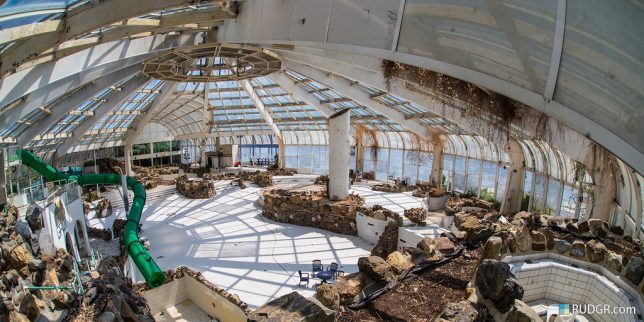
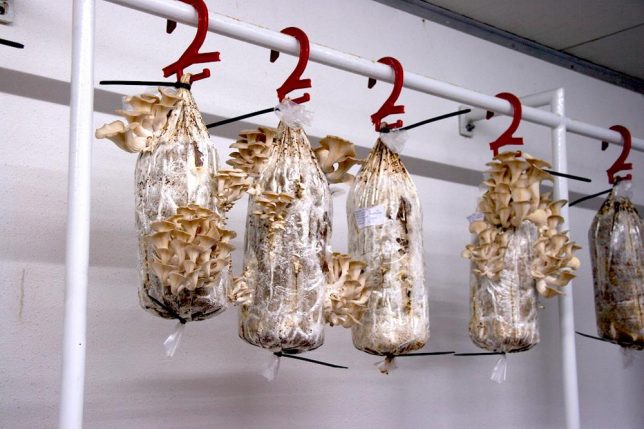
    Bags of old coffee grounds hang in the dank dressing rooms of an abandoned Rotterdam water park, growing oyster mushrooms. Two men turned the former Tropicana space, an old teen hangout, into the perfect damp, dim environment for their business, making use of the structure while the city council decides what to do with it. ‘RotterZwam’ rents the building on an anti-squat lease and have transformed it into a fascinating example of adaptive reuse and urban farming.

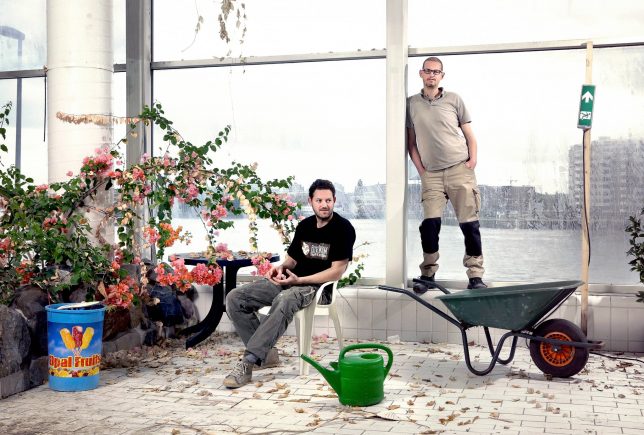
    Tropicana is fairly infamous among Rotterdam locals, but closed after the former owner went bankrupt in 2010. The space had been plagued with problems, from hygiene to sexual assault. It sat empty until Siemen Cox and mark Slegers, RotteZwam’s owners, realized it looked like a giant greenhouse.

    Though they hope that central glassed-in space – formerly the pool – will eventually become a greenhouse, for now, they’re making use of the dressing rooms and basement, which offer ideal conditions for fungal growth. The crew hangs bags of coffee grinds from the old Tropicana clothes hangers, and before long, they sprout oyster mushrooms.

    They collect the coffee from local cafes, transport it in their carrier bicycle, and give the compost to worms to create an extremely low-waste operation. The produce about 20-50kg of mushrooms every week, and sell it to local restaurants, bakeries and food trucks. They also offer DIY mushroom-growing kits.

    “Cities like Rotterdam produce nothing but waste and commuters,” they say in an interview with Vice’s Munchies. “This entertainment park represents that perfectly – we build things and, when we don’t want them anymore, we need others to clean it up, to sweep up our garbage. That’s not how nature works, though – in nature wast doesn’t exist. In this building we hardly ever buy a thing, because eery material or nail is already here.”

    Share on Facebook


    [ By SA Rogers in Abandoned Places & Architecture. ]

    [ WebUrbanist | Archives | Galleries | Privacy | TOS ]


    WebUrbanist

  • Desert Farm Grows Food Without Soil, Groundwater, Fuel or Pesticides

    [ By WebUrbanist in Architecture & Offices & Commercial. ]

    sundrop-farm-aerial-view

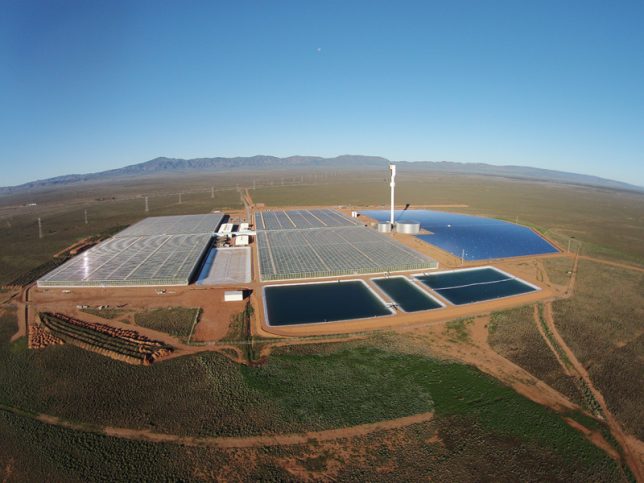
    Using the sun and the sea, renewable sources of energy and water, a desert farming operation in Australia show how organic food in a fresh new and sustainable way.

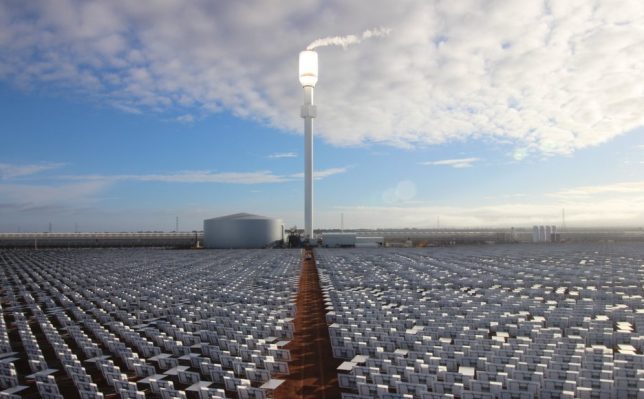
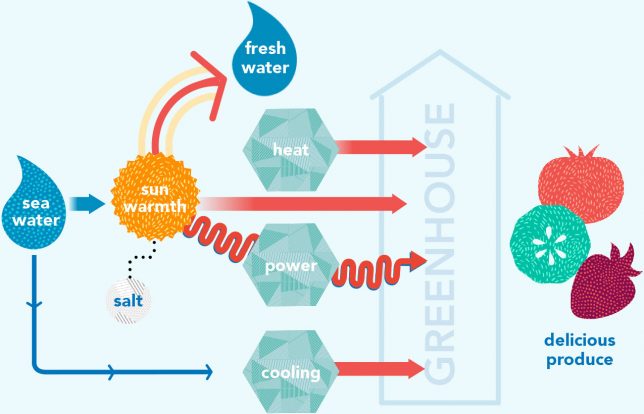
    The soil-free hydroponic systems of Sundrop Farms use solar energy to filter brackish water for use on crops, growing 17,000 metric tons of food annually. The sun’s energy also powers, heats and cools the greenhouses as needed, reflected via a series of 23,000 mirrors. In contrast, a “conventional greenhouse uses groundwater for irrigation, gas for heating, and electricity for cooling.”

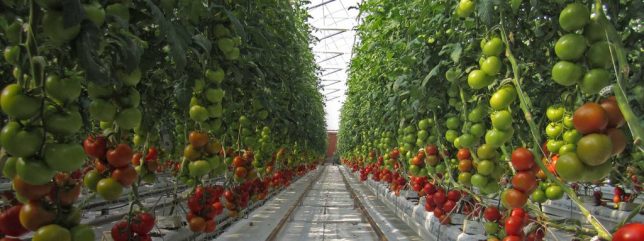
    sundrop-farm-tomato-row

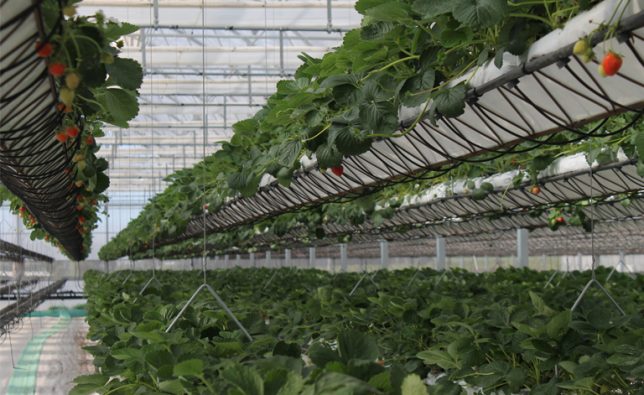
    The “plants are grown hydroponically, which is the technical way of saying we don’t use soil. Our plants flourish on nutrient-rich coconut husks instead.” Additional climate and irrigation controls allow the farm to maximize outputs with minimized inputs.

    sundrop-farm-solar-tower

    The desert location as well as natural control strategies allow Sundrop to accomplish their goals without harmful, expensive or polluting inputs as well. “Unlike traditional agriculture we use no fertilizers and no weed killers. We control plant eating bugs with carnivorous ones, just the way nature intended.”

    sundrop-farms-hydroponics

    Sundrop’s success illustrates the possibilities of working in a world where water, land and energy are all scarce and valuable. Moreover, the farm shows that fruits and vegetables can be produced year-round in any conditions thanks to hydroponics and green energy, from rural wastelands to urban food deserts.

    “Because we do everything in a controlled environment, we know what our input costs are, and we’re doing everything on a renewable basis, we can provide real consistency of supply and a higher quality product at a better price year ’round,” said Philipp Saumweber, chairman and CEO of Sundrop Farms.

    sundrop-farm-systems

    “Existing farming practices are unsustainable,” explains Sundrop. They generally use fossil fuels, excessive groundwater and require appropriate soil and weather conditions. “Yet by 2050 rising populations will see a 50% increase in food demand. Climate change is increasing the number and the severity of catastrophic weather events. And water scarcity is becoming more acute in arid regions. We need to look at alternative ways to create energy and to produce food. That’s no longer a preferred option but a necessity. Fortunately however, things are starting to change.”

    Share on Facebook


    [ By WebUrbanist in Architecture & Offices & Commercial. ]

    [ WebUrbanist | Archives | Galleries | Privacy | TOS ]


    WebUrbanist

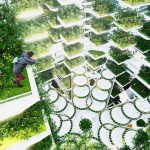
  • World’s Biggest Indoor Vertical Farm Near NYC to Use 95% Less Water

    [ By WebUrbanist in Architecture & Offices & Commercial. ]

    aerfarms rows

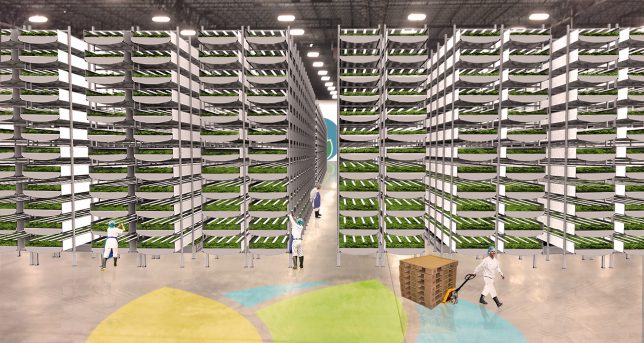
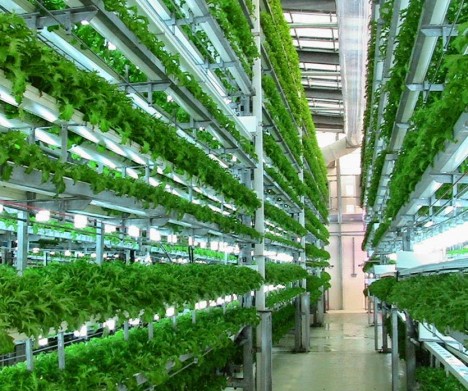
    AeroFarms is on track to produce 2 million pounds of food per year in its 70,000-square-foot facility in Newark, under construction about an hour outside Manhattan. Their efficient operation, based on previous experience at similar but smaller facilities, can accomplish this astonishing output “while using 95% less water than field farmed-food and with yields 75 times higher per square foot annually.”

    aerofarms facade

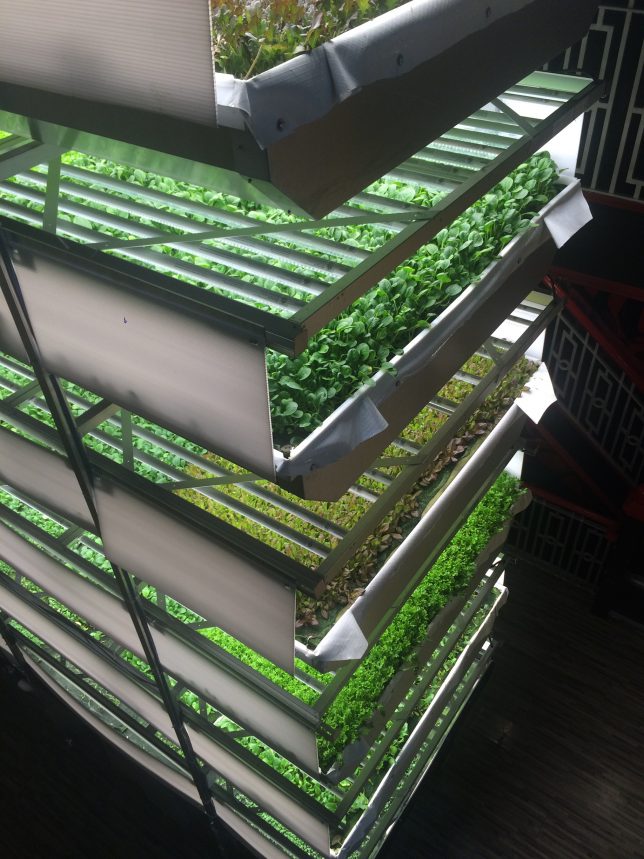
    This new facility is comparable in efficiency to what is currently the world’s largest vertical farm in Japan, but nearly three times the size. Staggering its crops is part of the success behind AeroFarm’s strategy at their new and existing locations – at a given facility they are able to switch between 22 crops per year. Their all-season growth works with specialized LED lights and climate controls all without the need for sunlight or soil.

    aerofarms diagram

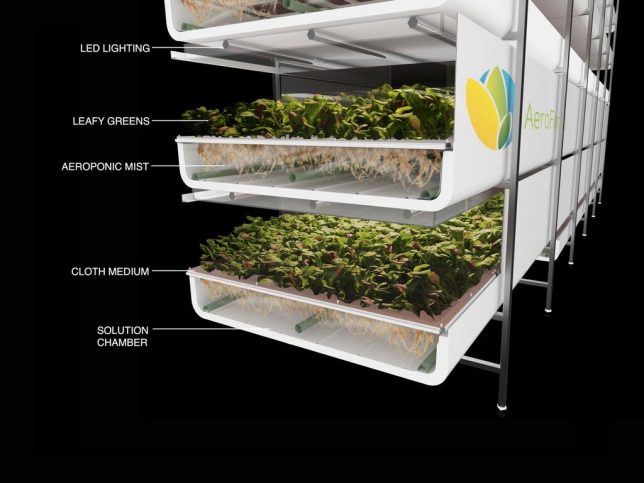
    “We use aeroponics to mist the roots of our greens with nutrients, water, and oxygen.,” explains AeroFarms. “Our aeroponic system is a closed loop system, using 95% less water than field farming, 40% less than hydroponics, and zero pesticides.” Smart pest management and highly-detailed data feedback loops help keep the system operating at peak efficiency and provide opportunities for iterative improvement, respectively.

    aerofarms shelves

    “Our passion is great tasting food and sharing our harvest with the world. In Newark, New Jersey, we are growing and selling into the New York Metro area. There has been tremendous demand for our locally grown, delicious, produce, and we have farms in development in multiple US states and on four continents. There has never been a greater need for safe, dependable, nutritious food, and we are scaling quickly to transform agriculture around the world.”

    aerofarms students

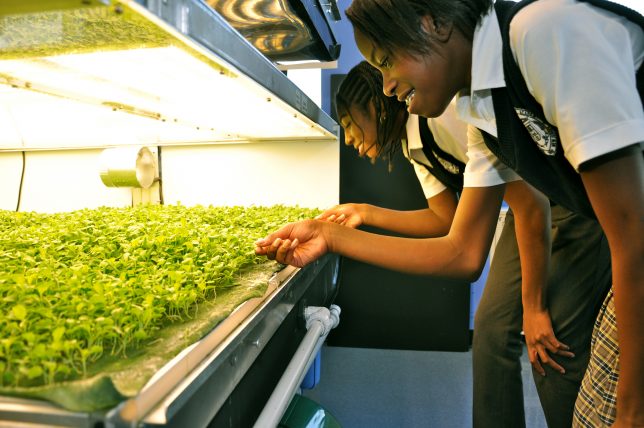
    First Lady Michelle Obama recently visited the Garden State and toured a nearby school, planting seeds in a rooftop garden and sharing healthy snacks with students involved in a youth program as young AeroFarmers.

    Share on Facebook


    [ By WebUrbanist in Architecture & Offices & Commercial. ]

    [ WebUrbanist | Archives | Galleries | Privacy | TOS ]


    WebUrbanist

  • Veggie Factory: World’s First Vertical Farm Run Entirely By Robots

    [ By WebUrbanist in Architecture & Offices & Commercial. ]

    robofarming

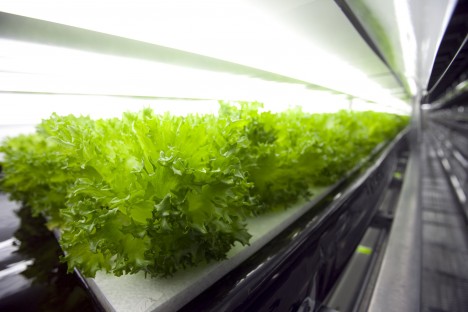
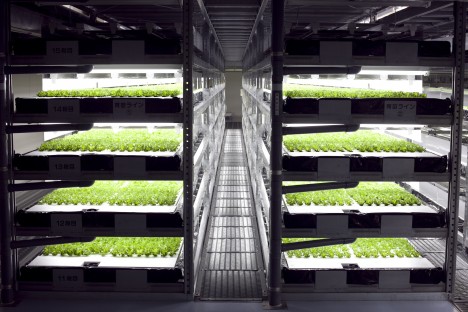
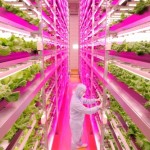
    Taking vertical urban indoor farming efficiency to the next level, a new automated plant coming to Japan will be staffed entirely by robots and produce 30,000 heads of lettuce daily.

    spread indoor farm

    The so-called Vegetable Factory is a project of Spread, a Japanese company already operating vertical farms. Located in Kyoto, its small army of bots will various seed, water, trim and harvest the lettuce.  Spread’s new automation technology will not only produce more lettuce, it will also reduce labor costs by 50%, cut energy use by 30%, and recycle 98% of water needed to grow the crops.

    spread stacked farm

    “The use of machines and technology has been improving agriculture in this way throughout human history,” says J.J. Price of Spread, tells Tech Insider. “With the introduction of plant factories and their controlled environment, we are now able to provide the ideal environment for the crops.”

    spread human farm

    Like other vertical farms, the benefits of this approach are numerous, including: reduced waste, controlled runoff, more efficient use of space and the ability to produce food locally (reducing cost, time and waste associated with rural-to-urban transport). Meanwhile, the fear of automation is becoming a reality, say critics, while advocates point out that this will free up factory workers to potentially engage in more interesting occupations within the same industry (if herding robots is considered interesting, at least).

    Share on Facebook


    [ By WebUrbanist in Architecture & Offices & Commercial. ]

    [ WebUrbanist | Archives | Galleries | Privacy | TOS ]


    WebUrbanist

  • Meal of Worms: Kitchen Farm for Growing Edible Insects at Home

    [ By WebUrbanist in Design & Products & Packaging. ]

    insect meal worms

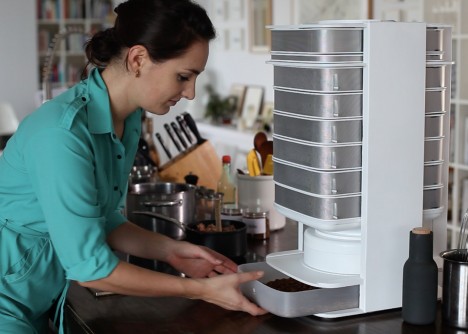
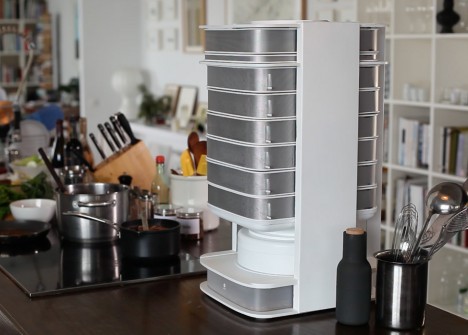
    Helping you grow and harvest edible mealworms right on your kitchen counter, the world’s first desktop-sized insect hive aims to aid a rebranding of an unpopular but nutrient-rich source of protein.

    edible insect farm

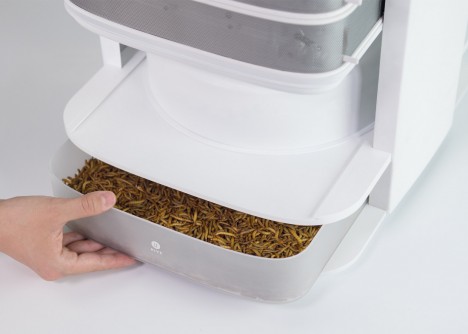
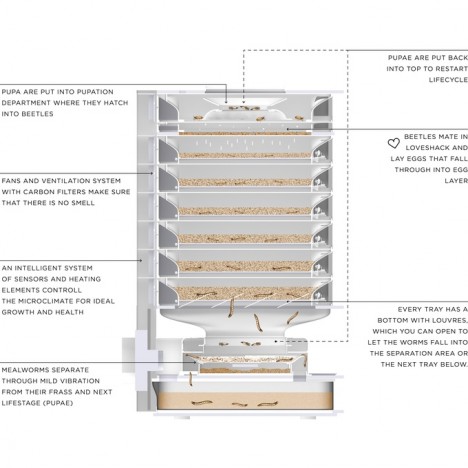
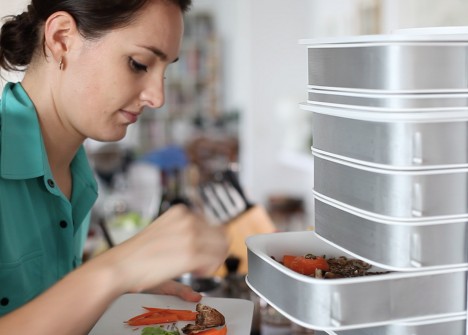
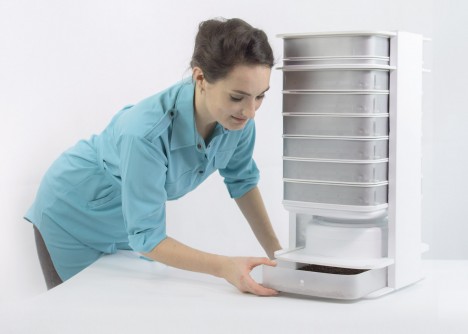
    The Livin Farm by Katharina Unger and Julia Kaisinger is just a few two feet tall and contains eight shelves for housing mealworms at various stages of growth, from egg and pupae to beetle.

    meal worm diagram

    The pupae mature in the top drawer, turning into egg-laying beetles. The eggs in turn fall through holes in the floor and grow into worms.

    insect feeding time

    The key to the whole operation is a customized micro-climate within the case as well as a fan, filter and ventilation system. The insects themselves can subsist on vegetable scraps and other kitchen waste.

    insect in salad

    insect food protien

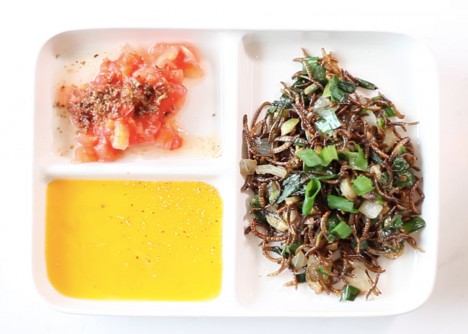
    A button on the box vibrates the operation, separating insects from waste automatically rather than the conventional and less appealing way: sorting by hand. These are chilled in the bottom drawer for storage or can be frozen before being minced and boiled into meals.

    meal worm benefits

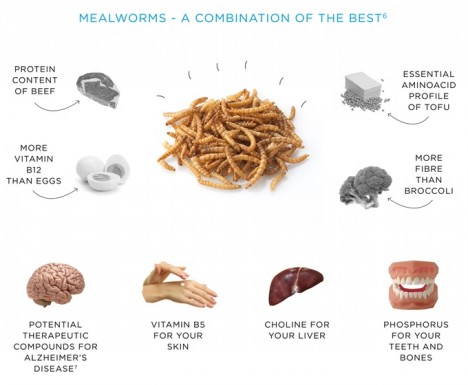
    Each harvest yields a few hundred grams with protein amounts roughly equivalent to similar weights of meat. The inputs are where the real savings is: less space, water and energy are needed for this system to work.

    livin kitchen farm

    insect kitchen counter

    If the ‘yuck factor’ seems tough to overcome, consider for a moment the foods that have become popular over time across cultures, including the rise of sushi (raw fish and seaweed) in the United States and elsewhere.

    Share on Facebook


    [ By WebUrbanist in Design & Products & Packaging. ]

    [ WebUrbanist | Archives | Galleries | Privacy | TOS ]


    WebUrbanist

  • Urban Ant Farm: Colony Encouraged to Hack City of Glass & Sand

    [ By WebUrbanist in Art & Installation & Sound. ]

    ant farm hybrid

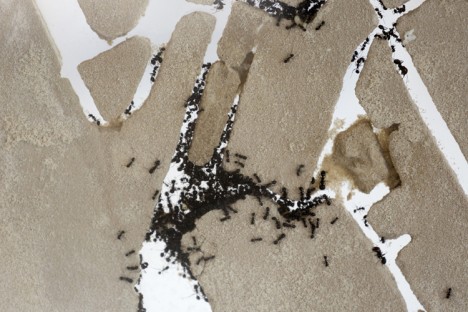
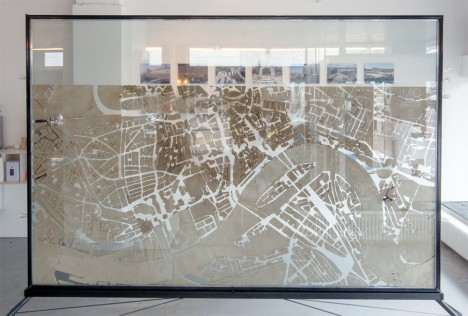
    In this Urban Ant City installation, hundreds of Spanish ants were set loose in a scale model of Rotterdam, allowed to navigate the existing street and carve their own paths and tunnels.

    ant city angle

    Using the same basic principles of a tabletop ant farm, STUDIO 1:1 (images by  Ossip van Duivenbode) added a twist to their approach, giving the sandy landscape sandwiched between glass panels an initial shape.

    ant city display

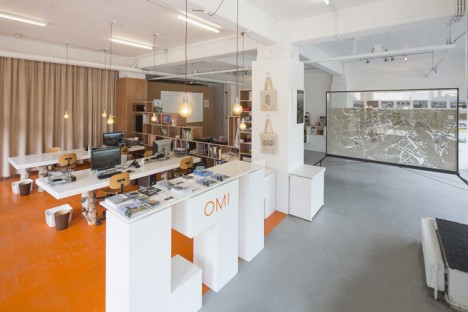
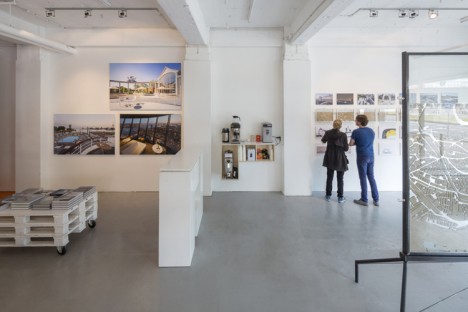
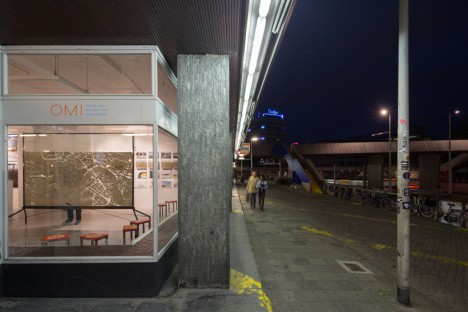
    The ants, in turn, are following their instincts, creating custom routes that evolve the existing cityscape, all set prominently on display at the the Office for Metropolitan Information.

    ant farm closeup

    The pending project results have potential to show how nature takes its course with cities over time, highlighting the intersection of planning and organic forces, and may add a new layer of meaning to EUsociality. It also just looks awesome.

    urban ant farm

    “OMI is an initiative of UrbanGuides, Perplekcity and Ossip Architecture Photography. These organizations offer city explorations, urban planning and photography combined in one place.”

    ant farm urbanism

    “In addition, an array of books and city guides have been collected and are presented at OMI, in collaboration with NAi Booksellers. Urban Ant City installation of STUDIO 1:1 is realized together with AIR, the architectural centre of Rotterdam.”

    Share on Facebook


    [ By WebUrbanist in Art & Installation & Sound. ]

    [ WebUrbanist | Archives | Galleries | Privacy | TOS ]


    WebUrbanist

  • Farm-to-Desk: Vertical Urban Farm Shares Tokyo Office Space

    [ By WebUrbanist in Architecture & Offices & Commercial. ]

    farm office seating

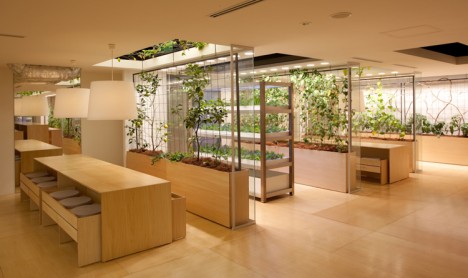
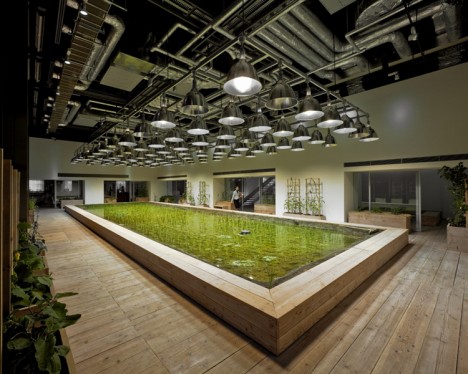
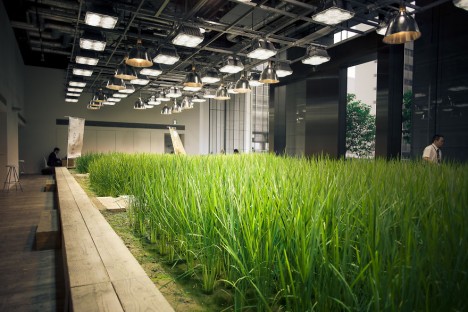
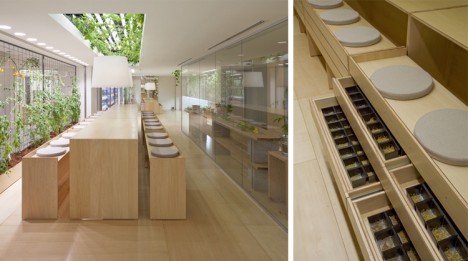
    Two hundred species of edible greens occupy a quarter of this 215,000-square-foot office in Tokyo, Japan, sharing space with thousands of workers who in turn consume harvested fruits, vegetables and rice right in the building’s cafeteria, a direct farm-to-table connection.

    tokyo rice paddy

    office rice paddy

    Plants are expertly interspersed with other functions throughout the building, sustained via soil-based and hydroponic systems, including 1,000 square feet of rice paddies and extensive broccoli fields.

    farm bench detail

    urban office farm

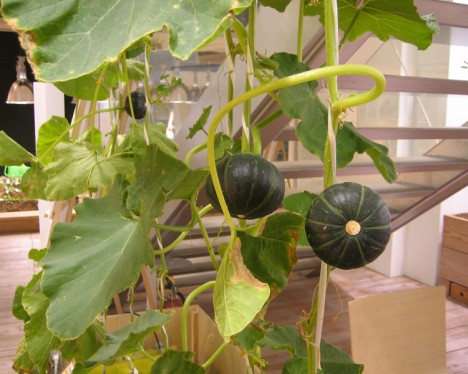
    Kono Designs elaborates on the ways different food-bearing plants occupy any extra (and sometimes hidden) spaces throughout the structure: “Tomato vines are suspended above conference tables, lemon and passion fruit trees are used as partitions for meeting spaces, salad leaves are grown inside seminar rooms and bean sprouts are grown under benches.”

    Next Page – Click Below to Read More:
    Farm To Desk Vertical Urban Farm Shares Tokyo Office Space

    Share on Facebook


    [ By WebUrbanist in Architecture & Offices & Commercial. ]

    [ WebUrbanist | Archives | Galleries | Privacy | TOS ]


    WebUrbanist