Tag: covers

  • ‘A Year in Photos’ documentary covers winning imagery from Sony World Photography Awards

    The annual Sony World Photography Awards is one of the world’s most reputable competitions for creatives. DPReview makes it a point to cover every announcement. Over the course of the past year, over 330,000 images were submitted to its myriad of contests covering contemporary events and issues. A documentary, produced by Chocolate Films, showcasing the winning images, as well as the stories behind them, was recently released.

    Hosted by British stand-up comedian and art historian Jacky Klein, who curiously stated that submissions came in from over 200 countries (she possibly meant territories as well), A Year in Photos from Sony World Photography Awards 2021 features imagery, behind-the-scenes takes, and interviews from some of the award-winning photographers. Some of the jurors also share what they love about a particular photographer’s style the most.

    Winning imagery addresses how some people believe the novel Coronavirus was a conspiracy.

    Naturally, a good deal of imagery discussed in the hour-long film cover the impact of climate change and the pandemic. As winning photographer Coenraad Heinz Torlage stated early on in the film, ‘I think photography is a powerful medium to speak for those who can’t speak for themselves.’ A Year in Photos from Sony World Photography Awards 2021 can be viewed in its entirety above or here.

    Articles: Digital Photography Review (dpreview.com)

  • How to Shoot Images for Book Covers: The Essential Guide

    The post How to Shoot Images for Book Covers: The Essential Guide appeared first on Digital Photography School. It was authored by Charlie Moss.

    how to shoot images for book covers

    There’s lots of information out there about making money shooting stock images. However, the most successful stock photographers have a secret – they’re shooting niche content for specialist agencies! There are lots of different specialist fields that you might consider, but in this blog post, I’ll walk you through how to shoot images for book covers.

    Let’s get started.

    How to break into the book cover industry

    There are several specialist book cover stock agencies that exist purely to match clients with photographers and illustrators. These agencies can be a great way to get into shooting book covers.

    However, book cover stock agencies do require a good portfolio as part of your application. If you don’t already have a portfolio suitable for a book cover agency and you want to get started right away, you can try networking with potential clients on social media – Instagram is a great place to connect with other creatives.

    Think about format and layout

    One of the most important things to think about when it comes to shooting book cover images is the aspect ratio. Book covers are almost always produced in a vertical format, so landscape images generally won’t be of interest to book cover designers.

    shoot images for book covers examples
    Left: Canon EOS 5D Mark II| Canon EF 100mm f/2.8 Macro USM | 100mm | 1/125s | f/8.0 | ISO 100 | Window Light + Reflector
    Right: Canon EOS 5D Mark II| Canon EF 70-200mm f/2.8 IS II USM | 70mm | 1/640s | f/2.8 | ISO 800 | Available Light

    Books can be printed in all different sizes, meaning that no single aspect ratio is the best for shooting cover photos. Therefore, book cover designers will usually need to crop images to make them fit on a cover.

    Keep this need to crop in mind when you shoot images for book covers, and make sure you don’t place any interesting parts of the subject or composition near the edge of the frame. This will give a designer more options when using your images in different book cover layouts.

    Leave some blank space

    When you shoot images for book covers, you can’t just think about the photo. You also need to leave room for the title of the book and the author. In other words, there should be at least one place in your book cover shot that is plain enough to place text.

    book cover layout examples
    Left: Fujifilm X-T20 | Fujifilm XF 35mm f/1.4 R | 35mm | 1/280s | f/1.4 | ISO 200 | Window Light
    Right: Fujifilm X-T20 | Fujifilm XF 35mm f/1.4 R | 35mm | 1/3500s | f/1.4 | ISO 200 | Available Light

    You can achieve these plain sections by using simple colors, by shooting areas with less detail, or by using a shallow depth of field to blur backgrounds and foregrounds.

    There’s no rule dictating where book cover designers must put the title and author text. However, it’s good practice to shoot several variations of each image, including compositions that leave room in the middle of the photo, as well as compositions that leave room at the top and bottom.

    Plan your images out

    If you’re finding it hard to shoot compositions that allow for text placement, then go old school and get out your sketchbook.

    Take a pen and paper, draw some empty rectangles, and start imagining all the different places a designer might put the title and name of the author. You can then start to imagine how and where you might leave blank space.

    book cover sketches
    These are a set of sketches based on the bestseller listings of a popular bookseller. The boxes show the text location on the cover of each book.

    To take your shots to the next level, think about the props you’d like to use in your photos and how they might fit into the sketches you just made.

    Playing around in a sketchbook can really improve your images and save you lots of time.

    Finding inspiration

    If you’re trying to come up with ideas for potential book cover images, I highly recommend browsing through a bookstore. You don’t have to do this in person; there are plenty of opportunities to browse book covers on the internet, as well!

    You’ll quickly get a feel for the different styles of cover images across various genres.

    shoot images for book covers
    Left: Fujifilm X-T20 | Fujifilm XF 35mm f/1.4 R | 35mm | 1/450s | f/2.0 | ISO 200 | Window Light + Reflector
    Right: Fujifilm X-T20 | Fujifilm XF 35mm f/1.4 R | 35mm | 1/640s | f/1.4 | ISO 200 | Window Light + Reflector

    It’s also a good idea to follow the social media feeds of publishers in your favorite genres. Many publishers regularly post pictures of upcoming books, which will give you a sense of industry trends.

    If you’re an author, but not a photographer

    So you’re a self-published author who wants to do the design work for your book yourself? That’s great, and all of the tips above still apply. However, you might find some of our beginner’s articles helpful; these will help you understand the creative potential of your camera.

    It’s also important to be realistic when shooting images for your book cover; photography isn’t instinctive for everyone, and the best photographs are usually the result of years of hard work and practice.

    However, if you put your mind to it and you learn the basics, there really is no reason why you shouldn’t shoot photos for your own book cover. Though it’s always worth asking a few trusted friends for their opinion when it comes to the final layout – especially if you have friends who buy and read a lot of books!

    How to shoot images for book covers: Conclusion

    Whether you want to diversify your photography business and start shooting images for a book cover agency, or you simply want to create your own book cover for your self-published book, the tips above should get you started. Follow traditional rules of composition, make space for titles and other text, and seek out inspiration in your genre.

    Ultimately, if you’re looking to start shooting images for book covers, the best advice is to jump right in. Put together a portfolio, then get it out there for people to see. Ask around to determine which stock agencies work best for photographers you know, and see if you can get your pictures on a new bestseller!

    The post How to Shoot Images for Book Covers: The Essential Guide appeared first on Digital Photography School. It was authored by Charlie Moss.


    Digital Photography School

  • Lockdown forces stars to photograph themselves for lifestyle magazine covers and interviews

    Model Naomi Campbell became a cover star, make-up artist and photographer for the latest issue of Essence magazine as lockdown measures prevented the team from traveling that was booked to work on the special issue cover. Just days before the shoot was due to take place, as part of the magazine’s 50th anniversary issue celebrations, the USA went into lockdown so the magazine asked Naomi if she would shoot the pictures herself.

    Also celebrating a 50th anniversary, Campbell rose to the challenge and, with direction from the magazine’s creative team, set up and shot the pictures with her iPhone. Planning discussions went on from the team’s homes via video chat, and the actual shoot was styled and directed remotely on the day—and the pictures have turned out pretty well.

    ‘Naomi shot herself with an iPhone,’ says MoAna Luu, the Chief Content & Creative Officer of the magazine. ‘We couldn’t send a team so, she had to do her hair, her makeup and her styling herself. We were on late night calls trying to figure out how she was going to do the shoot with her phone in her hand. Then, we had to do a re-shoot because the photos didn’t come out how we imagined. So, there were technical challenges, there were human challenges; but Naomi did it all without asking any questions, she never quit. What’s amazed me the most about working with Naomi to do this cover shoot during the pandemic is the way that she embraces the fact that she truly controls her own narrative. She’s never waited for people to do for her; she’s created her own opportunities. She’s been a pioneer in so many ways and now she’s a pioneer in ESSENCE history because she’s completely and literally controlling her own narrative in this issue from the cover to the in-book story.’

    Campbell isn’t the only one doing her own shoots during the global pandemic, as Batman actor Robert Pattinson had to take the pictures for an interview with him for GQ magazine. Pattinson had the good fortune to have a Nikon DSLR to shoot himself with rather than his phone, but perhaps a little less direction from the magazine. The pictures are pretty cool, and one shot in a mirror is used on the cover of this month’s magazine while another is being used as the header on the magazine’s social media channels.

    Articles: Digital Photography Review (dpreview.com)

  • Rental marketplace ShareGrid owner’s guarantee covers all equipment up to $20,000

    Film, photography and production equipment rental marketplace ShareGrid has introduced a $ 20,000 owner’s guarantee that covers all equipment against damage, theft, loss and fraud, including voluntary parting (theft by the renter).

    ‘Our goal has always been to make ShareGrid the safest way to rent your equipment to other people, and today we’re excited to offer even more protection to our users’ said Marius Ciocirlan, co-founder and CEO of ShareGrid. ‘For years, we’ve been the only marketplace to offer instant coverage against Voluntary Parting. With the ShareGrid Owner Guarantee, we’re taking this a step further and including protection against voluntary parting automatically. Best of all, it’s completely free for all our members.’

    ‘Voluntary parting’ or theft by the renter is typically not covered in the rental industry but is luckily also extremely rare. ShareGrid says only one in 10,000 rental transactions are affected, thanks to heavy investment in security technology and personnel. At 0.02 percent ShareGrid competitor KitSplit’s voluntary parting rate is double that of ShareGrid’s but still very low in absolute terms.

    ShareGrid’s Owner Guarantee offers protection for all rentals of equipment up to $ 20,000 in value and is included automatically. Terms are very similar to KitSplit’s equivalent policy but ShareGrid does not have the latter’s 20 percent deductible, making it the slightly more attractive offer.

    Articles: Digital Photography Review (dpreview.com)

  • These 3D-printed hotshoe covers remind you what speed film you have inside your camera

    Before the days of LCD displays, the only way you could keep track of what speed film you had in your camera was to remember it, select a dial on the camera, or cut out a piece of the film box and place it in a designated area on the back of the camera.

    However, not all cameras have ISO dials or places to put a note; and even if they do, some have a limited range of ISO labels to choose from. To remedy this problem, photographer Guy Sie customized a set of 3D-printed hotshoe covers with common ISO ratings on the top so you can easily check what speed film you have inside your camera.

    “On my fully manual ’50s Leica M3 rangefinder camera, the ISO film speed indicator dial on the back only goes up to 200 – the fastest speed available at the time. With film speeds going up to ISO 3200 now the dial is basically useless so I don’t bother with it, but then I have to remember what film I loaded last time I used the camera – which might be weeks ago,” says Sie in the project summary. “After screwing this up a few times too many, I modified gcardinal’s hotshoe covers by adding ISO speed numbers to the top. Load your camera, swap out the cover for the right ISO, and never forget what film is loaded again!”

    $ (document).ready(function() { SampleGalleryV2({“containerId”:”embeddedSampleGallery_7488268308″,”galleryId”:”7488268308″,”isEmbeddedWidget”:true,”selectedImageIndex”:0,”isMobile”:false}) });

    The set consists of covers for ISO 100, 125, 160, 200, 320, 400, 800, 1600, and 3200 film stocks. As is, the numbers on the covers are raised, but if you really want to make them pop, you can give them a little coat of paint or black them out with a permanent marker, as Sie has done with the set he made for his Leica M3.

    The files for Sie’s hotshoe covers are free to download through Thingaverse. You can print out at home if you have a 3D printer on hand or pay a few dollars to have some made through online print shops like Shapeways or Sculpteo.

    Articles: Digital Photography Review (dpreview.com)

  • Think Tank updates its Hydrophobia rain covers, introduces new compact ‘Emergency’ line

    Think Tank Photo has released the latest versions of its Hydrophobia rain covers and introduced a new pair of compact rain covers it calls the Emergency Rain Cover.

    The Hydrophobia V3.0 Rain Covers come in five different configurations to fit various DSLR cameras and Sony full-frame mirrorless camera setups. In Think Tank Photo’s own words, the Hydrophobia V3.0 Rain Covers are ‘considered the most protective weather protection on the market.’

    Hydrophobia V3.0 Rain Covers are made of a three-layer material and feature a DWR coating for extra protection against moisture. The stitches across the entire cover are seam-sealed and a rainproof front element cover is included so your lens doesn’t get splashed when sitting idle.

    If you don’t feel like carrying an all-out solution for keeping your gear dry, Think Tank Photo has also released a new thinned-out version of its rain covers. They’re called Emergency Rain Covers and as the name suggests, they’re a more compact, lightweight solution for keeping your gear safe from the elements in emergency situations.

    Emergency Rain Covers come in two sizes: small and medium — and they weigh just 99g/3.5oz and 114g/4oz, respectively. Compared to the approximately 300g/10.5oz of the full-size Hydrophobia Rain Covers, it’s quite the weight savings.

    The small is meant to keep a gripped or standard camera body protects with smaller primes or zooms attached. Specifically, Think Tank Photo mentions 16–35mm F2.8, 14–24mm F2.8, 24–105mm F4 and 24–70mm F2.8 lenses, but it’s safe to say most super-wide to standard lenses (35-70mm) should work fine. The medium Emergency Rain Cover can also keep a gripped or standard camera body protected with a 24–70mm F2.8 or 70–200mm F2.8 lens attached. Again, there are plenty of other lenses that would work beyond the two Think Tank Photo mentioned.

    All of the rain covers are currently available to purchase through Think Tank Photo’s online shop. The Hydrophobia Rain Covers start at $ 115 for the 24-70 size and go up to $ 150 for the massive 300-600 version. The small and medium emergency rain covers retail for $ 35 and $ 40, respectively.

    Articles: Digital Photography Review (dpreview.com)

  • Sleeves Are For Nerds: Geeky iPad, Tablet & eReader Covers

    [ By Steve in Gadgets & Geekery & Technology. ]

    Tablets, iPads and eReaders are so ubiquitous, nerdy owners are employing extreme acts of graphic personalization to imbue their devices with unique geek chic.

    Faaaalkooorr!! Almost every child of the Eighties holds a special place in their heart for The NeverEnding Story. The 1984 film spawned a pair of sequels and a TV show, cementing its hold on once-youthful imaginations and imbuing all who watched with the urge to ride a giant flying dog – OK, “luckdragon”, whatever.

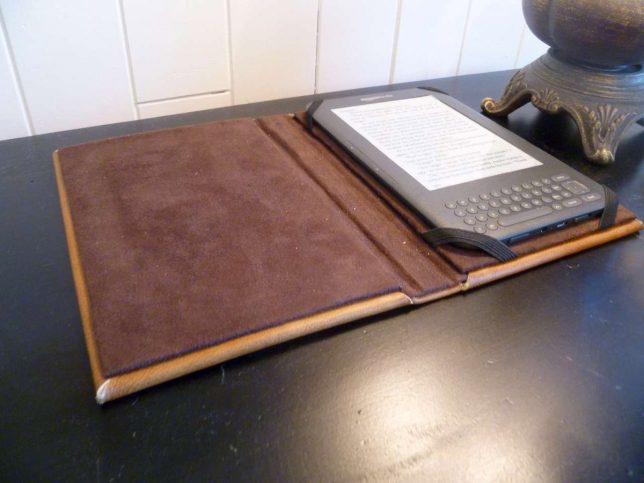
    Fans of the endearingly clunky, West German-produced fantasy film have grown into jaded adults but as Falcor famously advised, “Never give up and good luck will find you.” Yeah, tell that to Artax. Anyway, you can look up that and more on your tablet, ideally if its encased by a NeverEnding Story iPad / Tablet / EReader / Kindle Cover. Note the faux Auryn medallion affixed to the cover. Hey, it’s better than Nothing.

    Hit The Button, Frank

    Designed ideally for an Apple product like a Macbook or iPad and size-customizable by the seller, this MST3K adhesive vinyl decal features the familiar – to those in the know – silhouettes of Tom Servo, Mike Nelson and Crow T Robot in full-on movie-riffing mode. Now that Mystery Science Theater 3000 has been revived for a new run on Netflix, your robot roll call is as timely as ever.

    Ultimate Zelda

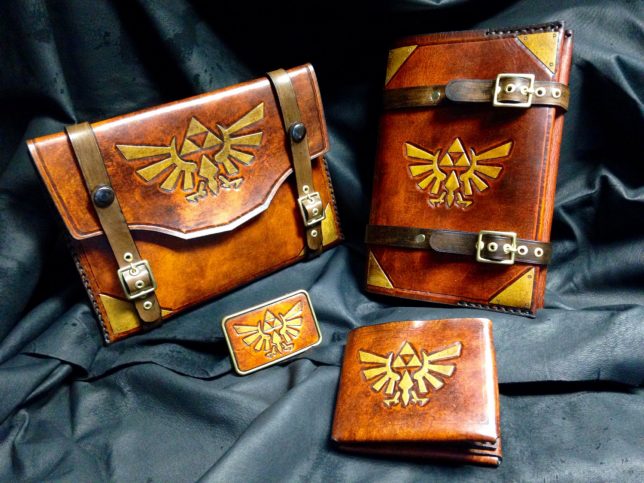
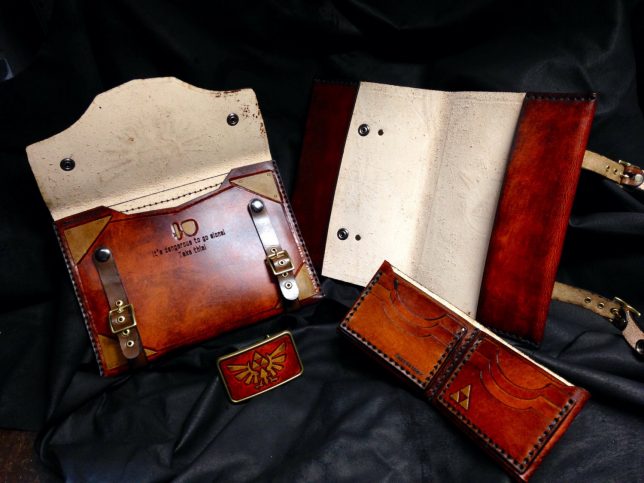
    The Legend of Zelda is one of Nintendo’s most successful gaming franchises though considering it debuted way back in 1986, it’s had plenty of time to accrue legions of devoted fans. This “Ultimate Zelda Fan Package” from Etsy seller SkinzNhydez includes a Zelda book cover, Zelda wallet, Zelda iPad case, even a Zelda belt buckle. All you need now is a girlfriend named Zelda… oh, wait.

    Time McFly’s

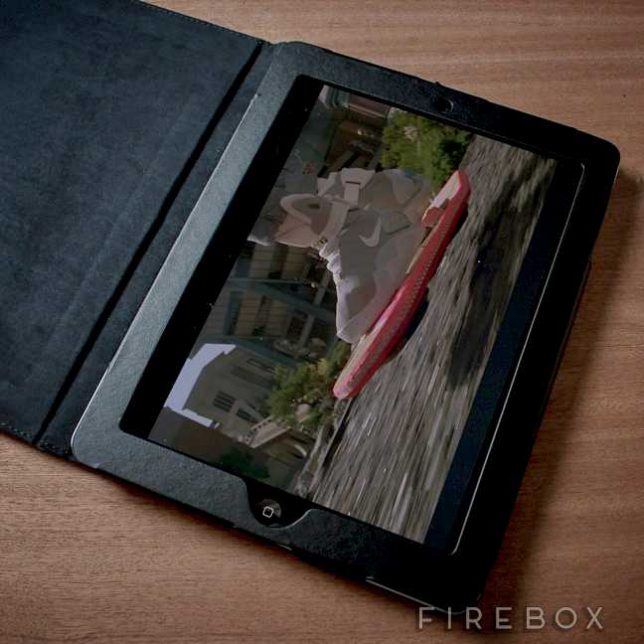
    Channel your inner Biff Tannen with this Back To The Future 2 iPad case, featuring the cover of Gray’s Sports Almanac 1950-2000: the book that brought our heroes from BTTF2 so much Griff, er, grief.

    Seller Firebox kindly advises potential purchasers that while “this book tells the future,” it’s “not to be used to create a series of paradoxes that destroy time.” Besides, since November 8th of 2016 we’ve already been living in the darkest timeline, amiright?

    Next Page – Click Below to Read More:
    Cover Ups Geeky Ipad Tablet Ereader Case Covers

    Share on Facebook


    [ By Steve in Gadgets & Geekery & Technology. ]

    [ WebUrbanist | Archives | Galleries | Privacy | TOS ]


    WebUrbanist

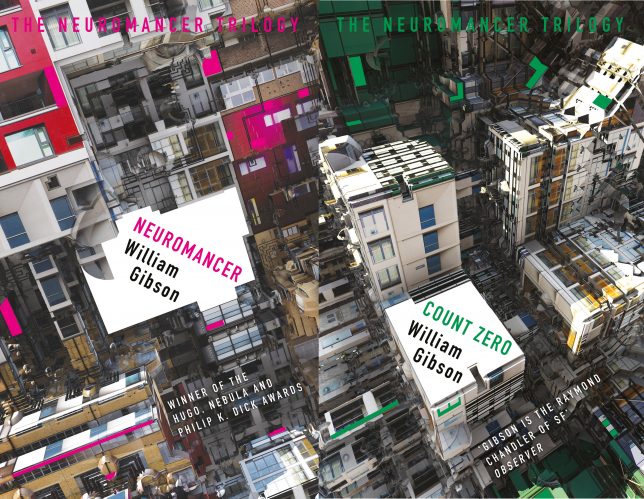
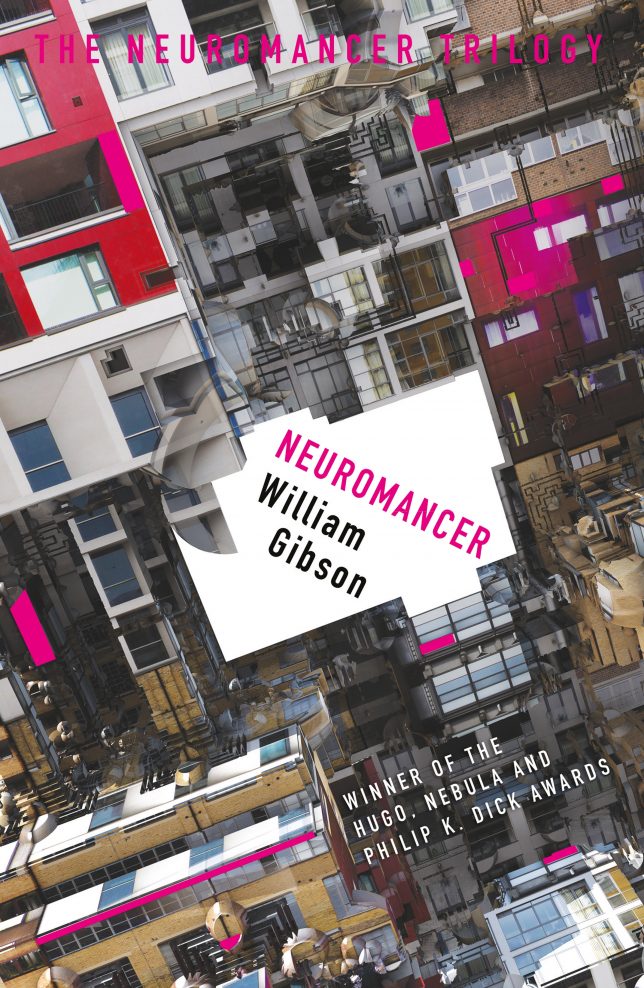
  • Sprawl Trilogy Redesign: Fractal City Covers for Classic Gibson Novels

    [ By WebUrbanist in Art & Drawing & Digital. ]

    fractal-cover-art

    Three classic cyberbunk books and a short story collection, all by William Gibson, are getting an apt makeover in the form of architectural covers featuring beautifully abstracted (if dystopian) urban landscapes.

    burning-chrome-cover

    Anyone familiar with this master of science fiction will make the connection quickly — the strange and seemingly impossible shapes are exactly what come to mind when reading the Sprawl Trilogy (Neuromancer, Count Zero, Mona Lisa Overdrive) as well as shorts from Burning Chrome. In William Gibson’s fiction, the Sprawl is a colloquial name for the Boston-Atlanta Metropolitan Axis (BAMA), an urban sprawl environment on a massive scale, and a fictional extension of the real Northeast megalopolis.

    neuromancer-cover

    Developed by digital artist, designer and programmer Daniel Brown, the method of these remakes also fits the techno-futuristic narratives in question: fractal mathematics and computer software turned ordinary architectural photographs into these surreal built environments. The covers seem to flow into one another but are distinctly colored, forming unique art separately but a kind of fractal collage when seen together.

    count-zero-cover

    The images were generated by repeating one shot at different scales to create complex patterns, at once recognizable as architectural but hard to pin down, much like a memory or a visualization based on reading a book. Gibson approached Brown when Gollancz, an imprint of Orion, acquired rights to the publishing of these speculative fiction classics.

    mona-lisa-overdrive-cover

    The designer says he was personally approached by Gibson to create the cover designs for the books, which have been recently acquired by science-fiction publisher Gollancz, an imprint of Orion. Their meeting was fortuitous as Brown had been looking for a platform to execute his creative ideas.

    new-gibson-cover-art

    “I had been experimenting with generating architecture via computer code,” says Brown. “As a project it was still in its infancy and without real purpose. Then William Gibson contacted me, and stated it was exactly how he had envisaged The Sprawl. In an uncanny way the code found its own purpose.”

    Share on Facebook


    [ By WebUrbanist in Art & Drawing & Digital. ]

    [ WebUrbanist | Archives | Galleries | Privacy | TOS ]


    WebUrbanist

  • Street Smokers: Cabin Sits & Steams Over NYC Manhole Covers

    [ By WebUrbanist in Art & Installation & Sound. ]

    smokes new york city

    This mobile art installation turns the most congested New York City intersections into an unlikely context for a most rural-looking little cottage, the illusion completed thanks to steam rising up from below the streets.

    smokers and cops

    When artist Mark Riegelman saw an orange traffic cone acting as an inadvertent steam conduit, the idea came to him to build something large and out-of-place to grab attention in a city of spectacle. Measuring 6 by 8 by 8 feet, the tiny micro-cabin still weighs hundreds of pounds and had to keep moving – as an unsanctioned project, it needed to avoid authorities.

    smokers installation

    smoker lane

    Inspired in part by the incense-smoking figures traditional to Germany, the Smökers installation comes alive through the appearance of dynamic vapors wafting up from the chimney. In the artist’s words: “the byproduct of the city’s essential industrial process, which provides power and heat to thousands of homes and businesses throughout the city, [are] highlighted and subverted.”

    smokers

    smoker moving

    smoker crossing

    The German “Räuchermann, also commonly referred to as ‘smokers’, are simple wooden incense burners, often resembling cabins, animals, and chimney sweeps.” These are usually, however, found on shelves in homes, not in the form of giant homes on the street.

    Share on Facebook


    [ By WebUrbanist in Art & Installation & Sound. ]

    [ WebUrbanist | Archives | Galleries | Privacy | TOS ]


    WebUrbanist

  • Nikon covers all focal lengths with three ‘DL’ enthusiast compacts with 1″-type sensors

    $ (document).ready(function() { SampleGalleryV2({“containerId”:”embeddedSampleGallery_8751365762″,”galleryId”:”8751365762″,”isEmbeddedWidget”:true,”standalone”:false,”selectedImageIndex”:0,”startInCommentsView”:false,”isMobile”:false}) });

    Nikon is entering the 1″-type premium compact market in a big way, introducing three new models: the Nikon DL18-50, DL24-85 and DL-24-500. Between them, they cover pretty much every focal length. The ‘guts’ of all three ‘DL’ models are the same, in that they share a sensor, image processor, autofocus system and support for 4K video (with clean HDMI output, no less). Parts of the design, especially the control layout and font, strongly resemble that of Nikon’s 1-series mirrorless cameras.

    Sensor-wise, the DLs use what is possibly the same 20.8MP 1″-type BSI CMOS sensor as Nikon’s J5 mirrorless camera. It’s paired with the company’s new EXPEED 6A image processor, which allows for a top ISO of 12800 and 4K/UHD video recording at 30p. All three cameras have ‘Dual Detect VR’, which combines data from the cameras’ angular velocity sensors and the scene itself to reduce shake. They also have fluorine coatings on their lenses to keep moisture and oil away. Each has a manual focus ring around the lens, as well.

    They also have 3″ touch-enabled OLED displays, tilting on the 18-50 and 24-85 and fully articulating on the 24-500. Naturally, they all have Wi-Fi with NFC, plus Nikon’s ‘SnapBridge’ technology, which uses Bluetooth to maintain a connection between camera and phone, so there’s no need to re-pair. Battery life on all three DL models is rated at 290 shots/charge (per the CIPA standard).

    One of the features that may set the DLs apart from the other 1″-type cameras is its Hybrid AF system, which combines 105 phase-detect with 171 contrast-detect points. This allows the camera to shoot at 20 fps with continuous autofocus, which is, by far, best-in-class (spec-wise). If you can live with single AF, then the DLs can shoot even faster: 60 fps.

    Nikon DL18-50

    The first camera is perhaps the most interesting, as it has the widest lens of any enthusiast compact on the market. That lens has an equivalent focal length of 18-50mm and a fast maximum aperture range of F1.8-2.8. The lens has a 3-stop ND filter and is Nikon’s first compact to have a Nano Crystal Coating, which reduces flare and ghosting. The lens has seven aperture blades and has a top shutter speed of 1/1600 sec (an electronic shutter, found on all three models, maxes out at 1/16000 sec). There is also built-in perspective correction, which is especially useful when shooting architecture.

    The camera has full manual exposure control, Raw support, tilting touch OLED display and aforementioned 4K/30p support. The DL18-50 also supports an optional tilting OLED electronic viewfinder with 2.36M dots. The 18-50 is the only one of the camera cameras to lack a built-in flash, though like its siblings it does have a hot shoe.

    Nikon DL24-85

    The DL24-85 is very similar to its wider sibling, both inside and out. The main difference is its lens, which is a 24-85mm equiv. F1.8-2.8 model, though it lacks the Nano Crystal Coating. Its standout feature is the ability to take life-size, 1:1 macro photos, with a minimum focus distance of 3cm. Macro shooters can also take advantage of focus peaking and bracketing as well as manual priority AF. Again it includes a built-in ND filter.

    Nikon DL24-500

    For those seeking a long zoom model, there’s the DL24-500. As its name implies, it has a 24-500mm equiv. lens, with a max aperture range of F2.8-5.6. Unlike the other two models, the 24-500 has a fully articulating display and a built-in OLED viewfinder. It’s also the only of the DL models with a mic input jack, with support for Nikon’s ME-1 shotgun mic. 

    All three cameras will be available in early summer with suggested retail prices of $ 649 (24-85), $ 849 (18-50), and $ 999 (24-500).

    Press Release:

    THE NIKON DL PREMIUM COMPACT SERIES: PUTTING POCKETABLE POWER AND LEGENDARY NIKKOR LENS PRECISION INTO THE HANDS OF PASSIONATE PHOTOGRAPHERS

    Pairing a Large 1-Inch Sensor with Superior NIKKOR Lens Technology, Nikon’s New Compact DL24-85, DL18-50 and DL24-500 Will Help Capture Stunning Images and 4K UHD Video

    MELVILLE, NY (Monday, February 22, 2016 at 11:01 P.M. EST) – Today, Nikon Inc. announced the new DL Series of premium compact cameras. These pocketable yet powerful imaging tools offer an elite level of imaging prowess that fits easily in one’s palm. Equipped with a variety of focal lengths optimized for different types of shooters, the DL24-85, DL18-50 and DL24-500 combine powerful NIKKOR optics with a large 20.8-megapixel (CX-format) 1-inch BSI CMOS sensor to produce stunning image quality and amazingly detailed images, even when shooting in low-light. Cameras in the new DL line will also feature powerful performance, with high-speed Autofocus (AF) and 20 frames-per-second (60 fps with fixed AF) continuous shooting capability for fast action moments, as well as 4K UHD video recording for users to tell their stories in new ways. Ergonomically designed and familiar for advanced users, all three cameras will utilize the new Nikon SnapBridge connectivity to make it easier than ever to shoot and share with ease.

    “We recognize consumers’ desire for smaller cameras capable of outstanding image quality,” said Masahiro Horie, Director of Marketing and Planning, Nikon Inc. “With the new DL line, Nikon is proud to fuse legendary NIKKOR optics with the latest innovations in imaging to provide advanced photographers amazingly compact tools capable of capturing photos and video that even the most discerned professional would be proud of.”

    The Nikon DL Series: Powerful Performance, Superior Optics

    The new DL line of premium compact cameras packs innovative and powerful imaging technology into elegantly designed yet remarkably compact camera bodies, making it easier than ever to carry pure imaging prowess in the palm of one’s hand. All of these new cameras are designed with a 20.8-megapixel CX-format (1-inch) BSI CMOS sensor, which when combined with fast, high quality NIKKOR glass, help to create stunning image quality for stills or 4K UHD video. Working alongside the new sensor is the new EXPEED 6A image processor that allows for impressive noise reduction and powerful, fast performance, making it possible to capture stunning low-light street photography, beautiful portraits or spectacular landscapes with ease. 

    For fleeting moments and fast-action, the DL line incorporates a high-speed hybrid autofocus (AF) system featuring 105 phase detect focus areas (with 171 focus points in contrast detect AF mode), as well as continuous shooting up to an incredible 20 fps, with capability to capture up to a blazing fast 60 fps with focus locked on the first frame. The DL series also features Dual Detect Optical VR technology to compensate for camera shake while handheld or at slower shutter speeds.

    Continuing the impressive legacy of NIKKOR glass, each new DL camera features a unique lens design capable of amazing resolution and beautiful background blur (bokeh), with impressively fast apertures. The lens barrel also includes a manual focus ring, giving users enhanced control over focus on any subject.

    Each NIKKOR lens is also equipped with a fluorine coating that helps repel dirt, water and oil, and also facilitates easy cleaning. For the first time in a Nikon compact camera, the DL18-50’s NIKKOR lens will utilize Nano Crystal Coat to help reduce ghost and flare, particularly useful when shooting at a wide-angle. With the best NIKKOR technologies now integrated into compact camera models, users will be able to capture phenomenal images with amazing detail time and time again. 

    Control and Versatility

    The DL24-85, DL18-50 and DL24-500 put creative control in the hands of each photographer and are all operated using the familiar Nikon DSLR menu design and an assortment of physical controls. The series also supports RAW (NEF) image capture, full PSAM manual controls and over 20 preset creative options, for use in both still and video shooting (including Picture Control, Creative mode, Multiple Exposure Lighten) to help challenge each user to expand their photographic horizons.

    The DL line provides the tools to frame nearly every shot, with all three cameras sporting high-resolution 1,037k-dot OLED Touch displays. While the DL24-85 and DL18-50 allow for tilting, the DL24-500’s display provides full Vari-angle capability, vitally important when shooting from unique perspectives. Even further customization and control is possible utilizing the hot shoe/accessory shoe available on DL24-85 and DL18-50 models that allows for complete system expandability with the DF-E1 optional electronic viewfinder. The DL24-500 also sports a hot shoe and a stereo microphone input jack, while all three models are compatible with Nikon i-TTL Speedlights. 

    Seamlessly Shoot and Share

    Nikon SnapBridge makes it easier than ever to shoot and share amazing images with friends and family. Available throughout Nikon’s newest line of premium compacts, SnapBridge utilizes Bluetooth®1 low energy technology (BLE) to provide an “always on” connection to a compatible2 smart device. Users can now seamlessly send images from their camera to a smart device (utilizing the new SnapBridge app) for easy sharing via social networks or to the cloud for instant storage. An unlimited number of thumbnails and 20 GB of storage will also be available for registered Nikon owners and SnapBridge users on Nikon Image Space, Nikon’s free image storing service. Additionally, built-in Wi-Fi3 and NFC remain available to help facilitate easy connection and sharing. 

    Through Nikon SnapBridge, users can also operate their cameras remotely using the app, automatically synchronize time and location information to any image utilizing the camera’s constant connection to a compatible smart device, as well as embed information on any image, including copyright or photographers’ names. Lastly, firmware updates have never been easier, as Nikon will send registered users firmware information via the new SnapBridge application, directly to their smart device.

    4K Video Capability

    The DL series will be among Nikon’s first compact offerings to support 4K UHD video capability [3840×2160] at 30p, affording users the ability to capture incredibly beautiful video with remarkable detail, all with a compact camera. Multimedia photographers will have free reign over their creative vision with the ability to utilize PSAM selectable exposure modes while recording, alongside popular movie features like HDMI output to an external recorder, slow motion to 1200 fps and the ability to grab stills from video. Other creative video functions available include: Full HD movie, HD movie, Motion Snapshot, Slow motion, 4-second movie, Time-lapse movie, Superlapse movie and Jump cut.

    DL24-85: The Premium Compact Camera Ready for Anything

    Great for travel, portraits and general photography, the DL24-85 offers pocket-sized imaging power with a fast and versatile 24-85mm focal range. Compatible with 40.5mm threaded filters, the newly designed NIKKOR lens (11 elements in 9 groups) features a 3.6x zoom range (7x with Dynamic Fine Zoom4) and a wide f/1.8-2.8 aperture, empowering users to capture a wide variety of subjects with incredible detail and natural bokeh, even in low-light. The 24-85mm offering also features Dual Detect Optical VR, AF bracketing and a tilting Touch OLED display to make composing from creative angles easier than ever.

    Exclusive to this DL model is a new Super Macro Mode (1:1) that helps capture even small subjects in life-size detail. Setting manual zoom on the camera to super macro position allows the user close-up shooting at a 35mm equivalent magnification, providing amazing detail whether shooting flowers in bloom or a wandering ladybug. Macro photographers can utilize a variety of camera functions within the mode, including focus bracketing, manual priority AF (M/A) mode and peaking indication, to truly customize the look and feel of every image.

    DL18-50: A Premium Pocket Camera That Can Capture It All

    For landscape and architecture shooters looking for compact, ultra-wide angle DL option, the DL18-50 provides a solution that fits easily into any photographer’s pocket. Starting at a wide 18mm and expanding to 50mm (2.8x zoom, 5.5x with Dynamic Fine Zoom) the camera sports a powerful NIKKOR lens with a wide f/1.8-2.8 aperture that makes it easier than ever to produce natural bokeh in any image, while capturing tack-sharp stills and video. This lens is compatible with 46mm filters and features Nikon’s Nano Crystal Coat to help reduce ghosting and flare. 

    Those who choose the wide-angle DL premium compact can also take advantage of perspective controls to help compensate for image distortion, particularly for shooting tall objects from the ground like landmarks and skyscrapers. Tailored for architecture shooters, this feature helps to capture the correct perspective with ease.

    For use with the DL24-85 and DL18-50, a newly designed optional DF-E1 electronic viewfinder (EVF) will be available for discerning photographers who desire for a traditional eye-level viewfinder to frame their photos. The compact DF-E1 features a 2,359k-dot resolution with eye sensor, alongside a tilting mechanism, diopter adjustment and anti-reflection coating, helping provide further clarity and versatility for DL shooters. 

    DL24-500: Get Close and Connect

    The DL24-500 offers the longest zoom capability of any DL premium compact, reaching an incredible 500mm focal length and 21x optical zoom (42x with Dynamic Fine Zoom). Combining Nikon’s new 1-inch sensor with this impressive super-zoom NIKKOR lens, the DL24-500 is an ideal choice for users eager to photograph and share anything from concerts to wildlife. Featuring an f/2.8-5.6 aperture, this lens (compatible with 55mm filters) integrates the newest NIKKOR technologies to help render amazing images and background blur, even from afar.

    The DL24-500 also features Dual Detect Optical VR, particularly useful when shooting at extremely long focal lengths or without a tripod, a built-in electronic viewfinder (EVF) with 2,359k-dot OLED display and an eye-sensor and a Vari-angle 1,037k-dot OLED screen.

    Price and Availability

    The new DL24-85, DL18-50 and DL24-500 will be available in early summer 2016 for suggested retail prices (SRP) of $ 649.95*, $ 849.95*, and $ 999.95*, respectively. Pricing and availability for the optional DF-E1 electronic viewfinder, compatible with both the DL24-85 and DL18-50, is TBD. For more information on these new Nikon products, please visit www.nikonusa.com.

    1 The Bluetooth® word mark and logos are registered trademarks owned by Bluetooth SIG, Inc. and any use of such marks by Nikon Corporation and its affiliates is under license. 

    2. WI-FI COMPATIBILITY This camera’s built-in Wi-Fi® capability can only be used with a compatible iPhone®, iPad®, and/or iPod touch® or smart devices running on the Android™ operating system. The Nikon SnapBridge application must be installed on the device before it can be used with this camera. The SnapBridge app is not yet available (coming soon in spring 2016) Apple, the Apple logo, iPhone, iPad and iPod touch are trademarks of Apple Inc., registered in the U.S. and other countries. App Store is a service mark of Apple Inc.

    3. Wi-Fi and the Wi-Fi logo are trademarks or registered trademarks of the Wi-Fi Alliance. N-Mark is a trademark or registered trademark of NFC Forum, Inc., in the United States and/or other countries.

    4. Dynamic Fine Zoom magnification is calculated from the full-wide end of optical zoom

    * SRP (Suggested Retail Price) listed only as a suggestion. Actual prices are set by dealers and are subject to change at any time.

    Nikon DL18-50 / DL24-85 specifications

      Nikon DL18-50 Nikon DL24-85
    Price
    MSRP $ 849 $ 649
    Body type
    Body type Large sensor compact
    Sensor
    Max resolution 5584 x 3712
    Image ratio w:h 3:2
    Effective pixels 21 megapixels
    Sensor photo detectors 23 megapixels
    Sensor size 1″ (13.2 x 8.8 mm)
    Sensor type BSI-CMOS
    Processor Expeed 6A
    Color space sRGB
    Color filter array Primary color filter
    Image
    ISO Auto, 100-12800
    White balance presets 7
    Custom white balance Yes
    Image stabilization Optical
    Uncompressed format RAW
    File format
    • JPEG (Exif v2.3)
    • Raw (NEF)
    Optics & Focus
    Focal length (equiv.) 18–50 mm 24–85 mm
    Optical zoom 2.8× 3.5×
    Maximum aperture F1.8 – F2.8
    Autofocus
    • Contrast Detect (sensor)
    • Phase Detect
    • Multi-area
    • Center
    • Selective single-point
    • Tracking
    • Single
    • Continuous
    • Touch
    • Face Detection
    • Live View
    Autofocus assist lamp Yes
    Digital zoom Yes (4x)
    Manual focus Yes
    Normal focus range 15 cm (5.91) 30 cm (11.81)
    Macro focus range 3 cm (1.18)
    Number of focus points 171
    Screen / viewfinder
    Articulated LCD Tilting
    Screen size 3
    Screen dots 1,037,000
    Touch screen Yes
    Screen type OLED
    Live view Yes
    Viewfinder type Electronic (optional)
    Photography features
    Minimum shutter speed 30 sec
    Maximum shutter speed 1/2000 sec 1/1600 sec
    Maximum shutter speed (electronic) 1/16000 sec
    Exposure modes
    • Program AE
    • Shutter priority
    • Aperture priority
    • Manual
    Scene modes
    • Bird Watching
    • Close-up
    • Food
    • HDR
    • Landscape
    • Multiple Exposure Lighten
    • Night Landscape
    • Night Portrait
    • Portrait
    • Selective Color
    • Sports
    Built-in flash No Yes
    Flash range 5.00 m (at ISO 100)
    External flash Yes (via hot shoe)
    Continuous drive 60.0 fps
    Self-timer Yes (2 or 10 secs)
    Metering modes
    • Multi
    • Center-weighted
    • Spot
    Exposure compensation ±5 (at 1/3 EV, 1 EV steps)
    Videography features
    Resolutions 3840 x 2160 (30p, 25p), 1920 x 1080 (60p, 50p, 30p, 25p), 1280 x 720 (60p, 50p, 30p, 25p)
    Format MPEG-4, H.264
    Videography notes Slow motion: 1080/120p, 720/240p, 800 x 296 (400p), 400 x 144 (1200p)
    Microphone Stereo
    Speaker Mono
    Storage
    Storage types SD/SDHC/SDXC
    Connectivity
    USB USB 2.0 (480 Mbit/sec)
    HDMI Yes (micro-HDMI)
    Microphone port No
    Headphone port No
    Wireless Built-In
    Wireless notes Wi-Fi with NFC and constant connection via Bluetooth
    Remote control Yes (via smartphone)
    Physical
    Battery Battery Pack
    Battery description EN-EL24 lithium-ion battery & charger
    Battery Life (CIPA) 290
    Weight (inc. batteries) 365 g (0.80 lb / 12.87 oz) 350 g (0.77 lb / 12.35 oz)
    Dimensions 106 x 63 x 58 mm (4.17 x 2.48 x 2.28) 105 x 61 x 50 mm (4.13 x 2.4 x 1.97)
    Other features
    Orientation sensor Yes
    Timelapse recording Yes (video)
    GPS None

    Nikon DL24-500 specifications

    Price
    MSRP $ 999
    Body type
    Body type Large sensor compact
    Sensor
    Max resolution 5584 x 3712
    Image ratio w:h 3:2
    Effective pixels 21 megapixels
    Sensor photo detectors 23 megapixels
    Sensor size 1″ (13.2 x 8.8 mm)
    Sensor type BSI-CMOS
    Processor Expeed 6A
    Color space sRGB
    Color filter array Primary color filter
    Image
    ISO Auto, 100-12800
    White balance presets 7
    Custom white balance Yes
    Image stabilization Optical
    Uncompressed format RAW
    File format
    • JPEG (Exif v2.3)
    • Raw (NEF)
    Optics & Focus
    Focal length (equiv.) 24–500 mm
    Optical zoom 20.8×
    Maximum aperture F2.8 – F5.6
    Autofocus
    • Contrast Detect (sensor)
    • Phase Detect
    • Multi-area
    • Center
    • Selective single-point
    • Tracking
    • Single
    • Continuous
    • Touch
    • Face Detection
    • Live View
    Autofocus assist lamp Yes
    Digital zoom Yes (4x)
    Manual focus Yes
    Normal focus range 30 cm (11.81)
    Macro focus range 1 cm (0.39)
    Number of focus points 171
    Screen / viewfinder
    Articulated LCD Fully articulated
    Screen size 3
    Screen dots 1,037,000
    Touch screen Yes
    Screen type OLED
    Live view Yes
    Viewfinder type Electronic (optional)
    Viewfinder coverage 97%
    Viewfinder resolution 2,359,000
    Photography features
    Minimum shutter speed 30 sec
    Maximum shutter speed 1/2000 sec
    Maximum shutter speed (electronic) 1/16000 sec
    Exposure modes
    • Program AE
    • Shutter priority
    • Aperture priority
    • Manual
    Scene modes
    • Bird Watching
    • Close-up
    • Food
    • HDR
    • Landscape
    • Multiple Exposure Lighten
    • Night Landscape
    • Night Portrait
    • Portrait
    • Selective Color
    • Sports
    Built-in flash Yes
    Flash range 10.00 m (at ISO 100)
    External flash Yes (via hot shoe)
    Continuous drive 60.0 fps
    Self-timer Yes (2 or 10 secs)
    Metering modes
    • Multi
    • Center-weighted
    • Spot
    Exposure compensation ±5 (at 1/3 EV, 1 EV steps)
    Videography features
    Resolutions 3840 x 2160 (30p, 25p), 1920 x 1080 (60p, 50p, 30p, 25p), 1280 x 720 (60p, 50p, 30p, 25p)
    Format MPEG-4, H.264
    Videography notes Slow motion: 1080/120p, 720/240p, 800 x 296 (400p), 400 x 144 (1200p)
    Microphone Stereo
    Speaker Mono
    Storage
    Storage types SD/SDHC/SDXC
    Connectivity
    USB USB 2.0 (480 Mbit/sec)
    HDMI Yes (micro-HDMI)
    Microphone port Yes
    Headphone port No
    Wireless Built-In
    Wireless notes Wi-Fi with NFC and constant connection via Bluetooth
    Remote control Yes (via smartphone)
    Physical
    Battery Battery Pack
    Battery description EN-EL20A lithium-ion battery & charger
    Battery Life (CIPA) 290
    Weight (inc. batteries) 780 g (1.72 lb / 27.51 oz)
    Dimensions 123 x 90 x 139 mm (4.84 x 3.54 x 5.47)
    Other features
    Orientation sensor Yes
    Timelapse recording Yes (video)
    GPS None

    Articles: Digital Photography Review (dpreview.com)