Tag: Amazon

  • Review of Amazon Prime Photo Storage: The Good and the Bad

    Who doesn’t love Amazon? Come on, where else can you buy live ladybugs, a ready-made shipping container home or tiny house kit, and a bacon-scented mustache all in one place? Amazon’s Prime membership is pretty sweet too. It allows you to take advantage of free delivery, as fast as same-day delivery for some products. You can also take advantage of Continue Reading
    Photodoto

  • Canon’s ISO 4 million multi-purpose camera was used to record fluorescent life in the Amazon

    Award-winning artist and director Lynette Wallworth released her documentary Awavena in 2018 to critical acclaim. The project’s director of photography, Greg Downing, utilized numerous cameras during production, including the specialized Canon ME20F-SH multi-purpose camera.

    Awavena follows the first female shaman of the Yawanawa tribe in the Amazonian rainforest. As part of the film, the crew documents an Ayahuasca vision quest and represents this experience using real footage captured in incredibly low light and CGI. Downing, with the aid of the ME20F-SH, captured footage of fluorescent insects and plants in nearly no light, something that Canon believes could have proven impossible for other cameras.

    This week, Canon shared a video going behind the scenes with Downing and the ME20F-Sh camera. You can view this below.

    If you’d like to view the trailer for Awavena, it can be seen below. Awavena is Wallworth’s second mixed-reality VR film, following up on the Emmy-winning film, Collisions. Wallworth says, ‘We engaged DP Greg Downing from XRez to film in the Amazon and brought the eminent Australian fluorescent biologist Dr. Anya Salih, my longtime collaborator, along on the shoot so we could film the previously unseen world of forest fluorescence as part of the vision sequence.’ Wallworth’s full artist statement about Awavena can be read here.

    While the Canon ME20F-SH camera is getting a bit long in the tooth, its technical specifications and features continue to impress over five years since it was announced. The camera utilizes a 2.26MP CMOS image sensor, which was originally announced all the way back in 2013. The sensor has pixels measuring 19?m, allowing for 1080/60p video capture in light levels as low as 0.0005 lux at a gain setting of 75 Db, which is equivalent to over ISO 4,000,000. The ME20F-SH supports Canon’s EF and EF-S lenses. While Awavena represented Downing’s first experience with the ME20F-SH camera, he has long relied upon Canon cameras for his work and has been a longtime Canon Professional Services member.

    Canon ME20F-SH camera

    This is not the first time footage from the ME20F-SH has been featured on our site. In 2016, Ben Canales recorded video of the Perseid meteor shower using the camera. You can see that footage below.

    In 2017, Canon outfitted an industrial done with the ME20F-SH all-purpose camera for nighttime surveillance. That video can be seen here.

    As PetaPixel notes in its coverage of Awavena, the ME20F-SH has been used to record the aurora borealis in real-time and record bioluminescent coral over 1,000 feet beneath the ocean’s surface. You can check out these videos below:

    Articles: Digital Photography Review (dpreview.com)

  • Did You Score Any Gear From This Massive Amazon Prime Blooper? Need to Know How to Use It?

    The post Did You Score Any Gear From This Massive Amazon Prime Blooper? Need to Know How to Use It? appeared first on Digital Photography School. It was authored by Jaymes Dempsey.

    amazon-prime-blooper

    This week, people flocked to Amazon for some annual Prime Day deals.

    But a select few got a bit more than they were expecting:

    Gear that normally costs thousands of dollars…

    …on sale for just $ 94.50 USD. 

    It all began when an observant Amazon shopper saw that a Sony a6000 bundle was on sale for $ 94.50. They shared this bargain on Slickdeals, and other photographers immediately began to take notice.

    Slickdeals users raced to grab the bargain, but it soon became apparent that the Sony a6000 bundle wasn’t the only thing on sale.

    Consider the Canon 800mm f/5.6L, which normally comes for $ 13,000 USD. One Amazon customer reportedly managed to snap it up for just $ 94.50 USD.

    The same story is true for a number of other pieces of camera kit: the Fujifilm X100F, the Sony a7III, and the Canon EOS R, all of which normally go for over $ 1000 USD, all marked down to $ 94.50.

    This was a mistake on Amazon’s part. First, it’s highly unlikely they would offer these items at such laughably low prices. And the deals weren’t seen by all customers; only some folks were able to view the bargain prices.

    Many have claimed that Amazon will cancel any orders made for these products. And this might make sense – if it weren’t for the fact that many items have already shipped. Some customers have even received their items.

    (Though it remains to be seen whether Amazon will honor the slashed prices for backordered items.)

    Unfortunately, this deal-of-a-lifetime is long gone. And only a few Amazon customers managed to grab professional-grade gear for under a hundred dollars.

    Were you one of them?

    And even if you weren’t able to lock in any of these accidental bargains, did you get any new photography equipment for Prime Day? Let me know in the comments!

    Also, for those who did get their hands on some exciting new photography gear, I’d like to take a minute to mention our course, which is only open for a limited time:

    31 Days to Become a Better Photographer.

    In it, you’ll discover how to use your new gear – so you can take stunning photos, consistently!

    Don’t miss out! Sign up here:

    31 Days to Become a Better Photographer

    The post Did You Score Any Gear From This Massive Amazon Prime Blooper? Need to Know How to Use It? appeared first on Digital Photography School. It was authored by Jaymes Dempsey.


    Digital Photography School

  • Supreme Court rules online retailers such as Amazon and B&H Photo can be required to collect sales tax

    One of the biggest appeals of buying cameras, lenses and accessories online may no longer be around. As reported by the NY Times, the United States Supreme Court, in a 5-4 decision, has ruled states can now demand retailers to collect sales tax from online sales, regardless of the physical location of the business.

    The ruling is the first time since 1992 that the Supreme Court has let states collect sales tax from retailers who don’t have a physical presence within their borders.

    ‘In Thursday’s ruling, the court effectively overturned a system that it created. In 1992, the court ruled in Quill Corporation v. North Dakota that the Constitution bars states from requiring businesses to collect sales tax unless they have a substantial connection to the state,’ says the NY Times in its report. ‘The Quill decision helped pave the way for the growth of online retail by letting companies sell nationwide without navigating the complex patchwork of state and local tax codes..

    One of the most well known instances of not having to pay sales tax on items in the photography world is B&H Photo. Based on the 1992 Supreme Court ruling, customers who live outside of the state of New York aren’t required to pay sales tax on any gear purchased online at B&H. On a large-ticket item, such as Canon’s $ 10,000 400mm F2.8 IS II lens, that saves a customer just over $ 887 dollars, based on New York’s 8.875% sales tax rate. If states are to follow through on putting in place the effects of this new ruling, the effects of which are immediate based on the Supreme Court’s decision, the sales tax rate applied to purchases would vary from state to state, depending on where you’re ordering from.

    This new ruling will also affect online retailers such as eBay and Amazon, the latter of which has used sales tax avoidance as a means of negotiations with states where it’s interested in building distribution centers.

    Articles: Digital Photography Review (dpreview.com)

  • Biospheres with a spherical camera: the Theta V at Amazon HQ

    Introduction

    Note – click and drag the 360 images in this article to explore. Enter full-screen by using the button on the bottom right of each image.

    It’s not every day that you get to take 360-degree spherical images inside of a collection of enormous spheres. But it wasn’t just any day; it was the start of opening day for the Amazon Spheres, and our former writer and current Amazon Visual Storyteller Jordan Stead invited me along for the ride.

    And so, I armed myself with Ricoh’s Theta V, Jordan armed himself with a Canon 5D Mark IV, and we set off into the warm, humid expanse to capture all the images we could. We were allowed in just one hour before the Spheres were to be overrun with events staff, tours and employees looking for an artisanal caffeinated beverage to sip while being gently misted in the face by the building’s environmental control system.*

    Full disclosure: DPReview is a wholly-owned but editorially-independent subsidiary of Amazon. We weren’t asked to visit the Spheres, or to write this article, we just thought it would be fun.

    Inside the Spheres

    This space is primarily geared towards large presentations, and is where the grand opening festivities chiefly took place.

    Walking through the entrance to Amazon’s Spheres begins with a blast of humidity followed with a spike in temperature, concluding in several seconds of adjustment to the blindingly bright lights from every direction. It feels like an exercise in teleportation or extraterrestrial abduction (in a good way).

    Here, the Theta V makes perfect sense

    And the Spheres also lend themselves really well to 360-degree imaging, mainly because of how architecturally distinct they are. I’ve struggled with really understanding the broad appeal of 360 imaging in the past, but here, the Theta V makes perfect sense. Given that it’s such an extraordinary environment, 360 photos and video provide a unique and valuable view of what it’s like to be there.

    Despite the Spheres’ immense size, part of what helps in this case is that they’re enclosed; the geometric skeleton gives you a consistent frame of reference and provides visual interest whichever direction you look. I also enjoy how the hard corners and edges of the metal skeleton contrast with the gentler curves of so many leaves and plant stems throughout the space.

    The Theta V: What worked

    One of the reasons we chose the Theta V for this shoot was its compact size and ease of use. We could mount it on a long monopod to convey a sense that the viewer is ‘floating’ within the surrounding area, and once it was paired to my Android smartphone, remote triggering of the shutter proved reliable.

    The Theta V automatically downloaded images to my phone immediately after capture

    Through the app, we could also experiment with other exposure modes for a given shot location, including DR Compensation and HDR capture; sometimes these improved things, sometimes they didn’t. But it also helped that we could preview our perspective in real time, to make sure we could be as efficient with our limited time as possible. That the Theta V automatically downloaded images to my phone immediately after capture was icing on the cake.

    Lots of power in an impressively small package.

    And though functionally and physically the Theta V is very similar to the older Theta S, Ricoh’s shoehorned an all-new processor into the V. Not only does this allow the V to capture good quality spherical 4K video (the S could only do 1080p), but still images are improved as well, despite the fact that the actual sensors and lenses are unchanged.

    Robust battery life was a plus, as well. We had the Theta V Wi-Fi connected to my smartphone for most of an hour, captured a couple of dozen stills as well as almost ten minutes of 4K video, and still the app showed full bars for the battery. Not bad.

    What needs work

    I really like this vantage point, but unfortunately, it required me holding the camera horizontally over the rail, and the Theta V’s auto horizon correction only works in video mode, not stills. Neither our embed code, nor Ricoh’s Theta app for Mac will allow me to adjust it at this time.

    For the average user, the Theta V could really benefit from software tweaks more than anything else.

    The main reason that we left the Theta connected to my smartphone for most of an hour was because early on, we had difficulty with reconnecting after a disconnect. The app would crash one or two times in a row for no real reason, and then it would work successfully on the third try. Usually. It wasn’t confidence inspiring.

    An option for batch conversion would be appreciated

    The next issue arose when I downloaded the spherical video files onto my iMac. Ricoh’s Movie Converter App refused to recognize any video files; luckily, the ‘Basic App’ converted the files just fine, albeit one at a time. An option for batch conversion would be appreciated.

    Lastly, the Theta falls behind on the video front compared to the likes of the Rylo 360 camera. This isn’t necessarily due solely to image quality (and our informal tests show the Theta produces more pleasing still images), but more due to the impressive software-based stabilization and subject tracking that the Rylo offers. The Theta V does at least offer intelligent horizon correction from its built-in gyros, but shaky footage remains shaky.

    What I learned

    Quibbles aside, I really enjoyed using the Theta V in the Amazon Spheres. Not only did I come away with some really neat 360 images, but I also learned just how little I know about ‘proper’ 360 video capture.

    When I sat down to edit the video, first of all, I was impressed that Adobe Premiere Pro handled the files just fine, and has an option to view the videos in their ‘VR’ form as I’m editing them. But I noticed that, too often, I just didn’t record clips that were long enough. The viewer really needs time to be able to click-and-drag around to explore before you move onto the next clip. Also, I was walking way too fast while recording.

    I also find myself wondering, for the first time, what other events and venues would lend themselves well to 360 stills or video capture – maybe all it takes is a little thinking outside the box.


    * There are a lot of misters throughout the Spheres to regulate humidity, but in the event that you don’t want to be misted in the face while sipping an artisanal caffeinated beverage, they’re easy to avoid.

    Articles: Digital Photography Review (dpreview.com)

  • Amazon sells an AmazonBasics flash for Canon and Nikon DSLRs for just $28

    $ (document).ready(function() { SampleGalleryV2({“containerId”:”embeddedSampleGallery_5138648754″,”galleryId”:”5138648754″,”isEmbeddedWidget”:true,”standalone”:false,”selectedImageIndex”:0,”startInCommentsView”:false,”isMobile”:false}) });

    If you’re looking to get into artificial lighting for dirt cheap, there’s a new ‘most affordable’ option in town. It turns out Amazon sells what looks to be a clone of the already cheap (~$ 70) Godox VT560 for the rock bottom price of just 28 bucks through the AmazonBasics brand.

    PetaPixel spotted the speedlight earlier today, and the response has been pretty positive so far. Sure, the “AmazonBasics Electronic Flash for DSLR Cameras” can’t be radio triggered and doesn’t feature useful options like TTL metering, but at $ 28 nobody in their right mind would expect it to.

    Instead, what you’re getting is a Canon and Nikon compatible speedlight with three modes (Manual, Slave 1, Slave 2), PC sync port for firing your flash off-camera without a master, 8 levels of power control, and a guide number of 33. Reviews so far are decent at an average of 3.9 our of 5 stars, with some calling the flash “unbeatable for the money,” although at least one reviewer said the flash failed on-location after working fine at home.

    To find out more about the ultra-affordable speedlight, or if you want to pick it up for yourself, click here.


    *FULL DISCLOSURE: dpreview.com is a wholly-owned but editorially independent subsidiary of Amazon.

    Articles: Digital Photography Review (dpreview.com)

  • Snapchat’s camera-toting Spectacles are now available on Amazon

    Snap, the company behind Snapchat, has launched its wearable camera Spectacles on Amazon.

    The glasses, which were previously only available through a physical vending machine that kept changing locations, and later through Snapchat itself, are now being offered in black, coral, and teal colors for $ 130 USD through the major online retailer.

    The glasses feature an HD camera capable of recording video in 10-second increments for durations up to 30 seconds each. Content is shared directly with the Snapchat app via WiFi, and the circular video full-screen no matter how you hold your smartphone.

    Articles: Digital Photography Review (dpreview.com)

  • New IKEA Smart Home Fixtures Compatible with Google, Apple & Amazon

    [ By WebUrbanist in Design & Fixtures & Interiors. ]

    Furniture giant IKEA is making its new low-cost smart home fixtures voice-controllable can connect with ease to systems including Google Home, Apple HomeKit and Amazon Alexa.

    The company has been pushing in the direction of making homes smarter for some time, with furnishings able to wirelessly charge phones, for instance. But with TRADFRI, they are taking the next step, providing low-cost options that can be operated through a variety existing connected-home systems.

    “With IKEA Home Smart we challenge everything that is complicated and expensive with the connected home. Making our products work with others on the market takes us one step closer to meet people’s needs, making it easier to interact with your smart home products,” says Björn Block, Business Leader for IKEA Home Smart.

    Smart lights, motion sensors, dimmers, door locks, all with additional layers of remote control, are slowly transforming everyday interiors into interactive design spaces. The barrier to entry is also intentionally low: the cost is one factor, but the solutions are also plug-and-play, requiring no complex knowledge or specialized coding. Their latest releases are set to be in stores later this summer or early this fall.

    Share on Facebook


    [ By WebUrbanist in Design & Fixtures & Interiors. ]

    [ WebUrbanist | Archives | Galleries | Privacy | TOS ]


    WebUrbanist

  • Amazon Calm: Rio’s Deteriorating Olympic Games Venues

    [ By Steve in Abandoned Places & Architecture. ]

    abandoned-rio-olympics-1h

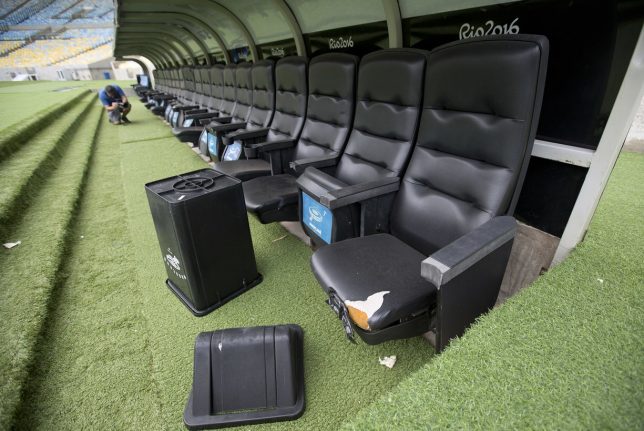
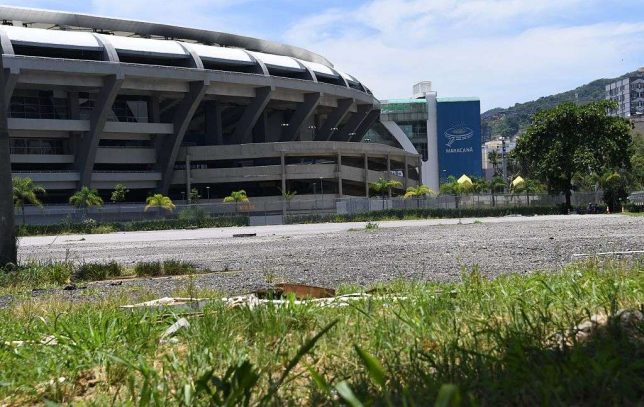
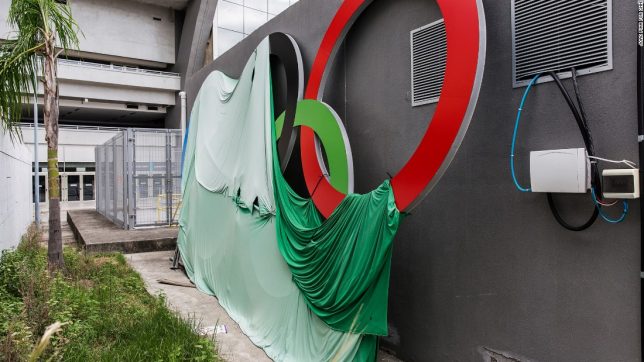
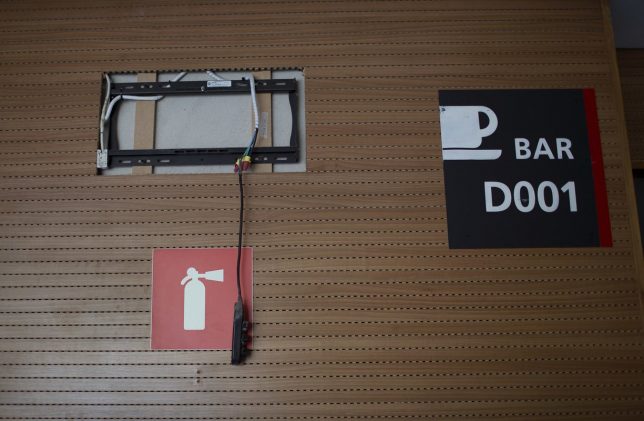
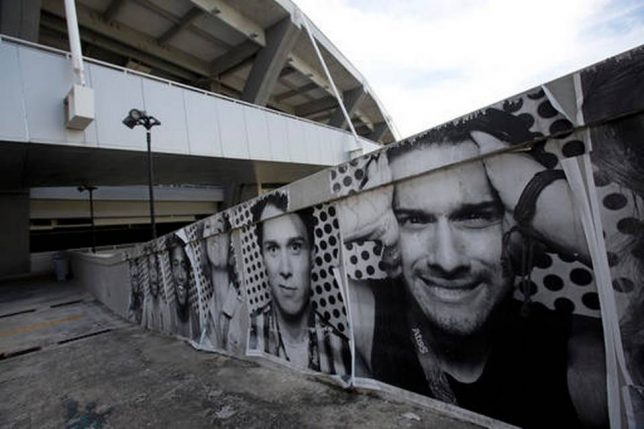
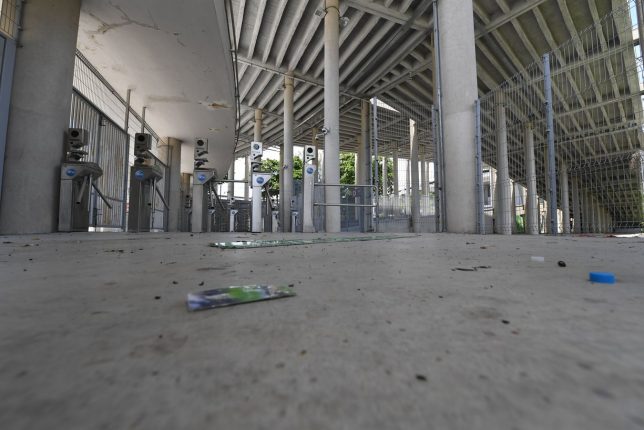
    Barely completed in time, venues at the 2016 Summer Olympic Games in Rio de Janeiro, Brazil are going south in a big way now that the athletes have left.

    abandoned-rio-olympics-1m

    The Games of the XXXI Olympiad – Rio 2016 for short – were meant to do for Brazil what the 2008 Summer Olympics in Beijing did for China: announce the host nation’s arrival on the world stage.

    abandoned-rio-olympics-1a

    abandoned-rio-olympics-1l

    abandoned-rio-olympics-1e

    Critics of Rio’s winning bid were placated by that old chestnut; “hosting the Games will bring improved infrastructure and services that will benefit residents far into the future.” So how’s that working out, less than a year after the circus left town?

    abandoned-rio-olympics-1i

    abandoned-rio-olympics-1f

    abandoned-rio-olympics-1g

    Rio’s Olympics weren’t all that popular with cariocas (Rio de Janiero-ians) from the get-go, and let’s recall that Brazil’s economy was booming back in October of 2009 when the Games were awarded. In 2014, a massive financial scandal coupled with the onset of Brazil’s worst economic recession since 1990 put a huge financial squeeze on preparations for the Games. With funds tighter than a gymnast’s tendons, corners were cut and, well, you know the story – it’s a wonder the Games were as problem-free as they appeared on TV.

    abandoned-rio-olympics-1j

    abandoned-rio-olympics-1k

    abandoned-rio-olympics-1d

    Good thing Rio’s poorer residents had so much to look forward to once the Games ended. Too bad their hopes focused on looting the lightly-guarded facilities of anything valuable – payback, of a sort, for their sense of disenfranchisement and a conviction that the only ones to benefit from the Olympic Games were the rich and powerful. These images depict the jewel in Rio’s Olympic crown, Maracanã Stadium, mere months after the Games ended with a bang at the Closing Ceremonies.

    Next Page – Click Below to Read More:
    Amazon Calm Rios Deteriorating Olympic Games Venues

    Share on Facebook


    [ By Steve in Abandoned Places & Architecture. ]

    [ WebUrbanist | Archives | Galleries | Privacy | TOS ]


    WebUrbanist

  • The Crying Forest: Faces of Indigenous Brazilians Fill the Amazon Rainforest

    [ By SA Rogers in Art & Installation & Sound. ]

    crying-forest-main

    Many times larger than life, the faces of indigenous Brazilian people illuminate the darkened Amazon Rainforest, projected directly onto the trees as a symbolic representation of their connection to the land. The Suruí Tribe, led by chief Almir Surui Narayamoga, are being displaced by massive deforestation that has already destroyed nearly 20% of the forest over the past 40 years, with another 20% projected to be lost within the next 20 years.

    crying-forest-3

    crying-forest-1

    The chief invited French photographer and street artist Philippe Echaroux to bring attention to the plight of the tribe through land-based art. Capturing portraits of individual members of the tribe, Echaroux enlarged the images and projected them onto trees in the village’s section of the rainforest in strikingly beautiful and often eerie compositions.

    crying-forest-2

    crying-forest-4

    “Victims of massive deforestation and gold washers who did not hesitate to violate the Surui’s territory to seize deposits of precious stones, the Surui people want to raise awareness of this horrible and greedy slaughter that endangers a territory and its people,” says Echaroux.

    crying-forest-5

    crying-forest-6

    The installation, entitled ‘The Crying Forest,’ was never meant to be seen in person by the public. It’s almost like a private ceremony just for the forest and the people who know it so intimately – but photographs of the display will be on exhibit at the Taglialatella Gallery in Paris from November 10th through December 15th 2016. You can catch more of Philippe Escharoux’s work on his Instagram.

    Share on Facebook


    [ By SA Rogers in Art & Installation & Sound. ]

    [ WebUrbanist | Archives | Galleries | Privacy | TOS ]


    WebUrbanist