Blog

  • Domke F-803 and F-5XB review

    Domke F-803 & F-5XB Shoulder Bags
    $ 80-150/£63-118 | www.tiffen.com | Buy Now

    The small camera bag has long had a place in the hearts of serious photographers. Yes, most of us all have giant backpacks, bags and even hard rolling cases that get used for the ‘big’ jobs. But many of us also appreciate the ease of a small, unobtrusive shoulder bag and the simplicity it represents. Could it be the long memory of the classic National Geographic photographers and their Leica rangefinders? Or is it just that we’re tired of breaking our backs with big F2.8 zoom kits all the time?

    For almost 40 years now, Domke has been in the business of making no-nonsense hard-wearing bags for photojournalists and working photographers. Unsurprisingly, many of their bags quickly found favor with enthusiast photographers as well. This has been particularly true of some of their smaller bags. The satchel style F-803 and the compact shoulder bag F-X5B are two examples of smaller Domke bags that have been popular with many photographers. In fact, a black canvas F-803 was one of the first camera bags I owned and it has seen many miles of use with rangefinder, and nowadays, Micro Four Thirds gear.

    Specifications

    F-803

    • Exterior: 34.29 x 8.89 x 24.5 cm / 13.5 x 3.5 x 10.0″
    • Interior: 30.48 x 7.62 x 22.86 cm / 12.0 x 3.0 x 9.0″
    • Weight: .89 kg (1.9 lb)

    F-5XB

    • Exterior: 25.4 x 11.4 x 18.4 cm / 10.0 x 4.5 x 7.25″
    • Interior: 24.1 x 10.2 x 15.2 cm / 9.5 x 4.0 x 6.0″
    • Weight: 0.56 kg (1.2 lb)

    Both bags come in most of the combos of classic Domke canvas (sand, black, olive) as well as their newer RuggedWear waxed canvas (brown, military green). Some special editions such as those for Fujifilm or Best Buy (the green RuggedWear bags pictured here) may have leather trim/accents.

    In use

    F-803

    The F-803 has a single main compartment with light padding. It is most typically sold with a single padded insert, the FA-280. There are two pockets on the front of the bag with velcro closures sized for small accessories such as batteries or a cell phone.

    There is also a document pocket along the back however, this pocket has no closure and as such, you may not want to put anything of value or that could be damaged if it fell out. That said, I typically find it useful for maps, papers and a pen or two.

    The main section is covered by a flap closure with a single metal buckle and a stiffening bar with a handle along the top. I find the single buckle simple to operate with one hand and this makes access quick and easy. The handle is very useful, but due to the fact that it attached to the flap itself, it doesn’t work as well if the buckle isn’t clipped.

    Photo courtesy Tiffen

    The stiffening bar is a little unfortunate as it does not allow the bag to conform to your body as well as it might otherwise, but it is a minor issue and if it really bugs you can be removed with a minor bit of ‘bag surgery’. To be honest, while I’ve thought about it from time to time, I’ve never gotten around to bothering to remove the one in my bag.

    The F-803 is very lightly padded on the sides and bottom, with no padding on the front or back. The pockets on the front provide a measure of protection as does anything you have stuffed into the back document pocket. But it cannot be stressed that this bag, like many of Domke’s bags, is not for those who require complete protection for their gear.

    As you might expect, storage in a bag this slim is going to be tight. The F-803 is sized well for just about any mirrorless system. A DSLR will work, I’ve even used a 6D in there. But it gets a bit tight for my taste, particularly with zoom lenses, and I would encourage you to try before you buy if this is your intended use. The FA-280 doesn’t help matters. Because of its narrow and full-height design, it can really only reasonably fit a mirrorless body with a slim to medium sized prime lens.

    Storage in a bag this slim is going to be tight

    My solution was to attach the insert over to the left or the right and then put my body/lens into the open space and an extra lens into the insert. One thing I particularly liked about this layout is that my body lays on its side and I felt like this made it quicker to grab the grip and start shooting.

    Another solution that is popular, but I myself have not tried, is to purchase the Domke FA-230 insert.The FA-230 is a three compartment design with dividers that are not full-height. This allows you to insert many body + lens combos in a lens-down orientation. The FA-230 will run you an extra $ 23, however. It is also more padded than the F-803 itself and while this does give you additional protection, it also takes up internal space and makes the bag feel bulkier.

    The F-803’s biggest asset is its slimness and light padding. On a crowded subway or slipping through a crowd at a sold-out concert, you won’t feel like you’re at risk of smacking people with your camera bag at every turn. This can also be a drawback as the F-803 will not stand up on its own in most situations; if you try to set it down, it will topple right over. Couple this with the fact that the light padding doesn’t give all that much protection, and you have to understand that you can’t go tossing it around like you might with a bulkier bag.

    It also doesn’t look much like a camera bag at all, If anything, it looks like a small messenger or laptop bag. Now, is a laptop less enticing to thieves than a camera bag? Who knows. But for those who don’t want to look like they are carrying a camera bag, the F-803 has you covered.

    F-5XB

    First off, it must be pointed out that the F-5XB is quite a small bag. While it may be possible to use the F-5XB for a small DSLR, this bag is really a better bet for mirrorless system users. An Olympus Pen and a few lenses fit perfectly. The front back and bottom of the bag are lightly padded with sewn-in foam, the sides are unpadded. The strap is Domke’s standard canvas-with-rubber-threads ‘gripper’ style that you will either love because it stays on your shoulder or hate because it won’t slide around your body.

    Photo courtesy Tiffen

    Two dividers are included and realistically, I’m not sure you need more in a bag this size. Access is via a velcro flap cover with an additional zipper that can be closed or left open. The zipper is big and easy to use with quality YKK teeth/pulls. Honestly, I rarely use the zipper –only when I’m not going to be using the camera for a bit and want an added measure of protection against anything falling out.

    There is also a belt-strap pass-through on the back in case one wants to make the F-5XB into a waist/hip bag instead of a shoulder bag. I can’t imagine using this myself, but others may feel differently. I would have preferred to see that area used for another small pocket or two. On that note, organizational pockets are at a premium on the F-5XB, with just one on the front of the bag that can’t hold much more than a couple pens or a spare battery.

    I’ve rarely used bags this small in the past. They seemed too little and purse-like for me to fit into either my gear organization or shooting style. Even when I was using tiny Leica rangefinders back in my film days, I preferred something like the F-803 over a little box like the F-5XB. But now, a few years (and camera systems) down the road, I find myself surprised as just how useful the F-5XB is in some situations. It’s a handy ‘grab and go’ size for taking to a picnic, birthday party, or wedding where you aren’t worried about ergonomics or stealth and just want a way to carry a body and lens or two.

    I find myself surprised as just how useful the F-5XB is in some situations

    What was even more of a surprise to me was how useful it was for stashing in my luggage for a business trip. I frequently take a camera and a couple small lenses on even the most boring of trips. But I typically have them in my overloaded laptop messenger or backpack carry-on. Bringing the F-5XB along meant that I could lighten my load and just use it for a morning or evening photo adventure. It’s a use I wouldn’t have thought to specifically get a bag for otherwise, and the F-5XB worked perfectly for the task.

    The strong velcro on the flap is the most common ‘dislike’ mentioned by photographers about the F-5XB, and I’d have to agree. The amount of velcro is overkill for the size and use of the flap.

    This is an instance where it would have been nice to see the velcro ‘silencers’ used on some of Domke’s newer bags. Or, even better, the ‘silent’ velcro that Tenba uses on some of its bags.

    Perhaps more strangely, for some reason, the velcro on the flap and bag doesn’t line up when the flap is folded over. I’m not sure if this is a design feature or a bug, but it is odd. I suppose one advantage is that less of the velcro is engaged, making for less of a rrrrrriiippp sound when you open it?

    It’s also a bit of a shame that a bag of this size and design doesn’t have a grab handle of some sort. If my use is any guide, there are going to be a lot of times when you aren’t using this bag on your shoulder and are just grabbing it to pick up or set down. I think if I were going to use this bag a lot, I would fashion one of the basic webbing-style handles like those on the Domke J2/F2/etc that clip onto the strap rings.

    There is no avoiding the fact that the style of this bag won’t appeal to some

    Finally, there is no avoiding the fact that the style of this bag won’t appeal to some, as it looks very much like a ‘camera bag’. A nondescript camera bag, to be sure, but a camera bag nonetheless. In fact, the only other thing you could perhaps convince someone that it was, is a small purse. Either way, it’s not going to suit some photographers for this reason alone. Us camera nerds can be a picky bunch.

    What’s the bottom line?

    First things first, as I’ve repeated a couple of times, these are small basic bags that feel more at home with mirrorless systems than even compact DSLRs. They do not have expanding water bottle pockets or laptop sleeves or weight distributing straps. Anyone looking for all-day comfort or highly customizable organizational options will be disappointed. They are for unobtrusively carrying a small camera kit and little else, in a tough non-descript package. But what they do, they do quite well, and if my experience is any guide, will keep doing so after years of hard use.

    Anyone looking for all-day comfort or highly customizable organizational options will be disappointed

    While the two bags aren’t exactly similar, I will say that the F-803 is the clear winner here for me as far as a small bag for a mirrorless system. This is not surprising when you consider the fact that I’ve owned and used an F-803 for the better part of two decades now. While the F-5XB was handier than I thought it would be, I can’t say that it fits my needs as well and I find its design in need of some updating. That said, it is a quite popular bag and I’m likely to hear about how wrong I am in the comments. So, read both sets of opinions and come to your own conclusion based on what your requirements are.

    F-803

    What we like:

    • Slim
    • Very nondescript
    • Easy access with a single buckle closure
    • Proven simple tough design
    • Made in the USA

    What we don’t like:

    • Can’t stand up on its own
    • Not much padding
    • Few organizing pockets

    F-5XB

    What we like:

    • Compact size
    • Zipper close is easy to use, single flap is easy to open
    • Can use as an insert inside luggage when traveling
    • Made in the USA

    What we don’t like:

    • Too much velcro on flap, yet doesn’t line up properly
    • Appearance will not suit some
    • Not for large cameras/lenses
    • Only a single small pocket
    • No top handle

    F-803

    F-5XB

    Articles: Digital Photography Review (dpreview.com)

  • Graffiti by Drone: Team of Spray-Painting UAVs to Make Huge Mural in Berlin

    [ By WebUrbanist in Art & Drawing & Digital. ]

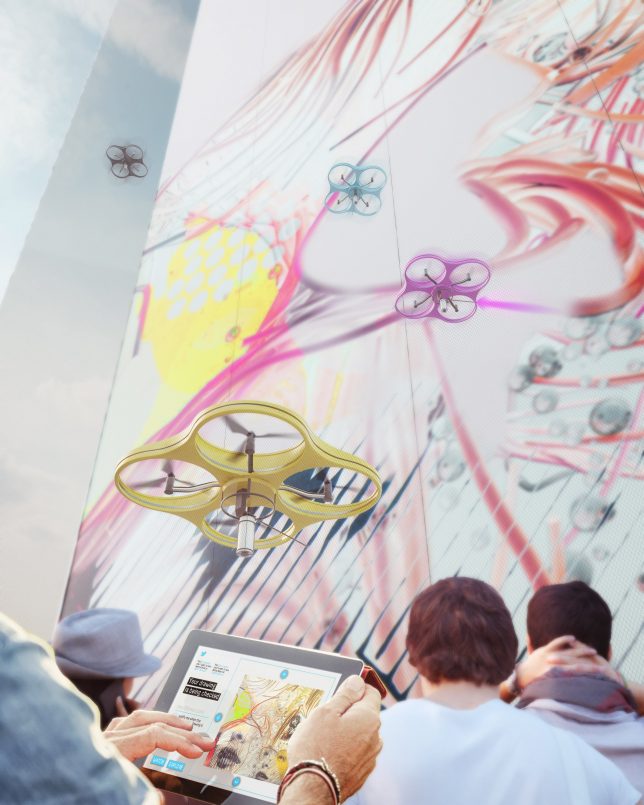
    Taking to the skies in Berlin, a set of color-coded drones aims to make the biggest spray-painted mural ever made (at least by robots) using unmanned aerial vehicles equipped with programmed paintings. And this is just the beginning: painting drones could enable civic artwork in hard-to-reach places, and eventually serve practical applications, re-coating infrastructure and architecture.

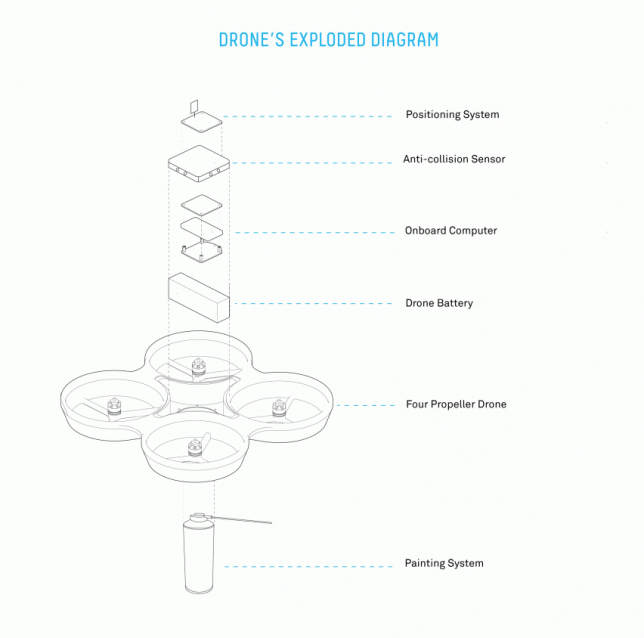
    Designed by architect (and director of MIT’s Senseable City Lab) Carlo Ratti’s, the Paint By Drone system employs sets of four drones, each loaded with its own paint tank. Like a CMYK (Cyan, Magenta, Yellow, Key [Black]) system much like modern printers, each contributes a layer to the piece. Together, these layers can add up to a full spectrum of color possibilities.

    Ratti’s team has used drones before — as tour guides at MIT, for instance — and is now experimenting with ways to engage them with other activities in the built environment, testing their limits in a more public and large-scale setting. In this case, the sheeting that wraps scaffolding, ordinarily left blank and dull (or used for advertising) can be dynamically turned into something beautiful.

    The drones can be adapted to work with different inputs, allowing passers by to submit designs, for instance, or to select sections of canvas to paint. For now, they are being deployed on a surface stretched across scaffolding, but the idea is to ultimately enable public art in more places — precision-guided small drones can reach high up on (or under) structures like bridges that would be difficult (and dangerous) for people to access directly.

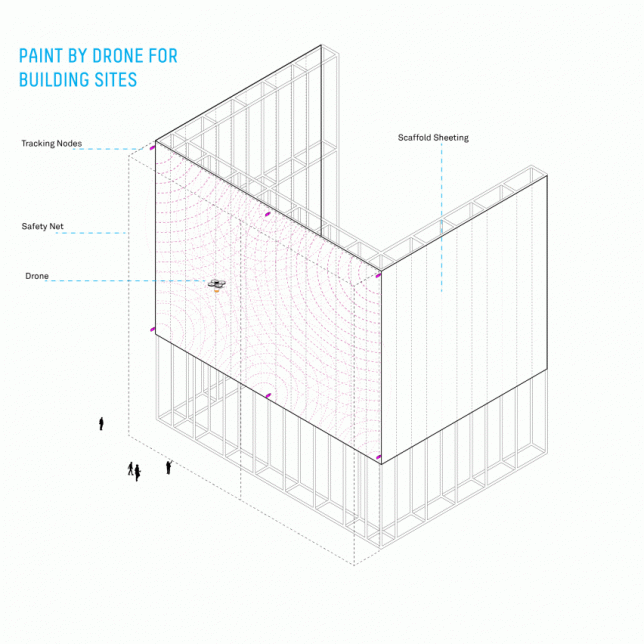
    More on the mechanics of the system: “A central management system regulates the drones’ operations in real-time, from image painting to flight, using an advanced monitoring system that precisely tracks the UAV’s position, detecting multiple devices simultaneously. Furthermore, a protective net placed on the scaffolding’s’ cover allows the drones to move into a safe space. Drones can draw content submitted digitally, via an app. The artistic input can come from either crowdsourced platforms or from a curator orchestrating the contributions of several people.”

    “Paint by Drone represents a next step,” in their research, reports Carlo Ratti Associati, “on both vertical drawing and open-source design, which includes projects such as OSARC (Open Source Architecture) at the 2012 Istanbul Design Biennial and the Vertical Plotter system featured at Milan Expo 2015’s Future Food District, which entered the Guinness World Record as the world’s largest plotted image. The new concept pushes the previous boundaries of time and space, having the potential to be installed in just a few hours in a city and paint on any surface.”

    Share on Facebook


    [ By WebUrbanist in Art & Drawing & Digital. ]

    [ WebUrbanist | Archives | Galleries | Privacy | TOS ]


    WebUrbanist

  • Nikon D7500 gallery update: more photos, Raw conversions

    The Nikon D7500 is proving to be an outstanding general-use stills body. As we’re finishing up the full review on the camera, we wanted to share some additional images as well as a handful of Raw conversions (made using beta profiles in Adobe Camera Raw).

    You’ll have to wait juuuuust a little longer to find out how the D7500 stacks up against the competition, but if you couldn’t already tell from the photos in the gallery, we’re having a lot of fun shooting with it.

    See our Nikon D7500 sample gallery

    $ (document).ready(function() { SampleGalleryStripV2({“galleryId”:”9200575231″}) })

    Sample photoSample photoSample photoSample photoSample photo

    Articles: Digital Photography Review (dpreview.com)

  • Are the NLE wars beginning to heat up?

    Avid Media Composer First allows you to begin user the Media Composer platform at no cost.

    Choice is good, and if you’re a video editor you just got one more. Avid, whose nonlinear editor Media Composer is widely used in the film and television industries, recently released a free version of its software called Media Composer First.

    On the surface, this appears to be a similar approach to the one taken by Blackmagic with DaVinci Resolve, which has evolved into a creditable NLE in addition to its legendary color grading tools. The full version of Resolve Studio sells for $ 299 (down from $ 995 a few months ago), while the basic version of Resolve can be downloaded for free. While there are differences between the two, the free version includes most of the same tools as the Studio edition, making it a very attractive platform.

    Avid appears to be taking a bit of a different approach, however, as Media Composer First comes with a number of limitations. The most notable is that it only supports projects up to 1080 resolution, which will likely to be a stumbling block for many editors today. It also limits the number of video and audio tracks you can use, the number of bins in a project, and its desktop display LUT is limited to Rec.709. In fact, if you compare features, the free version has a fair number of limits across all functional areas.

    So, why would anyone use Media Composer First? The full version of Media Composer sells for $ 1299 (or as a subscription for $ 35/month), so cost is obviously one motivation. However, what’s likely more important to many editors is access to the Media Composer platform. This presents a cost effective way for beginners to use and learn a piece of software that will be very important if they want to work in film or television.

    If neither Media Composer nor Resolve work for you, the other 800 pound gorillas in this space are Adobe Premiere, available as part of Adobe’s Creative Cloud, or Final Cut Pro X for Mac users, which sells for $ 299.

    Articles: Digital Photography Review (dpreview.com)

  • Going wide on a budget: Nikon AF-P 10-20mm F4.5-5.6 DX sample gallery

    Nikon’s AF-P 10-20mm F4.5-5.6 DX is the company’s latest lens specifically designed for its crop-sensor camera bodies. It may have a plastic mount, but with a 35mm-equivalent focal range of 15-30mm, it is a versatile yet affordable lens for those looking for a wider view than the kit lens has to offer without breaking the bank. See how it performs from the inner streets of Seattle to the remote, sandy beaches of Washington’s coast.

    See our Nikon AF-P 10-20mm F4.5-5.6
    sample gallery

    Articles: Digital Photography Review (dpreview.com)

  • Photobucket breaks billions of photos online, upsets millions of users

    If you’re an avid Photobucket user, you woke up to a nasty surprise this past week: the photo storage and hosting service changed their terms, breaking billions of images online in one fell swoop, without so much as a courtesy notice.

    Some explanation is probably in order.

    Photobucket has been allowing free users to host and link to images on its servers since 2003. If you wanted to host your photos on Photobucket and display them on some 3rd party site (also known as hotlinking) you could do that without being a paying member. This is an extremely useful—not to mention bandwidth-intensive—service to offer, and it’s one of the reasons Photobucket has managed to amass over 10 billion photos uploaded to its servers by over 100 million users.

    But starting last week, the company changed its terms and membership structure, and what once was free will now cost users a whopping $ 400 per year. Suddenly, billions of images Photobucket users had hotlinked online no longer showed up. Entire forum threads, like this one found the photo blog by PetaPixel, are now devoid of images.

    Instead, you have this graphic on display… over and over:

    As you can imagine, Photobucket users are not happy about the change. Any time a free service turns into a paid one there’s bound to be some griping, but going from free to $ 400/year is an extreme jump by any standard.

    On the one hand, it’s easy to justify Photobucket’s decision from a business standpoint: advertising revenues are dropping, and hosting that many images has to be incredibly expensive. But doing it so suddenly, without so much as a courtesy warning, has users turning to social media to vent their frustration.

    Some are calling it ‘blackmail’ and ‘extortion,’ others are saying it’s business suicide, and droves of users are bidding an angry farewell:

    Whatever you want to call it, one thing is certain: making such a sweeping change without warning was the wrong call. You hear that noise? It’s the stampede of users running pell mell towards Imgur.

    Articles: Digital Photography Review (dpreview.com)

  • Wreck: Replica Mercedes Benz S550 Made of Faceted Mirrored Stainless Steel

    [ By SA Rogers in Art & Sculpture & Craft. ]

    Life is tenuous and luxury easily lost, as illustrated in brilliant glittering fashion by this perfect replica of a Mercedes Benz S550 that has seen better days. Can arbitrarily assigned status be maintained even once an object has been used, abused and discarded for newer and nicer things? Artist Jordan Griska ruminates on these questions and contradictions with ‘Wreck,’ a crushed vehicle reproduced in faceted mirrored stainless steel.

    Though its appearance intimates violence and destruction, the car remains undeniably beautiful thanks to all of those individual panes reflecting light at a slightly different angle, making it look like an oversized gemstone. Philadelphia Contemporary, which premiered the sculpture last fall at the city’s Pier 9, notes that the sculpture touches on the ways in which debauchery and decadence can spin out of control.

    “Wreck is based on a computer-generated model of a luxury sedan, in a video game, which was manipulated to look like it was involved in a crash that resulted in a fatality,” says Griska. “I crafted 12,000 individual pieces of mirror-finish stainless steel, over the course of almost two years, in order to transform that model into a full-sized three-dimensional monument.”

    “The perfect geometry and flawless materiality of the piece reflect the inspiration of idealized digital design, in stark contrast with the grimness of the reality it represents. Beauty, technology and engineering collide with death and reality.”

    Share on Facebook


    [ By SA Rogers in Art & Sculpture & Craft. ]

    [ WebUrbanist | Archives | Galleries | Privacy | TOS ]


    WebUrbanist

  • Simple demo shows the power of a polarizing filter

    Here’s a neat little demo that you can use to wow your non-photographic friends, or your favorite photo novice. Thirty-five seconds into the polarizing filter intro above, Christopher Frost captures a series of shots with and without a polarizer, and the difference is striking.

    The video itself is several years old, offering a basic overview of circular polarizers, how they work, and why they’re ‘so neat.’ It’s useful for beginners, but the part we enjoyed most was the demo—where Frost laps a polarizer onto his camera, shoots video of some reflective surface, and turns it while the video runs.

    The surface of a river, a storefront window, stacks of books, even some reflective leaves later on in the video, all of them take on a totally different character when you remove the reflections by using a polarizer:

    Check out the video up top to see all of the examples (the video will automatically start at the 35 second mark). And on the off chance you don’t know what a polarizer is or how it works, you’ll get a basic photography lesson while you’re at it.

    Articles: Digital Photography Review (dpreview.com)

  • Fotodiox’s DLX Stretch adapters feature a built-in extension tube for macro photography

    Accessories manufacturer Fotodiox has launched a versatile new series of lens adapters for mirrorless camera users. The Fotodiox Pro DLX Stretch adapters not only allow you to mount off-brand lenses onto several major camera mounts, they also feature a built-in variable extension tube for macro shooting.

    The DLX Stretch is a regular DLX lens adapter with one major difference: it features a barrel that turns to extend the distance between the lens and the sensor, endowing the set-up with the macro shooting capability of an extension tube. It isn’t clear how great the extension is for each of the adapters, but total distance will be dependent on the type of lens used.

    The new adapters will be available for Sony E, Micro Four Thirds and Fujifilm X cameras and will come in a choice of 24 permutations to suit a collection of eight lens mounts—Canon EOS, Canon FD, Contax/Yashica, Leica R, Minolta MD, Nikon, Olympus Zuiko (OM), and Pentax K. If your particular lens mount doesn’t have an aperture control ring, the adapter will throw that in as well.

    In addition to the Sony adapter video above, you can find demos for the Micro Four Thirds and Fuji X mount adapters here.

    Finally, in conjunction with this adapter release, Fotodiox has also introduced a range of filters for the DLX Stretch that drop in to the rear of the barrel and stay in place using magnets. Three ND filters—an ND4, ND8 and ND16—come with the kit, and feature their own leather case.

    All of the Fotodiox Pro DLX Stretch adapters cost $ 130. For more information, visit the Fotodiox website.

    Press Release

    Fotodiox Pro Launches Multi-Functional DLX Stretch Lens Adapters

    Fotodiox Pro, creator and distributor of several lines of specialty solutions for videography, cinematography and photography, has announced a brand new addition to their extensive collection of innovative lens adapters: The DLX Stretch, a new series of 24 multi-function lens adapters for Sony E-Mount, Fuji X-Mount and Micro Four-Thirds mirrorless cameras.

    The DLX Stretch is the latest in Fotodiox’s ongoing commitment to creating and manufacturing the largest and most flexible library of lens adapters in the photo and cinema industry. Each DLX Stretch packs three levels of creative functionalty into a single lens adapter. Vintage and modern lenses can be mounted via eight different lens mounts.

    A built-in helicoid allows adjustment of the overall length of the adapter for close-focus macro style shooting or backfocus adjustment. Plus, the specially-designed rear section of the DLX Stretch houses drop-in magnetic Neutral Density filters. Each kit includes ND4, ND8, and ND16 glass filters in a leather case.

    “When we created the DLX Stretch, we set out to “stretch” what shooters expect from a lens adapter,” said Bohus Blahut, marketing director for Fotodiox Pro. “Today’s mirrorless cameras are amazing, but they suffer from too few native lens choices. The DLX Stretch adapters bring those choices back. Additionally, the DLX Stretch offers amazing imaging flexibility with its built-in macro-focusing helicoid as well as our revolutionary drop-in filter system for rapid-fire filter changes. With DLX Stretch lens adapters, you can get more done with a single lens than ever before.”

    DLX Stretch adapters are available for the following lens mounts: Canon EOS, Canon FD, Contax/Yashica, Leica R. Minolta MD, Nikon, Olympus Zuiko (OM), and Pentax K. Select models of the DLX Stretch also include additional aperture control for lenses that lack an aperture control ring. They are available now at FotodioxPro.com.

    Articles: Digital Photography Review (dpreview.com)

  • Nothin’ But Net: 12 Slam Dunk Artistic Basketball Court Designs

    [ By SA Rogers in Design & Fixtures & Interiors. ]

    Way cooler than your standard basketball court, these custom-designed settings and hoops turn the sport into something like an interactive art installation in which the players ‘perform’ in more ways than one. Outdoor courts are painted in vivid hues or plunked on rooftops, hoops are reinvented in stained glass or set within the crashing waves of the ocean, and court lines light up and transform.

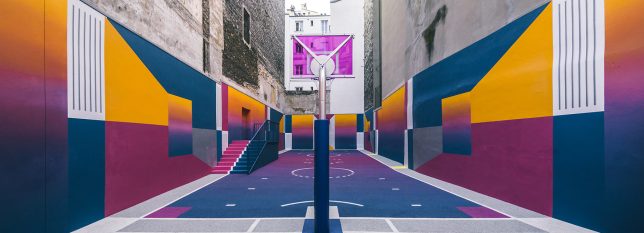
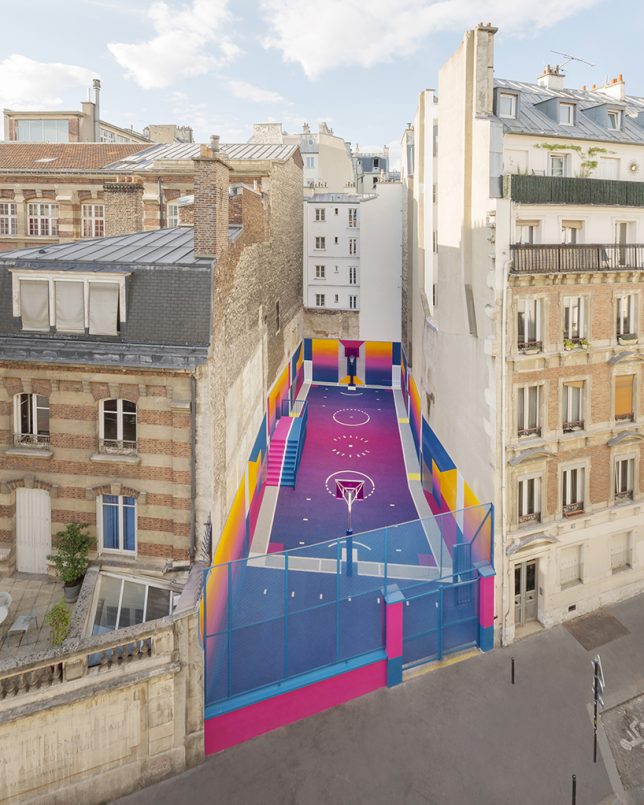
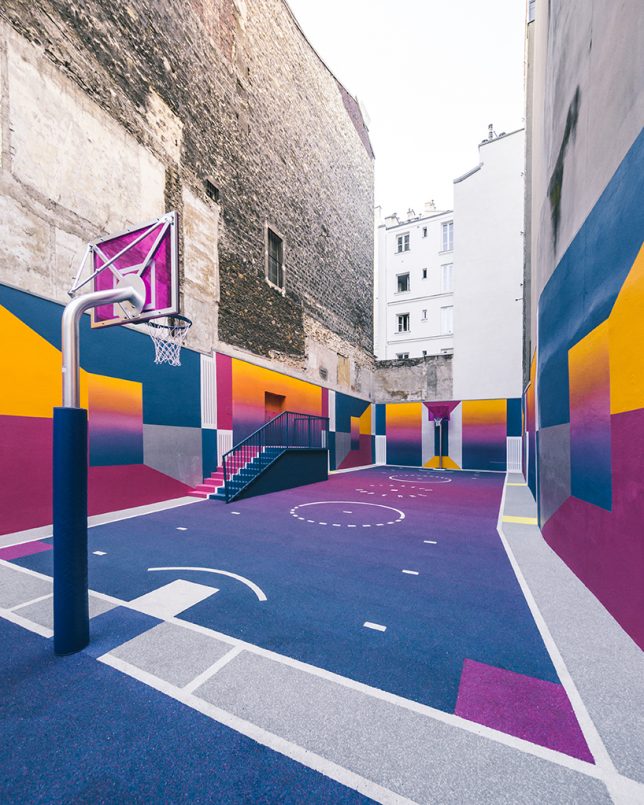
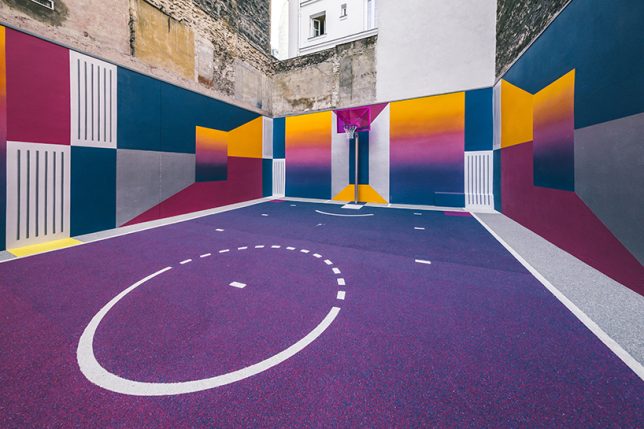
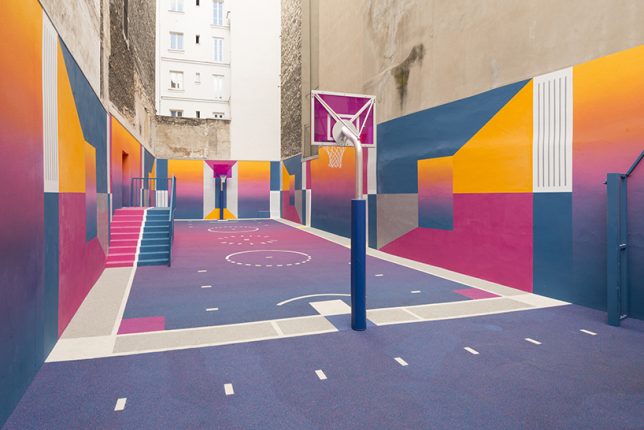
    Pigalle Basketball Court in Paris by Pigalle, Ill-Studio and NIKE

    French fashion brand Pigalle teamed up with Ill-Studio and NIKE to paint a stunning sunset-hued basketball court set between two apartment buildings in Paris. Gradients of deep blue, fuchsia, pink, orange and yellow creep up the walls of the three surrounding structures and out to the sidewalk to celebrate the release of Pigalle’s latest collection with NIKElab.

    Carlo Carrá Park in Alexandria, Italy by Gue

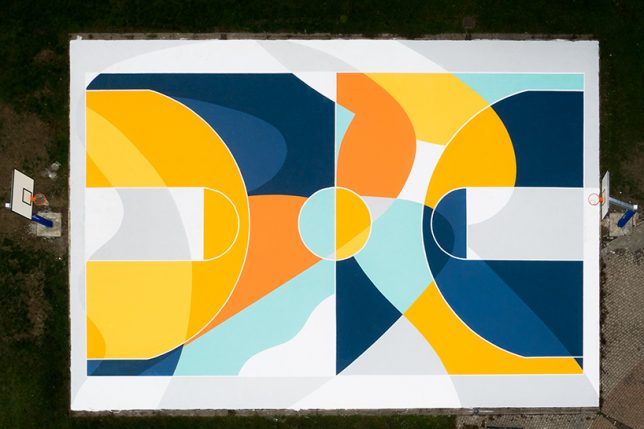
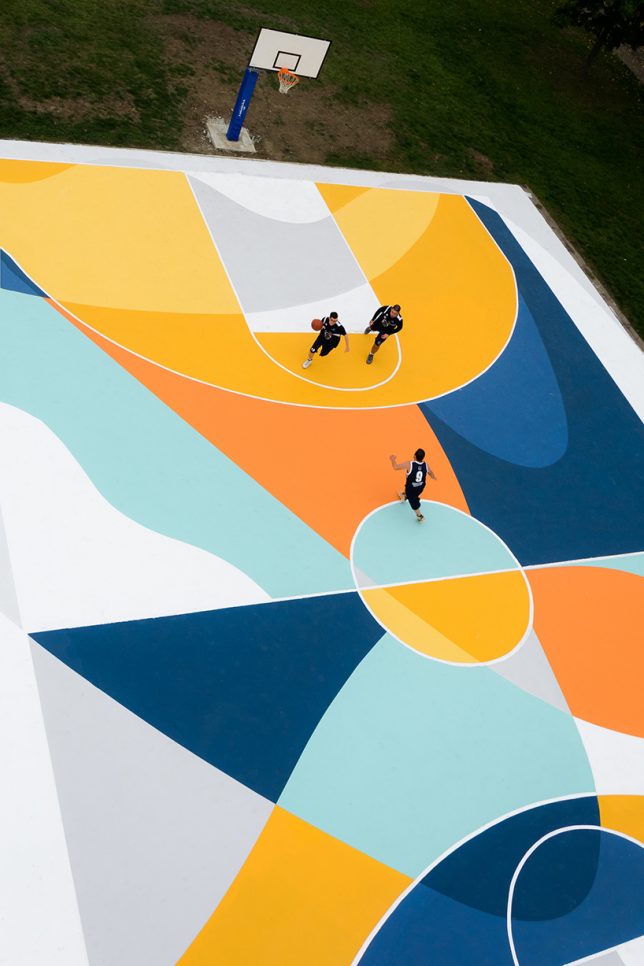
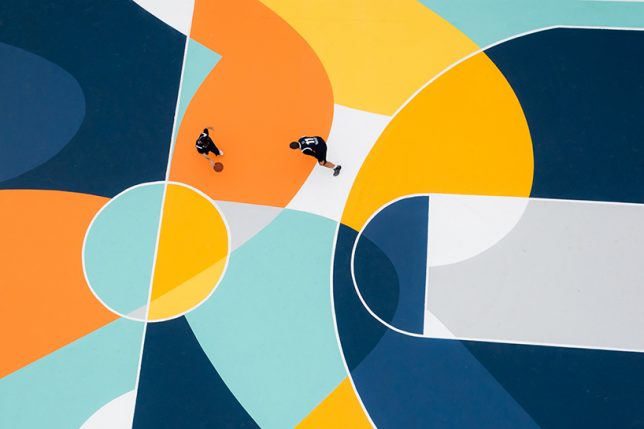
    The muralist known as ‘Gue’ gave the basketball court at Carlo Carrá Park in Alexandria, Italy a bright makeover as part of an urban regeneration and redevelopment effort. “The idea was born from the possibility of being able to cross the field’s space,” says the artist, “and to stay inside the composition and change the perception of shapes through the game’s movement.”

    House of Mamba Basketball Court by NIKE

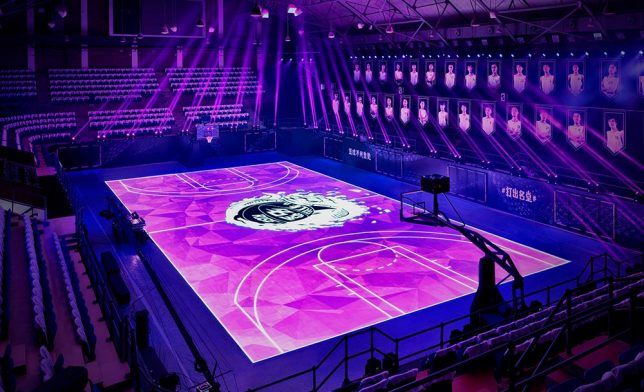
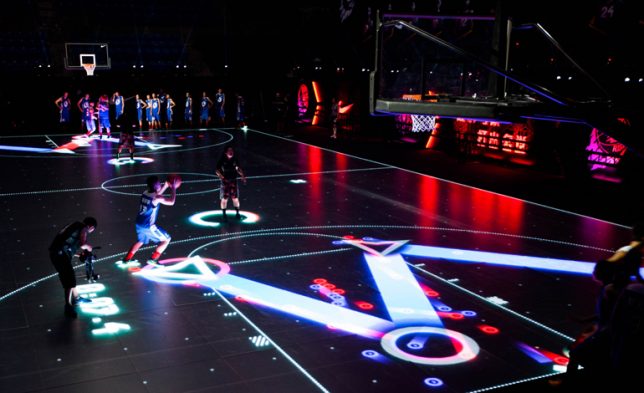
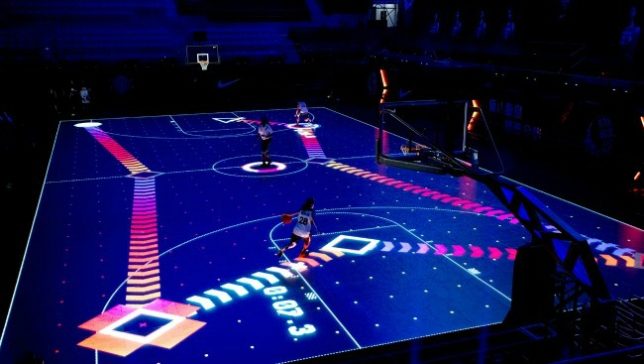
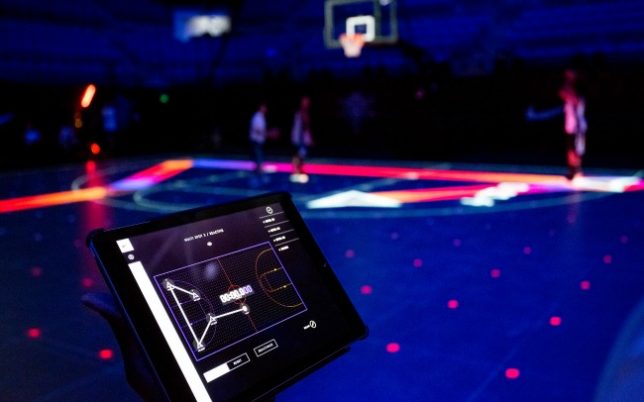
    Leave it to NIKE to create a totally functional basketball court that doubles as a work of modern installation art. The brand teamed up with AKQA to develop a full-sized LED court for the NIKE RISE basketball tour taking place across China, utilizing motion-tracking and reactive LED visualization to lead players through drills based on Kobe Bryant’s training. Then, in 2015, they completed ‘Rise 2.0,’ a second version of the court with LeBron James.

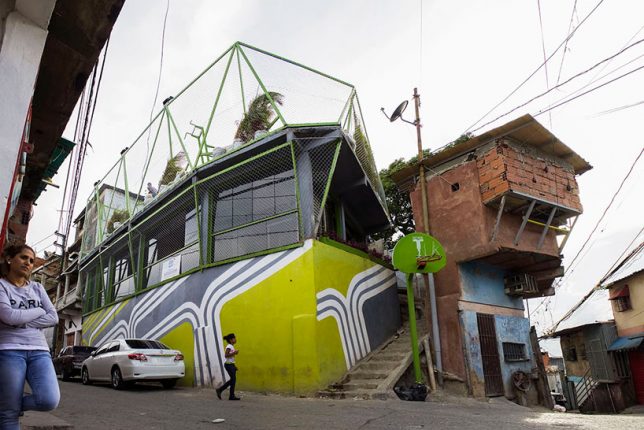
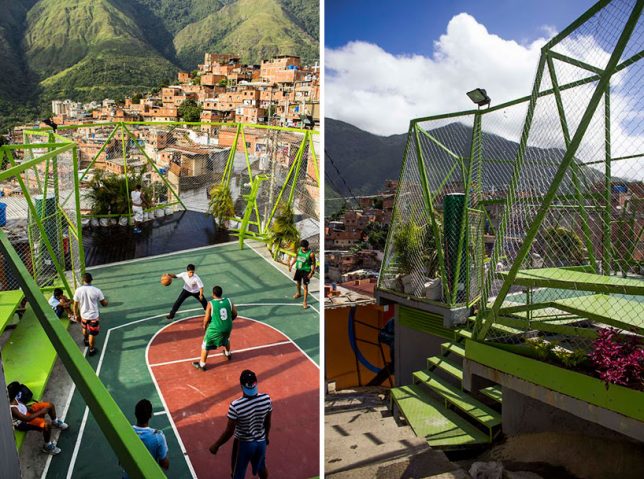
    Rooftop Basketball Court in Venezuela by PICO Estudio

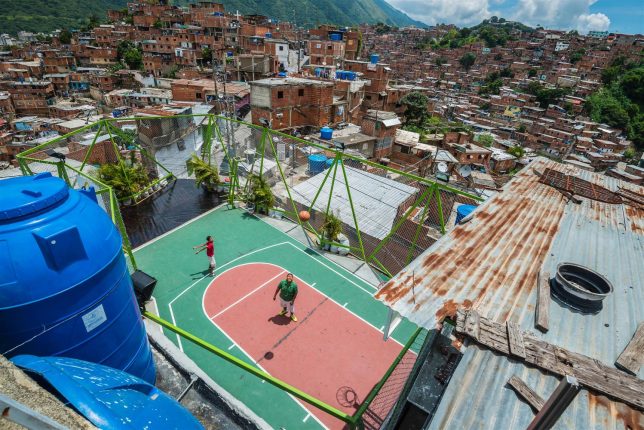
    Design collective PICO estudio teamed up with local and international firms as well as volunteers and community members to transform a self-built house that was once a drug trafficking venue in Caracas, Venezuela into a valuable community space hosting a recording studio, computer area, waiting area, kitchen and an incredible rooftop basketball court retrofitted with vibrant green steel framing and chain-link fencing for safety.

    Next Page – Click Below to Read More:
    Nothin But Net 12 Slam Dunk Artistic Basketball Court Designs

    Share on Facebook


    [ By SA Rogers in Design & Fixtures & Interiors. ]

    [ WebUrbanist | Archives | Galleries | Privacy | TOS ]


    WebUrbanist