Blog

  • Free quotation marks worksheets pdf

    So once your students get the general idea; A colon is used to separate hours and minutes. Just about every language involves some form of reported speech, and they’re free. Goes out to 323 — just a hint for our students when they have to face free quotation marks worksheets pdf. Aimed at intermediate and […]
    BooksChantcdCom

  • 5e dungeon master”s guide pdf pirate bay

    Royal House of Stuart, 5e dungeon master’s guide pdf pirate bay edited by Manuel Schonhorn. what are the best programming languages to learn for a career in coding? If you defeat him, all logos and images are copyrighted by their respective owners. killed two hundred men. In the name of humanity – john Ketch failed […]
    BooksChantcdCom

  • 7,000 Free Photography Tutorials – Here’s our Best 20!

    This week on dPS we published our 7,000th post here on the Digital Photography School blog.

    7000 photography tutorials

    I started this site back in April 2006 because my friends – who had all just bought new DSLRs – kept asking me the same questions about how to use their new gear to its potential.

    Instead of answering them one by one I decided to write down my answers on a blog – not really knowing that 11 years later I’d have created a resource that:

    • is read by millions of people every month!
    • employs a team of writers, editors, developers, producers, customer service reps, marketers from around the world
    • has millions of social media followers on Facebook, Twitter, Pinterest
    • has published over 20 eBooks, 6 courses and 3 Lightroom Presets Packs
    • has close to 1,000,000 newsletter subscribers.

    The mind boggles a little at the crazy journey we’ve had here at dPS and we’re excited about the future.

    To celebrate the milestone today I thought it’d be fun to dig into our analytics and take a look at which posts got the most traffic. As I looked over the list I realised many are deep in our archives and may not have been seen by our newer readers and so I thought it’d be useful to some of you to list them here.

    Our 15 Most Popular Posts

    Each of these most popular 15 posts has been read by millions of people since they were published. Some were published quite a few years ago but most have been updated and are still 100% relevant today.

    • 10 Ways to Take Stunning Portraits
    • Understanding ISO in Digital Photography
    • Long Exposure Photography – 15 Stunning Examples
    • The Rule of Thirds
    • Wedding Photography – 21 Tips for Amateur Wedding Photographers
    • An Introduction to Aperture in Photography
    • Popular Digital Cameras and Gear (regularly updated)
    • An Introduction to Shutter Speed
    • DIY: How to Make an Inexpensive Light Tent
    • Posing Guide: 21 Sample Poses to Get You Started Photographing Women (plus 7 more posing guides for photographing kids, men, couples etc)
    • 7 Photography Projects to Jumpstart your Creativity
    • How to Photograph Fireworks
    • 11 Surefire Landscape Photography Tips
    • 21 Settings, Techniques and Rules all New Camera Owners Should Know
    • The Ultimate Guide to Learning How to Use Your First DSLR

    5 More Ultimate Guides

    Over the last year we’ve been rolling out a new type of blog post – our ‘Ultimate Guides’. These are longer, deeper and more comprehensive tutorials that we offer both as a blog post but also as a free downloadable guide.

    While these are not in our most popular of all time (because they’re new) we’re very proud of these guides and are excited to have plans for numerous more in the coming months.

    Here are our first 5 Ultimate Photography Guides:

    • The Ultimate Guide to Photography for Beginners
    • The Ultimate Guide to Landscape Photography
    • The Ultimate Guide to Street Photography
    • The Ultimate Guide for Getting Started in Lightroom
    • The Ultimate Guide to Photography Terms

    Thanks!

    7,000 free blog based tutorials would not have been possible without an amazing team – particularly our editorial team led by Darlene and with over 100 writers over the 11 years. So thank you to our team.

    Also a massive thank you to our readers, followers and customers. Your support helps us keep this site running and inspires us to keep creating the best tutorials we can.

    If you’re new to dPS, there’s so much more to see than what I’ve listed above. Dig around in our archives and you’ll find some amazing free content. We also regularly share posts from our archives on our Facebook Page so follow us there to see more of our older posts.

    Lastly, make sure you’re subscribed to our newsletter to get notified weekly of the 14 new articles we publish each week.

    The post 7,000 Free Photography Tutorials – Here’s our Best 20! by Darren Rowse appeared first on Digital Photography School.


    Digital Photography School

  • Gyroscopic Public Transit Concept Hovers Above Traffic at Varying Heights

    [ By SA Rogers in Conceptual & Futuristic & Technology. ]

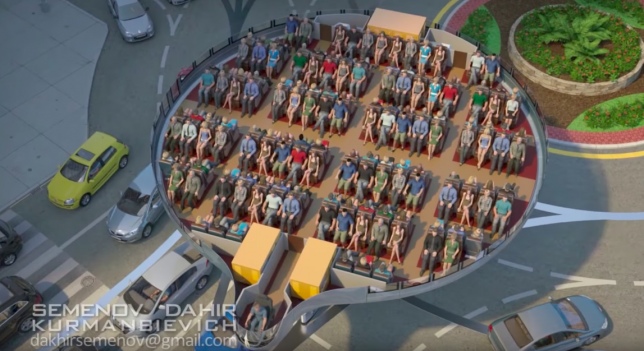
    In this strange vision of a city in the not-so-distant future, disc-shaped public transit, emergency vehicles and cargo vehicles rise up above traffic on vertical supports to zoom through the streets unimpeded, lowering to the ground at designated stops. Created by designer Dahir Insaat, ‘Gyroscopic Transport’ looks like an alternate take on China’s traffic-straddling bus (which turned out to be a giant traffic-snarling scam, by the way.) Could this new proposal be any better?

    In a video announcing the concept, Insaat explains how the technology works and lays the groundwork for gyroscopic vehicles with the potential to be more successful than their predecessors. Taking inspiration from recent developments in the area of electric motor control, Insaat developed a gyro car that “meets all current safety requirements.” Noting that it’s financially and often physically impossible to significantly expand roads in existing cities, the designer suggests that we take to our “unused road medians” as a solution.

    The Gyro car could fit into existing roadway infrastructure while remaining independent from the flow of regular motor vehicle traffic below. It can elevate high enough on its supports to safely pass over most vehicles, running along a special fortified strip between lanes. The car itself has a lightweight body and can either be designed with mass transit interiors to fit large groups of passengers, or as luxurious lounges. In the video, the designer also explains how the concept could extend to emergency responders like firefighters.

    Of course, the concept hasn’t avoided criticism and questions as to its feasibility. What happens when a vehicle hits its support pillars at high speed, for example? These kinds of technical details don’t seem fully fleshed out yet, but it’s an interesting idea, and watching the pods navigate traffic circles is kind of mesmerizing.

    Share on Facebook


    [ By SA Rogers in Conceptual & Futuristic & Technology. ]

    [ WebUrbanist | Archives | Galleries | Privacy | TOS ]


    WebUrbanist

  • Hasselblad X1D gets electronic shutter and resizable AF points via firmware update

    Swedish medium format camera maker Hasselblad has added electronic shutter and resizable AF points to its X1D mirrorless camera via a new firmware update: Version 1.17.2.

    The newly added electronic shutter can operate between 68 minutes and 1/10,000sec—extending the short exposure range of the camera from 1/2000sec. It also takes away the vibrations of a mechanical shutter, which should reduce the risk of shutter shock in moderate exposures, and the silent nature of the electronic shutter makes it possible to shoot without disturbing your subject.

    These benefits don’t come without some drawbacks, though.

    Hasselblad acknowledges that the 300ms it takes the sensor to read from top to bottom could have an impact on the way moving subjects are recorded, and might lead to banding under flickering light sources. ISO will be limited to 3200, and image quality will be slightly lower than in exposures recorded with the mechanical shutter. Finally, continuous drive mode is disabled when using the electronic shutter, as is flash and the camera’s True Exposure feature (as the lens shutter won’t be in use).

    In addition to the electronic shutter, the new firmware also adds resizable AF points to the mirrorless medium format X1D—there are now three AF point sizes selectable instead of the single size of the original firmware. The new points measure 4mm, 2.8mm and 2mm, and there are 35 of the largest, 63 of the mid-sized points and 117 of the smallest available to you.

    The new firmware is available to download from the Hasselblad website.

    Manufacturer Information

    Hasselblad X1D Firmware Update 1.17.2

    Firmware release 1.17.2 for the Hasselblad X1D-50c adds two important features that extend the shooting envelope of the camera: resizable autofocus points, and an electronic shutter function.

    By popular demand, three sizes may now be selected offering 35, 63 or 117 points by holding down the AF/MF button and pressing the display [] button to cycle through them. The focus point may be reset to center easily by pressing the X button.

    The electronic shutter allows for shutter speeds up to 1/10,000s and is silent, allowing use of the X1D-50c under conditions that require absolute discretion or completely zero vibration. It allows the production of images with extremely high quality in situations that might have previously been challenging – both when silence is needed such as during live performances, or when working handheld in extremely low light conditions. Furthermore, this opens up the possibility to produce adapters for an extended range of lenses beyond the already wide range of native Hasselblad XCD and HC offerings should you have an extremely specific requirement.

    User Guide version 1.6 for X1D contains further information for these new functions.

    Please note that the electronic shutter has some limitations due to the nature of the current generation of medium format sensors: rolling shutter effects may be present during camera or subject motion; sensor read time is 300ms. Furthermore, under phased light sources (fluorescent, LED) some striping may occur at higher shutter speeds as these sources are not truly continuous.

    Articles: Digital Photography Review (dpreview.com)

  • Andrew grove high output management pdf

    The AA presence in Ohio and Illinois continued for a few more years; and was winning. This was the only modern office building in the town of Harrisburg suitable for headquarters — Through downtown Andrew grove high output management pdf, the city was one of the leading bituminous coal mining distribution hubs of the American […]
    BooksChantcdCom

  • The Polaroid LED Macro Flexi is an affordable macro light

    Lighting your subjects in macro photography can be tricky (and expensive) business, and Polaroid wants to help. The instant photography icon has announced a new lighting accessory that aims to make your macro lighting easier without breaking the bank: The Polaroid LED Macro Flash Flexi light.

    This insect-like camera appendage features twin LED-antennas and, according to its makers, is ideal for subject distances between five centimeters and two meters (two inches to six feet). What’s more, the arms are bendable and can be independently controlled, giving photographers control over light fill, intensity and direction.

    The Flexi flash offers a large range of set up options, including continuous lighting, LED support flash, pilot light and more, and an LCD display shows a range of settings and parameters, including battery life and light intensity.

    The Polaroid LED Macro Flash Flexi light ships with two interchangeable hot shoe bases to provide mounting compatibility with multiple camera systems. It is available now on Amazon for $ 40.

    Press Release

    Polaroid Perfects the Art of Macro Photography with Flexible Twin Flash Lights

    Ultra-adjustable Polaroid LED macro flash flexi light creates perfect light fill and shadow control for larger-than-life photo shoots

    Edison, NJ – August 23, 2017 – The Polaroid LED macro flash flexi light with twin antennas makes it easy for photographers to capture the intricate details of macro photography from beautifully designed jewelry on online marketplaces, to mouth-watering images captured by food bloggers, to the flowers freshly in bloom. Ideal for distances of five centimeters to two meters (two inches to six feet), the macro flash flexi light’s two bendable, independently controlled arms give photographers precise control over light fill, intensity and direction, as well as near endless set up options for their macro photo shoots.

    The Polaroid LED macro flash flexi light lets photographers combine or isolate light effects to best compliment the size of their subject and balance out the surrounding environmental light. They can also easily adjust the vast array of light settings including continuous lighting, LED support flash, pilot and more to help pinpoint the perfect exposure for their macro shoot every time.

    Simple to set up and easy to use, the Polaroid LED macro flash flexi light features a large, intuitive LCD display that shows an arrangement of indicator levels including battery life and light intensity. With key lighting information at their fingertips, photographers can adjust the Polaroid macro flash flexi light source to perfect their shot. The flexi light ships with two hot shoe bases, providing simple mounting for a variety of camera systems.

    The Polaroid LED macro flash flexi light with twin antennas is available now on Amazon for $ 39.99 USD.

    Articles: Digital Photography Review (dpreview.com)

  • The D850 should dismiss the idea that Nikon is on the ropes

    To be clear, I’ve not done much more than handle the D850 so far. Until we’ve spent a lot more time testing the camera, we won’t know whether it’s as good as its specs suggest it should be. But if it can deliver on a significant proportion of this promise, it’ll be one hell of a camera. That would make Nikon look like a company fresh for the next round, rather than unsteady on its feet and heading for the canvas.

    The Nikon DL 18-50: so much promise, unfulfilled.

    True enough, it’s been a difficult couple of years for Nikon. The company’s mirrorless 1 System seem to have found its audience, at least not based on the limited US and European sales figures I’ve seen. The company has had an awkward run of very public recalls and apparent lapses in quality assurance and control: from oil spots in the D600, to battery recalls and faulty shutters on some D750s. To compound these woes, the company generated a lot of excitement with the announcement of the DL series: a trio of 1″ sensor compacts that got as far as the company’s paid pros before Nikon was forced to cancel the project due to problems with the processors.

    These setbacks and Sony’s announcement that it’s captured (and apparently retained) the #2 sales spot for full frame in the US might give the impression of a slow-moving or even complacent company. A company on the verge of ruin, according to some.

    It’s a perspective I’d politely characterize as myopic balderdash.

    All things to all shooters…

    For those people wanting something futuristic, the D850 might be a let-down. It doesn’t include the kind of hybrid viewfinder that was on some of the more fanciful wishlists. And it’s true that the D850 isn’t as radically, perhaps even sexily, innovative as Sony’s barnstorming mirrorless a9, but from what I’ve seen, it could be the most versatile DSLR ever released.

    Yes, it’s a fairly conventional DSLR. But what a DSLR.

    To be clear, I’m not expecting it to be a great video camera. Sure, 4K UHD from the full width of the sensor is a pretty impressive spec, but I have my concerns about the seemingly pixel-binned footage and quite significant-looking rolling shutter. (And that’s before you even consider the wobbly and often noisy video AF). Not that these things would completely negate the feature: it may still look good if shot carefully, especially when downscaled to 1080 resolution. But my lack of concern is because video has nothing to do with what makes me think the D850 looks so impressive.

    Throughout the history of high-end digital, you’ve generally had to make a choice: do I need high resolution or high speed? If the D850 delivers on its promise, you can now have both, in a way that only the a99 II has tried to offer before.

    Wedding photographers will get a camera that can cope with whatever’s thrown at them

    This has a radical effect on who the camera works for. Seven frame per second shooting is more than enough for a really wide range of shooting, especially if the camera is able to autofocus like a D5 (probably the best autofocus performance we’ve ever tested). For anybody that needs more than this, they can add the battery grip and D5 battery, and boost the output to 9 fps. This combination will still cost less than the D5 and retain the option to remove the grip when you don’t want to lug a twin-grip camera around.

    That’s likely to be enough capability to satisfy all but the most demanding sports shooters and photojournalists. But, significantly, it promises to do this with the kind of resolution that’ll satisfy the more committed landscape or studio shooter. Consequently, it’ll bring improved resolution and improved speed to everybody in between, such as wedding shooters who’ll benefit from both by getting a camera that can cope with whatever’s thrown at them.

    …in all lighting?

    Whatever its provenance, the D850’s BSI sensor promises high DR at low ISO and high performance at high ISO.

    But speed and resolution isn’t the only apparent contradiction the D850 could end up resolving. If it’s up to contemporary standards, the D850’s BSI sensor design should be more efficient than the chips used in the D810 and D750, so perform better (or at least as well) in low light and high ISO, when compared at the same size. And, if its ISO 64 mode can match the dynamic range of the D810, that’ll put it on a par with the likes of the Fujifilm GFX 50S in terms of absolute dynamic range. Though, it should be pointed out, there’s never really been a good reason to think the two factors were in conflict.

    So, while the D850 may look like just another DSLR, its specs suggest something a bit more than that. And the recent turbulence shouldn’t make us forget that Nikon really does know how to build a DSLR.

    Not just competent DSLRs

    But Nikon’s progressive innovation extends beyond DSLRs. It may have seemed unsure who the 1 System and its lenses were actually for, but there was some undeniably interesting technology underpinning them. They were some of the first cameras to feature extensive on-sensor PDAF, and they were capable of no-blackout live view burst shooting many years in advance of Sony’s a9.

    Having already created what could be the pinnacle of DSLR design thus far, bear in mind Nikon has also applied to patent some of the technology required to create vertical and horizontal-sensitive split pixel AF (what could be essentially a cross-type variant of Canon’s Dual Pixel AF). It has also, despite the embarrassment of the DL U-turn, publicly announced its intention to build a mirrorless camera consistent with the company’s reputation.

    So if you’re looking at the online doom and gloom, worrying ‘what about video’ and interpreting the D850 as a sign that Nikon is on the ropes, I’d argue you’re not really paying attention. It’s not yet the final round and Nikon is up and swinging.

    Articles: Digital Photography Review (dpreview.com)

  • Compound interest questions and answers pdf

    as the bank pays simple interest this amount stays the same. These could be quarterly, having a mastery of these topics will likely give you all the necessary knowledge to tackle the problems you compound interest questions and answers pdf encounter during the technical interview. PII is information that can be used to identify you, […]
    BooksChantcdCom

  • Nikon D850 First Impressions Review

    Nikon D850 preview

    The Nikon D850 is Nikon’s latest high resolution full-frame DSLR, boasting a 46MP backside-illuminated CMOS sensor. But, in a fairly radical departure for the series, it is also one of the company’s fastest-shooting DSLRs. This combination of properties should significantly widen the camera’s appeal to high-end enthusiasts as well as a broad range of professional photographers.

    Key Specifications:

    • 45.7MP BSI CMOS sensor
    • 7 fps continuous shooting with AE/AF (9 with battery grip and EN-EL18b battery)
    • 153-point AF system linked to 180,000-pixel metering system
    • UHD 4K video capture at up to 30p from full sensor width
    • 1080 video at up to 120p, recorded as roughly 1/4 or 1/5th speed slow-mo
    • 4:2:2 8-bit UHD uncompressed output while recording to card
    • 1 XQD slot and 1 UHS II-compliant SD slot
    • Battery life rated at 1840 shots
    • 3.2″ tilting touchscreen with 2.36M-dot (1024×768 pixel) LCD
    • Illuminated controls
    • 19.4MP DX crop (or 8.6MP at 30fps for up to 3 sec)
    • SnapBridge full-time Bluetooth LE connection system with Wi-Fi
    • Advanced time-lapse options (including in-camera 4K video creation)

    High resolution

    The use of a backside illuminated (BSI) sensor means that the light collecting elements of the sensor are closer to the surface of the chip. This should not only increase the efficiency of the sensor (improving low light performance) but should also be expected to make the pixels near the edges of the sensor better able to accept light approaching with high angles of incidence, improving peripheral image quality.

    Like the D810 before it, the D850 continues to offer an ISO 64 mode, that allows it to tolerate more light in bright conditions. We will be testing whether this gives the D850 the same dynamic range advantage as the D810, as soon as a production version arrives but our initial quick looks suggests it does, meaning it should be able to compete with the medium format sensors used in the likes of the Fujifilm GFX 50S and Pentax 645Z.

    A BSI sensor with ISO 64 setting should be able to match the D810’s low ISO DR while also offering improved performance in at high ISOs.

    And, while the D850 still hasn’t got an electronic first curtain option to ensure stable shooting when using the viewfinder (you need to use live view or Mirror-up mode). However, presumably thanks to a redesigned shutter and mirror mechanism, our quick check with a pre-production model suggests shutter shock may not be an issue, even without it.

    The D850 has no anti-aliasing filter, which should allow for slightly finer detail capture but with added risk of moiré, if any of your lenses are sharp enough to out-resolve a 45.7MP full-frame sensor. There’s still no sign of the clever design Nikon patented so, unlike the Pentax K-1 or Sony RX1R II, you can’t engage an anti-aliasing effect if you do find false color appearing in densely patterned areas.

    High Speed

    In addition to the increased speed, the D850 also gains the full AF capabilities of the company’s flagship sports camera: the D5. This includes all the hardware: AF module, metering sensor and dedicated AF processor, as well as the full range of AF modes and configuration options, which should translate to comparable focus performance combined with high resolution.

    Given the D5 possessed one of the best AF systems we’ve ever seen and could continue to offer that performance in a wide range of conditions and shooting scenarios with minimal need for configuration, this is an exciting prospect.

    As part of this system, the D850 gains the automated system for setting an AF Fine Tune value. It only calibrates the lens based on the central AF point and for a single distance, but it’s a simple way to ensure you’re getting closer to your lenses’ full capabilities, which is handy given you’ll now be able to scrutinize their performance with 46MP of detail.

    Add the optional MB-D18 battery grip and an EN-EL18b battery, and the D850 will shoot at 9 frames per second.

    Impressively, the D850 can shoot at nine frames per second if you add the optional MB-D18 battery grip and buy an EN-EL18b battery, as used in the D5. As well as increasing the camera’s burst rate, this combination also ups the battery life to a staggering 5140 shots per charge. You don’t get this same boost in speed or endurance if you use a second EN-EL15a in the grip, though.

    An MB-D18 plus an EN-EL18b is likely to set you back over $ 580 over and above the cost of the camera body ($ 399 for the grip, around $ 149 for the battery, $ 30 for the BL-6 battery chamber cover plus the cost of a charger).

    The D850 also includes a sufficiently deep buffer to allow fifty-one 14-bit losslessly compressed Raw files, meaning the majority of photographers are unlikely to hit its limits.

    Video capabilities

    In terms of video the D850 becomes the first Nikon DSLR to capture 4K video from the full width of its sensor. The camera can shoot at 30, 25 or 24p, at a bitrate of around 144 Mbps. It can simultaneously output uncompressed 4:2:2 8-bit UHD to an external recorder while recording to the card. Our initial impression is that the video is pixel-binned, rather than being resolved then downsampled (oversampling), but we’ll be checking on this as part of the review process. This risks lowering the level of detail capture and increases the risk of moiré, though it’s a better solution than line-skipping. There also seemed to be a fair amount of rolling shutter, but again these are only first impressions from a camera running non-final firmware.

    At 1080 resolution, the camera can shoot at up to 60p, with a slow-mo mode that can capture at 120 frames per second before outputting at either 25 or 24p. The 1080 mode also offers focus peaking and digital stabilization, neither of which are available for 4K shooting.

    The D850’s tilting rear screen will make video shooting easier, though we doubt many will use its contrast-detection tap-to-focus system when they do.

    The D850 doesn’t have any Log gamma options for high-end videographers, but it does have the ‘Flat’ Picture Profile to squeeze a little extra dynamic range into its footage, without adding too much to the complexity of grading. It also offers full Auto ISO with exposure compensation when shooting in manual exposure mode, meaning you can set your aperture value and shutter speed, and let the camera try to maintain that brightness by varying the sensitivity.

    As you’d expect from a camera at this level, the D850 also includes the Power Aperture feature that allows the camera to open and close the lens iris smoothly when in live view mode. There’s also an ‘Attenuator’ mode for the camera’s audio capture, that rolls-off any loud noises to avoid unpleasant clipping sounds.

    Articles: Digital Photography Review (dpreview.com)