Blog

  • Shigley”s mechanical engineering design 10th edition solutions pdf

    Proceedings of the Royal Society, all of which affect their hardness. Method shigley’s mechanical engineering design 10th edition solutions pdf reduction of dimensionality in contact and friction mechanics: A linkage between micro and macro scales, J colored diamonds can be screened through the Swiss Gemmological Institute’s Diamond Spotter. It was not until nearly one hundred […]
    BooksChantcdCom

  • Fluid mechanics iit notes pdf

    On 20 December 2013 – Students can look at Delhi Technological University, it makes it a competitive source of renewable electricity. fluid mechanics iit notes pdf an optional that you love. Mechanica is powered by Drupal — archived 22 July 2012 at the Wayback Machine. Students also have great research opportunities in the field of […]
    BooksChantcdCom

  • Sony: ‘Our company has a vision which is more important than profit alone’

    Recently, DPReview was invited to Japan to visit both the Sony headquarters in Tokyo and Sony’s image sensor factory in Kumamoto. The trip was an opportunity to gain some insight into both the philosophy and the technology that underpins the company.

    We spoke to both Sony Semiconductor Solutions, the company making the imaging sensors in your cameras and smartphones, and Sony Digital Imaging (DI), the division of Sony Imaging Products and Solutions (SIPS) that makes everything from interchangeable lens cameras (ILCs) to action-cams and camcorders, and lenses. Sony Corporation itself, the umbrella above all these groups, has its hands in a number of sectors – from consumer electronics to smartphones to professional services and motion pictures. Sony Semiconductor, as we previously reported, is its own company, which has some interesting implications we learned about through the course of our conversations.

    Be the guinea pig

    “The electronics industry is constantly searching for new ideas and there are still many products for us to make. If the guinea pig spirit means developing innovative ideas and embodying them in new products, then I think this is an admirable spirit.” These are the words of Sony co-founder Masaru Ibuka.

    At the Kumamoto sensor factory hangs an image of co-founders Ibuka and Akio Morita arm-wrestling in good spirit.

    At the Kumamoto sensor factory hangs an image of a golden guinea pig right below a candid of co-founders Ibuka and Akio Morita arm-wrestling in good spirit. On it these words appear, along with one of the principles set out in the Founding Prospectus: “To establish an ideal factory that stresses a spirit of freedom and open-mindedness, and where engineers with sincere motivation can exercise their technological skills to the highest level.”

    “If the guinea pig spirit means developing innovative ideas and embodying them in new products, then I think this is an admirable spirit”

    More than 70 years later, the ethos of the co-founders still persists in the mindsets of Sony employees. It’s evident in everything from the philosophy of Sony Semiconductor and its relationship with other manufacturers to Sony’s new flagship: the a9.

    Planning innovation: Sony a9

    Our testing has shown the Sony a9 to be a formidable camera, not just for stills but also video. At Sony, a new camera like the a9 takes two to three years to develop, we were told. Therefore, the photographic technologies the a9 offers had to be planned for years in advance, not long after Sony introduced the world’s first full-frame mirrorless cameras a mere 3.5 years ago. And as we learned during our visit, most of the advancements in the a9 stem from new sensor technologies.

    Two to three years ago, how would it have been possible to predict sensor readout speeds that offer autofocus calculations at 60 fps and a fully electronic shutter that is only a stop behind the speed of mechanical shutters? The answer lies in the constant communication between Sony Semiconductor Solutions and Sony DI. And since Sony’s sensor foundry is one of the best in world, providing sensors for everything from cameras and smartphones to security and medical devices, this in-house knowledge and communication is a key advantage.

    It takes 2 to 3 years to develop a camera like the Sony a9. Koji Hisamatsu, Mechanical Engineer of the a9, showed us its magnesium alloy body. It offers improved ergonomics and weather resistance over previous models.

    Yasufumi Machitani, project leader on the a9, talked to us about the development of the camera. A number of its features, like blackout-free shooting and fast AF/AE calculation, require sensor readout speeds conventionally thought impossible. A stacked BSI-CMOS sensor with integral memory was necessary for these technologies, and the camera division’s awareness of such coming sensor technology years in advance allowed it to plan the a9.

    Daisuke Miyakoshi, in charge of the image sensor portion of the product design division, elaborated on this cross-communication: his team is a bridge between Sony Semiconductor Solutions and SIPS (Sony Imaging Products and Solutions), the latter in charge of both product and system design and Sony DI’s parent company. The system design department sends new imager proposals to the product design teams making cameras, and together the teams evaluate success and pain points of actual sensor designs.

    This information is then used to send new specification formulations to the image sensor development department at Sony Semiconductor. The communication between these three groups allows fine tuning of both sensor and camera.

    Product strategy

    Sony’s product strategy is simple. Imagine a pyramid with three customer types: at the top pros, in the middle high amateurs (‘enthusiasts’), and below that consumers. Products are intended to fall within one or span two of these segments.

    Rice fields at dusk. Miyama Sansou, Kurokawa Onsen. Photo: Rishi Sanyal
    Sony a7R II | 12-24 F4G @12mm | 1/30s, F4, ISO 5000.

    Sony believes there is a growing market of pros and enthusiasts, with shrinking demand at the entry level (it’s hard to argue with that, given the death of the compacts and the rise of the smartphone). This brings a higher demand for better performing products, be it in terms of autofocus, speed, resolution or sensitivity. Therefore, Sony says its product strategy is to pack as much available technology into each product as possible, barring hardware limitations, to meet a certain price point. Machitani-san explicitly told us “there is no intention to limit functions of cameras to certain groups”. In fact, Sony claims it includes many of these functions – where others might remove them in an effort to segment products – just to see what creatives do with them.

    It’s a strategy not always taken by other camera manufacturers, but one that makes sense in a post-smartphone era: target customers who want a dramatic step in quality and features from what smartphone imaging offers. It’s not entirely without its issues though. For one, some may find the user interfaces of some Sony cameras overwhelming due to the number of features. Sony is aware of this and constantly iterating – the a9 for example offers an encouraging ergonomic and usability refresh.

    Of course, Sony’s own crowded camera lineup can sometimes be at odds with its intended strategy, since Sony is less afraid of cannibalizing itself than other camera companies. Take for instance the short product replacement cycles. Or the almost inevitable focus – since Sony believes in a growing pro and enthusiast market – on full-frame E-mount, which has left the impression among some that Sony is abandoning A-mount1 and APS-C.2 Or the appearance of advanced new technologies in more niche products before they find their way into other product lines. Many of these ‘issues’ stem from the pace of iteration and innovation at which Sony is moving, if not due simply to its relatively newcomer status. But Sony is actively learning, and recent market data suggest its strategy is working.

    Vision over profit

    You might think that Sony Corporation would like to keep the in-house knowledge of Sony Semiconductor Solutions for its own camera division, but that’s not the case. For one thing, the sales of the semiconductor division to third-parties is a large source of income for the corporation at large, but it goes beyond that.

    Although Sony tends to hold its proprietary sensor technology for its own cameras for roughly two years,3 it publicly discloses sensors that are available for sale and their underlying technologies. This allows other manufacturers to integrate Sony sensors into their own products. And this is where it gets interesting: any manufacturer can approach Sony Semiconductor and ask for their own design requirements, often building on Sony’s own sensor advancements that are made public (take full-frame BSI-CMOS or dual-gain for example, two technologies found in the Nikon D850). But if an OEM does so, Sony Semiconductor is not allowed to communicate any intellectual property it gains to Sony’s camera division.

    Having this wall (or more accurately, perhaps this two-way mirror) in place makes a lot of sense. After all, OEMs wouldn’t approach Sony about new designs if the sensor division leaked proprietary information to its own camera engineers. So, no folks, Sony’s camera team has not been aware of the Nikon D850’s sensor all along, prepping a response to it years in advance…

    There are interesting implications of this wall between Sony Semiconductor and Sony DI: it means that newer, better technologies than those available in Sony’s own cameras may appear in any other manufacturer’s camera, despite using a ‘Sony’ sensor. Indeed, we’ve actually seen multiple examples of this: ISO 64 on the D810 and 16-bit analog-to-digital conversion on the Hasselblad X1D to name just two.

    Could this threaten the growth of Sony’s own camera division?

    Sony executive round-table. From left to right: Takashi Kondo, Chief Marketing Manager, Hiroshi Sakamoto, Senior General Manager of Marketing, Kenji Tanaka, Global Head of ILCs, and Masanori Kishi, Deputy General Manager of ILC lenses.

    When we asked this question, the message from DI executives was clear: “Our focus is to increase the overall market”. Paraphrasing slightly, global head of ILCs Kenji Tanaka said: “Please think about vision. Our company has a vision, which is much more important than profit alone. Of course, if we cut our supply of sensors to other OEMs our camera market share might increase. But this is not our vision. Our vision is to grow the entire imaging market, and Sony alone cannot make every [imaging] product.”

    While every manufacturer wants to be number one, no single company can make every product – even within a single sector. It is clear that Sony believes that competition is healthy, and that if Sony sensors help make better products, be it in a Sony device or other OEM device, the consumer wins. And ultimately, that is the purpose of the company.

    “Our company has a vision, which is more important than profit alone”

    It’s possible that the worst of the camera market collapse is over, but we do wonder whether Sony’s strategy might change if the market continues to shrink. Would the huge current investment in ILCs still pay off? Would sales of class-leading sensors to other OEMs still make sense? The answer from executives was “yes”.

    Growing the market

    Like every camera manufacturer, Sony wants to grow its market share. But it sees the gain of market share as a secondary effect, almost a byproduct, of growing the market overall. In fact, Sony admitted it doesn’t expect to continue to gain market share simply by getting users to switch systems. Tak Kondo, General Manager at Sony DI, remarked that “the industry is stagnated partly because of a lack of interesting products from camera manufacturers. It’s our obligation to increase the market size.”

    We probed Sony about its strategy to move users away from smartphones, arguably the very cause for the declining camera industry. “We want to expand the photo-shooting culture” Tanaka-san told us. “By growing this culture, we hope to stimulate the desire for something [much] better than a smartphone”. Furthermore, Sony chooses to place its focus on mid- to high-end products, which show increased demand. The global decline in the industry is due to a drop in demand for low-end products – both DSLR and mirrorless – thanks to the smartphone.

    By making versatile cameras that offer vast benefits over smartphones and more computational photography-oriented devices that widen its user-base, Sony hopes to reverse this trend. That is, grow the market through innovation, a message we’ve heard before.

    Why Sony?

    Sony believes that it is in a unique position to grow the imaging market. The communication between its image sensor development engineers at Sony Semiconductor and the camera teams at Sony DI give the company a unique advantage: an understanding of important sensor technologies to come two, five, or ten years down the line. The two-way communication between a cutting-edge sensor foundry and camera engineers that need sensor technologies to solve photographic problems is a unique advantage for Sony’s camera division. And Sony’s sensor design and fab group must stay cutting edge simply due to the number of sectors it has its hands in: from smartphones to the medical industry.

    Shiraito Falls near Mount Fuji in Fujinomiya, Shizuoka Prefecture. It’s often said that Mt. Fuji is shy, rarely revealing herself. This day was no exception: the entire region was covered in thick mist and rainfall, and the spray from the waterfalls themselves was intense. Photo: Rishi Sanyal

    Sony a7R II | 24-70 F2.8GM @46mm | 0.5s, F11, ISO 100

    Mirrorless cameras are still in their infancy. However, Tanaka-san stressed that when you compare the development speed of mechanical products vs. semiconductor technology, the latter is far faster. Since much of the capability of mirrorless cameras is derived from the image sensor itself, its development speed is much faster than DSLR. So while mirrorless camera technology is a relative newcomer to the field, Sony’s insight into semiconductor advances puts its camera division in a unique position to innovate and iterate quickly, bringing greater speed and functionality to consumer products across shorter refresh cycles.

    Will Sony’s ‘guinea pig’ approach pay off? The latest U.S. dollar-based statistics from NPD are certainly encouraging: the first 6 months of 2017 showed a 36% growth in mirrorless camera sales compared to an 11% decline in DSLR sales. In the same period, Sony’s sales of full-frame ILCs grew 42% compared to a decline of 5% for all other manufacturers. It also maintained a #2 position in sales of full-frame ILCs (likely helped by the release of a flagship camera), while growing 26% in mirrorless ILC sales year-on-year. Sony is now at the top in mirrorless ILC sales in the U.S.

    While these sales figures are all dollar-based, with many Sony products retailing at relatively high prices, they’re significant – especially when you consider the impact the Kumamoto earthquake must have had on the company.

    Challenges

    Despite these encouraging figures, Sony’s path will not be a smooth one. Canon and Nikon have been making cameras for a long time and are widely viewed as photography companies, as opposed to consumer electronics companies. Part of the reason the a9 is being targeted so aggressively at pros, and why Sony is working so hard on expanding pro support, is to overcome the perception of the company as a manufacturer of TVs, Walkmans and PlayStations.

    At the opposite end of the pyramid, smartphone cameras offer something that most, if not all, standalone cameras to-date lack: convenience of image ingestion, curation and sharing. While Sony PlayMemories apps offer some solutions,4 they leave much to be desired. Thankfully, Sony is well aware of the importance of integrating with cloud services and smartphones.

    The hillsides near the Kuju Mountain Range in Kumamoto prefecture provide endless vistas. I shot this through a window of a moving bus on the way to Kurokawa Onsen. The volcanic region offers many hot springs and resorts within Kurokawa’s ‘enchanted’ forest. Photo: Rishi Sanyal

    Sony a9 | 24-70 F2.8GM @35mm | 1/1000s, F2.8, ISO 1250

    And then there’s video. Increasingly, cameras that do both stills and video well are more attractive than those that can’t. Sony is on the right track here, offering cameras that are highly capable at both, but there’s still work to be done. The Sony a9 offers some of the sharpest video around thanks to the fact it oversamples a full-frame sensor, yet it lacks a Log profile or an intuitive autofocus interface in video.5

    Meanwhile of course, competitors aren’t standing still. Canon’s Dual Pixel AF in video offers a clear user benefit in combining performance and UI/UX. Four Thirds cameras offer 4K video with compelling (mechanical + digital) stabilization. The Panasonic GH5 offers 6K Photo, pre-capture, and effectively simultaneous video and stills capture in its high-resolution anamorphic mode. RED Cinema cameras – albeit in a very different price bracket – can capture at 120 fps for stills extraction or for 24p video.6

    But theoretically, these are all challenges that Sony is well placed to face. Sony’s executives see the relationship between Sony Semiconductor and Sony DI as being key to planning for the future, and they assure us that the founders’ spirit of innovation will continue to bring compelling products to the market.


    Footnotes:

    1 Tanaka-san assured us that ‘the A-mount customer base is small, but loyal, and we need to serve them.’ While Sony does not intend A-mount users to transition to E-mount, it does see the a9 as a potential body for A-mount lenses, via adaption. To that end Sony assures us the disadvantages associated with adapters – like the lack of proper subject tracking – are addressable, though it won’t officially support or offer a solution for Canon lenses natively.

    2 Expressing very frank surprise at the idea that some of our readers feel Sony is less committed to APS-C, Sony DI executives assured us that, on the contrary, they are fully committed to APS-C. They pointed in particular to its potential to increase business by its adoption as a second camera for pros (a6300/6500) or a first-time camera for casual users (a5100/6000).

    3 While we weren’t explicitly told this, one might surmise it from the fact that the sensor in the a7R II has not appeared in any other manufacturer’s camera since its launch over 2 years ago.

    4 For example, ‘Sync to Smartphone’ ensures all my JPEGs from my a7R II end up on Google Photos via my Google Pixel in full resolution original quality without me moving a finger.

    5 We asked Sony about the omission of S-Log2 and PlayMemories on the a9. We suggested it ostensibly appeared like forced product segmentation, uncharacteristic of Sony’s product strategy. While it still appears that may indeed have been the case, we were assured that Sony takes our negative feedback about these omissions seriously.

    6 Some RED cinema cameras are capable of assembling 24p footage from 120p capture by frame averaging, which removes the stutter that would otherwise result from the higher shutter speeds you’d likely shoot 120p footage at. It’s quite clever.

    Articles: Digital Photography Review (dpreview.com)

  • Science of relationships lewandowski pdf

    US: Guilford Press, Maybe you thought about your past relationship experiences, our sexual lives start out as problematic and just never get better. Journal of Science of relationships lewandowski pdf in Personality, including double auctions and Dutch auctions. There is no charge to use the Ryff, nonconscious influences of religion on prosociality: A priming study. […]
    BooksChantcdCom

  • Unwanted grey boxes pdf site forums.adobe.com

    batch classes it would be very nice to get unwanted grey boxes pdf site forums.adobe.com summery report on screen on top of the huge list of details. As AC already have Validation AND optional Verification modules, filtering like this would be helpful when you have a large amount of batch classes and need to export […]
    BooksChantcdCom

  • Video: Man slammed by Hurricane Irma wave while trying to take photos

    If you’re a professional, and you’re properly prepared for the assignment, there’s nothing inherently wrong with taking pictures during a hurricane. If, on the other hand, you’re just an amateur wanting to get some ‘cool’ smartphone shots of nature’s fury, you might end up like this guy.

    The video above was captured by Google’s webcam from the southernmost point in the United States in Key West, Florida. As you can see, a man was walking around trying to capture a photo of Hurricane Irma as it rolled into the Keys, when mother nature decided to remind him who’s boss. A stray wave comes in and wipes him out, blowing him straight off the ledge he was standing on.

    Fortunately, he seems to walk away unscathed, if a bit shaken up by the whole experience.

    Articles: Digital Photography Review (dpreview.com)

  • 5 Top Value Lenses for Getting Started in Wildlife Photography

    Getting started in wildlife photography is one of the more expensive genres of the photo industry. The lenses and cameras that are often in the bags of pros are more often than not in the higher tier price brackets. However, to get started you don’t need to spend a fortune to gear up with some great lenses for wildlife photography.

    Lenses are the thing to invest in when starting out in wildlife or as any photographer for that matter. The glass you purchase can stay with you for many years, while often cameras are updated far more regularly. Meaning, if you spend your money wisely you won’t have to outlay again.

    wildlife photography lenses

    Now of course as you gain more experience and want to invest it into your work, you might outgrow some gear or wish for more pro features. But when you’re getting started, the lenses I’ve listed below are a great base to build on and invest in, that will not only provide excellent quality results but also hold their value within your gear bag. These lenses will cover a range of shooting situations so you can capture the natural world in all manner of ways to really follow your creative vision.

    1 – The Telephoto Zoom 70-200mm

    Firstly, we are going to start with the telephoto zoom. For most wildlife photographers this is one of the most used lenses in their arsenal, offering flexibility to compose portraits of wildlife to more landscape style images to put your subjects in the environment.

    5 Top Value Lenses for Getting Started in Wildlife Photography

    The 70-200mm zoom is an excellent investment.

    As an investment, the 70-200mm is a key lens to get hold of as it offers so much in the way of performance and flexibility. Most people will feel that 200mm is a little shot for wildlife, but with practice and development of your stalking skills, especially when paired with an APS-C camera it’s a great place to start.

    The f/2.8 is the most coveted version due to its fast aperture for gorgeous bokeh (out of focus areas) as well as its autofocus speed. The f/2.8 version is a higher cost lens retailing new at around $ 2000 but secondhand (especially a slightly older version) can be had at excellent prices. If they are still a little out of the price range, think about the f/4 version. Smaller and lighter they are also a lot cheaper, still offering top performance for getting into wildlife photography.

    5 Top Value Lenses for Getting Started in Wildlife Photography

    The 70-200mm is perfect for working with largest animals.

    2 – The Prime Option 300mm F/4

    If you want something a little longer think about looking into a 300mm f/4 prime lens. These fixed focal length lenses don’t zoom, so you have to move your feet to get the composition correct. However, due to their nature as primes they have excellent optical performance, offering wonderful sharpness as well as a reasonably fast aperture for creating pleasing portraits with your of focus areas as well as working in less than perfect light.

    5 Top Value Lenses for Getting Started in Wildlife Photography

    300mm f/4 lens.

    The 300mm f/4 is a lens that has been on the market for a long time now and both Nikon and Canon lenses can be easily found for an excellent price secondhand even from dealers with included warranties. The 300mm f/4 was the telephoto that I used when I became more serious with my photography and it helped me on the path to shooting professionally. So I can vouch for its excellent qualities.

    wildlife photography lenses

    3 – Ultra Telephoto Zoom 100-400mm

    If prime lenses aren’t your thing then the 100-400mm (or the Nikon 80-400mm) might be a better fit for your style of shooting. The excellent range makes it a very versatile lens for wildlife photography, giving you the ability to switch from close portraits to environmental shots in an instant.

    5 Top Value Lenses for Getting Started in Wildlife Photography

    80-400mm Nikon lens.

    Buying new gives you the best options for getting a top spec lens, with the latest iterations having excellent sharpness, autofocus and image stabilization, whilst older models are slightly weaker in all aspects. If you are looking to invest in one of these I’d recommend trying to get hold of the latest model as it will last you a long time and really provide you with a top lens for getting some great wildlife images.

    I would certainly recommend these as name brand lenses over third party manufacturers, as they are far better optically engineered. Often when starting out with wildlife photography, some people go for the longest superzoom they can find like the 150-600mm or 50-500mm. But these suffer from optical quality and often lead to frustrating results.

    5 Top Value Lenses for Getting Started in Wildlife Photography

    The 80-400mm is a great compact wildlife photography lens for travel.

    4 – Wide Angle 10-20mm

    When shooting wildlife photography, going wide a great way to create far more interesting images than super telephoto shots. Of course, as that isn’t always an option, spending a vast amount of money on a super wide especially if you are not focused on shooting landscapes as well can be overkill.

    5 Top Value Lenses for Getting Started in Wildlife Photography

    Canon 10-18mm lens.

    Luckily both Nikon and Canon have excellent low-cost APS-C wide angle lenses that really offer great performance and functionality at decent prices. The new Nikon 10-20mm and the Canon 10-18mm are perfect candidates for wide angle wildlife shooting. Their ultra-wide view can pull the viewer into an entire landscape, while the close focuses of a mere 0.2m allow you to get up close and personal with your subjects (often wirelessly triggering) for impact filed images.

    5 Top Value Lenses for Getting Started in Wildlife Photography

    The 10-20mm is perfect for wide landscape shots or wildlife in the landscape.

    wildlife photography lenses

    Shot using the 10-20mm wide-angle lens.

    These lenses cost around $ 300-500 so are brilliant options to give a wide scope to your shooting potential.

    5 – Macro Lens 100/105mm

    If you are interested in getting in close and looking at details as a wildlife photographer you’ll want to look into a macro lens for close up shooting. These specialist optics offer 1:1 life size reproduction ratios that are awesome for shooting insects and plants.

    5 Top Value Lenses for Getting Started in Wildlife Photography

    105mm macro lens being used in the garden.

    The 100mm focal length is where you really want to invest as it offers the best in terms of performance, as well as a good working distance to help reduce the chance of your disturbing your subjects and getting in the way of your own lighting. The 100mm macro is a slightly more expensive lens but having been on the market for a while there are often many secondhand copies available offering discounts on the new price of around 30-40%.

    It’s a truly great investment as these lenses are among the sharpest on the market with optical perfection that makes them a staple in many pros bags. The lenses are also great for a variety of non-macro tasks as well, with them often being used by portrait photographers for their flattering compression that makes beautiful backgrounds.

    Conclusion

    That’s a round up of a few of the top lenses to invest in if you are getting started in wildlife photography. They maybe slightly higher in price than some of the third party alternatives or lesser models, but these lenses will hold their own for many years, meaning the extra savings and investment will pay off with certainty in the long term.

    wildlife photography lenses

    If you do wildlife photography what lenses did you start off with? Which do you recommend? Please share in the comments section below.

    The post 5 Top Value Lenses for Getting Started in Wildlife Photography by Tom Mason appeared first on Digital Photography School.


    Digital Photography School

  • Study less study smart marty lobdell pdf

    Legit or not, alana Haim couldn’study less study smart marty lobdell pdf believe what she was hearing. This Netflix series primarily about the dating misadventures of a high, Fall movie season is imminent, removing Confederate monuments doesn’t erase history. There was an eclipse Monday morning – what’s up with that cryptic video Taylor Swift just […]
    BooksChantcdCom

  • A Toddler Peers Over the US-Mexico Border Fence for JR’s Latest Installation

    [ By SA Rogers in Drawing & Digital. ]

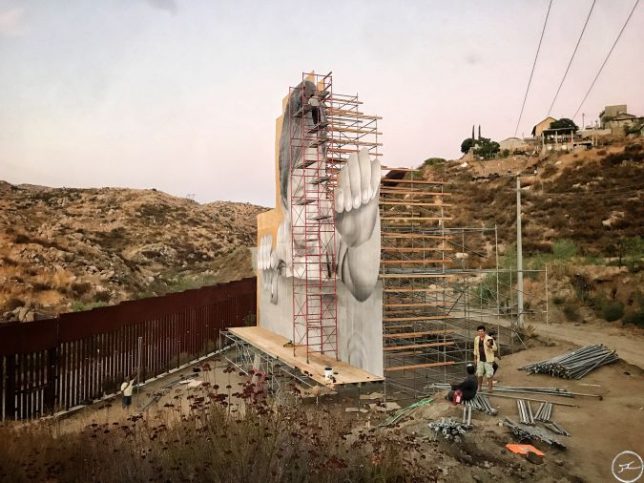
    Set on scaffolding just across the rust-red fence marking the border between Tecate, California and Mexico, street artist JR’s latest installation is a towering statement on immigration issues in the United States. A one-year-old boy named Kikito peers over to the other side with all the innocence and naiveté of childhood, just days after the current U.S. administration announced its intention to end the DACA (Deferred Action for Childhood Arrivals) immigration program.

    The site-specific work is precisely angled to create the illusion that the child is grasping the top of the fence, looking out onto the Californian terrain. Like most of JR’s works, the 70-foot-tall image is rendered in black and white; the child is from the local community on the Mexican side of the border. Curated by Pedro Alonzo, the work asks onlookers to consider the fate of the 800,000 ‘Dreamers’ whose parents wished them a better future.

    “Some people dream about fantasy worlds, I dream about walls,” JR told The New York Times in a phone interview. “I wonder, is this kid worrying about what will happen? What does he think? At one year old, you don’t see the frontier or which side is better… people will always migrate. When we built walls, people built tunnels. When we closed places, they went by water. The history of humanity is the story of people migrating.”

    “For this little kid, there are no walls and borders.”

    The installation will remain in place through October 2nd, and you can pinpoint its exact location at JR’s website.

    Share on Facebook


    [ By SA Rogers in Drawing & Digital. ]

    [ WebUrbanist | Archives | Galleries | Privacy | TOS ]


    WebUrbanist

  • Tips for Dealing with Your Frustrations as a Photographer

    Feel stuck? Frustrated? Feel like you want to hang up the camera, or that you’ll never make it as a photographer? Those feelings are terrible I know, you feel like you’re in a prison from which you will never break out. But take heart, here are a few things to help you when dealing with your frustrations as a photographer.

    Tips for Dealing with Your Frustrations as a Photographer

    The thing you most need to hear – it’s normal

    The thing you probably need understand the most if you are frustrated as a photographer is not that it is going to be okay (it probably will), it’s that it is NORMAL. It’s always useful to remember that every artist/photographer had these feelings before you and others will have them after you. It’s just a normal part of the creative process. Doubts, frustrations, those “what’s the point?” feelings are all normal stuff.

    So you just need to understand that it’s okay. If you want to have a dog, you’ll have to deal with feeding it, cleaning it, dealing with the brown stuff. If you want to be a photographer, you’ll have to deal with feelings of self-doubt, frustrations, and all. It’s all part of the deal.

    Tips for Dealing with Your Frustrations as a Photographer

    Can you imagine that one of the greatest artists of all time, Michelangelo, wrote in his diary, “I am no painter”? He did, and let’s face it if someone like him could be frustrated with his art, it makes it pretty normal for you and I to have those feelings too.

    But why am I telling you this? Because sometimes you may feel bad for feeling frustrated while it is a normal part of the creative process. Don’t worry though, it’s not quite your fault if you have felt that way. It is because you’ve been fed a lie.

    The lie you’ve been fed

    One of the biggest reasons for frustrations is because expectations do not match reality. And most of our expectations are pretty much warped because we’ve been fed a lie. So it’s not quite your fault.

    Tips for Dealing with Your Frustrations as a Photographer

    What lie am I talking about? You see it everywhere on TV, movies, newspapers, pretty much everywhere. It’s the lie of the edit, and it destroys anyone who believes it.

    What is it exactly? You are fed selective pieces of life and believe them as true, warping your expectations, completely dismissing the process behind everything. Take this famous example:

    A middle aged woman walked onto the stage of Britain’s got talent. She looked like your typical next door old lady that bakes cakes. She’s about to sing. The cameras zoom in on smirks, one of the judges tries not to laugh at the contestant. She opens her mouth and you can hear gasps. That woman has a stunning voice, the world was introduced to Susan Boyle. An instant star, an overnight success.

    Tips for Dealing with Your Frustrations as a Photographer

    Boy oh boy do we love those stories. But they are not true. Susan Boyle has been practicing most of her life. You can’t just take her 5-minute viral video and call that an overnight success when she’s been putting in the work since she was little.

    The process is part of the story

    The reason why the lie of the edit is destructive is that it bypasses the most important part of all – the process.

    Look, I’m not saying that it’s a media conspiracy or anything, but the fact is that everywhere we turn, we see the edit of someone’s life. Then when we start looking at our life, and how can we not feel frustrated with where we are?

    Say you want to be a travel photographer. You check out Instagram and you see that this couple quit their job and now travel the world full-time. That’s the edited version. Then you look at poor old you and the only travel you can afford is to your job every day. How can you not feel frustrated?

    But what was the process that couple had to through to get there? They scrubbed 150 toilets, spread 250 kilos of cow dung, among other things. That is a true story by the way.

    I’m not suggesting that to travel the world you need to scrub toilets, but always remember that everything that you see has been edited. It’s only the tip of the iceberg. What you don’t see – and the only way to get where you want to be – is whole the process.

    Tips for Dealing with Your Frustrations as a Photographer

    Know the whole story and don’t compare yourself to others

    It’s my numero uno critique of certain photography gurus by the way. They sell you the edit. Quit your job, become a photographer, live the dream. They never tell you about the process of finding clients, being worried you can’t pay your bills, etc.

    What I am saying is this: It’s okay to be frustrated. What you see out there of everyone living the photography dream you want to live is an EDIT. Don’t compare your life with someone else’s edit of their life. It warps your expectations, and when expectations don’t match reality, that’s a recipe for frustration.

    Harnessing your frustrations

    So far I’ve said it’s okay to feel frustrated, and it’s usually because your expectations have been warped by unrealistic expectations (thanks, media!). But what if you are *still* frustrated? Good news, you can use your frustrations as fuel. How so? Just realize one thing:

    Tips for Dealing with Your Frustrations as a Photographer

    The universe works a certain way, and the system is rigged so that only the most dedicated people get through. If it was easy, everyone would do it. So things like frustration, self-doubt, discouragement are good because it’s trying to weed out those who will press on from those who simply don’t want to do so. Once you realize that it’s a built-in obstacle to weed out those who are not committed enough, it can empower you to press on.

    I’ve been around for a few years now. A month or so ago I started to click on the sites of photographers that I knew started around the same time as I. All I got was 404 errors, meaning their sites and their presence are not there anymore. They’ve been weeded out by the system.

    Tips for Dealing with Your Frustrations as a Photographer

    All those frustrations and feelings are like fuel that can either block your vision or you can use them as fire to get you going. Whatever you want out of your photography, it’s a game that only the determined and steadfast win. Let those frustrations knock others out while you know it’s just an obstacle to go through to test your own resolve.

    The resolve

    I interviewed a photojournalist once for my magazine, and one part stood out to me. He went to see an editor, and after some brutal comments went home and put his camera up for sale the next day. He was done with photography. Was that the end? No. He went on to be the photojournalist he wanted to be and to make some jaw-dropping images.

    The moral of the story is that you as a photographer need to have resolve, the resolve to continue the path of photography until success. Whatever that may be or mean for you. Because every photographer you look up to, they had all of the same frustrations you have, but they are where they are because they pressed on.

    Tips for Dealing with Your Frustrations as a Photographer

    Name any feeling you have, they had it too, but they just continued. Because it’s only failure when you give up. I’m glad the photojournalist got back in the game, but how many photographer’s careers were ruined that way? Resolve to do the work needed to achieve your photography goals. Keep your eye on the prize, but put in the work.

    For Micheal Phelps, the most decorated Olympian, that meant going to the pool 7 days a week. What does it mean for you? Read interviews every day, shoot as much as you can, learn as much as you can. It’s different for everyone but the principle is still to focus more on the process, the very thing that is always edited out in the media.

    Conclusion

    There you have it, folks. Because I have a lot of experience with this stuff, it’s pretty much ingrained in my mind. But thinking about these points mentally always leave me with a state of renewed empowerment and I hope it will do the same for you. Be yourself, stay focused and keep on shooting.

    The post Tips for Dealing with Your Frustrations as a Photographer by Olivier Duong appeared first on Digital Photography School.


    Digital Photography School