Blog

  • fast speed retouching

    In this easy-to-follow video, I show you how to retouch, touch up, and edit your blemishes out of your photos easily, with Google Picasa 3! Website: www.vincebognot.com Twitter: www.twitter.com Contact: vince@vincebognot.com Save 25% Off Your New Domain Name With Hover: www.hover.com
    Video Rating: 4 / 5

  • Flood Fight

    Another destructive vision is revealed to Sonic and Knuckles where Tikal explains the servers and emeralds. Chaos instigates a devastating flood in Station Square. Oddly, Sonic and Eggman are on the same side against it. With help from his friends, Sonic collects Emeralds, transforms into Super Sonic, and causes the monster to retreat, happy, with Tikal and some chao friends.

    Rush Limbaugh punishes his dissenters. Emoticons declare war. The Craigslist Genie grants wishes. A texting love triangle, and five Britney Spears battle it out for the attention of the American Zeitgeist. Watch more SuperNews! www.current.com www.facebook.com VIEW more SuperNews! clips & SUBSCRIBE to the YouTube Playlist here… www.youtube.com
    Video Rating: 4 / 5

  • Annie Goes Boating – 3D Trailer

    trailer for Annie Goes Boating, a 3D short premiering at SXSW 2010, starring Alessandra Torresani, Alycia Delmore, Davie-Blue, Taylor Maxwell, Sam Wilson, and Sophia Goldfarb directed by Noel Paul, 2D trailer: www.vimeo.com imdb: www.imdb.com shot in DepthQ stereoscopic. www.depthq.com . .
    Video Rating: 4 / 5

  • At the playground | Reality (HD timelapse 1080p)

    Miniature scenes from the ocean, Gothenburg city and Strömstad all on the Swedish west coast. All edits and post processing done on a wee MacBook Pro 13″. Most of the scenes with zoom and pan are output as 3K (3072 x 1728) high-res intermediate videos downsampled in iMovie by the simple Ken Burns crop tool. I shot around 10.000 RAW-images for the film but not all of them ended up in the final editing. I used a homemade rapid interval timer for some of the scenes, shooting continous up to 3 frames/sec for smooth motion. Footage stabilization and deflickering managed in VirtualDub with the Deflicker and Deshaker plugins. For the tilt-shift effect I used Alien Skin Software’s plugin ‘Bokeh’ in Photoshop, some of the scenes were processed with their latest plugin ‘Exposure 3’ for filmic looks in classic Technicolor. Let me just say it took ages to develop and render thousands of high-res frames… Equipment used: Nikon D300 / D300s, Nikkor AF-S 70-200/2.8 VR, Nikkor AF-S 17-55/2.8, Nikon TC-17EII Teleconverter, DIY Nikon 10-pin Rapid Interval Timer (RIT), Manfrotto 035 SuperClamp w/ ball head 488RC2, Manfrotto 745B video tripod. Uploaded as 2K high-res x264 for best vertical detail at 1080p and 720p.
    Video Rating: 5 / 5

  • Olympus E-P3 samples gallery updated with revised settings

    We’ve added three additional images to our samples gallery for the Olympus E-P3 with revised processing. Following concerns expressed about the levels of noise reduction and sharpening being applied by the camera’s default settings, we have re-processed the images with the sharpening and noise reduction minimized. Having confirmed that re-processing raw files in-camera gave the same results as shooting natively at these settings, we re-processed three of our gallery images to allow side-by-side comparison with the default settings.
    News: Digital Photography Review (dpreview.com)

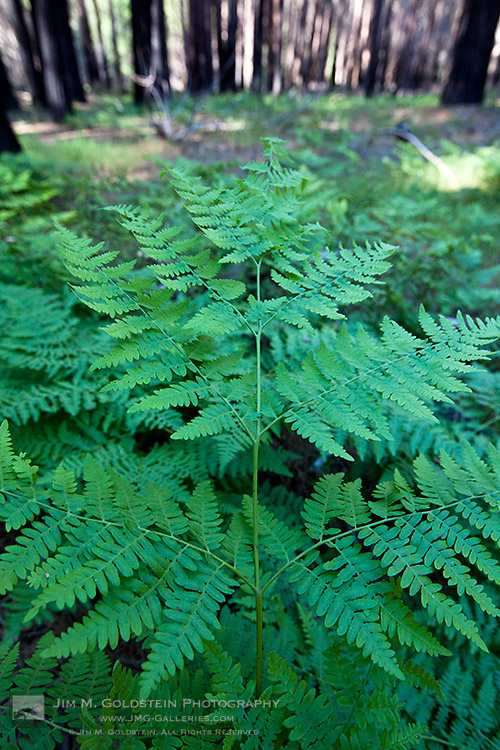
  • Fern Leaves, Yosemite National Park


    Yosemite provides an endless well of inspiration, even more so if you stop looking up. Tough to do, but always enlightening when it happens. On a casual walk amidst burnt trees on the valley floor the wind was kind enough to introduce me to some beautiful ferns. The next time you’re walking in your favorite location I recommend listening to the wind as you never know what it’ll introduce you to.

    Fern Leaves, Yosemite National Park

    Fern Leaves, Yosemite National Park

    Technorati Tags: photography, Yosemite National Park, fern, fine art, stock photo

    Copyright Jim M. Goldstein, All Rights Reserved

    Fern Leaves, Yosemite National Park

    flattr this!


    JMG-Galleries – Jim M. Goldstein Photography

  • Sean Armenta | One Light Beauty Shoot for FStoppers.com

    this is my entry to FStoppers.com’s BTSV contest. sign up at fstoppers.com to vote!
    Video Rating: 5 / 5

  • An STEREOGRAM

    An stereogram is an optical illusion of depth created from flat, two-dimensional image or images. Originally, stereogram referred to a pair of stereo images which could be viewed using a stereoscope. Other types of stereograms include anaglyphs and autostereograms. The stereogram was discovered by Charles Wheatstone in 1838. He found an explanation of binocular vision which led him to construct a stereoscope based on a combination of prisms and mirrors to allow a person to see 3D images from two 2D pictures. Oliver Wendell Holmes, Sr. invented an improved form of stereoscope in 1861, which had no mirrors and was inexpensive to produce. These stereoscopes were immensely popular for decades. Stereograms were re-popularized by the creation of autostereograms on computers, wherein a 3D image is hidden in a single 2D image, until the viewer focuses the eyes correctly. The Magic Eye series is a popular example of this. Magic Eye books refer to autostereograms as stereograms, leading most people to believe that the word stereogram is synonymous with autostereogram. Salvador Dalí created some impressive stereograms in his exploration in a variety of optical illusions. Stereoscopic imaging relies on the use of a stereoscope to present a slightly different image to each eye. The stereo pair can be viewed with the naked eye, if the images are placed side by side. The stereo pair is then viewed using the same viewing technique used to see autostereograms. Anaglyph images, also
    Video Rating: 4 / 5

  • Olympus E-P3 samples gallery updated with revised settings

    We’ve added three additional images to our samples gallery for the Olympus E-P3 with revised processing. Following concerns expressed about the levels of noise reduction and sharpening being applied by the camera’s default settings, we have re-processed the images with the sharpening and noise reduction minimized. Having confirmed that re-processing raw files in-camera gave the same results as shooting natively at these settings, we re-processed three of our gallery images to allow side-by-side comparison with the default settings.
    News: Digital Photography Review (dpreview.com)

  • Olympus SZ-10 Review

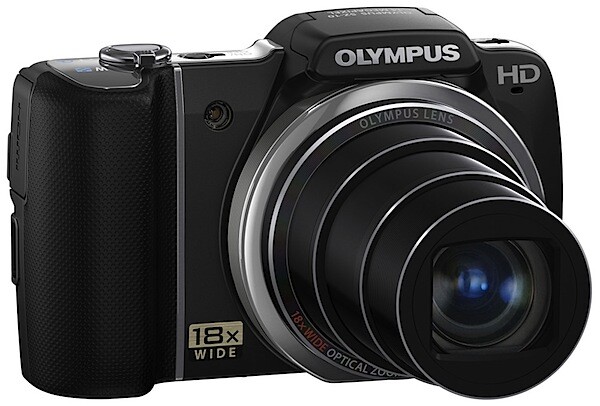
    And on they come! Compact maxi zoom digicams.
    Olympus SZ-10.jpg

    This one has an 18x optical zoom, equating to a 28-504mm lens as 35 SLR equivalent, As I’ve said before, try to fit out a DSLR with an 18x zoom and you hit a brick wall!

    Olympus SZ-10-Top.jpg

    The SZ-10 is nicely configured and slips easily into any pocket, thanks to its 38mm slimness. It’s only when the power button is tapped that the lens emerges, nearly doubling the body depth.

    Olympus-sx-10-back.jpg

    Olympus SZ-10 Features

    The maximum aperture is only f3.1, shrinking to f4.4 when the tele is fully extended, so you may need to dial in a slightly higher than normal ISO setting for out and about photography. Or lug a tripod with you to use a lower ISO and benefit from less noise in the image.

    Kids' ride.JPG

    The CCD captures 14 megapixels of picture data and creates a maximum image size of 4288×3216 pixels, or 36×27cm as a print. Olympus continues to disappoint in the movie department with a maximum video res of 1280×720 pixels — not Full HD — but then many people are quite happy with this maximum figure, as their videos often go no further than a YouTube posting.

    Menu.jpg

    The 7.6cm LCD screen swallows most of the camera’s rear surface, leaving room only for a four way ‘wheel controller’, the movie record button and an extra couple of buttons. A nice touch is a textured pad at the top corner to rest your thumb while shooting.

    The big news is a collection of New Magic Filters to glamourise your stills or movie work. These include Pop Art, Pin Hole, Punk, Fish-Eye lens, Soft Focus, Drawing (which converts the image into a sketch outline), Watercolor and a new one — Sparkle lights.

    What makes this feature differ from Olympus highly-trumpeted Art Filters, installed in some other models, is that you get an on screen preview of the effect on the intended subject before you press the shutter.

    In addition is a collection of scene modes which are really shooting enablers and can be selected to optimise the camera when shooting sports, low light indoors, portraits etc. There’s even a face recognition mode for pets!

    And then there’s 3D! Using the MPO format, the camera can be set up to shoot auto, leaving the camera to shoot the left and right image pair… or in manual, where you actually trigger the second image. 3D viewing is on a compatible TV.

    pano 2.JPG

    Allied with this feature is panoramic mode, with the camera taking the necessary segments as you pan across or up/down the scene. Following on Sony’s lead, the SZ-10 stitches the separate images into a whole panorama… but the implementation is very elegant, with a tiny on-screen pointer helping you line up the series. Brilliant!

    The SZ-10 talks to Eye-Fi SD cards, adding Wi-Fi capability so you can auto upload images to your computer — or direct to the Internet — as you take them.

    The camera uses a dual stabiliser arrangement: a mechanical shift of the sensor plus digital stabilisation. I’m not so sure of the latter as I believe it employs magnification of the sensor image to steady the picture.

    Movie Mode

    The auto focus can be set up to track and keep the picture sharp in movie mode, so I could quite happily move around and capture steady video.

    A welcome feature is a canceling option to ensure sound is not recorded while shooting.

    One odd item: you must cancel the sound recording option if you want to use the optical zoom while shooting video. Thought I’d mention it!

    And no, sorry, you can’t shoot stills while recording video.

    ISO Tests

    Olympus SZ-10 ISO 64.JPG

    Olympus SZ-10 ISO 400.JPG

    Olympus SZ-10 ISO 800.JPG

    Olympus SZ-10 ISO 1600.JPG

    Quality and noise levels hold up to ISO 800, with only ISO 1600 showing signs of deterioration.

    Startup

    In spite of the longish zoom the camera was ready for its first shot just two seconds after startup, then it took about a second ’tween shots.

    Distortion

    In terms of distortion, the SZ-10’s zoom performed very well with little sign of any distortion at either end of the zoom.

    Olympus SZ-10 Verdict

    Again, I found the buttons on the SZ-10’s rear surface very hard to read, except in bright light: small and dullish.

    Diamonds.JPG

    Quality: about average. OK for casual snapshooters.
    Why you’d buy it: the 18x zoom is mighty appealing in such a small camera.
    Why you wouldn’t: you want to zoom and record sound.

    Olympus SZ-10 Specifications

    Image Sensor: 14 million effective pixels.
    Sensor Size: 11mm CCD.
    Metering: Digital ESP, spot.
    Lens: f3.1-4.4/5.0-90mm (28-504mm as 35 SLR equivalent).
    Shutter Speeds: 4 secs to 1/2000 sec.
    Memory: SD, SDHC, SDXC plus 59MB internal memory.
    Image Sizes (pixels): 4288×3216 to 640×480. Movies: 1280×720, 640×480, 320×240.
    File Formats: JPEG, Motion JPEG.
    ISO Sensitivity: 100 to 1600.
    Viewfinder: 7.6cm LCD screen (460,000 pixels).
    Interface: USB 2.0, AV, HDMI, DC.
    Power: Rechargeable lithium ion battery.
    Dimensions: 105.9×67.3×37.9 WHDmm.
    Weight: Approx. 215 g (inc battery and card).
    Price: Get a price on the Olympus SZ-10 at Amazon (currently discounted by 21%).

    Post from: Digital Photography School’s Photography Tips. Check out our resources on Portrait Photography Tips, Travel Photography Tips and Understanding Digital Cameras.

    NYIP_DPschool468x60.jpeg

    Olympus SZ-10 Review


    Digital Photography School