Blog

  • Samsung NX 12-24mm to cost $600, 45mm F1.8 around $300

    45mm_frontpage.png

    Samsung has announced US pricing for the 12-24mm F4-5.6 ED wide-angle zoom and 45mm F1.8 mid-telephoto prime for its NX system. The lenses – announced at Photokina – will cost around $ 600 for the wide-angle zoom and $ 300 for the 45mm F1.8. Oddly we’re told there are no samples of the 45mm F1.8 at the show where they’re being ‘unveiled’, so we can’t know if it’s any closer to the promised ‘ultra-professional look and feel’ than the inexpensive-feeling early examples we saw at Photokina.

    News: Digital Photography Review (dpreview.com)

  • How to Prevent Photo Horror Stories — 6 Scary Photo Scenarios & How to Get Through Them


    Extra photos for bloggers: 1, 2, 3

    As photographers, we plan and plan for big shoots.

    But, we all have those days. The ones where that black cat that crossed our path, or we accidentally walked under a ladder.

    Despite our best efforts, things can go wrong from time to time.

    We’ll show you how to ward off those photoshoot nightmares. Our tips will prevent scary photo scenarios like garlic chases vampires away!

    How to Prevent Photo Horror Stories

    p.s. Take a peek at our Pinterest today for a chance to win a set of Tattly Temporary Camera Tattoos!

    No Memory Cards, No Problem

    paint-smDear Photojojo,

    I booked a photoshoot, and when I got there, I realized I had forgotten ALL of my memory cards! I apologized to the client and rescheduled, but I felt like such a dummy. How do I prevent this in the future?

    Love,
    Forgetful in Florida

    Dear Forgetful,

    This happens to the best of us. Here are some simple ways to keep track of your memory!

    • Make a checklist of all necessary equipment. Leave it by your keys the night before a shoot. Check it off in the morning before you leave.
    • Stash extra memory cards in common places. Leave one in your car, a hidden pocket in your camera bag, or in your wallet. That way you’ll always have a backup!
    • Shoot tethered to your laptop! By connecting the USB cable that comes with your camera to your laptop, images will be saved onto the computer instead of a memory card. This may limit mobility, but it will prevent you from disappointing your client.

    Sincerely,
    Photojojo

    Grain, Grain, Go Away!:

    paint-sm Dear Photojojo,

    I got home from a shoot only to realize I shot everything at 6400 ISO. The grain and noise is insane! What do I do?

    Help!
    Grim and Grainy

    Dear Grim and Grainy,
    Here are a few ways to enhance those grainy images.

    • You can use CameraRaw, Photoshop’s built in file converter for RAW files, to reduce noise in the image. The “filter” menu in Photoshop also has a noise reduction feature.
    • Other editing programs, such as iPhoto, Aperture, and Picassa have similar features or plug-ins you can install.
    • Only sharpen the parts of your photo that really need it. When you sharpen an image, it increases the contrast between the light and dark areas. Sharpening the whole image will increase the appearance of those noisy pixels all over. By selectively sharpening certain areas, you can minimize the grainy look.
    • You can also turn noisy color images into black and white. The grain gives it that good-old-fashioned-film feeling, and black and white takes away the distraction of colored pixels.

    Keep your chin up!
    Photojojo

    White Balance Woes:

    paint-smDear Photojojo,

    All of my photos have a strange color cast. My indoor photos look orange, and outdoor ones look blue.

    I’m guessing I have the wrong white balance settings? What is white balance anyway?

    Is there anything I can do?
    Blue in Longview

    Dear Blue,

    White Balance can be tricky, even for the most experienced photogs.

    • Your camera has settings to adjust for the temperature/color of light you are shooting in. Set your camera to the correct white balance while shooting, like daylight outside, and tungsten settings for indoors, to keep the color cast minimal.
    • Keep a gray card or a white balance lens cap in your camera bag for setting your white balance on location. A gray card is a neutral, 18% gray. Place the card in your scene for one shot, and remove it for your the next.
    • By doing this, you can set a custom white balance for each particular scene. Or use it when editing images on the computer later.
    • You can also correct white balance settings after the fact. With editing software like Photoshop, GIMP, or Adobe Lightroom, you can correct for a color cast.
    • If your image looks too blue, adding in yellow can help neutralize the tones. If it is too orange, adding a bit of cyan, green, and blue will make it look normal.

    Yours truly,
    Photojojo

    Eyes Wide Shut:

    paint-sm Dear Photojojo,

    I photograph weddings. It never fails that during group photos, someone will blink or make a face.

    Are there any tricks for getting people to keep their eyes open?

    Sincerely,
    Eyes Closed in Minnesota

    Dear Eyes Closed,

    It’s definitely hard to get everyone to look perfect at the same moment.
    Here are some tips:

    • Make sure your group shot is in a nice shady place facing away from the sun. It’s even harder for people to keep their eyes open when the sun is shining in them (obvi).
    • Here’s another trick. Use a tripod, and take A LOT of photos of the same group. Numbers can work in your favor. For groups smaller than 20, divide the number of people by three if there’s good light and two if the light’s bad. That’s how many shots you need to take. Then use editing software to swap heads if someone is blinking or making a funny face in the group photo.

    Happy Shooting,
    Photojojo

    Constant Callers:

    paint-sm Dear Photojojo,

    I recently did a photoshoot for a friend, and now she’s calling me everyday to check on her photos. I want to stay friends with her, but her constant calls are driving me crazy!

    How do I tell her that editing takes time?

    Sincerely,
    Aggravated in Arizona

    Dear Aggravated,

    You are not alone in this situation. Try to stay positive, and remember she is just anxious to see your amazing work.

    • Remind your friend that you want to give her the best product you can, and in order to do so, you need at least a week or two.
    • If you plan to work with clients more frequently, put a section in your contract that explains the turnaround time. Let them know up front when they can expect to see the finished images.
    • Make a mini blog post on your site to give her a preview of those rad photos!
    • Email her or Instagram one pic a day until you get them all finished. She’ll be excited and check her email more than her texts.

    Keep calm,
    Photojojo

    Cry Babies:

    paint-sm Dear Photojojo,

    With the Holidays coming up, I’ve started booking more sessions with kids and families.

    How do I deal with children that won’t quit crying?

    Sincerely,
    Cranky in Connecticut

    Dear Cranky,

    • How bout penciling a sweet ‘stache on that lil cutie?! Keep one of these in your camera bag and everyone will be laughing.
    • Attach a PEZ dispenser to your camera’s hot shoe to get portraits of kids with a little curiosity on their face.
    • Turn the music up, and use the ioShutter release to dance around with the little one and snap away at candid moments.
    • Another secret weapon… BUBBLES! Who can resist?

    Dry those eyes,
    Photojojo

    Still Puzzled?:

    • Have other photo problems? Send us an email.
    • Share your photo horror story or your advice by tagging us @photojojo on Twitter and Facebook.
    • Send us a link to your favorite photo problem-solving forum!

    Related posts:

    1. Halloween Photo Tips — Our Ghoulish Guide to Scary Snaps How can you not love a holiday that encourages you…
    2. Photojojo’s Guide to Scary Photo Pumpkins Live in NYC or San Francisco? Come to our Photo…
    3. Best New Photo Gifts of the Season (2 of 2) Dear friends, ’tis our final installment of photo goodies for…


    Photojojo

  • Bigfoot Car Crush in all 3-D formats and Non-3-D

    Bigfoot Crushes some cars at the 2011 Tamaqua Summer Fest. In this video Youtube controls the Convergence so its a bit off and less of an effect. I just uploaded this for those of you that can see 3-D or have a 3-D HDTV. If you don’t have a pair of anaglyph 3-D glass you can turn off the 3-D; in the youtube player time line bar to the right, click the “3D” pop up menu and select “Turn off 3D.” Watch in HD full screen. Select your 3D format in the pop-up menu. Optimized for computer monitors at 4’+ distance. Here’s the link to the other better one if you have right 3-D glasses www.youtube.com Left Eye: Red Right Eye: Blue
    Video Rating: 5 / 5

  • Quintessential Conversion: The Ultimate Warehouse Loft

    [ By Steph in Architecture & Houses & Residential. ]

    A historic 1880′s warehouse in Melbourne, Australia has been converted into a stunning luxury home with high ceilings, exposed red bricks walls and dramatic archways. The addition of new wood floors, white drywall and a modern kitchen make the space livable without overpowering it.

    The renovated apartment is located in ‘Leicester House’, a five-story Neo-Gothic building in downtown Melbourne with deep cornices and detailed Florentine arches on the exterior. Most of the spaces within it are still in use as offices.

    While many aficionados of warehouse conversions would likely prefer to see less carpeting and more modern furnishings, the space itself exudes all the historic charm that you could wish for in a building of this age, particularly in the ceiling and the brick walls.

    Rustic, recycled, modern and minimalist – apartment remodels come in all varieties, whether they’re redesigned from an out-of-date state or completely converted from something else. Check out 9 more amazing apartment designs and cool condo plans, and 11 lofty additions to urban rooftops.


    Want More? Click for Great Related Content on WebUrbanist:

    9 Amazing Apartment Designs & Cool Condo Plans

    Color, pattern, unexpected materials and careful editing of rustic historic architectural details make these apartment and condo remodels one-of-a-kind.
    2 Comments – Click Here to Read More »»


    7 Brilliant Building Conversion Projects: Superb Examples of Architectural Adaptive Reuse

    Know of other recycled design or amazing architecture projects? Be sure to list them in the comments below!
    40 Comments – Click Here to Read More »»


    Share on Facebook


    [ By Steph in Architecture & Houses & Residential. ]

    [ WebUrbanist | Archives | Galleries | Privacy | TOS ]


    WebUrbanist

  • GoPro HD: Surf Photography with Clark Little

    Shot 100% on the HD HERO® camera from GoPro®. Learn more at GoPro.com. An inside scoop of the art behind Clark Little’s surf photography. Music “Looking for Love” by Pretty Lights

    Great video tutorial on how to use your DSLR. It teaches you basic photography techniques. It’s a must see for beginners who want to learn the basics of using a camera.
    Video Rating: 4 / 5

  • Nice Visual Art photos

    A few nice visual art images I found:

    Stencil – Metrorex (?!)
    visual art
    Image by cod_gabriel

    aguela con guitarra-color.jpg
    visual art
    Image by ianaiare

  • How to Organise a Fashion Shoot in 5 Easy Steps

    A Guest Post by Olivia Vitazkova from www.reverinephotography.com

    DSC 4845

    Recently I’ve been asked more and more about how I go about organising a photo-shoot.

    It was mainly asked by my new flatmates who were surprised at the constant influx of strange, good-looking people in our tiny kitchen. The place would get transformed into a showroom, with enough makeup and clothes to be suspected of robbing a department store. The flatmates would look at me with a mixture of suspicion and curiosity: „Where do you get these people? How do you organise a photo-shoot?“ So I explained and then I thought that some of my knowledge can be useful for new photographers, thinking of planning their first big fashion shoot.

    1. Theme

    DSC 0882

    One of the most important things you need to consider is the theme or the concept of your photo-shoot. This will determine all your other choices including makeup and location. Your theme can be anything. You can start with a simple idea say „romantic picnic in a park“ from which we can already decide that we want an innocent looking young girl with long blond hair and maybe a male model to keep her company. Styling – romantic pastel colours, skirts and dresses. Makeup – natural. Location- park. Nothing too complicated, you just come up with an idea and then organise everything else to fit your vision.

    Despite this, I must confess that I rarely start organising a shoot with a precise theme or idea I have to execute. I usually start by getting into contact with a model I find interesting and think about what sort of concept would they suit best, essentially constructing the concept to fit the model. Either way you end up with some sort of a theme or idea, which is great for editorial work/fashion spreads as it will make the series of photographs look coherent and consistent.

    But sometimes I don’t even bother with that. That is what I call an improvisation shoot, and these are usually the most fun ones. It usually happens when it’s a last minute casting call and I don’t have much time to think/prepare but want to shoot. I tell the model to bring a big bag full of clothes, and we’ll mix and match on the spot and do the makeup accordingly. This is fairly easy and fun as it doesn’t require much preparation beforehand. However, you need to think on your feet once the team assembles. This can result in either fun and inspired photos or some fairly boring safe ones. The good thing is that there is no one director and everyone can bounce ideas off each other and have an input. You could maybe do two looks wildly different from each other depending on what photos people need. It’s a good way to go about getting portfolio work done but probably not a coherent editorial.

    2. Models

    DSC 1958

    Models can often either make or break the shoot. Depending on your theme you should decide on the look she or he should have. Think whether they should have any specific features (tattoos or no tattoos) or abilities (e.g. dancing) that would be useful for the shoot.

    But first of all, how to find models? Professional photographers often go straight to modelling agencies which make the process of choosing models easier, and more reliable. Unfortunately it’s not very budget friendly (unless you already have an amazing portfolio) so let’s explore some free alternatives.

    There’s a lot of websites for models and photographers, such as modelmayhem.com which enable you to search and connect with models, stylists and makeup artists in your area. The best thing is to offer a TFP (time for prints/photos) photo-shoot to models on your level of experience, this way you’ll both get something out of it and you’re less likely to be rejected. First make sure you already have some good photos of people uploaded on your profile. If you’re just starting out and have no pictures you can always find a lot of freelance models willing to work for a small fee. Hiring a model might cost you, but you should be getting a model who knows what she’s doing, and is highly motivated not to cancel on you, and with your new amazing photos more people will want to work with you.

    Lately however Facebook became more dominant due to the ease of posting casting calls and getting replies instantly, there’s several Facebook groups for models and photographers so try to find and join one for your location, or create a new one.

    Your friends and family are another option, even if they don’t look like supermodels, fashion is for people of all ages. You can even stop people on the street if you see someone absolutely incredible. I’ve done it once and had a photo-shoot with a lovely green-haired girl I probably wouldn’t have met otherwise.

    Okay, now you’re in contact with your model. Great. It’s always best to get a feel for her experience before the shoot, so you know what to expect. Is she new to modelling as well? Then you’d better read something about posing (the DPS has a great series on posing) or maybe just do a beauty shoot where it’s less about the body and more about makeup (and expression). For the first few photo-shoots I’d recommend working with just one model as posing multiple models can be quite challenging, but nothing wrong with starting big.

    3. Fashion Team Assembles – Make-up & styling

    DSC 0146

    The other person you need the most is the makeup artist, or as we call them – MUA. I love these guys, not only they make the model look more beautiful than before (or crazy, depending on the look you’re going for), but they can often double as assistants. I often make them carry my bags and shine the reflector during the shoot, which is probably not what they thought they’ve signed up to do. Also it’s great to have another pair of eyes on set as they may notice little details that you’ve missed, like hair in the face or wardrobe malfunctions, while you were concentrating on exposure and composition. So yes, makeup artists are indispensable.

    DSC 0185

    But how do you get hold of these wondrous people? Don’t worry, it’s pretty much like finding a model. A lot of people study makeup these days and need photos for their portfolios so are keen to help out on a TF basis. You can also ask your model about them if they’re more experienced, as they would often have a favourite MUA they can contact for you. Score.

    Now it’s time to think about what sort of clothes the model will be wearing. Contact a stylist, local designer or a vintage shop to help you with sourcing clothes for your big photo-shoot. These people are generally quite difficult to reach so don’t get disappointed if you can’t find anyone. You should try and be proactive in the local fashion community, going to vintage fairs, fashion shows and socialising with people there, actually that’s a great way to meet models and MUA’s as well.

    Okay, now you’ve gathered a team of people – model, MUA and a stylist, you may also need a hair stylist or an assistant, depending on what your shoot needs. The next step is to think of what makeup and clothes you need based on your idea. „The girl next door“ should not have the same makeup and clothes as „the biker chick“. Look for inspirational images for makeup and clothes in magazines or on the internet and send them to your team, so you know they’re on the right page regarding your idea. You can print these out and make a mood-board that you can use during preparation.

    Nothing worse than telling the MUA to do whatever she wants, then deciding after she’s finished an elaborately creative look that you want something more natural. Or not telling the model what clothes she should bring and getting disappointed that nothing fits your vision. Or bringing clothes yourself but realising they won’t fit the model. Communication is key so make sure that everyone is on the same page.

    4. Location & Logistics

    Regarding communication, the most difficult thing will probably be deciding on the right date and time (unless you send out a casting call with exact time and date and got suitable replies, in which case I applaud you). Hopefully everyone in your team will be free on the same date.

    You also need to pick where you’re going to shoot, is it a studio, indoor location or outdoors? Yet again, the location should fit your theme.

    You also need to decide where you’ll do the makeup, I usually just gather everyone at my place as it’s convenient and easy to get to, but might not work for everyone. You can use someone else’s flat, studio or a public place – once we had to do the makeup in Starbucks, and we didn’t even order anything, now that’s shooting on a budget…

    Anyway, try and keep in mind that the makeup will probably take about an hour and a half, the resulting time will depend on various factors such as model’s skin, intricacy of makeup and just how much fun you’re having while chatting away. Therefore make sure to factor in makeup time, and always give it more time than you think just so you wouldn’t accidentally miss the golden hour, or pay more than you expected if you’re hiring a studio.

    5. The Shoot (Preparation & Action)

    ?DSC 4757

    Preparation

    Stare at your mood-board obsessively. List in various magazines for inspiration for poses and lighting. If you have already not done so, scout your area for the locations you’re gonna shoot in. Make sure you’ve got your equipment ready, charged and sparkling clean.

    Day before the shoot, message everyone to confirm the shoot. Make sure you’ve got everyone’s number and that everyone’s got your number and know where they’re going and when. In case it’s an outdoors shoot and the weather is supposed to be bad decide on a plan B (my plan B usually involves telling people to bring umbrellas, I live in Scotland so I’m more surprised when it’s not raining at my shoots).

    On The Big Day
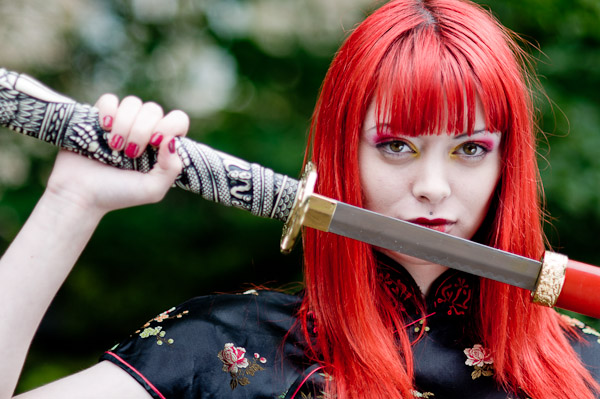
    DSC 3826

    Be nice. If you’re hosting the event make sure to offer everyone at least a glass of water or a cup of tea. Sometimes things go wrong, trains are cancelled, things forgotten etc. Even if things are not going your way, it’s no use getting upset, and making everyone else in the team feel bad. Instead take it as a challenge.

    Make sure to notice the little things, don’t get too trigger happy only to be disappointed by the photos because the model has the same pose on every photo or there’s a bra strap poking out. Your makeup artist or assistant might notice some of these things and fix them, but don’t get too caught up in the moment to forget directing when it’s needed. Expression is also extremely important so make sure you’re communicating with the model, making everyone feel relaxed and content. Your model might look stunning with her makeup and clothes in a gorgeous location, but if she looks awkward the picture won’t work, but don’t worry most people will get right into it after a few frames. Just remember that you’re creating images, not shooting wildlife, although with some models it might as well feel like it.

    But most of all, don’t forget to have fun.

    Then, what’s next? Edit your pictures and send the best ones to the team, you can then submit to magazines or slap them on to your website… and start planning your new photo-shoot.

    Good luck!

    Olivia Vitazkova is a fashion photographer based in Glasgow, UK. When she’s not running around with her camera or attempting to travel the world, Olivia can be found annoying her cat, reading books and consuming ungodly amounts of chocolate. You can find her work on www.reverinephotography.com or her blog.

    Post originally from: Digital Photography Tips.

    Check out our more Photography Tips at Photography Tips for Beginners, Portrait Photography Tips and Wedding Photography Tips.

    How to Organise a Fashion Shoot in 5 Easy Steps


    Digital Photography School

  • Bird Photography Workshops by Glenn Bartley – Adobe Photoshop Workflow – Part 1.wmv

    Adobe Photoshop workflow lesson by Glenn Bartley. Learn a basic workflow in Adobe Photoshop from RAW conversion to final Tif image. For more info visit – www.glennbartley.com

  • FOCUS: Alive

    A short film shot from the eyes of a 14-year old. He frequently thinks about his past and the events that have shaped his identity. Often regretting situations he’s been in but learns that everything does really happen for a reason. That boy is me. leftover footage from F: nature prevails. This is the second installment of the FOCUS series. Let me know how you Honsters are liking it! Hope these are making you think a little. add me on facebook! on.fb.me other linksss – www.youtube.com www.twitter.com www.jordhon.tumblr.com Produced by Jordon Hon Original Music by Kerry Muzzey – “Looking Back”
    Video Rating: 4 / 5

    A stopmotion time lapse of a twelve hour period of a winter blizzard in Rhode Island. Shot with a Nikon D300s and a 10.5 mm fisheye lens. Visit my blog at: www.rhody360.com
    Video Rating: 4 / 5

  • Fotoessay: „At The Wall Of Fortress Europe“

    Ein Beitrag von: Martin Ritzmann

    Vor einigen Jahren wurde ich durch die Band „Heaven Shall Burn“ auf die Grenzen Europas aufmerksam gemacht. In dem Song „Tresspassing the Shores of your World“ wird die qualvolle und für manche im Tod endende Reise vieler Migranten nach Europa thematisiert.

    Migration von Menschen findet schon seit Jahrtausenden statt. Heutige Gründe für die Flucht und dass verlassen der Heimat sind, für die betroffenden Menschen, unter anderem Kriege und sich häufende Naturkatastrophen durch den Klimawandel.

    Dafür sind sie unter menschenunwürdigen Bedingungen jahrelang unterwegs und zahlen Schleusern viel Geld um schnell nach Europa gelangen. Anstatt den Flüchtlingen Zuflucht zu gewähren, wird mit allen Mitteln versucht, den bestehenden Wohlstand zu verteidigen und so wenige Menschen wie möglich in Europa aufzunehmen.

    Einer dieser Orte, an dem versucht wird, sich zu verteidigen, heißt Melilla.

    Melilla ist ein spanische Enklave an der Nordküste Marokkos und wurde während der Kolonisationszeit im Jahre 1497 von Spanien besetzt, um einen Handels- und strategischen Vorposten Europas auf dem afrikanischen Kontinent zu errichten. Diesen Status trägt Melilla heute immer noch.

    Auf den ersten Blick wirkt Melilla wie eine typisch andalusische Stadt: In den Restaurants am Strand gibt es traditionelle Tapas zuhauf und im Zentrum der Stadt werden Vorbereitungen für die Feria, ein spanisches Volksfest, getroffen. Doch bei genauerem Hinsehen bemerkt man, dass etwas anders ist. Neben einer Statue des ehemaligen spanischen Diktators Francisco Franco sieht man viele Schwarzafrikaner, die vom Wüstenstaub bedeckte Autos waschen.

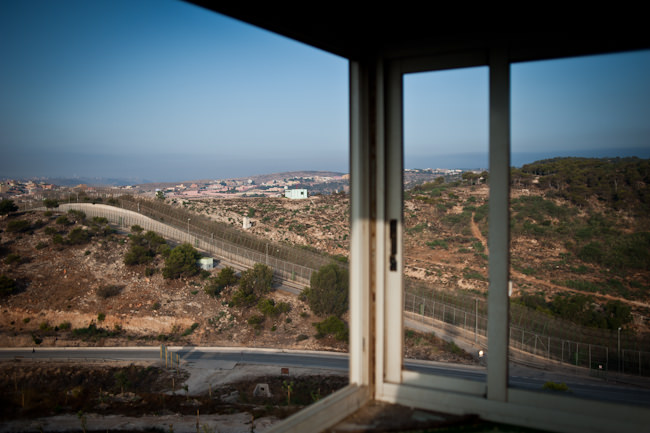
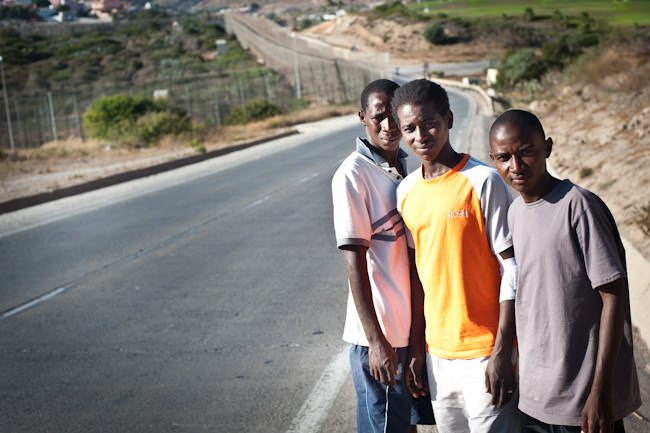
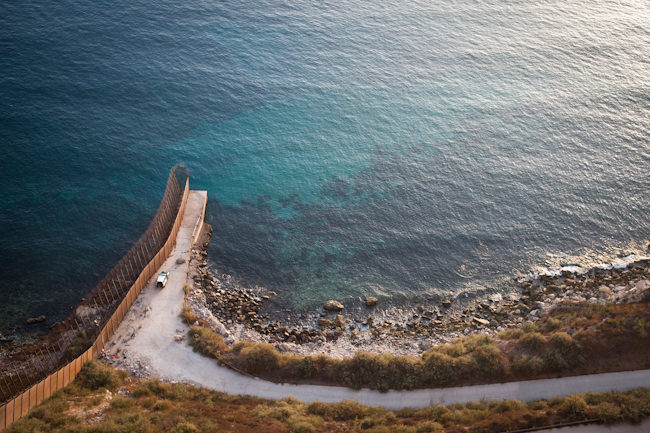
    Verlässt man das Zentrum, so fällt auf, dass es dort viele militärische Einrichtungen gibt. Etwas weiter sieht man schon den sechs Meter hohen, von der europäischen Grenzschutzagentur Frontex errichteten Grenzzaun. Es ist die Grenze Europas. Dreifach gesichert, überall sind Kameras und Stacheldraht zu sehen. Über meinen Kopf rast ein Helikopter der Guardia Civil, der spanischen Grenzpolizei. Es ist kaum zu glauben, dass es Menschen schaffen, diesen Zaun zu überwinden.

    Im September 2005 kam es zu den ersten Todesfällen während eines Fluchtversuches. Hunderte von afrikanischen Flüchtlingen erstürmten mit selbstgebauten Leitern in der Nacht die Grenze. Das marokkanische Militär war mit der Situation völlig überfordert und schoss in die Menschenmenge. 14 Flüchtlinge aus Westafrika starben. Seitdem kommt es immer wieder zu Vorfällen am “perímetro (fronterizo)”, dem Grenzgebiet.

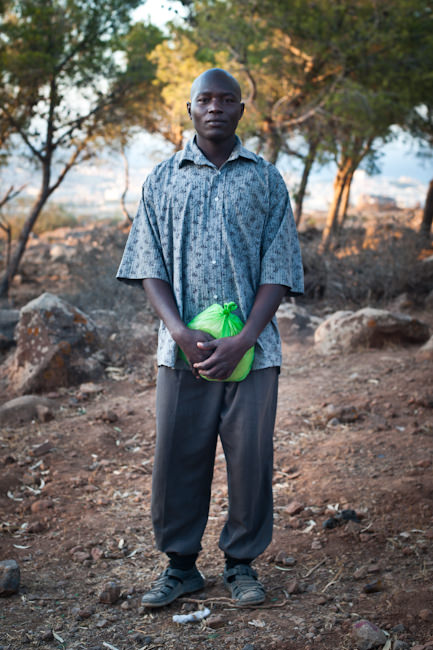
    Es ist Ramadan, der islamische Fastenmonat. Viele marokkanische Grenzbeamte sind nicht im Dienst. Diese Chance nutzen die Flüchtlinge. Sie leben versteckt in den Wäldern des nahegelegenen Gurugú-Berges, ohne Zugang zu Wasser oder Lebensmitteln. Viele von ihnen sind junge Männer, die seit Jahren auf der Flucht sind.

    Sie sind gut organisiert und wissen viel über den Grenzzaun – wann und wo es möglich ist, in die Stadt zu gelangen. In der Nacht zum 19. August 2012 passierte das, was viele in Melilla fürchten: 450 Flüchtlinge stürmten die Grenze, man hörte Schüsse und sah das Blaulicht der Guardia Civil.

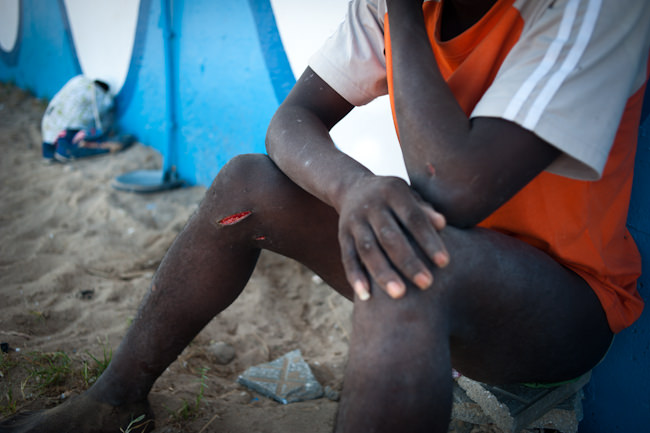
    Nur 60 Migranten, größtenteils aus der Sahel-Zone Zentralafrikas schafften es. Viele von ihnen sind erschöpft von den Strapazen der Nacht und ihre Körper gezeichnet von Schnittwunden des Zauns. Nach der Genfer Flüchtlingskonvention von 1967 hat jeder, unabhängig von seiner Herkunft, das Recht auf Asyl, sobald er europäischen Boden betritt.

    Dieses Gesetz wird regelmäßig von der Guardia Civil gebrochen. Immer wieder berichten Flüchtlinge, dass sie direkt nach ihrem Fluchtversuch an die marokkanischen Grenzschutzpolizei übergeben werden, obwohl sie bereits in Melilla waren. Dort haben sie keine Aufenthaltsrechte und keinen Anspruch auf eine medizinische Behandlung.


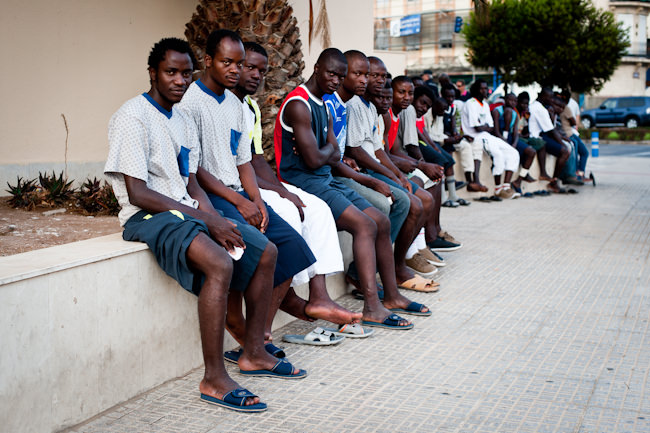
    Das Flüchtlingslager in Melilla, auch genannt C.E.T.I. (Centro de Estancia Temporal de Inmigrantes) wurde für die Aufnahme von maximal 350 Migranten gebaut. Dennoch ist es auf Grund des großen Ansturm völlig überfüllt. Aus Platzmangel schlafen viele von ihnen unter freiem Himmel. Auch gibt es viele Jugendliche, die den langen Weg nach Melilla angetreten und im Centro de Menores untergebracht sind – dem Kinderheim für Flüchtlinge.

    Erst vor einigen Jahren baute die Stadt einen Golfplatz direkt vor den Toren des C.E.T.I. – es wirkt, als wolle man den Menschen im Flüchtlingsheim zeigen, wie gut es den Europäern in Melilla geht. Ein Großteil der Bevölkerung Melillas arbeitet im staatlichen Sektor, wie dem Polizei- oder Militärdienst. Als Beamter verdient man aufgrund des extraterritorialen Status ca. 20 Prozent mehr als auf dem Festland, zudem gibt es keine Steuern auf Tabakwaren und Alkohol.

    Momentan scheint die Lage aussichtslos für viele Migranten. In Spanien wird krampfhaft versucht, durch einen massiven Sparkurs die wirtschaftliche Situation des Landes auf Vordermann zu bringen. Immer häufiger kommt es zu spontanen Abschiebungen der Migranten durch die spanische Grenzpolizei.

    Oft kommen sie nachts in das Flüchtlingsheim, um weniger Aufsehen zu erregen. Nachdem die Flüchtlinge an die marokkanischen Beamten übergeben werden, droht vielen der Abtransport in die Grenzregionen des Landes inmitten der Sahara. Aus Angst vor Abschiebung schlafen viele außerhalb des Flüchtlingsheims im Freien.

    Erst kürzlich wurde bekannt, dass Frontex damit begonnen hat einen weiteren Grenzzaun zu errichten. Dieser wird gerade in der Nähe des Evros gebaut, dem Grenzfluss zwischen Griechenland und der Türkei. Dort kommen ca. 80 Prozent der illegalen Einwanderer nach Europa. Auch dort werden die Kameras, bewaffneten Grenzbeamten und der Stacheldraht zu sehen sein, aber das eigentliche Probleme wird auch dort nicht gelöst werden können.

    Ganz gleich wie hoch, gesichert und bewacht die Grenze ist, den Willen der Menschen, die täglich ihr Leben für eine bessere Zukunft auf’s Spiel setzen, wird sie nicht stoppen können. Denn zu verlieren haben sie nichts mehr.

    Weitere Informationen findet Ihr auf dem Blog (Spanisch) von José Palazón Osma, dem Präsidenten der Menschenrechtsorganisation Prodein in Melilla.


    kwerfeldein – Fotografie Magazin