Blog

  • How to Choose Your Camera Angle to Take Better Portraits

    Taking portraits involves so many variables that it can feel overwhelming for a new photographer. What lenses do you use—zoom, prime, or a mix of both? Do you shoot full-frame or cropped sensor? Will you shoot indoors or outdoors. Even the subject matter can be tricky, with some portrait photographers working exclusively with families, others who only shoot high school seniors or newborn babies, and still more who do a mix of everything.
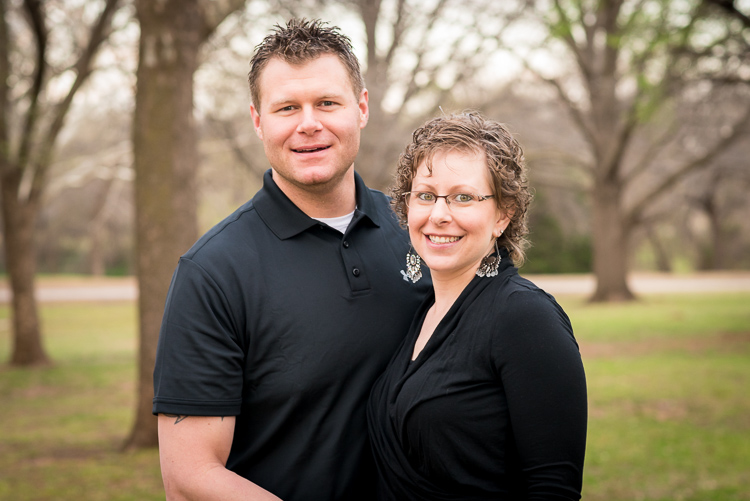
    all-about-angle-husband-wife-outdoors

    Nikon D750, 85mm, f/4, ISO 900, 1/250 second

    While you are pondering all these variables it can be easy to lose sight of the forest for the trees and forget about a few key basics such as posing and lighting, and no matter what style of portraits you choose to pursue there is one thing that always comes into play which may not seem obvious: the camera angle from which you shoot. This can make all the difference between happy clients and complaining customers. Understanding how you can use camera angles and points of view can greatly enhance any portrait session.

    Point of view – up high or down low

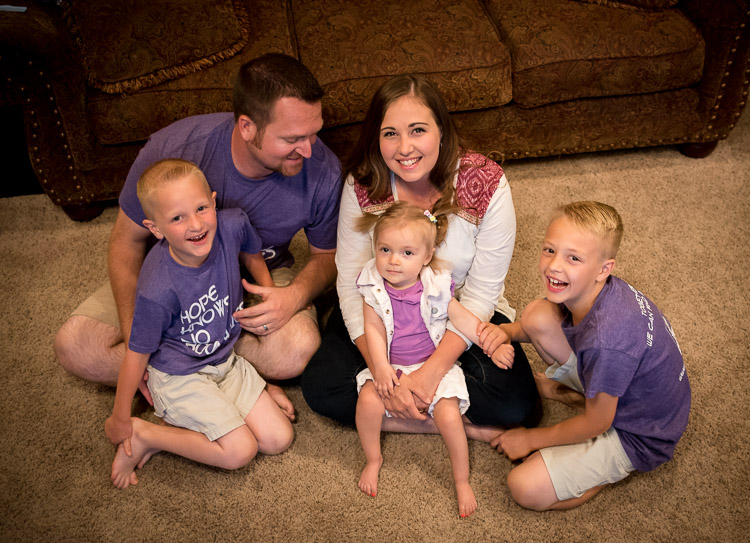
    Understanding how your camera angle, or point of view, can affect your shots will go a long way towards improving not just your portraits, but your photography in general. How you position yourself in relation to your subjects can have a dramatic effect on the resulting pictures. As an illustration of how this works, here are two pictures of a family from a recent home-based session I did. Both show a very similar scene, and yet the different angles from which I shot them results in two vastly different images.
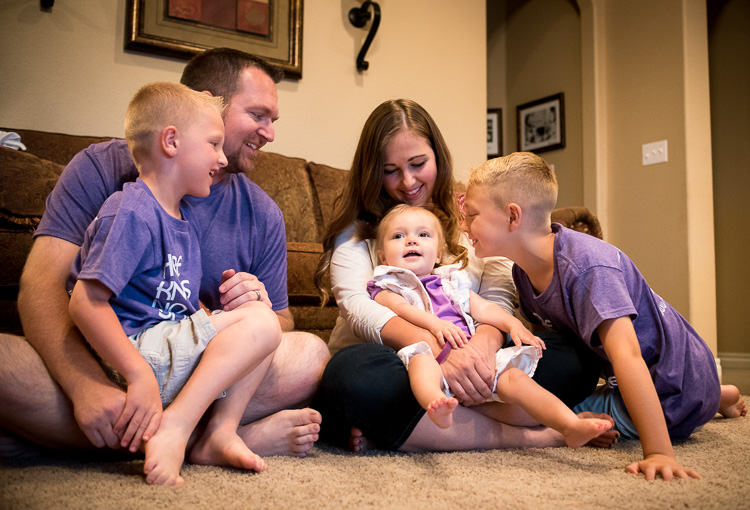
    all-about-angle-family-indoors-low

    Nikon D750, 35mm, f/4, ISO 5600, 1/90 second

    As I shot the image above I was very low to the ground. Crouching down on my hands and knees, I got very close physically to the family while the mother and father watched the boys play with their sister. It feels like the viewer is part of the scene, right there with them as they all share a fun moment together. This is entirely due to the low angle from which the picture was shot. Now take a look at virtually the exact same scene but shot from high above.
    all-about-angle-family-indoors-high

    Nikon D750, 35mm, f/4, ISO 3600, 1/90 second

    To get this picture I grabbed a dining room chair and stood on it to get a shot from a much higher angle. The result is a picture that feels quite different from the first one. It doesn’t seem like you are a part of the scene, but an outside observer looking at the family as they gather together.

    While I like both images, each one creates a very different emotional response on the part of the viewer. Even though both were shot with the same camera and lens, at the same location, with the same subjects, the result is two pictures that are vastly different from one another all because of the angle from which they were taken.

    Even subtle changes make a difference

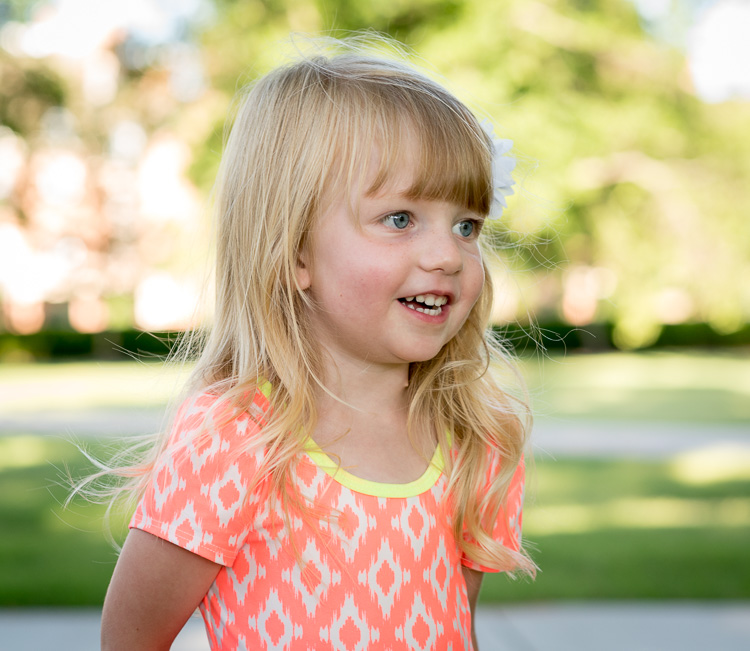
    You can see a similar, but more subtle, effect in this pair of portraits I took of a young girl near her birthday.
    Shot with a Nikon D750 and 85mm lens.

    Nikon D750, 85mm, f/4, ISO 800, 1/500 second

    The angle here isn’t as low as the first one of the family, but it’s low enough to be on the girl’s eye level. To get this I had to kneel down and stand a few meters back as her mother talked with her from my right-hand side. It gives a similar sense of intimacy as the first picture of the family and feels as though the viewer is near the girl and part of the scene.

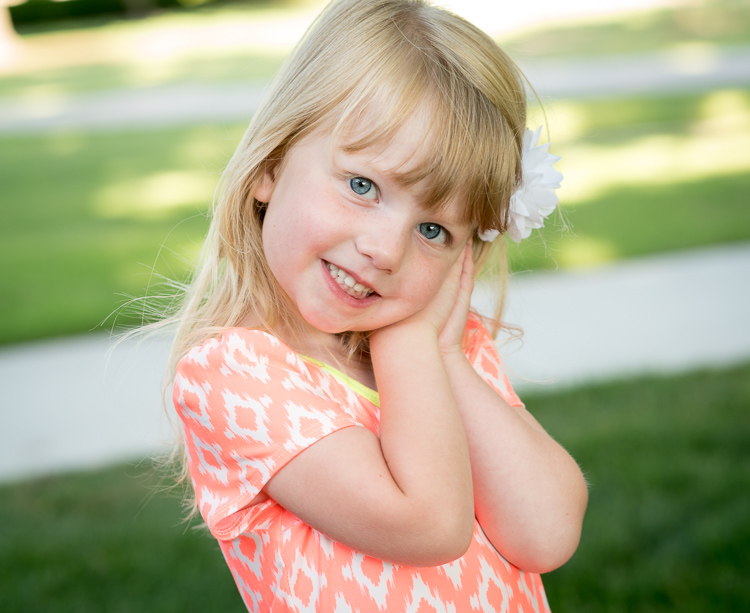
    This changes a bit when the girl is shot from an adult’s eye level looking down (below).
    all-about-angle-child-playing-high

    Nikon D750, 85mm, f/4, ISO 560, 1/250 second

    While the effect here is not as dramatic as the example with the family, you will still note a similar result in terms of emotion and tone. Instead of getting down on eye level I shot this while standing up about the same distance away. It doesn’t feel like you, the viewer, are a part of the scene and instead it seems like you are merely an observer. Notice how the sidewalks in the background cut across the frame at odd angles whereas in the first one the sidewalks neatly cross in horizontal lines, adding a subtle touch without being too obvious or gaudy.

    Once again I don’t think either picture is necessarily better or worse, but both are quite different as a result of the camera angle.

    Kids – break the rules

    This is, incidentally, one of the most common issues I see with people who are taking casual snapshots of their kids, whether with a fancy DSLR or just their mobile phone. Taking a few seconds to crouch down and get on eye level with the children can make all the difference in the world between an intimate moment frozen in time, and a boring snapshot.

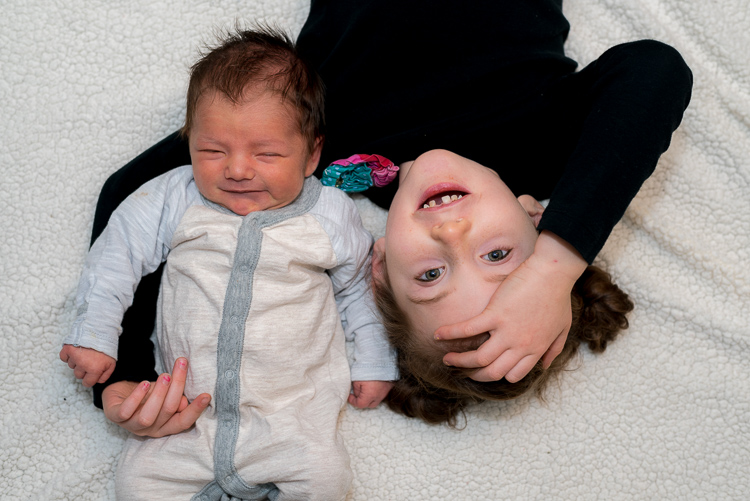
    However, I don’t want to give the mistaken impression that shooting from a high angle is necessarily a bad thing. It can be a very good thing indeed, and quite effective when used intentionally, such as this image of a girl with her two-week-old baby brother (below).
    Shot with a Nikon D750 and 50mm lens.

    Nikon D750, 50mm, f/4, ISO 400, 1/125 second

    This picture was a bit tricky, but the results were well worth it. I was doing this on location in the family’s home so I didn’t have a lot to work with, but I wanted to get something a bit unique. I put the two kids on a blanket on the floor, got a chair to stand on, and positioned myself directly above them while bouncing my flash off the ceiling.

    It resulted in an image that feels more fun and playful as if the viewer is peeking in on a fun moment between the two siblings. The equipment here was nothing all that special (I could have just as easily used my old D7100 and 35mm lens to get the same shot) but paying attention to the angle made for a picture that stood out quite a bit from the rest of the image I shot that day.

    Other camera angles to consider

    Sometimes finding the right angle involves something as simple as choosing where to put yourself in relation to your subject, not necessarily whether to shoot from high above or down low. You can see this in the example below. After an hour of taking a variety of traditional portrait-style

    After an hour of taking a variety of traditional portrait-style shots, I stood back while the family walked back to their car and took some pictures with the sunset casting a warm glow through the trees above.
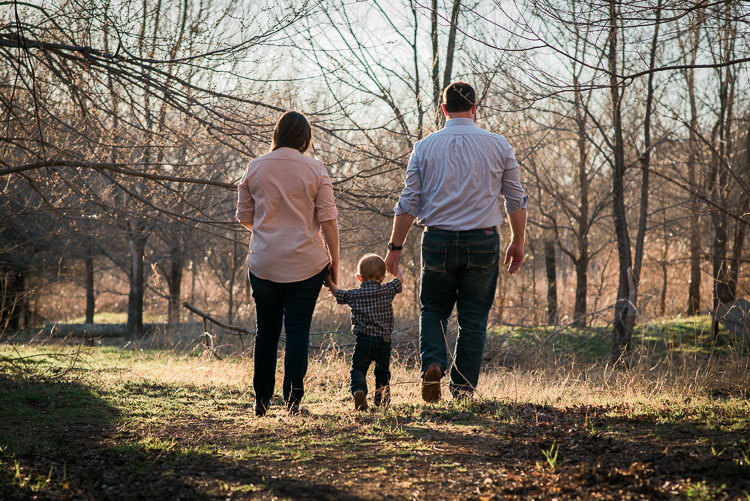
    Shot with a Nikon D750 and 85mm lens.

    Nikon D750, 85mm, f/4, ISO 180, 1/400 second

    There are some elements that I could do without, such as the tree branches coming from the left-hand side. But overall the picture feels warm, cozy, and conveys a sense of comfortable intimacy as if I have captured the family in a quiet and sincere moment. It puts you, the viewer, as an outside observer to the scene and almost feels like you are watching from afar as the family shares a special time together.

    This is in stark contrast to the next picture, which despite being at a different location is composed in almost exactly the same manner except for one variable: the angle.
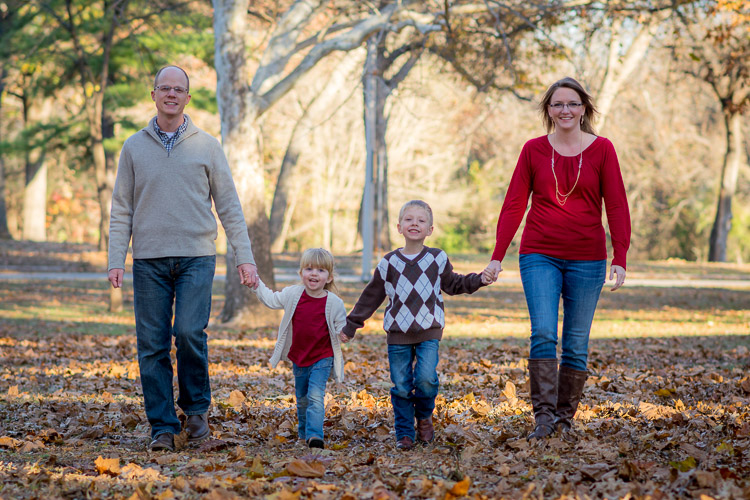
    Shot with a Nikon D7100 and 85mm lens.

    Nikon D7100, 85mm, f/2.8, 1/250 second, ISO 100

    This picture feels like it’s full of energy, excitement, and enthusiasm as the family holds hands and walks towards me. I like both pictures quite well, but changing the angle resulted in two images that are vastly different from one another.

    Summary

    Hopefully, these examples give you an idea of how your camera angle and point of view can dramatically affect the types of portraits you take. If you are looking to try something new and kick your photography up a notch without spending any money on more gear, try doing something as simple as changing your angle and see what happens.

    In fact, this now makes me wonder about your favorite tips and tricks for shooting portraits at different angles. Leave your thoughts in the comments below, and feel free to share pictures as well!

    googletag.cmd.push(function() {
    tablet_slots.push( googletag.defineSlot( “/1005424/_dPSv4_tab-all-article-bottom_(300×250)”, [300, 250], “pb-ad-78623” ).addService( googletag.pubads() ) ); } );

    googletag.cmd.push(function() {
    mobile_slots.push( googletag.defineSlot( “/1005424/_dPSv4_mob-all-article-bottom_(300×250)”, [300, 250], “pb-ad-78158” ).addService( googletag.pubads() ) ); } );

    The post How to Choose Your Camera Angle to Take Better Portraits by Simon Ringsmuth appeared first on Digital Photography School.


    Digital Photography School

  • Adobe Stock Apparel line celebrates the worst of stock photography

    Adobe is promoting its stock photo service with a ‘limited edition clothing line’ celebrating such stock photo atrocities as ‘laughing woman eating healthy vegetable salad’ and ‘smiling seniors using laptop.’ The campaign pokes fun at famously bad images that services like Shutterstock are rife with, and commemorates the images by putting them on t-shirts and sweatshirts. Fortunately, or unfortunately depending on your views on ironic t-shirts, none if it is actually for sale, but you can view the whole collection in a mock lookbook. 

    The promotion rests on the premise that Adobe Stock weeds out the so-called low quality images found in other stock websites, saving creatives from spending time sifting through the cheesiest of photos. It’s also worth noting this comes just after the news that Shutterstock is now offering a Photoshop plugin, making it possible for designers to access their extensive collections within Adobe’s own software. 

    Articles: Digital Photography Review (dpreview.com)

  • Winning images from the Weather Channel’s 2016 It’s Amazing Out There contest

    2016 It’s Amazing Out There winners

    Grand Prize winner. Photo by Greg Gulbransen

    The Weather Channel recently announced winners of its annual It’s Amazing Out There photo contest, awarding $ 15,000 to the grand prize winner. Second and third place winners took home cash prizes as well, and a total of 64 finalists were recognized for their photos celebrating fantastic weather, wildlife and adventure. Take a look at a few favorites here, including one from a familiar face.

    2016 It’s Amazing Out There winners

    Grand Prize winner. Photo by Greg Gulbransen

    Greg Gulbransen captured this photo of a polar bear on the frozen Hudson Bay in Manitoba, Canada when a rapid temperature drop at sunrise created the mist in this image.

    ‘I said to myself, “I hope a bear walks into this scene’ and sure enough this bear just walked into the scene,” he says. ‘The bear walked out there with his head down. I was so cold, I couldn’t feel my fingertips and I was praying my battery wouldn’t freeze and I said, “bear, would you just lift your head about 8 inches?” And sure enough, it lifted its head and that’s when I got the shot. I knew it was a special moment when I took it.’

    If only nature was always so cooperative for photos.

    2016 It’s Amazing Out There winners

    Second place. Jomblang (Grubug) Cave, Indonesia. Photo by Dale Johnson

    We featured Dale Johnson’s work last year as part of our Readers’ Showcase series and since then he’s continued to gain recognition for his photos. He describes this shot from a trip inside Jomblang Cave in Indonesia as ‘the toughest selfie I’ve ever taken.’ If Instagram selfies were half as good as this one, we’d generally like them a whole lot more.

    2016 It’s Amazing Out There winners

    Third place. Photo by Derek Burdney

    Derek Burdney’s photo of a Texas thunderstorm earns him the contest’s third place prize. Based in Omaha, Neb. Burdney says of this storm ‘The [weather] models looked good, so we got in position and watched this thing develop. It was a beautiful storm and everything was good for tornado production. It was really rotating. It never threw a tornado down, but it was really photogenic.’

    2016 It’s Amazing Out There winners

    Finalist. ‘Walking in the clouds.’ Midway Geyser at Yellowstone National Park. Photo by Derek Burdney

    2016 It’s Amazing Out There winners

    Finalist. ‘Playtime.’ Photo by Jimmy Marz

    2016 It’s Amazing Out There winners

    Finalist. ‘Galactic Rainbow.’ Stargazing on top of Maui’s Haleakala Volcano. Photo by Michael Trofimov

    2016 It’s Amazing Out There winners

    Finalist. ‘Sunset gallop through the marshes.’ A herd of Camargue White Horses galloping through a marshy area in the Camargue region, southern France. Photo by Steve Lange

    2016 It’s Amazing Out There winners

    Finalist. ‘Fisherman on the Dam.’ Three fly fisherman crossing the dam on a small creek in Tennessee. Photo by Shane Durrance

    2016 It’s Amazing Out There winners

    Finalist. ‘Step of rice terrace at Chiangmai, Thailand.’ Rice terrace at Chiangmai, Thailand, before rain. Photo by Sarawut Intarob

    2016 It’s Amazing Out There winners

    Finalist. ‘Weeki Wachee Springs.’ A bird’s eye view of the Weeki Wachee River in the Tampa Bay Area of Florida. Photo by David Underwood

    Articles: Digital Photography Review (dpreview.com)

  • Think Tank Airport Helipak for 3DR Solo drone and Airport Advantage bags now available

    Think Tank has a new rolling camera bag and a drone backpack for traveling, the Airport Advantage and Airport Helipak for 3DR Solo. The Airport Advantage bag is designed for safely transporting cameras and lenses, while the Helipak model is designed to transport the 3DR Solo drone, a 15-inch laptop, and related drone accessories including the controller.

    The Airport Advantage bag meets both international and US airline carry-on requirements, according to Think Tank, weighing in at 5.8lbs / 2.7kg with 2.7 W x 19.5 H x 7.3in D / 32.3 x 49.5 x 18.5cm external dimensions. This rolling bag can accommodate various camera and lens arrangements, such as two gripped DSLRs with lenses and three or four additional lenses, a pair of mirrorless camera bodies with ‘lots of lenses,’ or a standard DSLR with attached lens alongside three or four other lenses, a 15-inch laptop, and a gripped DSLR with an attached lens.

    The Airport Helipak, meanwhile, is a soft-bodied backpack with a dedicated pocket for a 15-inch laptop, plus a custom divider that enables the wearer to reconfigure the bag’s space to accommodate other gear. According to Think Tank, the bag can hold the laptop, 3DR Solo drone and its controller, a charger and spare rotors, extra batteries, tools, GoPro cameras, a jacket and other items. The backpack weighs 4.6lbs / 2.1kg and has 14 W x 20.5 H x 9in D / 35.6 × 52.1 × 22.9cm external dimensions.

    Both the Airport Advantage and the Airport Helipak for 3DR Solo are available now for $ 249.75 and $ 199.75.

    Via: Think Tank (1), (2)

    Articles: Digital Photography Review (dpreview.com)

  • PABLO is a long exposure and light painting app for the iPhone

    Czech photographer Miroslav Tichy once described photography as painting with light. Now there is an app for that, but instead of naming it after Tichy, its makers decided to call it PABLO for Pablo Picasso, who created some of the first notable light art images with photographer Gjon Mili in 1949.

    PABLO has been developed for light painting with the iPhone. You can create pictures and video by moving a light source in front of the camera while capturing a long exposure. Alternatively, you can illuminate a subject, shine a point of light directly at the camera, or move the camera itself during exposure.

    In the app’s ‘live view’ you can watch as light paintings are created and a community feed lets you see a continuous gallery of light images by PABLO users around the world. Additionally, you can create light paintings by uploading existing video clips. Any lights in the video will freeze to create light trails.  You can find more information in the video below and on the PABLO website. How-to videos are available in the PABLO Youtube channel and if you’d like to try the app yourself you can now install it for free from the App Store. 

    Articles: Digital Photography Review (dpreview.com)

  • Minimum flash duration of 1/63,000sec makes the Profoto D2 the fastest TTL monolight in the world

    Flash manufacturer Profoto has launched what it is describing as the fastest TTL monolight heads in the world. The Profoto D2 studio flash heads have a shortest output duration of 1/63,000sec, can run at a rate of 20 bursts per second and can sync with camera shutter speeds as short as 1/8000sec. The heads come in two output varieties, 500Ws and 1000Ws, with both featuring full TTL control for Nikon and Canon users via the company’s AirTTL 2.4GHz radio system. The heads can also be controlled in manual mode with 10 stops of output in 1/10th stop increments.

    The heads are available to order now, retailing for $ 2000/£1554 for the Profoto D2 1000Ws AirTTL Monolight and $ 1500/£1194 for the Profoto D2 500Ws AirTTL Monolight.

    For more information see the Profoto website.

    Press release

    Profoto releases the D2, the world’s fastest monolight with TTL

    With the ability to freeze action at up to 1/63,000 of a second, to shoot bursts of 20 images per second and sync with camera shutter speeds as fast as 1/8,000 of a second the D2 is redefining the definition of speed in monolights.

    “For a photographer, every new day is a new challenge. So for them, speed isn’t one thing – it’s many. That’s why we created the D2 to be remarkably fast in every way” says Johan Wiberg, Product Manager at Profoto.

    A photographer might need to freeze action with absolute sharpness. The D2 brings pin sharp clarity with a flash duration of up to 1/63.000 of a second, which makes it faster than most high end studio packs on the market. Better still, it offers supershort flash duration across the full energy range.

    If flash duration is exceptionally fast, recycling time is equal to it. With the D2 you can shoot up to 20 flashes per second . That allows you to catch 20 versions of the same moment, and quite often that’s the difference between capturing a good image and a great image.

    Bringing yet another dimension to speed is Profoto’s High-Speed Sync technology (HSS). This allows the D2 to sync with the fastest shutter speeds available. An advantage when you need to catch a deep blue sky or take full control of ambient light.

    The D2 can also help to speed up workflow because it’s equipped with patented TTL technology. You can point-andshoot and the D2 will automatically adjust its output for perfect exposure. But manual mode is available at click of a button, so switching between both modes with settings intact just makes everything move faster.

    In terms of output, the D2 is available in 500Ws and 1000Ws versions. At full power you’ll easily overpower the sun, or fully illuminate a larger Light Shaping Tool. Both versions come with a super wide 10 f-stop energy range and superior color consistency over the entire range. So leave the ND filters at home and add just a hint of light if needed.

    Above all, this is Profoto Light Shaping equipment. So the design is smooth and minimal, it’s intuitive to use, the build quality as you’d expect, is rugged and sturdy, and it can be used with more than 120 different Light Shaping Tools.

    “We designed the Profoto D2 to be the world’s fastest monolight,” says Johan Wiberg, Product Manager at Profoto. “But the speed is not a gimmick. We truly believe that more speed allows you to be more creative and consistently take better images regardless of what challenge you face – with the D2, you’re always up to speed.”

    For high volume production when you shoot thousands of images per day, like packshot photography, there is an optional Quartz flashtube available.

    The D2 is released Sept 15, 2016. Both the 500Ws and 1000Ws versions are available in different kits configurations.

    Learn more at profoto.com/d2

    Articles: Digital Photography Review (dpreview.com)

  • Weekly Photography Challenge – Fall Leaves

    Earlier I rounded up several images of fall leaves to get you thinking about shooting the autumn colors.

    Now it’s your turn to get shooting.

    Pedro Fernandes

    By Pedro Fernandes

    Randi Hausken

    By Randi Hausken

    Weekly Photography – Fall Leaves

    If it is autumn or fall in your area the leaves may be changing color soon. So now is the perfect time to go shoot some great colorful images of leaves, landscapes, or even fall portraits. Even if it is not autumn where you live (southern hemisphere) try finding some interesting leaves, do a macro shot, or get creative with processing or composition.

    Here are some articles that may give you ideas how to approach this subject:

    • Guide to Creative White Balance for Landscape Photography
    • Tips for Abstract Macro Photography; Using Texture and Light
    • 12 Tips to Help You Capture Stunning Landscape Photos
    • Backyard Macro Photography Safari
    • How to Create Strong Compositions Using Color Contrast
    • Add Contrast to Your Images by Using Complementary Colors
    David Ohmer

    By David Ohmer

    Umberto Nicoletti

    By Umberto Nicoletti

    Stuart Williams

    By Stuart Williams

    --IZA--

    By –IZA–

    Vincent Brassinne

    By Vincent Brassinne

    Share your images below:

    Simply upload your shot into the comment field (look for the little camera icon in the Disqus comments section) and they’ll get embedded for us all to see or if you’d prefer, upload them to your favourite photo sharing site and leave the link to them. Show me your best images in this week’s challenge. Sometimes it takes a while for an image to appear so be patient and try not to post the same image twice.

    Share in the dPS Facebook Group

    You can also share your images on the dPS Facebook group as the challenge is posted there each week as well.

    Michael Salvato

    By Michael Salvato

    Elisa Greco

    By elisa greco

    Olli Henze

    By Olli Henze

    googletag.cmd.push(function() {
    tablet_slots.push( googletag.defineSlot( “/1005424/_dPSv4_tab-all-article-bottom_(300×250)”, [300, 250], “pb-ad-78623” ).addService( googletag.pubads() ) ); } );

    googletag.cmd.push(function() {
    mobile_slots.push( googletag.defineSlot( “/1005424/_dPSv4_mob-all-article-bottom_(300×250)”, [300, 250], “pb-ad-78158” ).addService( googletag.pubads() ) ); } );

    The post Weekly Photography Challenge – Fall Leaves by Darlene Hildebrandt appeared first on Digital Photography School.


    Digital Photography School

  • Vessel: Climb This Sculptural NYC Landmark to Look Out Onto Hudson Yards

    [ By SA Rogers in Architecture & Cities & Urbanism. ]

    hudson yards heatherwick

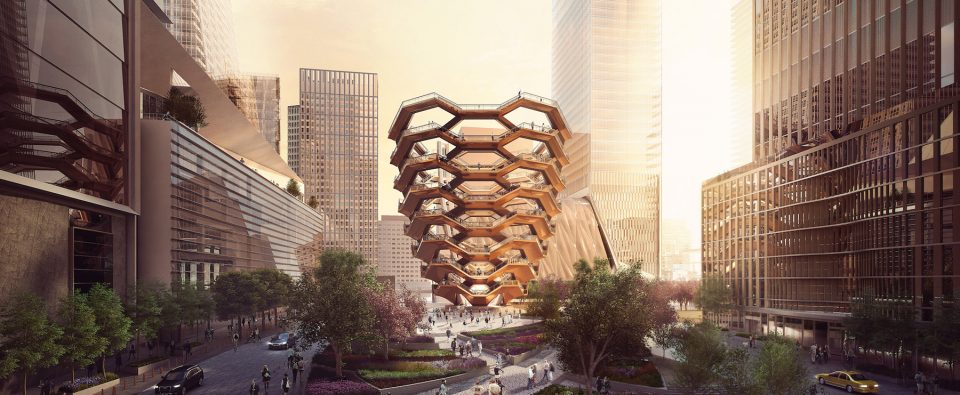
    Unlike most of New York City’s standout architecture, this sculptural, almost alien-looking structure set to rise above the new Hudson Yards development will be open for the public to explore. Architect Thomas Heatherwick envisions this centerpiece as a way to take all of the visitors to the square and “sort of sprinkle them into the air,” encouraging them to interact with each other and with their surroundings in a new way.

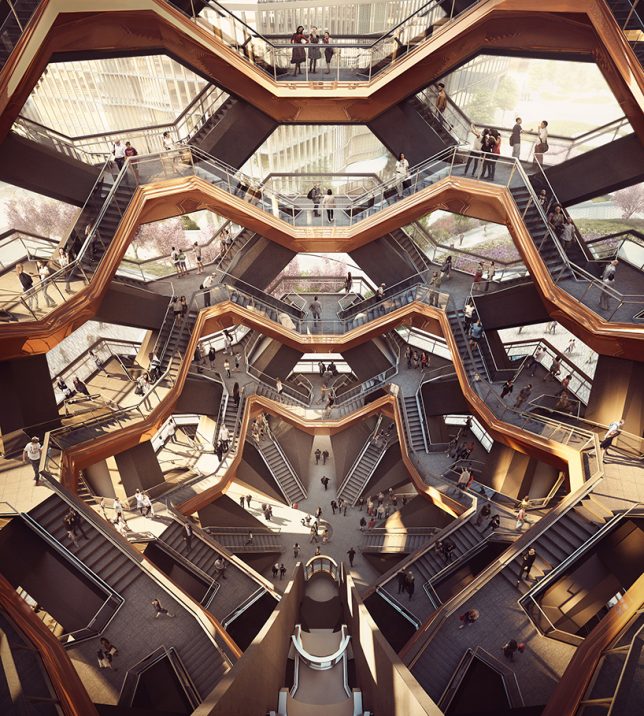
    Influenced by images of Indian stepwells, which use hundreds of flights of stairs to descend beneath ground level, this observation deck uses flights of stairs almost like building blocks to reach into the sky.

    hudson yards heatherwick 2

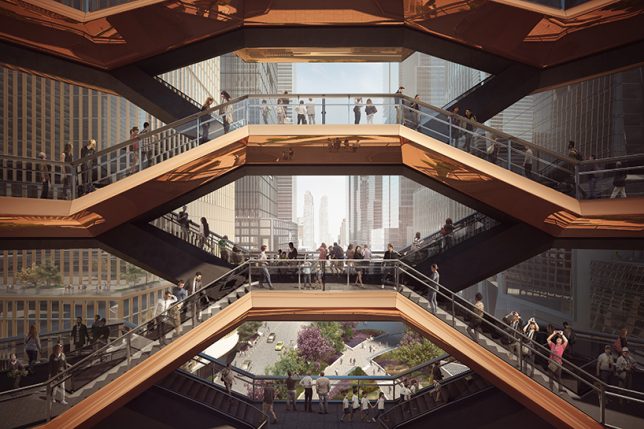
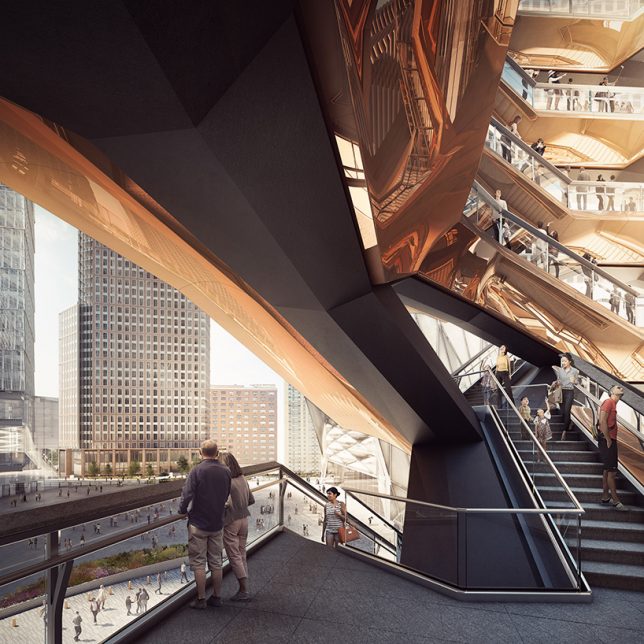
    The ‘Vessel’ design is made up of 154 interconnecting flights of stairs, with nearly 2,500 individual steps and 80 landings, and if you want to walk the whole thing, you’ll travel an entire mile while remaining in the air above Hudson Yards. It’s 50 feet in diameter at the feet, blooming into 150 feet at the top, and gleams appealingly in polished copper.

    hudson yards heatherwick 3

    hudson yards heatherwick 4

    The square at Hudson Yards is a collaboration between Heatherwick Studio and landscape architecture firm Nelson Byrd Woltz, set to feature 5 acres of trees, perennial gardens, pathways, seating and a 200-foot-long fountain mimicking a flowing river.

    hudson yards heatherwick 5

    The square will be surrounded by a whopping 16 brand new skyscrapers containing nearly 13 millions square feet of office, residential and retail space. The largest development in New York City since Rockefeller center was built in 1939, it’s currently under construction, and estimated to be fully completed by 2023.

    hudson yards heatherwick 6

    “We put ourselves under this vast pressure because we felt, intuitively, that it should be something that you haven’t experience already before,” says Heatherwick. “It has no commercial job to do. It’s not based on electronics. It’s not based on advertising. it’s extremely interactive but it’s properly using your physicality. There’s something that is timeless about humans and our physicality. The project, in a way, is a big invitation. It’s just there to hopefully mean things to different people, to not tell you how you’re supposed to think. It’s like a platform for life.”

    Share on Facebook


    [ By SA Rogers in Architecture & Cities & Urbanism. ]

    [ WebUrbanist | Archives | Galleries | Privacy | TOS ]


    WebUrbanist

  • KitSplit Giveaway Winners: It’s You!

    Well, technically, we have just one grand prize winner: @camdenwalker won $ 200 in gear rental and gizmos!

    But, we looooved seeing all your contest entries, and your big photo plans. You had so many great ideas, that we’ve decided to do what we can to turn all these dreams into reality.

    We can’t giveaway everything (our accountants said no. boooo) but we can offer discounts! Use the code FALL for 20% off gear rental at KitSplit, and/or use the code DreamBig for $ 10 off any Photojojo order over $ 25.

    Now, to really get your creative juices flowing, click on through for ten of our favorite photography ideas entered into the #KitJojoGiveaway.
    (…)
    Read the rest of KitSplit Giveaway Winners: It’s You! (0 words)


    © laurel for Photojojo, 2016. |
    Permalink |
    No comment |
    Add to
    del.icio.us

    Post tags:


    Photojojo

  • Epson’s FastFoto FF-640 scanner can digitize a photograph in one second

    The newly unveiled Epson FF-640 is, according to Epson, the fastest photo scanner in the world. The model can scan photographs as rapidly as 1 image-per-second, doing so at 300dpi, or more slowly at a higher quality 600dpi resolution. Unlike flatbed scanners, the new FastFoto model features a 30-photo auto feeder, scanning the images to a hard drive and then providing the option to upload the files to online destinations including Dropbox, Google Drive, or Facebook.

    The rapid scanning rate is made possible in part by technology that scans both the front and the back of a photo simultaneously. In addition to the scanning capabilities, the related Epson software organizes image files in such a way that they’re easy to find using searchable metadata, ‘recognizable file and folder names,’ and a capture date that, when possible, uses the date the photo was taken rather than the date it was scanned.

    FastFoto also includes Epson’s Smart Photo Fix Technology; with it, users can press a related button and allow the software to automatically restore their photos, applying things like red-eye reduction, fade correction, and ‘enhancements.’ This is complemented by Dynamic Skew Correction, a technology that works with multi-roller scanners to auto-correct the angle at which the photo is scanned.

    Finally, the FF-640 has what Epson describes as a ‘special handling sheet’ that is used to scan old or otherwise fragile photos. The Auto Size Detection tech means differently sized photos can be scanned in the same stack, while Double Feed Detection works with an ultrasonic sensor to help ensure no photos are skipped during the scanning process.

    The Epson FF-640 is now available from Epson’s online store and some major retailers for $ 649.99.

    Via: Epson

    Articles: Digital Photography Review (dpreview.com)