Tag: Trains

  • Moving Performances: 50 Outdoor Mini-Plays Staged for Passing Trains

    [ By WebUrbanist in Art & Installation & Sound. ]

    Turning the local landscape into an outdoor theater set, hundreds of volunteers in Germany’s Saale Valley staged a series of live performances for the viewing pleasure of train passengers zipping by.

    Spanning nearly 20 miles, the Bewegtes Land (or “Moving Land”) project featured a series of fast-moving vignette pieces designed to entertain and amuse, featuring things like a surprise (fake) lake shark and scampering.

    Organized by media artists and Bauhaus professors Jörn Hintzer and Jacob Hüfner, the idea was to grab attention for just a few moments at a time (much like we are used to in today’s digital world). The action goes fast indeed, often unfolding in seconds.

    Across the rural area in which the performances played out, over 400 residents volunteered their time to take part, turning the enterprise into a community-building experience. It was also a nice way to put the place on the map.

    “For one thing, it’s a great weekend, but also people get to notice the beauty of the countryside,” a local mayor reported. “This is not a typical tourist area so maybe this will attract more people.”

    Share on Facebook


    [ By WebUrbanist in Art & Installation & Sound. ]

    [ WebUrbanist | Archives | Galleries | Privacy | TOS ]

    WebUrbanist

  • Reading Coaster: NYC Public Library Installs Tiny Book Delivery Trains

    [ By WebUrbanist in Design & Fixtures & Interiors. ]

    book-trains

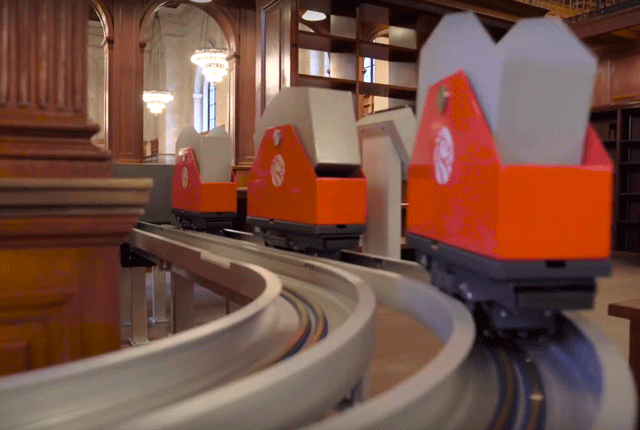
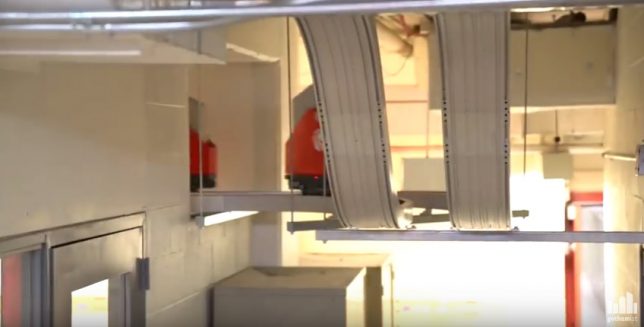
    A crafty conveyor system helps bring up books from a series of research stacks and storage spaces hidden beneath Bryant Park, making the volumes accessible via a system of miniature trains.

    This particular branch of the New York Public Library in the Stephen A. Schwarzman Building houses millions of volumes, many of which are stored below the ground.

    book-train-in-motion

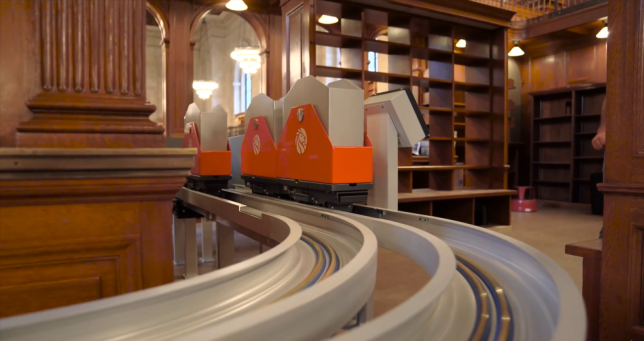
    This book train system looks a bit like a tiny roller coaster and is used to transfer materials seamlessly, quickly and automatically along the vertical-and-horizontal track system, carrying requested books directly to places like the Rose Main Reading Room.

    vertical-book-delivery

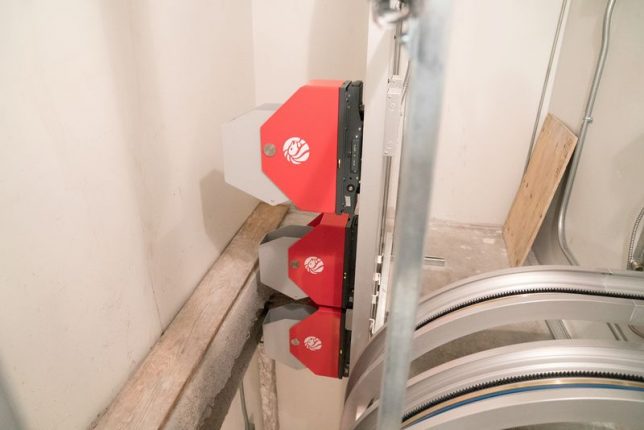
    Each cart (of which there are 24) can hold 30 pounds of reading materials and can climb 11 stories within the building to service various floors.

    reading-room-library-train

    A pivot joint between the book-carrying basket and the main body of the cart allows the former to remain upright without spilling its contents while the latter tilts up to 90 degrees, carrying books straight up between levels.

    Share on Facebook


    [ By WebUrbanist in Design & Fixtures & Interiors. ]

    [ WebUrbanist | Archives | Galleries | Privacy | TOS ]


    WebUrbanist

  • Modes of Transportation – 28 Images of Planes, Trains, and Automobiles

    We photographers tend to have a fascination with a few different subjects including old cars and bicycles.

    But what other modes of transport are there that we love to shoot? How many can you see here, and how have these photographers captured their essence, done them justice?

    These first few images are mine:

    Darlene Hildebrandt

    By Darlene Hildebrandt

    Darlene Hildebrandt

    By Darlene Hildebrandt

    Darlene Hildebrandt

    By Darlene Hildebrandt

    Darlene Hildebrandt

    By Darlene Hildebrandt

    Darlene Hildebrandt

    By Darlene Hildebrandt

    Darlene Hildebrandt

    By Darlene Hildebrandt

    These are by other photographers:

    Giovanni Orlando

    By Giovanni Orlando

    Howard Ignatius

    By Howard Ignatius

    Brent Pearson

    By Brent Pearson

    Timothy Neesam

    By Timothy Neesam

    Staffan Scherz

    By Staffan Scherz

    Garrett

    By Garrett

    Jimmy Brown

    By jimmy brown

    Peter Miller

    By Peter Miller

    Gerry Balding

    By Gerry Balding

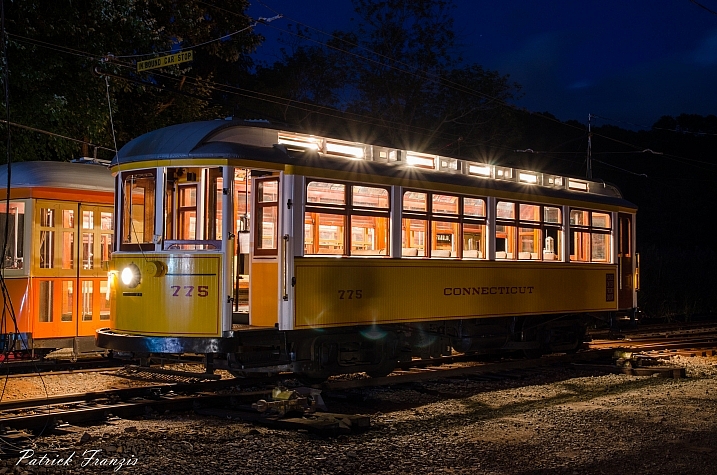
    Patrick Franzis

    By Patrick Franzis

    Justin

    By Justin

    Konstantinos B

    By Konstantinos B

    Amanda Tipton

    By amanda tipton

    Davide D'Amico

    By Davide D’Amico

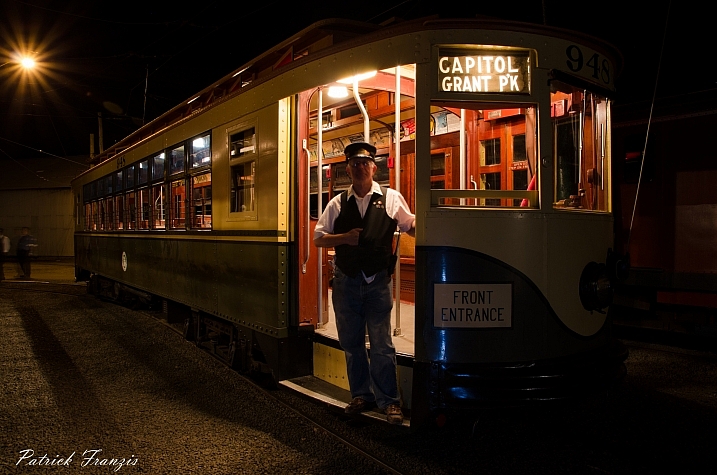
    Patrick Franzis

    By Patrick Franzis

    Jimmy Brown

    By jimmy brown

    Michael Kooiman

    By michael kooiman

    Ryan Desiderio

    By Ryan Desiderio

    WickedVT

    By WickedVT

    Madhan R

    By madhan r

    Kev Haworth Photography

    By Kev Haworth Photography

    Dennis Jarvis

    By Dennis Jarvis

    Caden Crawford

    By Caden Crawford

    googletag.cmd.push(function() {
    tablet_slots.push( googletag.defineSlot( “/1005424/_dPSv4_tab-all-article-bottom_(300×250)”, [300, 250], “pb-ad-78623” ).addService( googletag.pubads() ) ); } );

    googletag.cmd.push(function() {
    mobile_slots.push( googletag.defineSlot( “/1005424/_dPSv4_mob-all-article-bottom_(300×250)”, [300, 250], “pb-ad-78158” ).addService( googletag.pubads() ) ); } );

    The post Modes of Transportation – 28 Images of Planes, Trains, and Automobiles by Darlene Hildebrandt appeared first on Digital Photography School.


    Digital Photography School

  • Tube Travelators: Replacing London Trains with Moving Walkways

    [ By WebUrbanist in Conceptual & Futuristic & Technology. ]

    underground

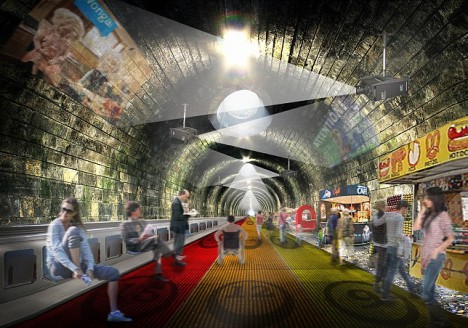
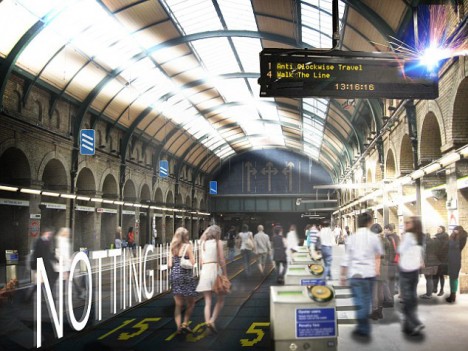
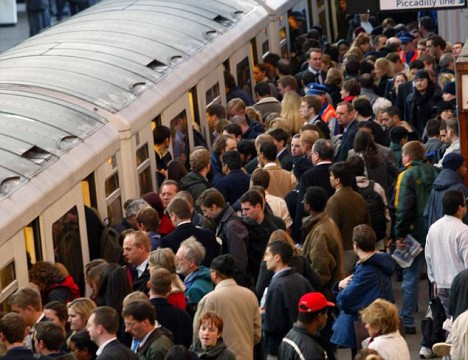
    A proposal by an international architecture firm would reduce travel time in the London Underground, not with faster rail cars but by using people movers of the kind generally found in airports. Closing the loop on questions of congestion, this strategy would stop trains in their tracks.

    tube congestion reduction standing

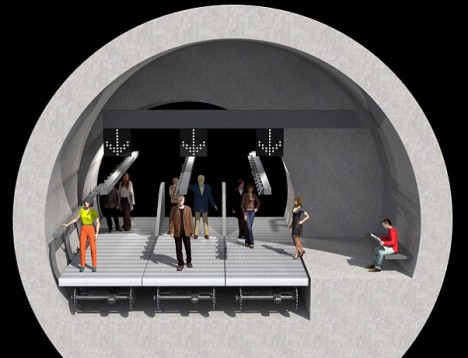
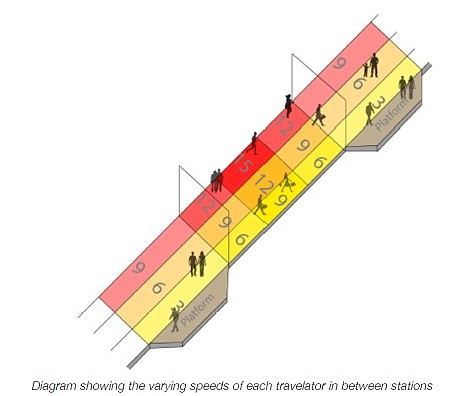
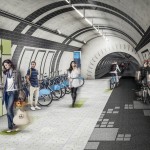
    Aimed at the congested Circle Line looping through the heart of the city, the design from NBBJ Architects incorporates three parallel walkways moving at different speeds (up to a maximum of 15 miles per hour). That may sound slow until you consider that the top speed of the trains currently running these sections of Tube is around 20 MPH due to congestion.

    tube function diagram design

    Commuters and travelers would step from the slowest-moving walkway across to increasingly faster lanes, using the replacement paths to connect to work or other (generally faster) lines of the Underground. People walking down the fast lane could actually end up moving more quickly than a train. Others could potentially sit down along one side on fold-down seats (as with an escalator railing, these would speed along at the same pace as the track below).

    tube futuristic walkway idea

    While the odds of implementation are slim, the data is compelling – the system could accommodate more passengers than the current trains and would eliminate the frustration of waiting in queues. The Circle Line in particular is infamous for delays, with an average of 10 reported per day.

    Christian Coop of NBBJ cites a challenge from think tank New London Architecture for the inspiration to create these strange proposal. If nothing else, it might be something to consider for the vast expanses of derelict underground rail space running through the city.

    Share on Facebook


    [ By WebUrbanist in Conceptual & Futuristic & Technology. ]

    [ WebUrbanist | Archives | Galleries | Privacy | TOS ]


    WebUrbanist

  • Plains, trains and automobiles: The landscape photography of Bill Leigh Brewer

    Bill Leigh Brewer’s career in photography started with a road trip, a Canon AE-1, lots of Kodachrome 25, and The Clash. His landscapes lend a surrealist quality to the commonplace and unique aspects of Americana, without demeaning its subjects. Take a look at his work and read our Q&A. See gallery

    Articles: Digital Photography Review (dpreview.com)

  • Non-Stop Rail: 2 Future Trains Pick Up Passengers in Motion

    [ By WebUrbanist in Conceptual & Futuristic & Technology. ]

    bullet train moving alongside

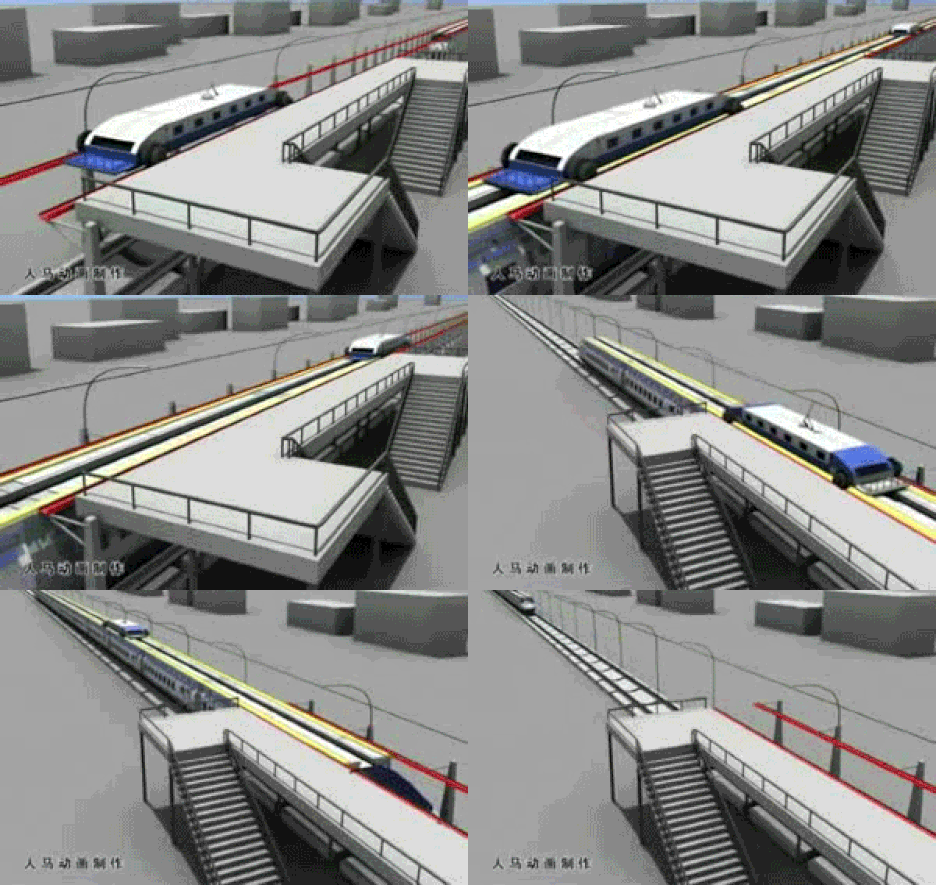
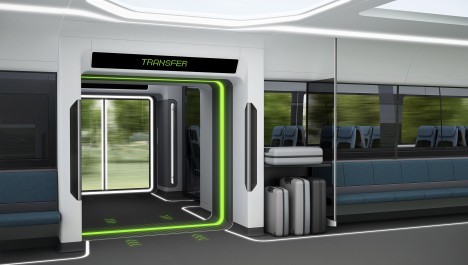
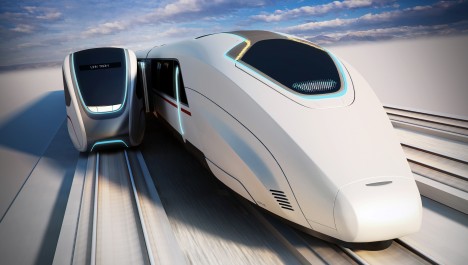
    Saving time, energy and bridging the gap between high-speed rail and local-only service, these proposed solutions (each in their own unique way) let people board and disembark at their leisure while the main train speeds along. In on case, passengers wait inside an ancillary car that hooks into a passing bullet train – in the other, they step seamlessly across a dock when changing between slower and faster trains.

    gif rail

    First, the overhead-car approach (illustrated above) from China, a country that has long been on the cutting-edge of record-fast rail travel, pioneering magnetic levitation trains and incredibly fast cross-country routes with few stops in between. One simply steps into the upper cabin and then walks down into the main train once the two sync up.  A second approach, proposed by PriestmanGoode and shown below, involves synchronizing two trains alongside one another then allowing each to dock with the other in transit.

    transfer train passenger idea

    Aside from being more energy-efficient, a lot of other standard frustrations of train travel are rendered obsolete by one or both approaches, like queuing up, pushing and shoving for quick entrances and exits at the right stop (an issue you will know is serious if you have ever ridden Chinese trains or subways). In the case of Moving Platforms from PG, train transfers in general could be made faster and smoother without requiring stops along the way.

    parallel docking bullet train

    At this stage, the concepts look promising but some technical questions still need to be resolved, including whether using wheels makes the most sense (in the Chinese variant) and the speed reduction required on the part of the passing train to make the two meet smoothly (in either case). Both, however, address a huge pain point in transportation as well as energy efficiency: slowing, stopping and waiting for and between public transit rides. Eventually, one could imagine an omni-directional maglev system taking people directly from buildings to their trains without needing to stop or transfer along the way.

    Share on Facebook


    [ By WebUrbanist in Conceptual & Futuristic & Technology. ]

    [ WebUrbanist | Archives | Galleries | Privacy | TOS ]


    WebUrbanist

  • Time-Traveling Trams: 30,000 LED Lights Vanish Street Trains

    [ By WebUrbanist in Art & Installation & Sound. ]

    seasonal time traveling tram

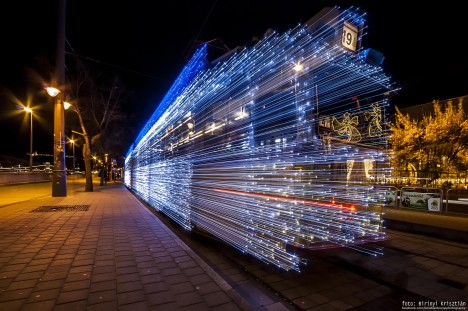
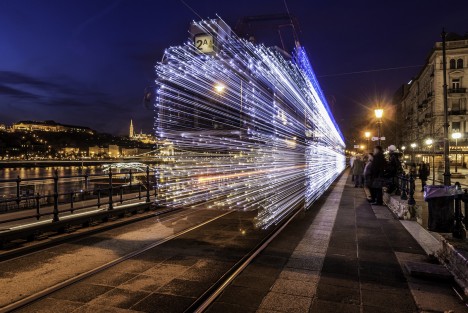
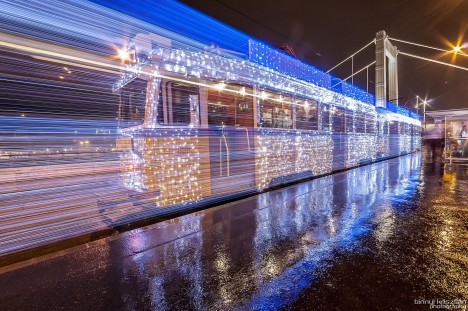
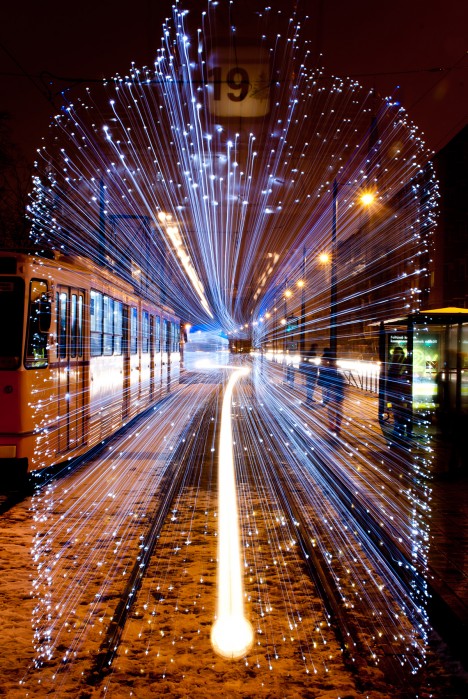
    Extended exposure photography combined with a unique art installation project creates an incredible time lapse illusion on the streets of Budapest, making train cars appear to disappear in a burst of light.

    seasonal christmas tram lights

    seasonal time lapse art

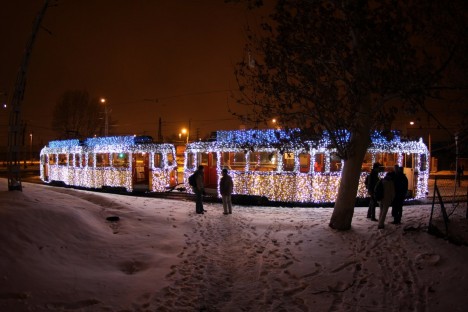
    Started for Christmas 2009, this is a project of a regional transport company since captures by a number of intrepid photographers, each showing different speeds and resulting effects.

    seasonal installation art series

    seasonal train photo shoot

    Via Colossal, this seasonal lighting is meant to attract tourists and additional riders, a decorative nod to the holidays as well as a moving work of photogenic art.

    seasonal train light art

    seasonal disappearing train view

    Images here were taken by Andras Csore, Victor Varga, Krisztian Birinyi, Krisztian Birinyi, Zsolt Andrasi English Hungary and the Centre for Budapest Transport.

    Share on Facebook


    [ By WebUrbanist in Art & Installation & Sound. ]

    [ WebUrbanist | Archives | Galleries | Privacy | TOS ]

    WebUrbanist

  • Talking Windows: Trains Deliver Ads Directly into Your Head

    [ By Delana in Conceptual & Futuristic & Technology. ]

    marketing through bone conduction ads

    Television, radio, the internet, billboards, newspapers, magazines, malls, supermarkets…wherever you are and whatever you’re doing, it’s highly likely that at least a few  companies are trying to market their products to you every moment. A quiet train ride and a nice nap used to be a welcome escape from the cacophony of consumerism, but soon even your commute-time nap may be filled with the sounds of advertisements.

    bone conduction train ads

    The German branch of ad company BBDO has tested a form of bone conduction technology on a train between Munich and North Rhine-Westphalia. When a commuters rest their heads against a window, hoping to catch a few winks before getting to their destination, ads which were previously inaudible suddenly begin playing inside their heads.

    The technology works by using high-frequency transmitters to send sounds through the train’s windows. If you aren’t touching the window you can’t hear the ads at all. But lean your head against the window and the sounds are loud and clear, having been transmitted through your skull and directly to your inner ear. It’s the same concept that makes bone-conduction headphones and hearing aids work.

    talking train window advertisements

    Although BBDO has no current plans to actually put the technology into use, the fact that it was tried out successfully may mean that this type of marketing will soon be used on a wider scale. We have a feeling commuters would object to the practice of advertisements invading their sleep, but if trains played relaxing music or important travel information in this manner it would be much easier to get behind the idea.

    Share on Facebook


    [ By Delana in Conceptual & Futuristic & Technology. ]

    [ WebUrbanist | Archives | Galleries | Privacy | TOS ]


    WebUrbanist

  • Faux Facades: Fake Buildings Hide Trains, Power & More

    [ By WebUrbanist in Architecture & Public & Institutional. ]

    fake urban architecture

    When is a building not a building? When it is only a facade, (aka) dummy! You might have passed right by train tunnels, communications towers or even entirely empty buildings and never realized you were being duped – until now.

    Underground Train Passage & Ventilation in Rowhouse

    fake architecture underground venting

    Consider units 23 & 24, Leinster Gardens in Paddington, London. When underground rail was routed through the neighborhood in the 1860s, the residences at those addresses were razed … and replaced with a very convincing facade. Behind it: an empty void for the old engines to vent along their route, and metal bracing to help hold up adjacent structures. Hoaxes played on this place include everything from the pizza-delivery redirect to a prankster selling tickets to a charity ball at the address.

    Subway Emergency Exit & Energy Converter in Townhouse

    fake building over subway

    One more urban ventilator before we move on: 58 Joralemon Street in Brooklyn, New York follows a similar pattern to its British brethren – blacked-out windows are the only up-close giveaway to an otherwise-complete illusion of occupation, while the railway runs below. This faux building has had multiple subway-related purposes beyond ventilation, though, including electrical conversion and emergency egress.

    Power Substations in Houses, Offices, Factories & Castles

    fake building power substations

    Toronto has a century-long history of hiding its urban energy substations as all kinds of architecture, from small single-family homes to huge block-sized factory buildings, at addresses including 29 Nelson Street, 2833 Yonge Street & 640 Millwood Road. Some have caught fire in freak accidents – not something the neighbors like to worry about. Others have been decommissioned and converted to residential or commercial use, in a strange instance of life imitating the art of imitation.

    Share on Facebook


    [ By WebUrbanist in Architecture & Public & Institutional. ]

    [ WebUrbanist | Archives | Galleries | Privacy | TOS ]

    WebUrbanist

  • Faux Facades: Fake Buildings Hide Trains, Power & More

    [ By WebUrbanist in Architecture & Public & Institutional. ]

    fake urban architecture

    When is a building not a building? When it is only a facade, (aka) dummy! You might have passed right by train tunnels, communications towers or even entirely empty buildings and never realized you were being duped – until now.

    Underground Train Passage & Ventilation in Rowhouse

    fake architecture underground venting

    Consider units 23 & 24, Leinster Gardens in Paddington, London. When underground rail was routed through the neighborhood in the 1860s, the residences at those addresses were razed … and replaced with a very convincing facade. Behind it: an empty void for the old engines to vent along their route, and metal bracing to help hold up adjacent structures. Hoaxes played on this place include everything from the pizza-delivery redirect to a prankster selling tickets to a charity ball at the address.

    Subway Emergency Exit & Energy Converter in Townhouse

    fake building over subway

    One more urban ventilator before we move on: 58 Joralemon Street in Brooklyn, New York follows a similar pattern to its British brethren – blacked-out windows are the only up-close giveaway to an otherwise-complete illusion of occupation, while the railway runs below. This faux building has had multiple subway-related purposes beyond ventilation, though, including electrical conversion and emergency egress.

    Power Substations in Houses, Offices, Factories & Castles

    fake building power substations

    Toronto has a century-long history of hiding its urban energy substations as all kinds of architecture, from small single-family homes to huge block-sized factory buildings, at addresses including 29 Nelson Street, 2833 Yonge Street & 640 Millwood Road. Some have caught fire in freak accidents – not something the neighbors like to worry about. Others have been decommissioned and converted to residential or commercial use, in a strange instance of life imitating the art of imitation.

    Next Page:
    Faux Facades Fake Buildings Hide Trains Power More

    Share on Facebook


    [ By WebUrbanist in Architecture & Public & Institutional. ]

    [ WebUrbanist | Archives | Galleries | Privacy | TOS ]


    WebUrbanist