Tag: Stops

  • Fujifilm debuts mid-price X-S10 with six stops of in-body stabilization

    $ (document).ready(function() { SampleGalleryV2({“containerId”:”embeddedSampleGallery_4447936161″,”galleryId”:”4447936161″,”isEmbeddedWidget”:true,”selectedImageIndex”:0,”isMobile”:false}) });

    Fujifilm has just introduced its newest APS-C mirrorless camera, the X-S10. It brings the X-T4’s still image capabilities into a smaller, more affordable package, with nearly the same in-body stabilization rating.

    The Fujifilm X-S10 features a 26.1MP X-Trans sensor and X-Processor 4, both borrowed from the X-T4. What isn’t lifted from the higher-end model is an all-new in-body image stabilization system, re-designed for the X-S10’s more compact form and 30% smaller than the X-T4’s IBIS unit. It’s rated up to 6 stops of shake reduction (compared to the X-T4’s 6.5) and achieves that level of performance with most of Fujifilm’s unstabilized lenses.

    The X-S10 offers a fully articulating 3″ LCD with 1.04 million dots, and a built-in electronic viewfinder that’s a bit lower resolution than what you’ll find on the X-T4: 2.36M dots compared to 3.69M. The camera offers a single UHS-I SD card slot and its battery is rated to 325 shots per charge.

    For video shooters the X-S10 provides 4K/30p recording, as well as microphone input and headphone connection via adapter. Flat F-Log recording is supported but, unlike the X-T4, footage can only be captured internally at 8-bit 4:2:0, though it can be recorded externally at 10-bit 4:2:2.

    The Fujifilm X-S10 is scheduled to arrive in November for $ 1000 body-only, $ 1400 for XF 18-55mm F2.8-4 kit, or $ 1500 for XF 16-80mm F4 R OIS WR kit.

    Press releas:

    Fujifilm Introduces X-S10 Mirrorless Digital Camera

    Up to 6.0-stops of In-Body Image Stabilization in a compact, lightweight body

    Valhalla, N.Y. – October 15, 2020 – FUJIFILM North America Corporation today announced the launch of FUJIFILM X-S10 (X-S10), the newest addition to the X Series family of compact and lightweight mirrorless digital cameras. X-S10 is expected to be available in November with two lens kit options.

    Equipped with key features including the 26.1MP X-TransTM CMOS 4 sensor, and the high- speed image processing engine, X-Processor 4, as well as In-Body Image Stabilization (IBIS), the X-S10 offers maximum functionality in a compact body.

    “X-S10 is a perfect fit for anyone who needs a lightweight imaging solution with professional features for both photo and video,” said Victor Ha, senior director of marketing and product management for FUJIFILM North America Corporation’s Electronic Imaging Division. “It offers something for everyone; the popular AUTO/SP (Scene Position) Mode automatically adjusts camera settings to produce stunning images without the need to make fine adjustments to image settings. The advanced video capabilities can either produce sharp 4K/30P 4:2:2 10-bit video or high-speed full-HD video at 240fps, and the vari-angle LCD screen can also be flipped forward 180 degrees, giving everyone from photographers and filmmakers to vloggers and hobbyists something to love about this camera.”

    Main product features:

    A newly developed, smaller IBIS for its compact body

    • The camera’s IBIS mechanism is approximately 30% smaller in volume and weight than the previous, similar X Series model*1. Despite its small size, weighing just 465g (1.02lb), X-S10 delivers up to 6.0-stops*2 of five-axis image stabilization. It is also the first mid-range X Series camera to use a motion sensor retention mechanism, which is a mechanical shock absorber that guards against slight vibrations that may come from the shutter unit, adding another level of stability beyond what was previously available in X Series products to ensure that image clarity and resolution are maintained.
    • To further assist with hand-held stability, X-S10 features a large, ergonomic magnesium- alloy grip, making it easy to keep the camera stable when large lenses are mounted. The design also features a magnesium-alloy front and top-plate to keep the body rigid and robust.

    Legendary Film Simulation Modes and updated AUTO functions for outstanding image quality

    • FUJIFILM Film Simulation Modes were created to celebrate the history of photographic film by digitizing some of the industry’s most iconic analog films. X-S10 features 18 Film Simulation Modes, including ETERNA Bleach Bypass, which creates a beautiful, desaturated, high-contrast look.
    • To complement these Film Simulation Modes, X-S10 also offers an updated [AUTO / SP (Scene Position)] mode that automatically adjusts shooting settings to the given scene, without the need to make further, fine adjustments in Settings. Now, photographing landscapes with clarity and vivid colors, making portraits with beautiful skin tones, and creating evenly-balanced images in back-lit conditions are possible, regardless of skill level.

    Dependable AF and High-Speed Burst Mode performance for those important moments

    • The combination of X-S10’s high-speed AF and AF-tracking performance with the X- TransTM CMOS 4 sensor’s 2.16 million phase detection pixels and X-Processor 4’s computing power provides quick and accurate autofocus results, achieving focus in as fast as 0.02 seconds in some cases, even at -7.0 EV*3.
    • X-S10 is equipped with high-precision Tracking AF for moving subjects and Face/Eye AF function to track a subject’s face and eyes.
    • Offers blackout-free, high-speed burst shooting of 30fps with the electronic shutter and 8fps when using the mechanical shutter*4.

    Vari-angle LCD monitor and viewfinder that supports three Boost modes

    • X-S10 has a vari-angle LCD monitor that can rotate up to 180 degrees, making it useful not only for selfies but also for stills and videos taken from various camera positions.
    • The viewfinder’s Live View function has three Boost modes available, including Low
      Light Priority, Resolution Priority Model, and Frame Rate Priority.

    Extensive video-recording functions

    • X-S10 generates 4K video from the amount of data equivalent to 6K to ensure the footage is in high resolution with low noise. It supports recording 4K/30p 4:2:0 8-bit video onto an SD card inserted in the camera, and outputting 4K/30p 4:2:2 10-bit video via the HDMI port.
    • The X-S10 camera is also capable of high-speed full-HD recording at 240fps, producing up to 10x slow-motion footage of a fast-moving subject’s split-second motion.
    • In addition to X-S10’s IBIS, its Digital Image Stabilization (DIS) mode powerfully compensates for camera shake even when walking with the camera. Adding IS Mode Boost provides even more stabilization, nearly eliminating camera shake when it is used from a fixed, hand-held position.
    • With a dedicated movie recording button on its top-plate, X-S10 lets users start recording video even when the camera is set to stills mode. It will also automatically set exposure and focus settings if the camera is in an AUTO shooting mode*5.

    Pricing and Availability

    X-S10 is expected to be available in the U.S. and Canada markets commencing November 2020 in black color, and will be offered in both a body-only and two XF lens kit options.

    FUJIFILM X-S10 body-only: $ 999.95 USD / $ 1,349.99 CAD

    FUJIFILM X-S10 with XF18-55mmF2.8-4 R lens kit: $ 1,399.95 USD / $ 1,899.99 CAD

    FUJIFILM X-S10 with XF16-80mmF4 R OIS WR lens kit: $ 1,499.95 USD / $ 2,049.99 CAD

    For more information, please visit https://fujifilm-x.com/en-us/products/cameras/x-s10/.

    *1 When compared with the IBIS function featured in the FUJIFILM X-T4 mirrorless digital camera
    *2 Offering a 6.0-stop advantage to 20 out of the 30 currently available, interchangeable X Series lenses (XF/XC lenses)
    *3 Referenced performance available using the X-S10 with an XF50mmF1.0 lens
    *4 High-speed continuous shooting without blackout (i.e. without the viewfinder going dark during shooting, causing the user to lose sight of the subject) applies only when using the X-S10 electronic shutter.
    *5 The AF mode automatically switches to Continuous AF in these instances.

    Fujifilm X-S10 specifications

    Price
    MSRP $ 999 (body only), $ 1399 (w/18-55mm lens), $ 1499 (w/16-80mm lens)
    Body type
    Body type SLR-style mirrorless
    Body material Magnesium alloy
    Sensor
    Max resolution 6240 x 4160
    Image ratio w:h 1:1, 3:2, 16:9
    Effective pixels 26 megapixels
    Sensor size APS-C (23.5 x 15.6 mm)
    Sensor type BSI-CMOS
    Color space sRGB, Adobe RGB
    Color filter array X-Trans
    Image
    ISO Auto, 160-12800 (expands to 80-51200)
    Boosted ISO (minimum) 80
    Boosted ISO (maximum) 51200
    White balance presets 7
    Custom white balance Yes (3 slots)
    Image stabilization Sensor-shift
    Image stabilization notes Up to 6 stops with select stabilized lenses. 5-5.5 stops with other lenses.
    CIPA image stabilization rating 6 stop(s)
    Uncompressed format RAW
    JPEG quality levels Fine, normal
    File format
    • JPEG (Exif v2.3)
    • Raw (Fujifilm RAF, 14-bit)
    Optics & Focus
    Autofocus
    • Contrast Detect (sensor)
    • Phase Detect
    • Multi-area
    • Center
    • Selective single-point
    • Tracking
    • Single
    • Continuous
    • Touch
    • Face Detection
    • Live View
    Autofocus assist lamp Yes
    Digital zoom Yes
    Manual focus Yes
    Number of focus points 425
    Lens mount Fujifilm X
    Focal length multiplier 1.5×
    Screen / viewfinder
    Articulated LCD Fully articulated
    Screen size 3
    Screen dots 1,040,000
    Touch screen Yes
    Screen type TFT LCD
    Live view Yes
    Viewfinder type Electronic
    Viewfinder coverage 100%
    Viewfinder magnification 0.93× (0.62× 35mm equiv.)
    Viewfinder resolution 2,360,000
    Photography features
    Minimum shutter speed 900 sec
    Maximum shutter speed 1/4000 sec
    Maximum shutter speed (electronic) 1/32000 sec
    Exposure modes
    • Program
    • Aperture priority
    • Shutter priority
    • Manual
    Built-in flash Yes
    Flash range 7.00 m (at ISO 200)
    External flash Yes (via hot shoe)
    Flash X sync speed 1/180 sec
    Continuous drive 20.0 fps
    Self-timer Yes
    Metering modes
    • Multi
    • Center-weighted
    • Average
    • Spot
    Exposure compensation ±5 (at 1/3 EV steps)
    AE Bracketing ±5 (2, 3, 5, 7 frames at 1/3 EV, 1/2 EV, 2/3 EV, 1 EV, 2 EV steps)
    WB Bracketing Yes
    Videography features
    Format MPEG-4, H.264
    Modes
    • 4096 x 2160 @ 30p / 200 Mbps, MOV, H.264, Linear PCM
    • 4096 x 2160 @ 25p / 200 Mbps, MOV, H.264, Linear PCM
    • 4096 x 2160 @ 24p / 200 Mbps, MOV, H.264, Linear PCM
    • 4096 x 2160 @ 23.98p / 200 Mbps, MOV, H.264, Linear PCM
    • 3840 x 2160 @ 30p / 200 Mbps, MOV, H.264, Linear PCM
    • 3840 x 2160 @ 25p / 200 Mbps, MOV, H.264, Linear PCM
    • 3840 x 2160 @ 24p / 200 Mbps, MOV, H.264, Linear PCM
    • 3840 x 2160 @ 23.98p / 200 Mbps, MOV, H.264, Linear PCM
    • 1920 x 1080 @ 240p / 200 Mbps, MOV, H.264, Linear PCM
    • 1920 x 1080 @ 120p / 200 Mbps, MOV, H.264, Linear PCM
    • 1920 x 1080 @ 60p / 200 Mbps, MOV, H.264, Linear PCM
    • 1920 x 1080 @ 50p / 200 Mbps, MOV, H.264, Linear PCM
    • 1920 x 1080 @ 30p / 200 Mbps, MOV, H.264, Linear PCM
    • 1920 x 1080 @ 25p / 200 Mbps, MOV, H.264, Linear PCM
    • 1920 x 1080 @ 24p / 200 Mbps, MOV, H.264, Linear PCM
    • 1920 x 1080 @ 23.98p / 200 Mbps, MOV, H.264, Linear PCM
    Microphone Stereo
    Speaker Mono
    Storage
    Storage types SD/SDHC/SDXC slot (UHS-I supported)
    Connectivity
    USB USB 3.2 Gen 1 (5 GBit/sec)
    USB charging Yes
    HDMI Yes (micro-HDMI)
    Microphone port Yes
    Headphone port No
    Wireless Built-In
    Wireless notes 802.11b/g/n + Bluetooth
    Remote control Yes (via smartphone)
    Physical
    Environmentally sealed No
    Battery Battery Pack
    Battery Life (CIPA) 325
    Weight (inc. batteries) 465 g (1.03 lb / 16.40 oz)
    Dimensions 126 x 85 x 65 mm (4.96 x 3.35 x 2.56)
    Other features
    Orientation sensor Yes
    Timelapse recording Yes
    GPS None

    Articles: Digital Photography Review (dpreview.com)

  • Panasonic’s new Lumix S Pro 70-200mm F2.8 offers up to 7 stops of shake reduction

    $ (document).ready(function() { SampleGalleryV2({“containerId”:”embeddedSampleGallery_1550322233″,”galleryId”:”1550322233″,”isEmbeddedWidget”:true,”selectedImageIndex”:0,”isMobile”:false}) });

    Panasonic has officially unveiled the Lumix S Pro 70-200mm F2.8 for its full-frame L-mount system, adding a fast-aperture, stabilized telephoto zoom to the native lens lineup. The lens will go on sale early next year for $ 2600.

    The 70-200mm F2.8 includes optical stabilization, which can be combined with in-camera ‘Dual IS 2’ system for a total of 7 stops of shake reduction. It’s dust and water-resistant, and offers a minimum focus distance of about 1m (3ft).

    The lens weighs 1570g (3.5lbs) and accepts 82mm filters. Optical construction comprises 22 total elements in 17 groups, including one aspherical, three Extra-low Dispersion and two Ultra Extra-Low Dispersion lenses to reduce chromatic aberration.

    The Panasonic Lumix S Pro 70-200mm F2.8 will arrive alongside the also-announced 16-35mm F4 in January at a price of $ 2600.

    Press release:

    Panasonic Launches Two New L-Mount Interchangeable Lenses for the LUMIX S Series Full-frame Digital Single Lens Mirrorless Camera

    Newark, NJ (November 6, 2019) – Panasonic is proud to introduce two new interchangeable lenses based on the L-Mount system for the LUMIX S Series Full-frame Digital Single Lens Mirrorless Cameras. Designed for professional use, the LUMIX S Series offers uncompromising photographic expression with its high-quality cameras and lenses.

    The LUMIX S PRO 70-200mm F2.8 O.I.S. (S-E70200) is a large-aperture telephoto zoom lens that boasts high descriptive performance across the entire zoom range. The LUMIX S PRO 16-35mm F4 (S-R1635) is a versatile wide zoom lens that provides high resolution images and a beautiful bokeh despite its compact, light-weight profile. Both high-performing LUMIX S PRO lenses achieve LEICA’s stringent standards.

    LUMIX S PRO/S Lens Lineup as of November 2019

    • LUMIX S PRO 50mm F1.4 (S-X50)
    • [NEW] LUMIX S PRO 16-35mm F4 (S-R1635)
    • LUMIX S PRO 24-70mm F2.8 (S-E2470)
    • LUMIX S 24-105mm F4 MACRO O.I.S. (S-R24105)
    • [NEW] LUMIX S PRO 70-200mm F2.8 O.I.S. (S-E70200)
    • LUMIX S PRO 70-200mm F4 O.I.S. (S-R70200)

    In addition to Panasonic’s existing portfolio of first-class lenses for the LUMIX S series family of cameras, the company is committed to designing and developing 11 or more lenses with the emphasis on the “LUMIX S PRO” class by March 2021. Currently, more than 46 interchangeable L-Mount lenses are available or will be available from Panasonic, Leica Camera AG and Sigma, opening up a virtually limitless spectrum of new creative possibilities.

    LUMIX S PRO 70-200mm F2.8 O.I.S. (S-E70200)

    Designed and developed for professional field shooting, the LUMIX S PRO 70-200mm F2.8 O.I.S. (S-E70200) uses 2 UED (Ultra Extra-low Dispersion) lenses, 3 ED (Extra-low Dispersion) lenses and optimum alignment comprising 22 elements in 17 groups, effectively suppressing both axial chromatic aberration and chromatic aberration of magnification. Astigmatism is also corrected with an aspherical lens, achieving high resolving performance. Adoption of a double focus system suppresses fluctuation of aberration even at close distances, which results in high descriptive performance from the center to the corners over the entire zoom range despite its large aperture.

    Covering from 70mm to 200mm, the use of a Teleconverter allows a maximum 280mm (1.4x, with DMW-STC14) and 400mm (2x, with DMW-STC20) super telephoto shooting*1, with maximum 480 fps focus control for high-speed, high-precision auto focus. The O.I.S. (Optical Image Stabilizer) in the lens complies with the camera’s Body I.S. and the 5-Axis Dual I.S. 2*2 makes it possible to use a 7-stop slower shutter speed*3. Adoption of a focus clutch mechanism enables instant AF/MF switching and accurate manual focusing.

    The constant F2.8 large aperture provides smooth defocus gradation from the focus peak to the neighboring area of the image to achieve a beautiful bokeh effect as well as a rich perspective. The LUMIX S PRO 70-200mm F2.8 O.I.S. also excels in video recording performance with a mechanism that suppresses focus breathing, which was a fatal problem in all interchangeable lenses designed for still image photography.

    The rugged, dust/splash-resistant*4 design withstands use under harsh conditions even at 10 degrees below zero for high mobility. The filter size is 82 mm, with an 11-blade circular aperture diaphragm.

    LUMIX S PRO 16-35mm F4 (S-R1635)

    The LUMIX S PRO 16-35mm F4 (S-R1635) is a versatile wide zoom lens boasts high descriptive performance in both photo shooting and video recording.

    Comprising 12 elements in 9 groups, the use of 3 aspherical lenses, an ED (Extra-low Dispersion) lens and a UHR (Ultra-High Refractive Index) lens and the optimum alignment achieves high MTF performance despite its compact size and light weight. It boasts stunningly high resolution toward the corners even at wide open as well as a beautiful bokeh, suppressing double line bokeh and vignetting.

    A double-magnet linear motor is integrated for the AF actuator, featuring high power despite its small size, achieving a maximum 480 fps high-speed sensor drive. This realizes fast, high-precision AF to ensure that photo opportunities are never missed. Like the 70-200mm F2.8 O.I.S. (S-E70200), the 16-35mm F4 (S-R1635) adopts a focus clutch mechanism, enabling instant AF/MF switching and accurate manual focusing, as well as excels in video recording performance thanks to a mechanism that suppresses focus breathing.

    It is also rugged dust/splash-resistant, *4 withstanding harsh conditions even at 10 degrees below zero for high mobility. The filter size is 77 mm, with a 9-blade circular aperture diaphragm.

    Both lenses will be at retail in January. The LUMIX S PRO 16-35mm F4 will available for $ 1,499 and the LUMIX S PRO 70-200mm F2.8 is $ 2,599.

    *1 Use of the tele converter reduces the effective aperture by one f/stop (DMW-STC14) or two f/stops DMW-STC20)
    *2 5-Axis Dual I.S. 2 can be used with the camera LUMIX S1R, S1 and S1H, as of November 6, 2019.
    *3 Based on the CIPA standard [Yaw/Pitch direction: focusing distance f=200mm, when
    LUMIX S1R/S1/S1H is used.]
    *4 Dust and Splash Resistant does not guarantee that damage will not occur if this lens is subjected to
    direct contact with dust and water.

    Panasonic Lumix S Pro 70-200mm F2.8 O.I.S. specifications

    Principal specifications
    Lens type Zoom lens
    Max Format size 35mm FF
    Focal length 70–200 mm
    Image stabilization Yes (up to 7 stops with Dual IS 2 compatible bodies)
    CIPA Image stabilization rating 7 stop(s)
    Lens mount Leica SL
    Aperture
    Maximum aperture F2.8
    Minimum aperture F22
    Aperture ring No
    Number of diaphragm blades 11
    Optics
    Elements 22
    Groups 17
    Special elements / coatings 1 aspherical + 3 ED + 3 UED elements
    Focus
    Minimum focus 0.95 m (37.4)
    Maximum magnification 0.21×
    Autofocus Yes
    Motor type Linear Motor
    Full time manual Yes
    Focus method Internal
    Distance scale Yes
    DoF scale No
    Focus distance limiter Yes
    Physical
    Weight 1570 g (3.46 lb)
    Diameter 94 mm (3.7)
    Length 209 mm (8.23)
    Materials Magnesium alloy
    Sealing Yes
    Colour Black
    Zoom method Rotary (extending)
    Power zoom No
    Zoom lock No
    Filter thread 82 mm
    Hood supplied Yes
    Tripod collar Yes

    Articles: Digital Photography Review (dpreview.com)

  • Report: Apple stops development of quantum dot image sensors

    Last week, shares of Nanoco Technology, a UK company specializing in quantum dot (QD) technology, dropped by nearly 80 percent after news broke that a high-volume supply-contract had been canceled by a major customer.

    The Telegraph now reports this customer is Apple which has been working with Nanoco on the development of QD technology for image sensors that could have been used in future iPhone generations. According to market research firm BlueFin Research, Apple decided to stop the development of QD image sensors because it was too expensive for mass production.

    Nanoco first announced a partnership with a ‘large, undisclosed U.S. listed corporation’ in 2018. In January of this year it announced the contract had been expanded to cover stress testing and refinements. According to the report, the contract had a volume of £17.1 million ($ 21.7 million) which is more than half of Nanoco’s total revenue.

    The UK company specializes in cadmium-free QDs, which are currently predominantly used to improve image quality on TVs and other high-resolution large screens where the dots’ light-emitting properties allow for more accurate color rendering. In an image sensor Apple and Nanoco were hoping to apply the technology to enhance image quality and help with the development of advanced augmented reality features.

    With QD technology off the table, it remains to be seen if Apple’s iPhone cameras will rely on more conventional technologies for the foreseeable future or if the US company has another innovative image sensor card up its sleeve.

    Articles: Digital Photography Review (dpreview.com)

  • Nikon stops all activity in Brazil after ending sales in 2017

    Last year, Nikon announced plans to end its sales in Brazil as part of a “global scale restructuring,” a decision that went into effect on December 31, 2017. Though product sales ended, the company maintained its Brazil-based customer and technical support business segments in the nation, but that too has come to an end.

    In a statement last week, Nikon Brazil revealed that it is ending all of its activities in the country. Nikon Group will still offer technical assistance and warranty repairs for valid warranties, but photography equipment owners will need to submit those requests through the Nikon Brazil website. Any out-of-warranty requests will be handled by Nikon USA.

    Since the shuttering of its e-commerce sales in December 2017, photographers seeking Nikon gear in Brazil have had to rely on parallel imports brought into the country through non-official channels, without valid warranties.

    Via: PetaPixel

    Articles: Digital Photography Review (dpreview.com)

  • RED unveils Monstro 8K VV full-frame sensor with 17+ stops of dynamic range

    RED has just announced its new Monstro 8K VV full-frame sensor for Weapon cameras. The device features a 35.4MP 40.96mm x 21.60mm sensor and is able to record at a full 8K/60fps resolution. RED explains that the Monstro 8K VV replaces its existing DRAGON 8K VV sensor, and that anyone who has ordered the DRAGON 8K VV will be offered the Monstro as of October 5th.

    The Monstro 8K VV sensor has full support for RED’s IPP2 image processing pipeline, as well as an “unprecedented dynamic range [of 17+ stops] and breathtaking color accuracy,” according to RED President Jarred Land. When coupled with the Weapon 8K VV, the device can simultaneously record Redcode RAW and either Avid DNxHD/HR or Apple ProRes, likewise offering data speeds up to 300MB/s. The sensor’s full technical spec sheet is insane, and available for your viewing pleasure here.

    Existing carbon fiber Weapon customers have the option of upgrading for $ 29,500, while the new Weapon with the full-frame Monstro sensor is priced at $ 79,500. New orders for the device will start shipping to customers in early 2018.

    Press Release

    RED ANNOUNCES THE NEW MONSTRO 8K VV

    Today RED announced a new cinematic Full Frame sensor for WEAPON cameras, MONSTRO™ 8K VV. MONSTRO is an evolutionary step beyond the RED DRAGON 8K VV sensor with improvements in image quality, including dynamic range and shadow detail.

    This new camera and sensor combination, WEAPON 8K VV, offers Full Frame lens coverage, captures 8K full format motion at up to 60 fps, produces ultra-detailed 35.4 megapixel stills, and delivers incredibly fast data speeds of up to 300 MB/s. Like all of RED’s DSMC2 cameras, WEAPON shoots simultaneous REDCODE RAWand Apple ProRes or Avid DNxHD/HR recording and adheres to RED’s dedication to OBSOLESCENCEOBSOLETE—a core operating principle that allows current RED owners to upgrade their technology as innovations are unveiled as well as move between camera systems without having to purchase all new gear.

    “RED’s internal sensor program continues to push the boundaries of pixel design and MONSTRO is the materialization of our relentless pursuit to make the absolute best image sensors on the planet,” says Jarred Land, President of RED Digital Cinema. “The Full Frame 8K VV MONSTRO provides unprecedented dynamic range and breathtaking color accuracy with full support for our IPP2 pipeline.”

    The new WEAPON will be priced at $ 79,500 (for the camera BRAIN) with upgrades for carbon fiber WEAPONcustomers available for $ 29,500. MONSTRO 8K VV will replace the current RED DRAGON 8K VV sensor in RED’s lineup, and customers that had previously placed an order for a RED DRAGON 8K VV sensor will be offered this new sensor beginning today. New orders will start being fulfilled in early 2018.

    RED has also announced a comprehensive service offering for WEAPON carbon fiber camera owners called REDARMOR-W. RED ARMOR-W offers enhanced and extended protection beyond basic RED ARMOR, and also includes one sensor swap each year.

    “‘Good’ has never been ‘good enough’ for RED,” says Land. “We put ourselves in the shoes of our customers and see how we can improve how we can support them. RED ARMOR-W builds upon the foundation of our original extended warranty program and includes giving customers the ability to move between sensors based upon their shooting needs.”

    Additionally, RED’s enhanced image processing pipeline (IPP2) is now available in-camera for all cameras with HELIUM and MONSTRO sensors through today’s v7.0 release firmware update. IPP2 offers a completely overhauled workflow experience, featuring enhancements such as smoother highlight roll-off, better management of challenging colors, an improved demosaicing algorithm, and more.

    Articles: Digital Photography Review (dpreview.com)

  • US Army abruptly stops using DJI drones due to ‘cyber vulnerabilities’

    A leaked US Army memo obtained by unmanned aviation news site sUAS News is making some waves in the drone world today. In the memo, the largest branch of the United States armed forces called for its units to “cease all use, uninstall all DJI applications, remove all batteries/storage media from devices, and secure equipment for follow on directions.”

    The decision was reached by the US Navy and the US Army Research Lab, which identified ‘operational risks’ and ‘user vulnerabilities’ in DJI’s products.

    The memo does not go into detail regarding the specific vulnerabilities, saying only that,

    Due to increased awareness of cyber vulnerabilities associated with DJI products, it is directed that the U.S. Army halt use of all DJI products. This guidance applies to all DJI UAS and any system that employs DJI electrical components or software including, but not limited to, flight computers, cameras, radios, batteries, speed controllers, GPS units, handheld control stations, or devices with DJI software applications installed.

    DJI’s public relations manager Michael Perry responded to the news in an e-mail to sUAS News, saying the company was ‘surprised and disappointed’ that the Army didn’t consult DJI during the decision process. “We are happy to work directly with any organization, including the U.S. Army, that has concerns about our management of cyber issues,” wrote Perry, saying that DJI would reach out to the US Army to confirm the memo and better understand what they mean by ‘cyber vulnerabilities.’

    To read the full memo and response, or dive a bit deeper into some of the cyber security concerns surrounding DJI’s products, head over to sUAS News by clicking here.

    Articles: Digital Photography Review (dpreview.com)

  • 5 Troubleshooting Steps for When Your Nikon’s Autofocus Stops Working

    You’re in the middle of a photoshoot and suddenly you notice nothing in your viewfinder is in focus. Your shutter and AF-ON buttons (if using back-button focusing) do not seem to work. All eyes are on you, and the pressure is on to quickly fix the problem. Where do you start? Or perhaps you have just changed lenses and suddenly nothing works. Where might you have gone wrong?

    This has happened to me one too many times, so I have now come up with a system of troubleshooting in the quickest time possible on the spot. It goes without saying, of course, that your camera needs to be switched to ON and the lens cap needs to be off.

    nikon-autofocus-troubleshooting-photo-tips

    #1 Autofocus not Manual

    Check that both the lens and the camera switches are both pointing towards Autofocus. On the camera it must be set on AF, not M, and on the lens put it to M/A (A stands for Autofocus and M for Manual, M/A allows you to use both). Flicking the lens switch to Manual can be done unwittingly and fairly easily, especially if you are in a rush to change lenses.

    nikon-autofocus-troubleshooting-photo-tips

    nikon-autofocus-troubleshooting-photo-tips

    #2 Back dial is not Locked

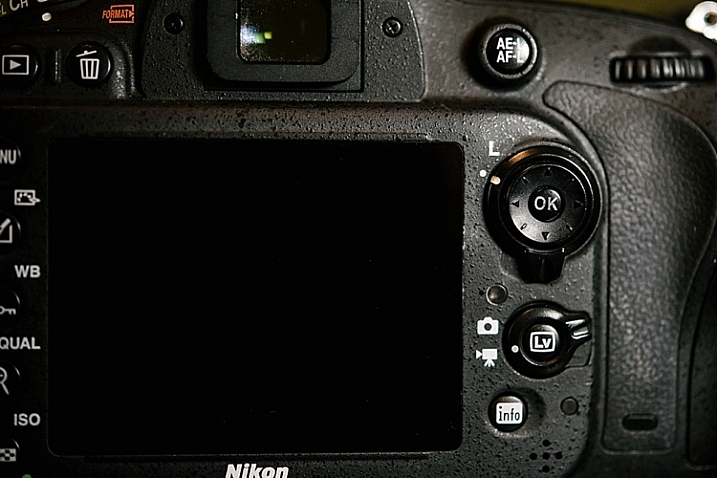
    Check that the dial is pointed towards the camera icon and not the L, which stands for lock.  You can easily flick this dial, especially if you are back-button focusing and your dial sees so much action.

    nikon-autofocus-troubleshooting-photo-tips

    #3 AEL / AFL

    Check your AEL/AFL button that you haven’t locked focus. Clicking it once locks focus so click it another time to unlock focus.

    nikon-autofocus-troubleshooting-photo-tips

    #4 Check the lens

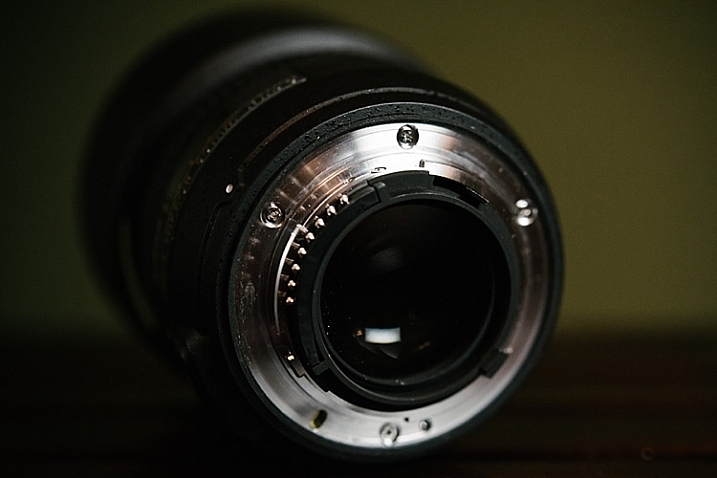
    Remove the lens. Inspect the front and rear lens aspects for smudges or dirt. Check also that no part of the lens is broken. If you have filters on your lens, check that they are clear and there are no cracks. When you re-attach the lens, make sure you hear a click once the lens is twisted in place.  If there are any smudges on the lens, make sure you clean it with a lens cloth, and do not blow on the lens.

    Lens cloths are usually lint-free pieces of material, and should be used with a lens cleaning solution, rather than anything with solvents. Blowing on the lens can contribute to lens damage since a person’s breath can contain harmful acids. If you feel you have to blow, use a lens bulb blower and a brush.

    nikon-autofocus-troubleshooting-photo-tips

    #5 Viewfinder

    Finally, check your viewfinder and make sure there are no oils, smudges or dirt covering your sight. You can clean the viewfinder the same way you clean your lens.

    nikon-autofocus-troubleshooting-photo-tips

    #6 Bonus

    This applies to any camera, not just Nikons. If something is going on with your camera that is odd – turn it off for a few seconds, then turn it back on. It’s like a reboot for your camera, just like you do with your computer. If that doesn’t work you can also try removing the battery for a minute or more (remember to turn the camera off before removing the battery). As a last ditch effort you could try resetting all functions and settings on the camera to factory default. If it still isn’t working test the camera with another lens, if that one works you may need to take your lens in to get serviced. If the

    I hope this little troubleshooting guide helps when you get stuck with focusing problems. Do you have any other quick focus troubleshooting tips to share?

    googletag.cmd.push(function() {
    tablet_slots.push( googletag.defineSlot( “/1005424/_dPSv4_tab-all-article-bottom_(300×250)”, [300, 250], “pb-ad-78623” ).addService( googletag.pubads() ) ); } );

    googletag.cmd.push(function() {
    mobile_slots.push( googletag.defineSlot( “/1005424/_dPSv4_mob-all-article-bottom_(300×250)”, [300, 250], “pb-ad-78158” ).addService( googletag.pubads() ) ); } );

    The post 5 Troubleshooting Steps for When Your Nikon’s Autofocus Stops Working by Lily Sawyer appeared first on Digital Photography School.


    Digital Photography School

  • Soviet Bus Stops: Surreal Architectural Roadside Wonders

    [ By Steph in Destinations & Sights & Travel. ]

    soviet bus stops 1

    Standing stark against silent desert backdrops like sculptures made for Burning Man, these leftover Soviet structures are actually bus stops scattered throughout one of the most sparsely populated regions on Earth. Photographer Christopher Herwig followed bus routes from Estonia to Armenia to photograph odd little roadside shelters in former Soviet satellite states for a new book.

    soviet bus stops 8

    soviet bus stops 12

    ‘SOVIET BUS STOPS’ chronicles dozens of these entirely unique and surprisingly artistic structures in 157 color photographs, exploring the bus pavilion as its own architectural form. “There is a certain amount of [utilitarianism] here,” reads the foreword by Jonathan Meades. “But it is atypical. The norm is wild going on savage. Just as follies were, in the 18th century, often try-outs for new architectural styles, so may some of these wayward roadside punctuation marks have been structural or aesthetic experiments; they certainly don’t lack grandeur and audacity.”

    soviet bus stops 5

    soviet bus stops 4

    soviet bus stops 3

    Herwig first discovered the strange beauty of these huts on a long-distance bike ride from London to St. Petersburg in 2002. Designed by local artists, seemingly without any restrictions from the government providing the money, each one displays a bit of the character of the town in which it stands.

    soviet bus stops 11

    soviet bus stops 10

    soviet bus stops 9

    Throughout his journey, which took him to 13 countries and through territories that are rarely traversed by tourists, Herwig reports that he was occasionally accused of being a spy. The photographer scoured maps, Google Earth and traveler’s blogs for clues to find many of the shelters, which appear to be in exceptionally good shape for their age.

    soviet bus stops 2

    soviet bus stops 6

    soviet bus stops 7

    Twelve years in the making, the photos were originally published in a limited-edition, sold-out version of the book, which is now available in an expanded, smaller-format trade edition. 


    Share on Facebook


    [ By Steph in Destinations & Sights & Travel. ]

    [ WebUrbanist | Archives | Galleries | Privacy | TOS ]



    WebUrbanist

  • Sweet Transit: Japan’s Cute Fruit-Shaped Bus Stops

    [ By Steve in Destinations & Sights & Travel. ]

    fruit-bus-stops-strawberry-1a
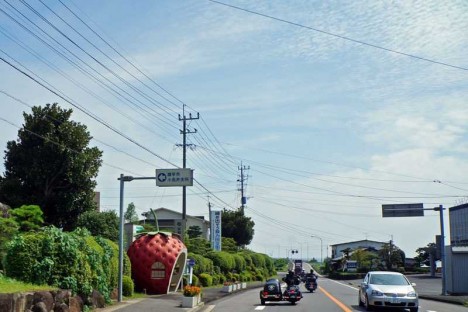
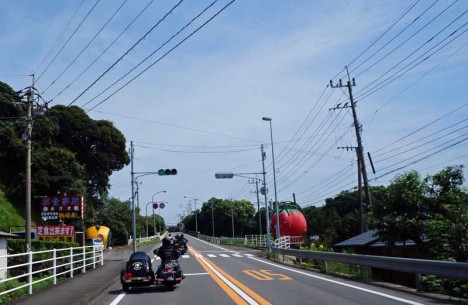
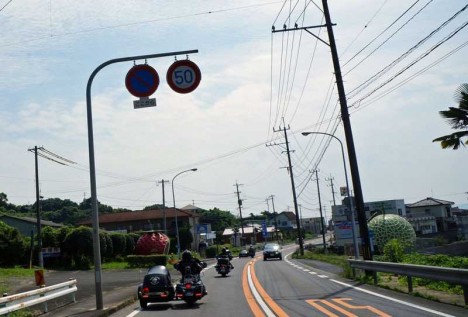
    Originally built for a 1990 travel expo, these fruit-shaped bus stops from southern Japan still look as tasteful (and tasty!) as they did 25 years ago.

    fruit-bus-stops-pair-1a

    fruit-bus-stops-motorcycle-1a

    fruit-bus-stops-motorcycle-1b

    fruit-bus-stops-motorcycle-1c

    EXPO ’90 (or the International Garden and Greenery Exposition; its formal title) was hosted by the city of Osaka from April through September of 1990. The fair attracted over 23,000,000 visitors over a six-month run, and a host of smaller fairs expressing related themes were held across Japan as well.

    fruit-bus-stops-orange-2

    fruit-bus-stops-tomato-1a

    fruit-bus-stops-heroes

    fruit-bus-stops-watermelon-1a

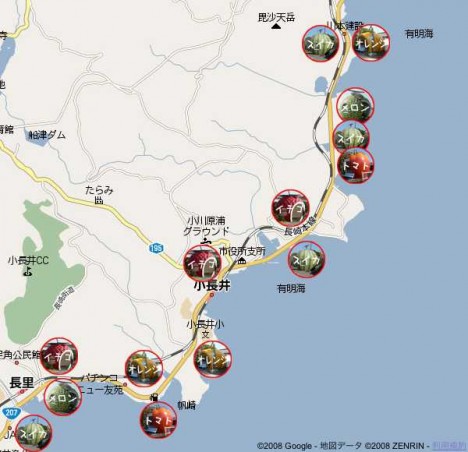
    Konagai, a small town situated just east of Nagasaki, decided to jump aboard the bandwagon by hosting the little-known Nagasaki Journey exhibition. The only remaining relics of the fair are fourteen bus stops (some sources state the number to be 16) constructed in the form of hollowed-out oversized fruits!

    fruit-bus-stops-map

    naga_yama_bus02fru_bus_stop

    The stops have held up remarkably well over the ensuing quarter-century… still functional and in splendid shape structurally, the bus stops erected along the 207 National Highway have become a tourist attraction in their own right.

    Next Page – Click Below to Read More:
    Sweet Transit Japans Cute Fruit Shaped Bus Stops

    Share on Facebook


    [ By Steve in Destinations & Sights & Travel. ]

    [ WebUrbanist | Archives | Galleries | Privacy | TOS ]


    WebUrbanist

  • Commuter Glitch: 15 Abandoned Bus Stops & Shelters

    [ By Steve in Abandoned Places & Architecture. ]

    abandoned-bus-stop-1a
    Bus routes often change so why are so many bus stops built to last? These 15 abandoned bus stops are prime examples of non-transient transit infrastructure.

    abandoned-bus-stop-1b

    abandoned-bus-stop-1c

    Wow, Topeka has really let itself go… well, some parts at least. Flickr user Mike Linksvayer (mlinksva) captured the sorry state of this brazenly neglected and obviously abandoned Kansas Avenue bus stop on November 26th, 2014.

    “Feed Me, Seymour!”

    abandoned-bus-stop-12

    Flickr user Laszlo Ujvari snapped this naturally camouflaged abandoned bus stop on February 24th, 2013. No wonder it was abandoned: who the heck could find it? How long did it take for Mother Nature to consume this unnamed bus stop… and is there a similarly smothered bus filled with skeletons stranded nearby?

    Raus-ted

    abandoned-bus-stop-2

    The former East Germany is awash in abandoned infrastructure and, it would seem, unwelcome bus-riding Nazis. Flickr user Jim Cooper (stilo95hp) photo-documented this abandoned bus stop and complementary busted street lamp in Hoyerswerda, a gritty industrial town near the Polish border infamous for spates of anti-immigrant violence.

    Bulgarity


    abandoned-bus-stop-3a

    abandoned-bus-stop-3b

    So how’s that capitalism thing working out for you, post-communist Eastern Europe? Flickr user Tony G. (trghpu 1994) caught this abandoned Bulgarian bus stop/station on January 18th of 2013. Why is it abandoned? Well, most Bulgarians drive Bentley’s and Rolls Royce’s nowadays, dontcha know, making bus travel virtually obsolete. Yeah, that’s the (bus) ticket!

    The Best Laid Plans…

    abandoned-bus-stop-14

    Shrubbery waiting for a bus? According to Flickr user Shawn Watson (gator_macready), this verdantly overgrown and rather large bus stop was abandoned shortly after it was built – never once did any buses stop there! Supposedly the bus stop was built in anticipation of an industrial district that never moved beyond the planning stage. Nice job of planning there, North Queensferry (Scotland) urban planners!

    Next Page – Click Below to Read More:
    Commuter Glitch 15 Abandoned Bus Stops Shelters

    Share on Facebook


    [ By Steve in Abandoned Places & Architecture. ]

    [ WebUrbanist | Archives | Galleries | Privacy | TOS ]


    WebUrbanist