Tag: Stanford

  • Exhibit & Book Not To Miss – Carleton Watkins: The Stanford Albums

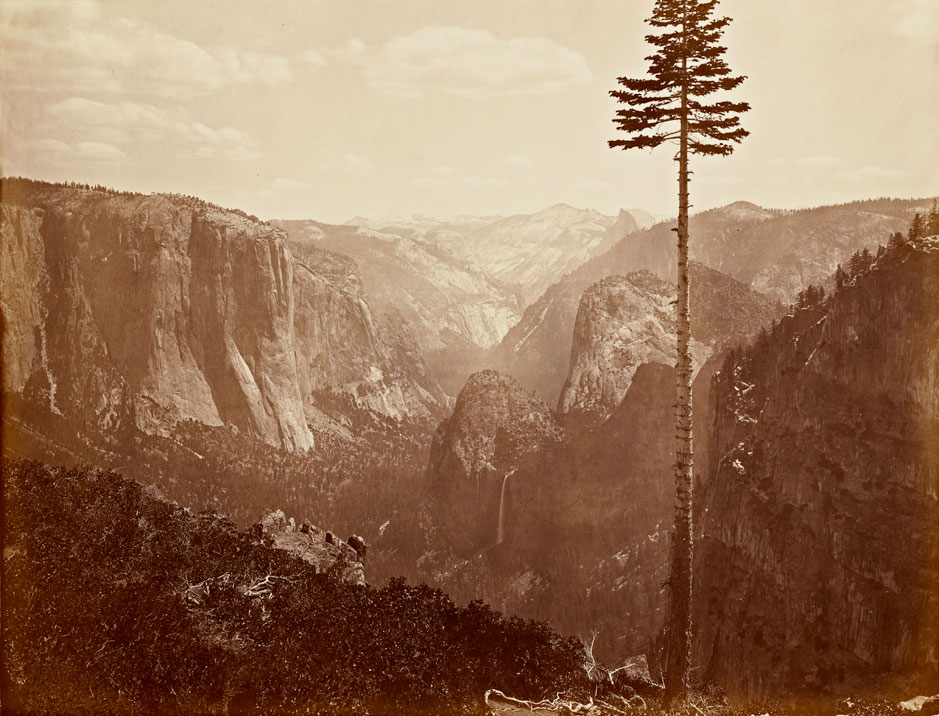
    “The Yosemite Valley from the ‘Best General View,’” 1866

    There is a lot we take for granted about National Parks, in particular the likes of Yosemite National Park, which are steeped in history particularly in the realm of nature conservation. If you’re a fan of Yosemite you may already know this year is the 150th Anniversary of the Yosemite Act of 1864. This single piece of legislation put the wheels in motion for the  eventual creation of our National Park system with the help of then U.S. President Abraham Lincoln.

    What is particularly fascinating about this anniversary is that it may never have happened without Carleton Watkins photographing Yosemite in the early 1860′s with a camera capable of producing stereo views and another camera capable of holding 18×22 glass negatives. These 18×22 plates became known as the “mammoth plates”.    Watkins had a rough ride of it as a professional photographer losing his studio in the great San Francisco earthquake of 1906, but some of his photographs survived. (3) three of his albums reside at the Stanford University Libraries and select photos from these albums are now on display through August 17th, 2014 at the Cantor Art Center. Even more notable for Yosemite fans worldwide is the release of these 3 albums via a large format photo book aptly titled the Carleton Watkins: The Stanford Albums. Remarkably this beautiful large format book, containing 280 pages, is only $ 40. I received my copy this past week and it’s amazing. I highly recommend it both for the beautiful photos, rich history, and fine quality of the book. Before there was Ansel Adams there was Carleton Watkins and his photos are a rare glimpse into Yosemite Valley’s past.

    Side Notes

    What did I find so amazing about the images in this book?

    1. It reveals a view of San Francisco when it was still forming.
    2. It shows Yosemite more barren and populated in a different fashion than we see today.
    3. It shows how a single photographer first visualized wild landscapes setting the visual tone for future photographers to emulate for decades to come.

    Copyright Jim M. Goldstein, All Rights Reserved

    Exhibit & Book Not To Miss – Carleton Watkins: The Stanford Albums

    The post Exhibit & Book Not To Miss – Carleton Watkins: The Stanford Albums appeared first on JMG-Galleries – Landscape, Nature & Travel Photography.


    Related Stories

    • Exhibit & Book Not To Miss – Carleton Watkins: The Stanford Albums – Enclosure
    • Return of Film: Snowy Sunrise at Gates of the Valley
    • Wilderness Protection – Only As Strong As The Wilderness Act


    JMG-Galleries

  • Exhibit & Book Not To Miss – Carleton Watkins: The Stanford Albums

    “The Yosemite Valley from the ‘Best General View,’” 1866

    There is a lot we take for granted about National Parks, in particular the likes of Yosemite National Park, which are steeped in history particularly in the realm of nature conservation. If you’re a fan of Yosemite you may already know this year is the 150th Anniversary of the Yosemite Act of 1864. This single piece of legislation put the wheels in motion for the  eventual creation of our National Park system with the help of then U.S. President Abraham Lincoln.

    What is particularly fascinating about this anniversary is that it may never have happened without Carleton Watkins photographing Yosemite in the early 1860′s with a camera capable of producing stereo views and another camera capable of holding 18×22 glass negatives. These 18×22 plates became known as the “mammoth plates”.    Watkins had a rough ride of it as a professional photographer losing his studio in the great San Francisco earthquake of 1906, but some of his photographs survived. (3) three of his albums reside at the Stanford University Libraries and select photos from these albums are now on display through August 17th, 2014 at the Cantor Art Center. Even more notable for Yosemite fans worldwide is the release of these 3 albums via a large format photo book aptly titled the Carleton Watkins: The Stanford Albums. Remarkably this beautiful large format book, containing 280 pages, is only $ 40. I received my copy this past week and it’s amazing. I highly recommend it both for the beautiful photos, rich history, and fine quality of the book. Before there was Ansel Adams there was Carleton Watkins and his photos are a rare glimpse into Yosemite Valley’s past.

    Side Notes

    What did I find so amazing about the images in this book?

    1. It reveals a view of San Francisco when it was still forming.
    2. It shows Yosemite more barren and populated in a different fashion than we see today.
    3. It shows how a single photographer first visualized wild landscapes setting the visual tone for future photographers to emulate for decades to come.

    Copyright Jim M. Goldstein, All Rights Reserved

    Exhibit & Book Not To Miss – Carleton Watkins: The Stanford Albums

    The post Exhibit & Book Not To Miss – Carleton Watkins: The Stanford Albums appeared first on JMG-Galleries – Landscape, Nature & Travel Photography.


    Related Stories

    • Return of Film: Snowy Sunrise at Gates of the Valley
    • Return of Film: Snowy Sunrise at Gates of the Valley – Enclosure
    • In Defense of Pretty Pictures – Enclosure
    Feed Ads by FeedBlitz
    powered by ad choices


    JMG-Galleries

  • California: Stanford University – Iris & B. Gerald Cantor Center for Visual Arts at Stanford University – Burghers of Calais
    Check out these visual art images:

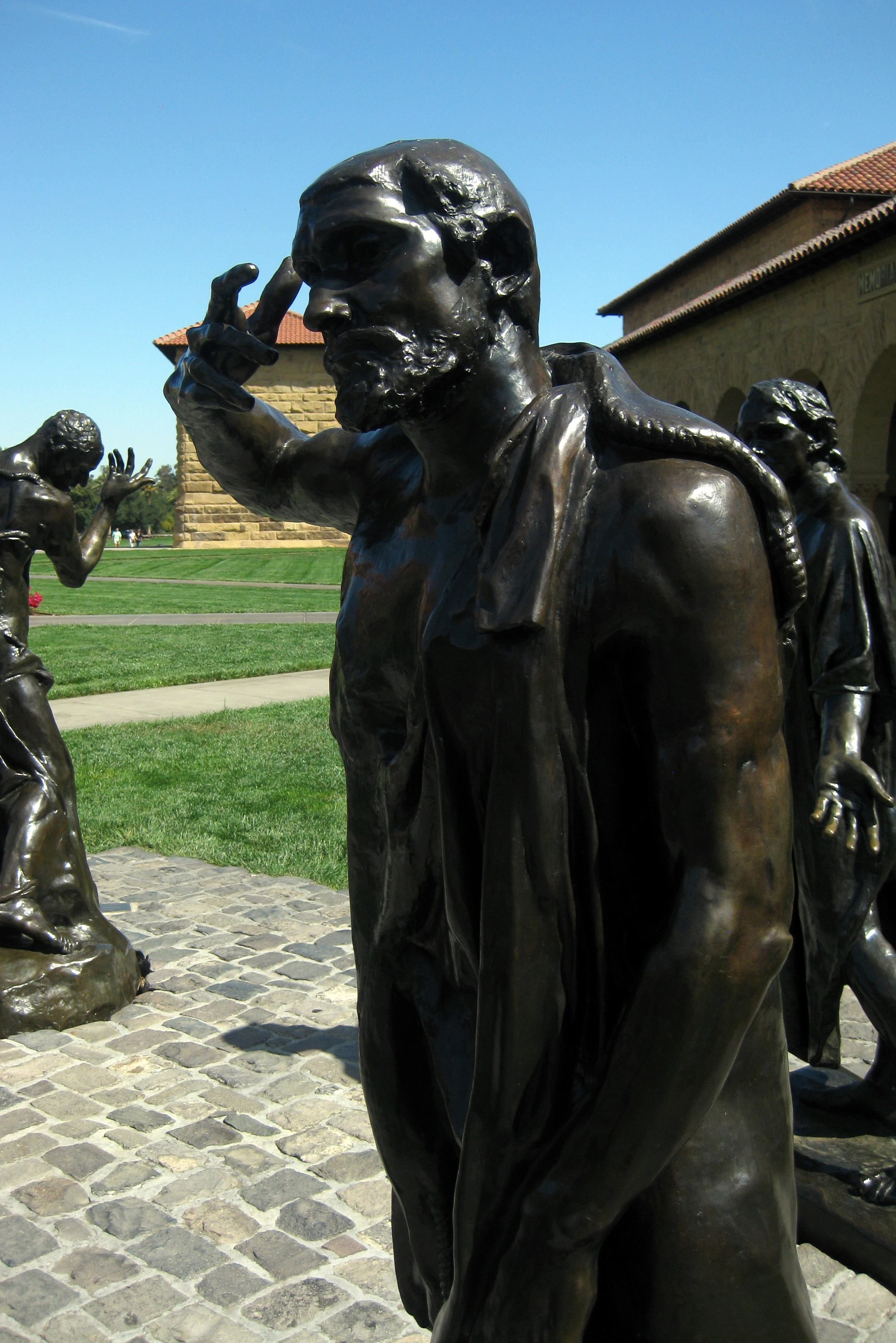
    California: Stanford University – Iris & B. Gerald Cantor Center for Visual Arts at Stanford University – Burghers of Calais
    visual art
    Image by wallyg
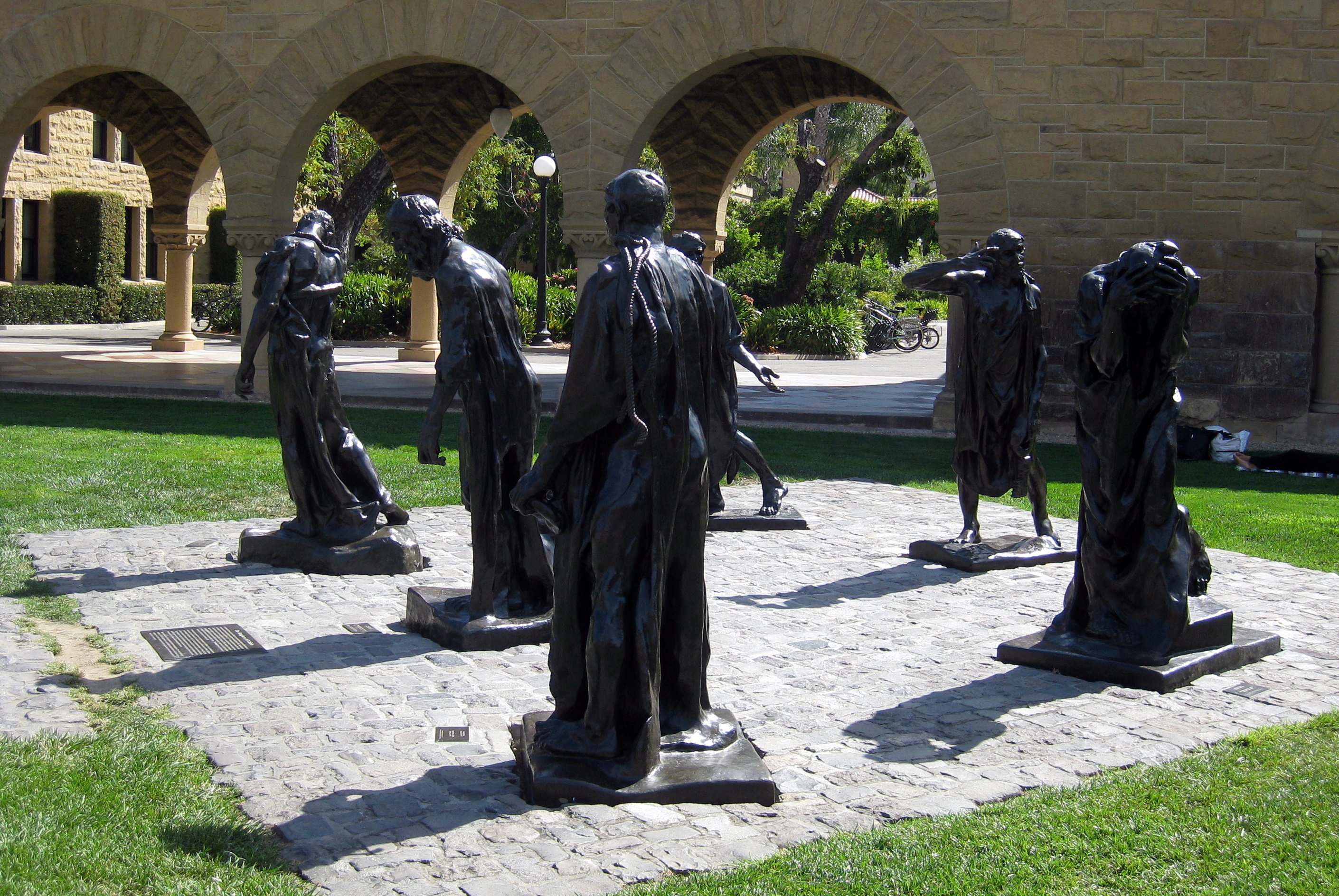
    Les Bourgeois de Calais (The Burghers of Calais) is one of the most famous sculptures by Auguste Rodin. It serves as a monument to the heroism of six burghers in Calais during a siege by the England in the Hundred Years’ War in 1347.

    After a victory in the Battle of Crécy, England’s King Edward III besieged Calais, an important French port on the English channel, and Philip VI of France ordered the city to hold out at all costs. Which it did for a over a year. Philip failed to lift the siege and starvation eventually forced the city to parlay for surrender. Edward offered to spare the people of the Calais if any six of its top leaders would surrender themselves. Edward demanded that they walk out almost naked, wearing nooses around their necks and carrying the keys to the city and castle. One of the wealthiest of the town leaders, Eustache de Saint Pierre, volunteered first and five other burghers–Jean d’Aire, Jacques and Pierre de Wissant, Jean de Fiennes, Andrieu d’Andres–soon followed suit. Though the burghers expected to be executed, their lives were spared by the intervention of England’s Queen, Philippa of Hainault, who persuaded her husband by saying it would be a bad omen for her unborn child. Rodin depicts a larger than life Saint Pierre leading the envoy of emaciated volunteers to the city gates, prepared to meet their imminent mortality.

    The monument was initially proposed by Omer Dewavrin, mayor of Calais, for the town’s square in 1884. Unusual in that monuments were usually reserved for victories, the town of Calais had long desired to recognize the sacrifices made by these altruistic men. Rodin’s controversial design echoed this intent–the burghers are not presented in a heroic manner, but sullen and worn. His innovative design initially presented the burghers at the same level as the viewers, rather than on a traditional pedestal, although until 1924 the city, against Rodin’s wishes, displayed it on an elevated base.

    The original statue still stands in Calais. Other casts stand around the world–the Victoria Tower Gardens, in the shadow of the Houses of Parliament in London; the Israel Museum in Jerusalem, the Rodin Museum in Philadelphia, the Metropolitan Museum of Art in New York City, the Brooklyn Museum in New York City, Musée Rodin in Paris, the National Museum of Western Art in Tokyo, the Rodin Gallery in Seoul, and Glyptoteket in Copenhagen, to name a few. Some installations have the figures tightly grouped with contiguous bases, while others have the figures separated. Some installations are elevated on pedestals, others are placed at ground level. This bronze cast, at Stanford University’s Iris & B. Gerald Cantor Center for Visual Arts, consists of six separate pieces which are slightly sunken, concealing the bottom few inches of the bases, and spaced such that viewers can walk between the figures. The museum claims this is how Rodin wished them to be displayed.
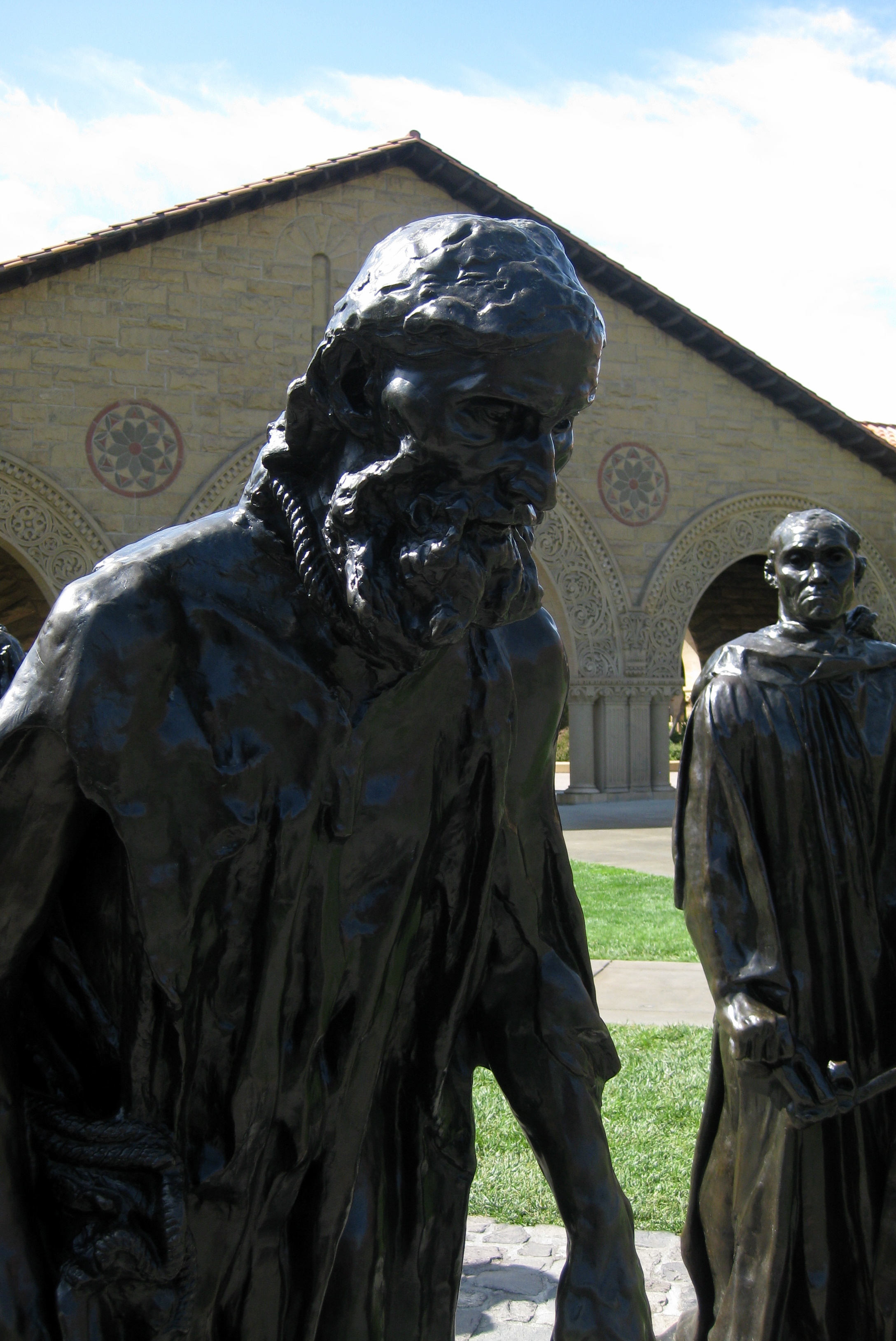
    California: Stanford University – Iris & B. Gerald Cantor Center for Visual Arts at Stanford University – Burghers of Calais
    visual art
    Image by wallyg
    Les Bourgeois de Calais (The Burghers of Calais) is one of the most famous sculptures by Auguste Rodin. It serves as a monument to the heroism of six burghers in Calais during a siege by the England in the Hundred Years’ War in 1347.

    After a victory in the Battle of Crécy, England’s King Edward III besieged Calais, an important French port on the English channel, and Philip VI of France ordered the city to hold out at all costs. Which it did for a over a year. Philip failed to lift the siege and starvation eventually forced the city to parlay for surrender. Edward offered to spare the people of the Calais if any six of its top leaders would surrender themselves. Edward demanded that they walk out almost naked, wearing nooses around their necks and carrying the keys to the city and castle. One of the wealthiest of the town leaders, Eustache de Saint Pierre, volunteered first and five other burghers–Jean d’Aire, Jacques and Pierre de Wissant, Jean de Fiennes, Andrieu d’Andres–soon followed suit. Though the burghers expected to be executed, their lives were spared by the intervention of England’s Queen, Philippa of Hainault, who persuaded her husband by saying it would be a bad omen for her unborn child. Rodin depicts a larger than life Saint Pierre leading the envoy of emaciated volunteers to the city gates, prepared to meet their imminent mortality.

    The monument was initially proposed by Omer Dewavrin, mayor of Calais, for the town’s square in 1884. Unusual in that monuments were usually reserved for victories, the town of Calais had long desired to recognize the sacrifices made by these altruistic men. Rodin’s controversial design echoed this intent–the burghers are not presented in a heroic manner, but sullen and worn. His innovative design initially presented the burghers at the same level as the viewers, rather than on a traditional pedestal, although until 1924 the city, against Rodin’s wishes, displayed it on an elevated base.

    The original statue still stands in Calais. Other casts stand around the world–the Victoria Tower Gardens, in the shadow of the Houses of Parliament in London; the Israel Museum in Jerusalem, the Rodin Museum in Philadelphia, the Metropolitan Museum of Art in New York City, the Brooklyn Museum in New York City, Musée Rodin in Paris, the National Museum of Western Art in Tokyo, the Rodin Gallery in Seoul, and Glyptoteket in Copenhagen, to name a few. Some installations have the figures tightly grouped with contiguous bases, while others have the figures separated. Some installations are elevated on pedestals, others are placed at ground level. This bronze cast, at Stanford University’s Iris & B. Gerald Cantor Center for Visual Arts, consists of six separate pieces which are slightly sunken, concealing the bottom few inches of the bases, and spaced such that viewers can walk between the figures. The museum claims this is how Rodin wished them to be displayed.

  • Iris & B. Gerald Cantor Center for Visual Arts at Stanford University

    Check out these visual art images:

    Iris & B. Gerald Cantor Center for Visual Arts at Stanford University
    visual art
    Image by Lisa Padilla

    Iris & B. Gerald Cantor Center for Visual Arts at Stanford University
    visual art
    Image by Lisa Padilla

    Iris & B. Gerald Cantor Center for Visual Arts at Stanford University
    visual art
    Image by Lisa Padilla

  • California: Stanford University – Iris & B. Gerald Cantor Center for Visual Arts at Stanford University – Burghers of Calais

    Some cool visual art images:

    California: Stanford University – Iris & B. Gerald Cantor Center for Visual Arts at Stanford University – Burghers of Calais
    visual art
    Image by wallyg
    Les Bourgeois de Calais (The Burghers of Calais) is one of the most famous sculptures by Auguste Rodin. It serves as a monument to the heroism of six burghers in Calais during a siege by the England in the Hundred Years’ War in 1347.

    After a victory in the Battle of Crécy, England’s King Edward III besieged Calais, an important French port on the English channel, and Philip VI of France ordered the city to hold out at all costs. Which it did for a over a year. Philip failed to lift the siege and starvation eventually forced the city to parlay for surrender. Edward offered to spare the people of the Calais if any six of its top leaders would surrender themselves. Edward demanded that they walk out almost naked, wearing nooses around their necks and carrying the keys to the city and castle. One of the wealthiest of the town leaders, Eustache de Saint Pierre, volunteered first and five other burghers–Jean d’Aire, Jacques and Pierre de Wissant, Jean de Fiennes, Andrieu d’Andres–soon followed suit. Though the burghers expected to be executed, their lives were spared by the intervention of England’s Queen, Philippa of Hainault, who persuaded her husband by saying it would be a bad omen for her unborn child. Rodin depicts a larger than life Saint Pierre leading the envoy of emaciated volunteers to the city gates, prepared to meet their imminent mortality.

    The monument was initially proposed by Omer Dewavrin, mayor of Calais, for the town’s square in 1884. Unusual in that monuments were usually reserved for victories, the town of Calais had long desired to recognize the sacrifices made by these altruistic men. Rodin’s controversial design echoed this intent–the burghers are not presented in a heroic manner, but sullen and worn. His innovative design initially presented the burghers at the same level as the viewers, rather than on a traditional pedestal, although until 1924 the city, against Rodin’s wishes, displayed it on an elevated base.

    The original statue still stands in Calais. Other casts stand around the world–the Victoria Tower Gardens, in the shadow of the Houses of Parliament in London; the Israel Museum in Jerusalem, the Rodin Museum in Philadelphia, the Metropolitan Museum of Art in New York City, the Brooklyn Museum in New York City, Musée Rodin in Paris, the National Museum of Western Art in Tokyo, the Rodin Gallery in Seoul, and Glyptoteket in Copenhagen, to name a few. Some installations have the figures tightly grouped with contiguous bases, while others have the figures separated. Some installations are elevated on pedestals, others are placed at ground level. This bronze cast, at Stanford University’s Iris & B. Gerald Cantor Center for Visual Arts, consists of six separate pieces which are slightly sunken, concealing the bottom few inches of the bases, and spaced such that viewers can walk between the figures. The museum claims this is how Rodin wished them to be displayed.

    Sainsbury Centre for the Visual Arts, Norwich
    visual art
    Image by Xavier de Jauréguiberry
    C402_35
    15/08/2008 : Norwich, University of East Anglia, Sainsbury Centre for the Visual Arts