Tag: Question

  • To Specialize or Not to Specialize with Your Photography – That is the Question

    Photography is one of those careers where the industry is so broad that realistically you can select any field to focus on. Even if you define yourself as a particular type of photographer, you can further niche yourself into one of the many subcategories that are available in almost every genre.

    For example, if you are a fashion photographer you can further categorize yourself as catalog, high fashion, fashion blogger and/or editorial. Portrait photographers can focus on maternity, family, newborn, high school seniors, etc.

    There is such a multitude of options available that sometimes it does get a bit overwhelming. It is true that there is a market for almost any type of photography, but you have to understand that you cannot be a photographer for everyone. Not only would you get burned out, but your business messaging and branding could be confusing to potential customers.

    So how do you choose what genre of photography to focus on or specialize in? Is it monetary or interest driven? Here are a few things to think about when deciding to specialize in a certain area of photography or be a jack of all trades

    #1 – Interests and Skills

    To Specialize or Not to Specialize with Your Photography - That is the Question

    Be honest with yourself and figure out where your interests really lie.

    Are you as passionate about nature and landscape photography as you are about newborn photography? What are your strengths? Do you have the magic touch to calm any sort of pet? Are you an animal whisperer? Or are you someone who can maintain their composure no matter what, so dealing with a crazy stressed out bride is a walk in the park?

    Photography is as much about soft skills like communications and people interactions as it is about technical skills.

    #2 – Market size and potential

    This is probably not something that we creative people really want to think about but analyzing the market size for your ideal clientele is really crucial. It does not have to be specific numbers – even a quick ballpark is sufficient.

    To Specialize or Not to Specialize with Your Photography - That is the Question

    Look at housing data, high school enrollment, photography businesses in your area, and other factors to figure out the market size. Even if your market size is small, try to understand if there is enough potential to upsell.

    For example, if you focus on weddings, are your clients more likely to hire you for anniversary, maternity and/or family portraits because they like, know and trust you and your work? If so, then maybe family portraiture and weddings are markets that you could potentially build.

    #3 – Messaging or branding

    This is an often overlooked part of a market analysis and if I am completely honest, one that even I ignore from time to time. I ignore it because I don’t have the bandwidth to manage multiple websites, multiple social media accounts, and multiple channels.

    To Specialize or Not to Specialize with Your Photography - That is the Question

    More often than not, one falls off the bandwagon. If you are working and playing in two genres that have a lot of overlap then you can get away with using branding and messaging that speaks to all the areas under one umbrella cohesively. However, if your markets don’t overlap then I strongly suggest you separate out the businesses so they can be their own entities.

    For example, a good friend of mine is a wedding photographer and a business coach for creative entrepreneurs. She has two different websites, two social media accounts, and two different businesses. But she is talking about them across each channel because overall her brand aesthetics are the same and she can cross-pollinate content from one to the other. She has targeted her coaching clients as other photographers, artists, and creatives in the wedding industry.

    To Specialize or Not to Specialize with Your Photography - That is the Question

    Now, regardless of what I say and what you might think, this argument about specializing is not as easy as black and white. The reality is that sometimes we all go through dry spells, times where there are no paying clients, yet our bills have to be paid. It is easy enough to run a marathon weekend of family sessions and make as much or more than what you would make with one wedding.

    Sometimes it feels like inquiries for all the things you don’t want to do come in the door and none of the work that you really want and love. At the end of the day, all I can say is that we each do what we must to earn money, pay the bills and have some semblance of enjoyment from our work.

    Conclusion

    So, what’s the final verdict? Should you specialize in your photography or not?

    Yes, it makes good business sense to focus all your efforts and energies on your chosen genre. There are a lot of benefits to specializing, such as technical and creative expertise, name and brand recognition, etc. But when there isn’t a consistent flow of clients because of external factors like market changes, client needs and/or a recession, you do what you must to stay afloat and earn a living.

    The post To Specialize or Not to Specialize with Your Photography – That is the Question by Karthika Gupta appeared first on Digital Photography School.

    Digital Photography School

  • Isro question papers mechanical pdf

    With the total number of isro question papers mechanical pdf over 2000, government jobs by registering now! WRITTEN TEST DATES FOR THE POSTS OF TECHNICAL ASSISTANT, click here to go for AMCAT registration link  www. In order to perform well in the Indian Army MNS SSC Exam 2016, Here are some of previous year, I tried to download […]
    BooksChantcdCom

  • Monkey photo copyright in question as Wikipedia denies photographer’s takedown request

    On a trip to Indonesia in 2011, photographer David Slater was photographing a black crested macaque when it grabbed his camera and proceeded to take hundreds of pictures of itself. The resulting ‘monkey selfie’ did the rounds on the internet, winding up in Wikimedia Commons. Mr. Slater has asked that the photo be taken down, but Wikimedia sees things differently. Read more

    Articles: Digital Photography Review (dpreview.com)

  • Do we value cameras as tools or objects? New exhibition asks the question

    image-4.jpeg

    Do we value cameras for their form, or their function? An exhibition in Philadelphia which features hundreds of camera sculptures made from a range of different materials aims to examine this question. ‘Reach Ruin’, which is showing at The Fabric Workshop in Philadelphia includes several sculptures of cameras created from carved stone, glass, chalk and sand. According to the artist, Daniel Arsham, as well as being a photographic tool, ‘many of us that use photography have a relationship with the object. If you want, call it a fetish’. Click through for more information and images from the exhibition.

    News: Digital Photography Review (dpreview.com)

  • Become a Better Photographer By Asking One Simple Question

    A Guest Post By: John Davenport

    Let’s be honest whether it is coming up with portrait posing ideas, photographing the stars, or avoiding danger in the field we all have a common goal here – gain more knowledge and put it to use in our photography – but there comes a time when we must be our own teachers.
    We must venture out away from the tutorials, the guidebooks and those YouTube videos to simply do something for ourselves, without fear, and without guidance. Just with the knowledge that we already have in our heads. My friend, that is what this question is all about. 

    What Happens When I Do This?

    Image One.jpg

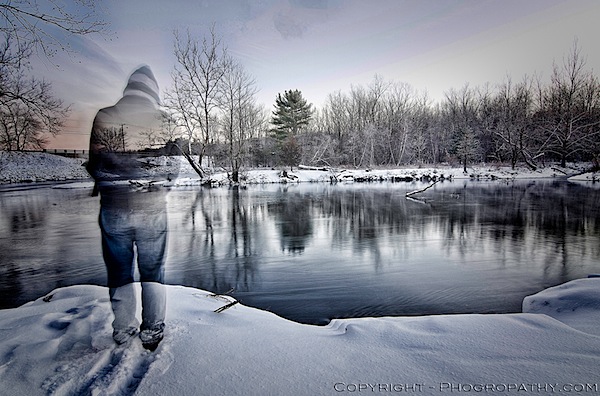
    If I had not tried something different, something out of my comfort zone, I wouldn’t have been able to capture this photograph. I was attempting to create an HDR composite, but I wanted to see if I could create one with me in the frame. I’d never done this, I hadn’t even attempted it, so I just set my camera up to capture the brackets, put it on a timer, and walked into where I thought would be a good place to stand. However, while the camera was still taking the shots, I left the scene before the shutter had closed for the final time, and thus – a ghostly figure.

    Image Two.jpg

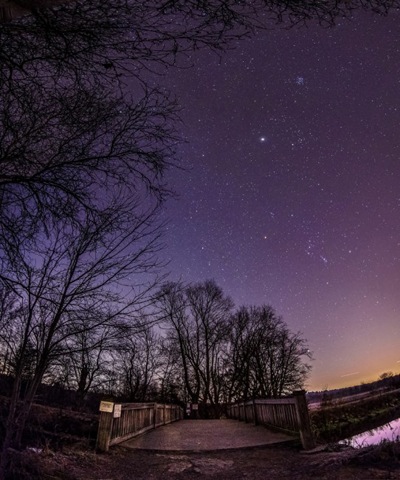
    Another example is this photograph of the night sky. It actually consists of four separate landscape orientated images stitched together to create a vertical panorama with a fisheye like effect to boot. I talk in a bit more detail about how I created this vertical panoramic image on my own site, but if you’re listening to the message of this post, you probably shouldn’t have clicked on that link ;) .

    It Takes Courage

    Tutorials and guides make life easy. Follow the steps and you’ve got a great photograph, but is it original?
    It takes courage to be able to do this style of learning and even more so to share your photographs with the world. You have to accept the fact that you’re going to make mistakes, you’re going to feel like you’ve wasted some time, and you’re going to have people tell you that you’ve done it all wrong, but to that I say all this is part of a good learning process.

    Don’t Stop With Taking the Photo

    Apply this no-holds-bars-experimentation-attitude to all aspects of photography and yes, maybe even to life as well.

    Whether you’re using Instagram or Photoshop to edit your photographs asking, what happens if I do this?, is key to creating something different. Sure there’s a lot more to experiment with in the latter, but if you’re always using the same filter and the same blur effect in Instagram are you really learning anything?

    What Do You Think?

    Is it more important to get out in the field and forget the books once you’ve got the basic knowledge or should you stay up-to-date with all the knowledge that’s being shared on the web every-single-day and miss the possible shot of a lifetime?

    John Davenport is an enthusiastic amateur photographer and blogger who shares daily photos on his site Phogropathy. You can also find him on Facebook and Twitter.

    Post originally from: Digital Photography Tips.

    Check out our more Photography Tips at Photography Tips for Beginners, Portrait Photography Tips and Wedding Photography Tips.

    Become a Better Photographer By Asking One Simple Question


    Digital Photography School

  • Best DSLR Choice for Video from Nikon and Canon for Under $1000 – Viewer Question

    www.artoftheimage.com – Best DSLR Choice for Video from Nikon and Canon for Under 00 (Viewer Question)Check out the new Art of the Image Recommended Photography Gear List at http PS If you have kids or know someone with kids, check out my latest online book, “Diary of a Nerd King” at www.nerdkingdiary.com. It’s funny and it’s FREE! Please pass it along… thanks! PSS If you have toddlers or small children, check out http for my children’s ebooks for Kindle, iPad, iPod, iPhone, laptops, etc! Please pass it along… thanks!
    Video Rating: 0 / 5

  • FX Lens Performance On DX DSLR Digital Cameras – Viewer Question

    www.artoftheimage.blogspot.com – Nikon FX Lens Performance On Nikon DX DSLR Digital Cameras – Viewer QuestionCheck out the new Art of the Image Recommended Photography Gear List at http PS If you have kids or know someone with kids, check out my latest online book, “Diary of a Nerd King” at www.nerdkingdiary.com. It’s funny and it’s FREE! Please pass it along… thanks! PSS If you have toddlers or small children, check out http for my children’s ebooks for Kindle, iPad, iPod, iPhone, laptops, etc! Please pass it along… thanks!

  • Reader’s concept prompts question: what would your ideal camera be?

    Enthusiast.png

    What does your dream camera look like? One of our more enterprising readers has sketched-out what his would look like – creating an interesting contemporary rangefinder concept. Bristling with Nikon F4-inspired manual controls, each dial and switch also has a ‘neutral’ position to allow the on-screen interface settings to take precedence. Easycass acknowledges the concept may not be entirely possible – an ‘ultra-fast’ 24-105mm lens would dictate a fairly small sensor, and autofocus rangefinders have never exactly been commonplace – but it raises questions the question: ‘What would your perfect camera be?’

    News: Digital Photography Review (dpreview.com)

  • Forensic DSLR Camera Question – Nikon D90 & GPS 090630

    I’m trying to use a camera to photograph an image and to prove that it’s authentic and not photoshopped. Can anybody help me here?
    Video Rating: 4 / 5

    www.dpnotes.com companion video.
    Video Rating: 4 / 5