Tag: portfolio

  • 25 Fresh & Free Portfolio WordPress Themes 2014

    Give your photography the online showcase it deserves. In this collection, I handpicked 25 best and free WordPress portfolio themes to build your photography website or blog on. There is no need to spend money to create your presence online. If you’re seeking for a free solution to create your first portfolio website, these WordPress themes are the best choice Continue Reading

    The post 25 Fresh & Free Portfolio WordPress Themes 2014 appeared first on Photodoto.


    Photodoto

  • 8 Tips for Creating an Online Photography Portfolio

    Dreaming about a career as a professional photographer? With the right guidance, practice, skills, network, and portfolio, you can make your dream come true.

    Developing the necessary skills required to be a professional photographer cannot easily be summed up in a single blog post, let alone many. And networking… well, if you are like most artists, that can be nightmarish, but nevertheless, is absolutely critical. As your referral network grows, so will your business. But that can take years.

    So, you may ask yourself, how do I start?

    BBB online portfolio

    Step 1 – create your portfolio. This is a great starting point to help launch your career as a photographer.

    Here are eight tips to get you on the right path to creating an online photography portfolio and securing those potential gigs.

    1. Show off your work:

    In other professions, people use their resumes to apply for potential jobs. However, as a photographer, your portfolio will act as the resume and will showcase the breadth of your work. It will give potential clients a deeper look into your particular forte and expertise.

    2. Organize:
    Site organization

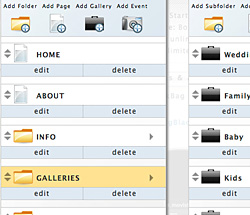
    Your breadth of work should be arranged according to theme or subject. If your work is presented in an organized and easy to navigate way, chances are, potential clients will appreciate the curation and level of professionalism that went into putting your portfolio site together. It also makes their lives a lot easier when looking through your work.

    3. Show your best work:

    Remember, this is your portfolio site, not your external hard drive. So, you want to make sure that only the best of the best goes up. No one needs to see every single thing you ever shot. Clients need to know what you are good at, so make sure to show only those images that truly count. You may also want to put your best work at the forefront of your site. Most clients are busy and don’t have the time to scan through every photo in all of your galleries, so make sure the work that you are most proud of is at the beginning of your photo galleries.

    4. SEO, SEO, SEO:

    Often times photographers create beautiful sites and then wait around hoping that clients will see them. However, they forget that they need SEO (search engine optimization). How will anyone hire you, if they can’t find you in a search? Use a portfolio service that enables you to take control of your SEO, and includes search engine friendly URLs, crawl-able content, and unique meta tags. These features will drive traffic to specific places on your site and build links to more than just your homepage.

    Seo friendly page names

    5. Website Builder Versus Custom Website:

    You may have good intentions to build your own custom portfolio site, wanting it to be a representation of your own unique brand. However, make your life easier and focus on your work, and leave the coding and technicalities to the professionals. Portfolio builder sites will take the guesswork out of the process and will allow you to quickly put together a working, professional site in a short amount of time, so that you can focus on creating and refining your photography.

    6. Choose a platform that makes your life easier:

    Nowadays, there are so many portfolio sites to choose from that it can be overwhelming. Some highlight cheap services, various levels of efficiency, and different features. For an aspiring photographer, you want a site that is easy to use, and has a large selection of customizable and flexible templates, so that the site you create truly reflects your personal branding and style. You may also want to use a site that includes unlimited photo proofing. As a professional photographer, you may find yourself uploading thousands of visuals, and you don’t want to be stuck paying for each upload. Stick to a platform that allows you to do this without charging exorbitant fees.

    7. Choose a platform that makes your client’s life easier:

    Look for a platform that makes it easy for potential clients to use. The platform you decide to go with, should make it easy for clients to navigate your portfolio using a desktop computer, tablet, or smartphone. Using a portfolio website service, with responsive design, will allow your clients to see your site perfectly formatted to their device. Also, if you plan a career as a commercial photographer, like focusing on weddings, kids, etc, you may want to give your clients the option to purchase certain images directly from your site. Look for a site that has a built-in e-commerce function that clients can use to easily choose and purchase the images they love.

    8. Marketing:

    Marketing

    Lastly, you want a site that helps you to connect all your social media pages with your portfolio site. This way, visitors can share your photos on social media platforms with just a click, allowing you to gain more visibility for your brand. You also want to look for a platform that helps you manage your client email list, so that you are ready and organized for sending mass emails.

    It may at first seem overwhelming all the things you need to do to get your portfolio together. However, if you really sit down and get your plan together and choose the right portfolio website builder, you can create a beautiful, professional site in days. Now get out there and start putting your site together!

    More tips on making a portfolio here:

    • Turning Pro Part I: Portfolio and Persistence
    • How To Build A Portfolio Without Clients
    • How to Present Your Photographic Portfolio and Get Photography Work

    The post 8 Tips for Creating an Online Photography Portfolio by Julian Dormon appeared first on Digital Photography School.


    Digital Photography School

  • Portfolio: Martin Kimbell’s ‘Light Paintings’

    UK-based photographer Martin Kimbell doesn’t put his camera down when the sun goes in. His series of ‘light paintings’ add a surreal twist to long-exposure night pictures. In his images, tunnels, spirals and discs of light create sculptural forms in the landscape. We spoke to him about his work, and how he creates it. Click through to view his images and read our Q&A. 

    Articles: Digital Photography Review (dpreview.com)

  • Portfolio: Todd Bretl’s captivating underwater photography

    Todd Bretl says he asks himself ‘Would I hang this on my wall?’ when he’s composing his photos of marine life. Challenging himself with this question has helped him produce some stunning works of art. Some of his images call to mind glass sculpture, while others capture the wildness that thrives below the water’s surface. He answered our questions about his process and gear – take a look at some of his work and find out more about how it’s created. See gallery

    Articles: Digital Photography Review (dpreview.com)

  • Portfolio: Michel Lamoller’s space and time-bending tautochronos project

    In his series ‘tautochronos’, Berlin-based artist and photographer Michel Lamoller takes multiple pictures of the same scene at different times, before physically combining the prints and using a scalpel to cut through the layers. In doing so, Lamoller’s ‘layerscapes’ offer a vision of time and space that would be impossible in a conventional single exposure. His work is hard to describe in words – click through to read our Q&A and take a look at his work. 

    Articles: Digital Photography Review (dpreview.com)

  • Make Your Online Portfolio Stand Out

    How To Make Your Online Portfolio Stand Out (FashionPhotographyBlog.com)

    You’ve assembled all your best work in an online portfolio, but is that site getting you noticed? Taking great pictures is not enough sometimes. Your portfolio is on line to showcase your career, it should be creatively appealing but also concise, focused and easily found through the clutter of the internet. FashionPhotographyBlog.com invited Julian Dormon, the founder of BigBlackBag to share five tips to make your online portfolio stand out.

    1. Define Who You Are

    Have you always been passionate about one topic, like fashion or travel, or do you dream of branching into other fields? No matter what, showcase the work that will land your next assignment. You can easily group your photos into different categories, with each project telling its own story. Choose a strong “headline” image to draw the viewer in.

    It never hurts to write a short caption that explains the process and what was accomplished. Fill each category with a dozen of your best pictures, keeping in mind that clients have little time to scan through all your work. Think of it as a visual resume that explains your key skills.

    2. Function Before Form

    The best websites are simple, clean designs that viewers can easily navigate. There are dozens of companies that can do the heavy lifting when it comes to crafting and hosting our online portfolio, but it’s ultimately up to you to organize it. Don’t clutter your site with too many pictures and avoid high-tech functions like Flash. The biggest drain on bandwidth should be devoted to your photos, especially as more and more people are viewing on mobile devices.

    Include a bio and your contact information. Also keep a close eye on your colleagues. Websites evolve quickly and what was a popular design a few years ago may look dated now. Update your portfolio with your latest and best work to keep fresh once every month or two but definitely every quarter.

    3. Make Sure Your Portfolio Shows Up In Searches

    Keep your online portfolio to basic HTML, which shows up more easily on search engines. You can use specific tags and keywords to put your site on top of internet searches. Again, an online portfolio company can take care of this for you.

    Google remains the dominant search engine and it’s better to work with them than against them. Consider using Google My Business to help draw local traffic to your site.

    4. Use All Your Social Media Voices

    Gone are the days where you could just message your friends about an event or show or add a link on Facebook. Tumblr, Pinterest and Twitter are all vying for people’s attention–and more social media sites are on the way. Use each site to promote your work, making sure to list the URL for your online portfolio consistently.

    5. Don’t Forget the Old Fashioned Way to Promote

    Reach out to friends and clients when you have something to share. Did your photo just get published in a magazine, or were you interviewed in a local paper? Send an email, tweet or post on Facebook about the news. It may not go “viral”, but word of mouth could help you land that next gig.

    Contributor’s Bio

    Julian Dormon is the Founder of BigBlackBag, specializing in professionally designed online portfolio websites perfect for photographers, artists, and other creative professionals. He’s an amateur photographer and professional entrepreneur with a passion for all things beautiful.


    Fashion Photography Blog

  • Portfolio: Photography student Luke Evans

    PHOTOBOOTH_NEW-1.jpg

    Luke Evans is a student, just coming to the end of a three-year course in graphic design and photography at London’s University of Westminster. Since starting the course Luke has received attention from media across the globe for his unusually fresh approach to the challenges of the course. Luke’s work is imaginative, technically innovative and thought-provoking, and we spoke to him as he was preparing his final year show. Click through to read our interview and see some of his work.

    News: Digital Photography Review (dpreview.com)

  • Pop-Up Portfolio: Mobile Furniture Folds Flat Between Pages

    [ By WebUrbanist in Design & Furniture & Decor. ]

    flat pack furniture set

    It is not unusual to see art and design students walking around with portfolios under their arms, but few open up to reveal such creative results as these.

    flat pack chair closed

    flat pack green chair

    Inspired by campus folder cases, origami and pop-up books, Japanese designer Mariko Tsujimoto created this series of unfolding furnishings that deploy into surprisingly solid (if small) functional objects.

    flat pack table open

    flat pack table closed

    Set in vivid colors to distinguish their functionality, the set includes a chair, table, desk and bookshelf, each of which refolds automatically when the end pages are closed.

    flat pack shelf closed

    flat pack book shelf

    flat pack in motion

    These quite literal portfolio pieces are just plastic prototypes for now, but rendered in a more solid material they could provide the conceptual groundwork for a full-fledged furnishing set.

    Share on Facebook


    [ By WebUrbanist in Design & Furniture & Decor. ]

    [ WebUrbanist | Archives | Galleries | Privacy | TOS ]


    WebUrbanist

  • Amazing Little Pocket Portfolio


    Extra photos for bloggers: 1, 2, 3

    There is something to be said about an object that fits in the palm of your hand.

    Small things have that cool ability to be precious while at the same time not taking themselves too seriously.

    They are quiet and understated and beg us to take a second look.

    We’ve got a handy little tutorial for you that will show you how to easily make a tiny portfolio to showcase your large talent.

    Good things come in small packages. Oh, heck yeah they do!

    Create Your Very own Pocket Portfolio(…)
    Read the rest of Amazing Little Pocket Portfolio (482 words)


    © Karla for Photojojo, 2014. |
    Permalink |
    No comment |
    Add to
    del.icio.us

    Post tags:


    Photojojo

  • The Smart Guide to Creating Your Portfolio the Right Way

    Your photography portfolio should be a collection of your work that will encompass your entire career, or it can focus on a single theme or medium. Most photographers who have been at it a while tend to have multiple portfolios that cover a myriad of compositions, mediums and client need aspects. Many of the best will have tens of portfolios, Continue Reading

    The post The Smart Guide to Creating Your Portfolio the Right Way appeared first on Photodoto.


    Photodoto