Quick. Unpredictable. Unwilling to sit still. Kids really are the ultimate test for a camera’s autofocus system. We’ve compiled a short list of what we think are the best options for parents trying to keep up with young kids, and narrowed it down to one best all-rounder.
Tag: Parents
-
3 Simple Photography Tips for Parents – How to Take Better Pictures of Your Kids
One of the most frequently asked questions I receive as a writer here at Digital Photography School is, “How do I take better pictures of my kids?”. There’s just something about becoming a parent that helps you understand exactly how fleeting childhood is, as well as how important it is to capture it. Whether you’re using a pro-level DSLR camera, a point-and-shoot, or your phone’s camera, here are a few quick and easy tips that will help you take your momtography or dadtography to the next level and take better pictures of your kids.

1. Emotion Trumps Perfection
It’s never a bad idea to learn about the technical aspects of photography. But when it comes to photographing your own kids, the truth is that the photos you’ll treasure the most are the ones that capture genuine emotion. When you pull your camera out, don’t just look for the perfect smiles. Look for genuine expression and emotion, which tends to happen most often when your kids don’t realize you’re watching them.
Similarly, when you’re culling images, don’t automatically trash every image with soft focus or strange cropping. Sometimes, those technically imperfect photos may capture genuine emotion so perfectly that it would be a shame to delete them just because they’re not perfect. You may not want to blow those imperfect images up onto a giant canvas, but definitely keep them for your own records!

Let go of perfection
Technically speaking, there are a few things about the above image that I don’t like. I wish I hadn’t cropped off some of one daughter’s fingers, and I wish the other daughter was in focus. I was super tempted to delete this photo right away because it’s not quite up to my standards. However, every time I look at this image it makes me smile to see the absolute joy on their faces. I remember their excitement at seeing the cherry blossoms covering the ground like snow, scooping them up by the handful, and throwing them up into the air while laughing and squealing with delight.
As family and friends flip through photo albums, they don’t comment on the other image I took that day of the girls standing perfectly still while looking at the camera and smiling, they comment on this photo. They mention how happy the girls look, and how much they love this photo. This image is beloved not because it’s technically sound, but because emotion always trumps perfection when it comes to photography.

2. Find Beauty in the Ordinary
When it comes to photographing your kids, don’t wait for the moments when everyone is perfectly dressed in coordinating outfits at golden hour. Those moments are beautiful, but they’re few and far between. Instead, look for ways to capture the beauty in the ordinary everyday moments.
Snap a photo of your kids reading a bedtime story every once in awhile. Take a quick snapshot of their messy faces after spaghetti night. Capture the mismatched crazy outfits that they put together when they dress themselves. Quietly sneak out your camera as they’re practicing writing their name at the kitchen table.

Life isn’t always perfectly styled, it’s messy and full of mundane, repetitive moments. It’s really tempting to wait to pick up your camera until your house is cleaner, or the kids are dressed in something that isn’t stained, or until the flowers in the backyard have bloomed. Don’t wait.
Take the opportunity to photograph your kids just as they are right at this moment, and see if you can’t find some beauty in the ordinary.

3. Capture What Your Kids Love
At any given point in time, your kids are likely to have at least one thing that they’re absolutely obsessed with. It may be a stuffed dinosaur, their favorite book, a hat that they want to wear every single day or a best friend.
Regardless of what their current favorite thing is, taking photos of your childen with the things that they absolutely love is a really sweet way to remember them at the different stages of their lives.

Chances are that in a year or two, your child will move on to a new favorite thing. You’ll forget all about that stuffed dinosaur or favorite blanket much more quickly than you’d probably think. It’s fun for both you and them to be able to look back and say “Remember when you used to….”

Bonus Tip: Get the Photos Off Your Computer!
How many of us are guilty of taking hundreds of photos of our kids, maybe uploading a few to social media, and then letting them hang out on our hard drives in perpetuity? In all honesty, one of the most important parts of photographing your kids is to actually print the photos you take of your kids.
There are so many great resources out there now, whether you want to send prints off to a professional lab or print a photo book right from your Instagram feed, there truly is something for everyone. You don’t have to do it all, but just pick something, and get those images off your computer and into your lives!

Do you have any non-technical tips that you’d share with moms and dads just trying to take great photos of their kids? If so, please chime in below in the comments.
The post 3 Simple Photography Tips for Parents – How to Take Better Pictures of Your Kids by Meredith Clark appeared first on Digital Photography School.
-
6 Tips on How to do Horse Show Photography for Parents
The sport of horse riding and showing can be very rewarding and beneficial to a young child. However, capturing those memories to print and share with family and friends can be a challenge for parents. Basic horse knowledge is helpful not only in keeping your child and their horse safe, but others around them as well. The following are a few dos and don’ts to get you started successfully, and safely, photographing your child at horse shows.
#1 Avoid the use of flash
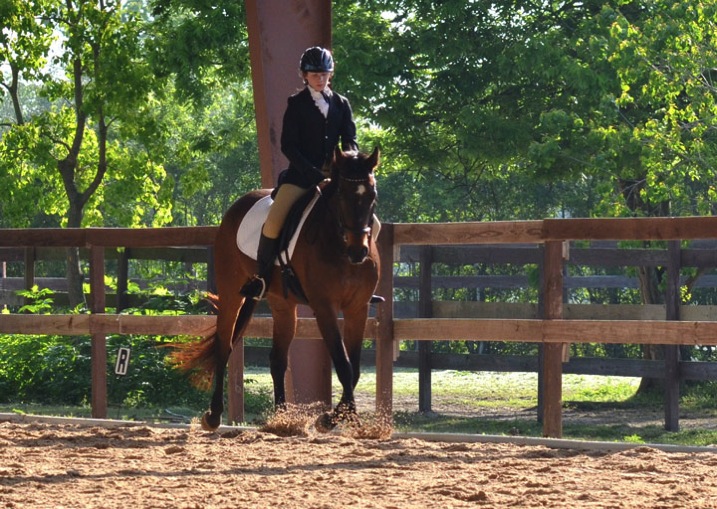
Camera flashes from the audience during rodeos and exhibitions are common, and for the most part those horses are accustomed to many distractions. However that may not be true for the horse your child is riding. An experienced horse with an inexperienced or nervous rider, at an off-property show (and sometimes the excitement of a show at their home barn) may react differently from their usual calm, sensible self. A covered arena can be challenging in terms of lighting and on-camera flashes won’t effectively reach the far end. If they are riding in the morning or late afternoon one side of the arena should be sunny. Wait until the horse and rider are in the sunlit area before capturing the moment. Obviously, this will cut down on the number of images taken, but they should be sharper and brighter, and worth the wait.
#2 Make yourself visible to the horses
Do not hide behind a fence post, arena support, fence, etc. Wide arena supports can be tempting to steady yourself, but this is essentially playing peek-a-boo with a half-ton animal (that has a mentality of a young child) which your son/daughter is sitting on. Horses notice change and if an object or person has moved they may look for it; taking their attention away from the rider. In addition to being noted as a comment or error on the rider’s test, this could also create a dangerous situation if your child’s horse is a bit on the nervous side. Stand or sit out in the open – let them see you, and stay there until the test is complete. Standing on a lower step of a mounting block, outside the arena, will get your camera higher than the fence. But, position yourself during the time riders are entering and exiting the arena, and remain there for the duration of the ride.
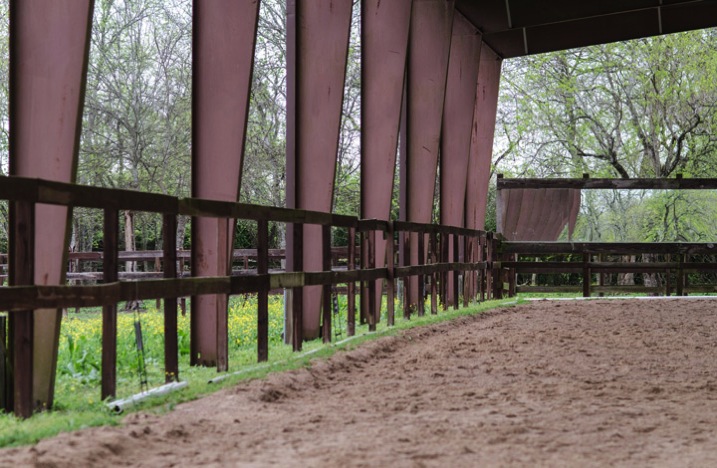
#3 Shoot hand held without a tripod or monopod
Do not use a tripod or monopod. Depending upon the type and location of the event there may be several horses, riders and their trainers, waiting to enter or exit the arena, return to stalls, etc. Extended tripod legs can be a tripping hazard for people, and a scary thing for horses. Fence railings, tables and tucking your arms into your body are good solution to stabilize your camera.
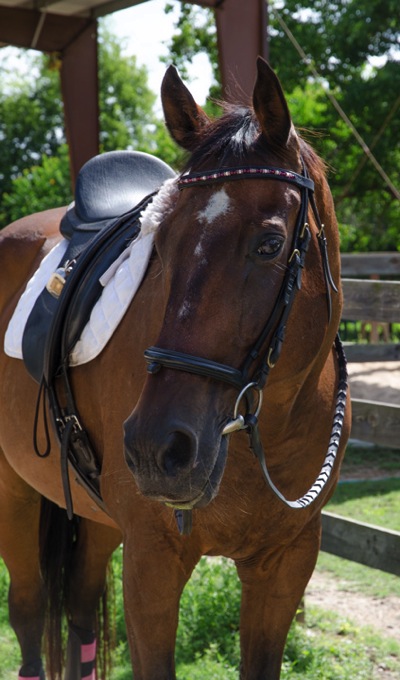
Besides, most tests are over in a few minutes, so foregoing that extra gear will allow you to quickly rejoin your child. Larger shows often hire official show photographers who will take pictures inside the main arena (from a vantage point different from spectators) that you can purchase later. Additionally, if you are using a tripod or monopod you may be viewed as a professional (whether that is the case or not) by show officials who may ask that you refrain from taking any pictures if they feel you are in competition with the official photographer.
#4 Use a fast prime lens
DO buy, rent, or borrow the fastest prime lens you can – 50mm or 85mm preferred (keeps the horse’s head in proportion). A longer lens (85mm) also keeps your camera out of everyone’s personal space and avoids any possible flight response in the horse. There are many bomb-proof horses for young riders who will absolutely not react to anything (near or far), but you don’t want to test that out – especially with your child holding the reins or sitting on top of all that power.
A fixed focal length lens also means you won’t be able to adequately shoot across a large arena. Riding tests often have the horse and rider cover the entire arena, so capture your child when they are closer to you; details such as the rider’s hands, legs, and boots produce great images too.
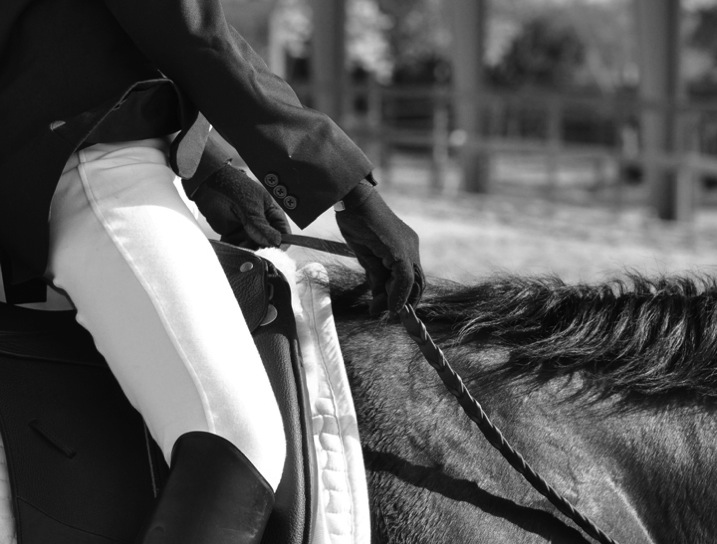
#5 Know the routine your child will be doing
DO learn the tests your child is riding. Tests in both English and Western disciplines require specific movements, to be performed at certain places in the arena. Being familiar with the tests will allow you to anticipate the next movement and be ready to shoot, especially when using a fixed focal length lens. Some movements are photographically more appealing than others, but simply ensuring that all four legs of the horse are visible, arena supports are not coming out of the rider’s head, and the focus is centered on the rider’s or the horse’s eyes, will improve your images. Test movement patterns can usually be found on the internet (In the states, the United States Equestrian Federation website is a good starting place for all disciplines).
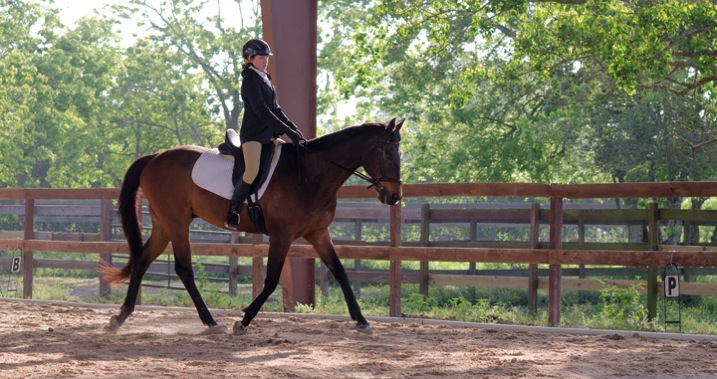
#6 Take details shots outside the show ring
Do shoot the details outside of the show ring; the relationship between horse and rider, grooming/tacking up, show clothes, friends, bridle, stalls, etc., – all those moments leading up to and after riding the actual test.
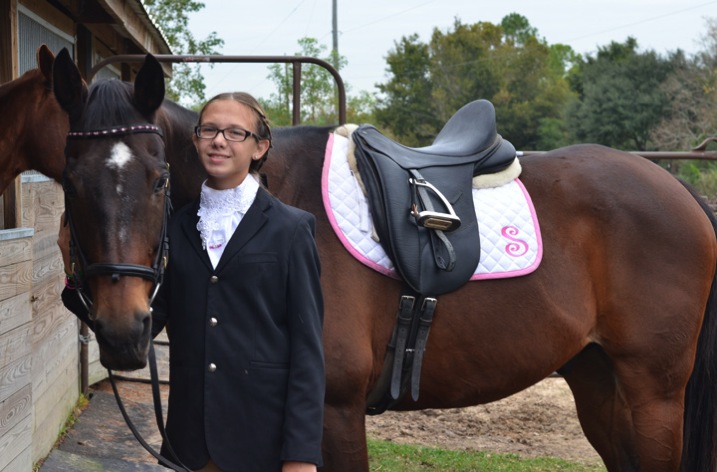
Photographing activities of the entire day completes the horse show story, which the show’s official photographers do not usually cover. Using a 50mm or 85mm lens captures the action without being too close (not adding to a rider’s show nerves) and produces casual, natural photographs. Older, more experienced riders, often assist the younger riders with tacking up and grooming for shows (among their many other duties that day) held at their home barn. An experienced rider can be a valuable asset on show day and may already have an established relationship with your child.
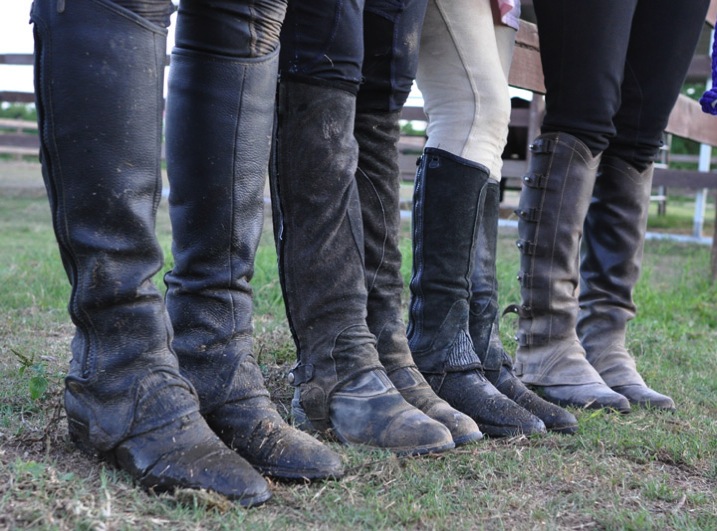
Horse show photography can be exhausting, dirty, and a continuous learning opportunity, but can also be an amazing experience. Dress comfortably, avoiding open toed shoes, and approach the day as an adventure that you and your child will remember forever.
googletag.cmd.push(function() {
tablet_slots.push( googletag.defineSlot( “/1005424/_dPSv4_tab-all-article-bottom_(300×250)”, [300, 250], “pb-ad-78623” ).addService( googletag.pubads() ) ); } );googletag.cmd.push(function() {
mobile_slots.push( googletag.defineSlot( “/1005424/_dPSv4_mob-all-article-bottom_(300×250)”, [300, 250], “pb-ad-78158” ).addService( googletag.pubads() ) ); } );The post 6 Tips on How to do Horse Show Photography for Parents by Sherry Bowman appeared first on Digital Photography School.
-
Insanely Ingenious: Longboard Stroller for Daredevil Parents
[ By WebUrbanist in Technology & Vehicles & Mods. ]

Insane, ingenious, or both, this design combines an alternative way to commute with your kids, assuming you can get past the skateboarding aspect and feel safe moving at speed while pushing your child in this contraption.
The most obvious (and essential) question: how secure is it? While it is hard to say for sure, a wide wheel base makes it more stable than a conventional skateboard, and the lower center of gravity from the weight of the child should help with balance.

The push-bar element of a traditional stroller becomes a handlebar, also allowing for more control by the parent. This same bar wraps around to form a kind of roll cage in case of spills.

While it is still a prototype at this point, the Longboard Stroller‘s creators at Quinny are working with Studio Peter van Riet to realize a fully-functional and marketable version of the design. Whether actual adults will buy the finished product and ride it with their children remains to be seen.

From its daring designers: “Quinny believes that you don’t have to leave the city when you become a parent; that for parents with a positive attitude and the right solutions, the city is a place full of opportunities. Quinny wants to create these solutions; seamless mobility solutions, so urban parents have the freedom to move . The longboard stroller is completely fitting this mindset; it’s a concept thought, a different way of thinking on how parents can move. It’s an alternative solution which makes it easy to travel longer distances in a nice, environmentally friendly way.”


[ By WebUrbanist in Technology & Vehicles & Mods. ][ WebUrbanist | Archives | Galleries | Privacy | TOS ]


