Tag: Fujifilm

  • Fujifilm surfaces FinePix XP60 rugged, waterproof 16MP CMOS camera

    fujifilm_xp60.png

    Fujifilm has announced the FinePix XP60, the latest addition to its rugged waterproof line of compact cameras. The 16MP XP60 is waterproof down to 6m (20 feet), has a 5x optical zoom lens, image stabilization and can record 1080i60 video. A dedicated ‘burst mode’ button offers up to 10fps at full resolution. The camera also comes with a sweep panorama mode as well as several effects filters. The XP60 will be available in March.

    News: Digital Photography Review (dpreview.com)

  • Fujifilm introduces FinePix SL1000 50X superzoom

    fujifilm_sl1000.png

    Fujifilm has announced the FinePix SL1000, a 50x superzoom camera. The 16MP SL1000 features a 24-1200mm (equiv.) optical zoom lens and a newly developed image stabilization system. In addition to the exceptionally wide focal length range, the lens can focus as close 1cm (.39 inches). A 3″ articulated rear LCD complements the camera’s built-in 920k dot electronic viewfinder. The camera is capable of burst rates of up to 10fps at full resolution. The SL1000 records 1080i60 video alongside stereo audio.

    News: Digital Photography Review (dpreview.com)

  • Fujifilm launches FinePix HS50EXR and HS35EXR high-end superzooms

    fujifilm_hs50exr.png

    Fujifilm has announced the 16MP FinePix HS50EXR, its new flagship superzoom camera. The HS50 features a 42x 24-1000mm (equiv.) optical zoom lens and a new EXR CMOS II sensor. A 3″ articulated rear LCD complements the camera’s built-in 920k dot electronic viewfinder. The HS50 records 1080p60 video alongside stereo audio. An ‘Intelligent’ hybrid autofocus system allows for automatic switching between contrast and phase-detection AF operation. Burst modes as high as 11 fps are possible in full resolution mode. A more affordable HS35EXR has also been announced, which features an earlier version sensor, 30x optical zoom and 1080p30 video recording.

    News: Digital Photography Review (dpreview.com)

  • Fujifilm creates X20 enthusiast compact with X-trans CMOS sensor

    fujifilm_x20_2.png

    Fujifilm has announced the X20 – a substantially upgraded re-working of its high-end enthusiast compact. The biggest changes over the X10 are the adoption of the X-Trans color filter pattern from the company’s mirrorless cameras, along with an LCD added to the optical viewfinder to allow shooting information to be overlaid. A faster processor and on-chip phase detection elements promise fast focusing while the addition of a ‘Q’ quick-menu button should also improve the camera’s usability.

    News: Digital Photography Review (dpreview.com)

  • Fujifilm X100S retains retro looks while adding cutting-edge technologies

    fujifilm_x100s.png

    Fujifilm has announced the X100S – a significantly enhanced replacement for its X100 large sensor, fixed-lens compact camera. The X100S retains its predecessor’s classic styling but has been extensively re-worked inside, with a 16MP X-Trans sensor that includes on-chip phase-detection elements (a technology first utilized by Fujifilm), and a higher-resolution LCD in its Hybrid optical/electronic viewfinder. A faster ‘EXR II’ processor, along with the on-chip AF information help Fujifilm offer what it says is the world’s fastest AF. The X100S backs-up its rangefinder-esque looks with a digital split-image manual focus system, allowing fast manual focusing. A great many fine details of the camera have also been enhanced – we look in greater detail in our hands-on preview article.

    News: Digital Photography Review (dpreview.com)

  • Fujifilm X-E1 preview extended

    fujifilm_xe1.png

    Just Posted: an extensive update to our Fujifilm X-E1 preview. With a sensor and imaging pipeline that is identical to the X-Pro1’s the X-E1 promises much of the X-Pro1’s fun in a more compact and affordable package. We’ve been working with a production sample X-E1 for a couple of weeks and we’ve been working towards a full review, which we hope to publish early in the new year. In the meantime we’ve added seven pages to the preview, including our studio test shots and a sample gallery. Click through for a link to the expanded preview, including our 49-image real-world sample gallery. 

    News: Digital Photography Review (dpreview.com)

  • Fujifilm delays XF14mm F2.8 in light of XF 18-55mm F2.8-4 R LM OIS success

    FUJINON_XF14mm.png

    Fujifilm has announced it is delaying the introduction of its XF 14mm F2.8 prime lens by a month so it can concentrate production on the XF 18-55mm F2.8-4 R LM OIS. The 14mm (21mm equivalent) prime lens is the first in the X-mount lineup to feature a pull-back focus ring that engages manual focus and reveals distance markings to allow use of its depth-of-field scale. It will now start to become available from late January 2013. Meanwhile we’ve been shooting with the 18-55mm zoom and will include a gallery of images along was an expanded XE-1 preview later this week.

    News: Digital Photography Review (dpreview.com)

  • Fujifilm X-E1 preview extended

    fujifilm_xe1.png

    Just Posted: an extensive update to our Fujifilm X-E1 preview. With a sensor and imaging pipeline that is identical to the X-Pro1’s the X-E1 promises much of the X-Pro1’s fun in a more compact and affordable package. We’ve been working with a production sample X-E1 for a couple of weeks and we’ve been working towards a full review, which we hope to publish early in the new year. In the meantime we’ve added seven pages to the preview, including our studio test shots and a sample gallery. Click through for a link to the expanded preview, including our 49-image real-world sample gallery. 

    News: Digital Photography Review (dpreview.com)

  • Fujifilm X-E1 preview extended

    fujifilm_xe1.png

    Just Posted: an extensive update to our Fujifilm X-E1 preview. With a sensor and imaging pipeline that is identical to the X-Pro1’s the X-E1 promises much of the X-Pro1’s fun in a more compact and affordable package. We’ve been working with a production sample X-E1 for a couple of weeks and we’ve been working towards a full review, which we hope to publish early in the new year. In the meantime we’ve added seven pages to the preview, including our studio test shots and a sample gallery. Click through for a link to the expanded preview, including our 49-image real-world sample gallery. 

    News: Digital Photography Review (dpreview.com)

  • Fujifilm XF1 Review

    XF1_Black_Front_Left_Wide.jpg

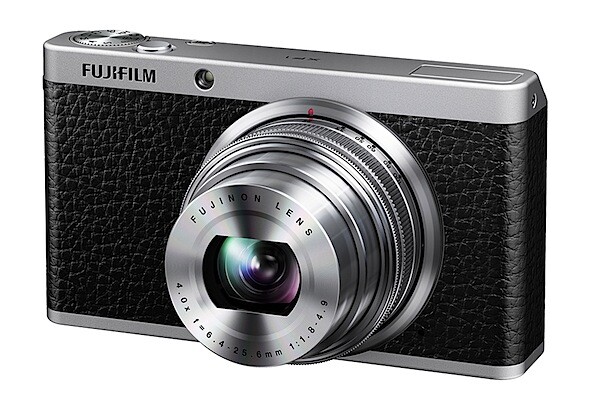
    After a swag of complex, interesting and somewhat challenging digicams passed over my review desk, I felt I deserved a holiday. So I fell upon this new, aluminium-bodied Fujifilm model as an example of what you can find out there: small, pocketable, easy to use, yet with a smallish zoom range … but with a very fast lens.

    It’s easy to get blasé in this business and sometimes I don’t immerse myself deeply enough in the press guff that accompanies these delights of technology. So when I pulled the XF1 out of the box I was flummoxed at how to start it up. No power button! Nowhere could I find a means to kick it into life. And of course the last place I would look for assistance was in the instruction manual PDF!

    So what to do?
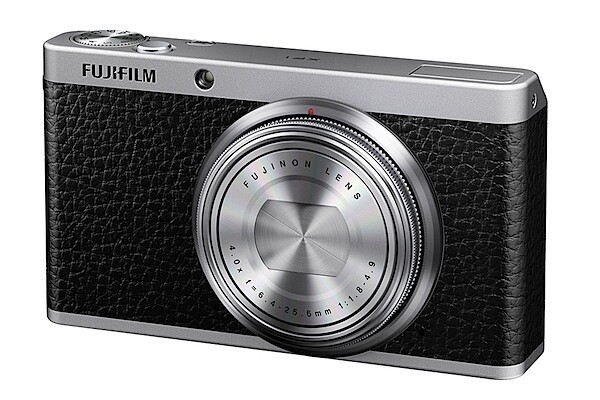
    XF1_Black_Front_Left_Off.jpg

    I then noticed that the lens was oddly flush with the camera body. So I idly twirled the lens, pulling it out a few mils. Then twirled it a bit more.

    Voila! Power’s on. LCD screen comes alive. What a gas! Cleverest startup I’ve ever seen.
    XF1_Black_Back.jpg

    Fujifilm XF1 Features

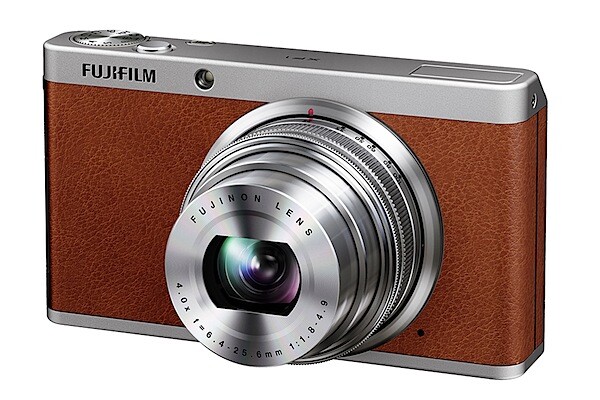
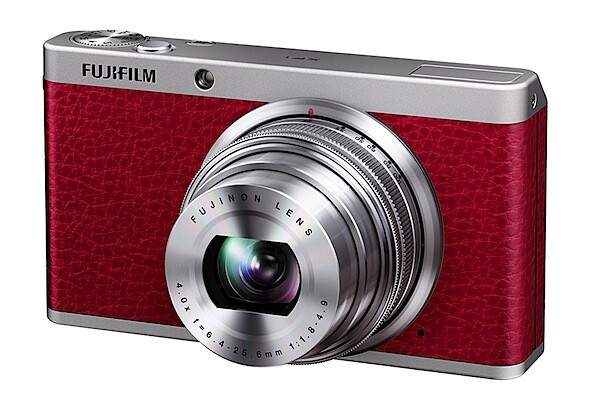
    The review XF1 was beautifully styled with a chrome top deck and black body. Very Leica-ish! It’s also available in two other colours: red and brown.
    XF1_Brown_Front_Left_Wide.jpg

    XF1_Red_Front_Left_Wide.jpg

    The lens is an f1.8 4x zoom, with the wide end a decent 25mm SLR equivalent, zooming into a useable 100mm tele end, ideal for portraiture.

    The maximum image size can deliver a 34x25cm print.

    Movies at Full HD res of 1920×1080 pixels can be shot.

    In keeping with the clean design philosophy, external controls are down to an absolute minimum.
    Top deck: mode dial (PASM, auto, two custom settings, EXR, advanced settings, scene position) plus shutter button, Function and flash pop-up.

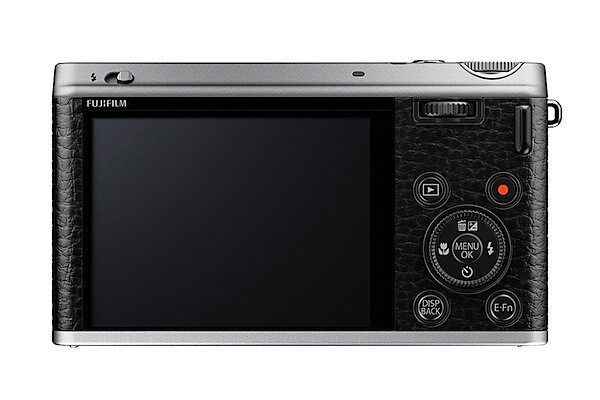
    Rear: four way rocker (trash, exposure compensation, macro, self timer, flash settings) display options, Function, replay and video record.
    Main menu.JPG

    Menu 2.JPG

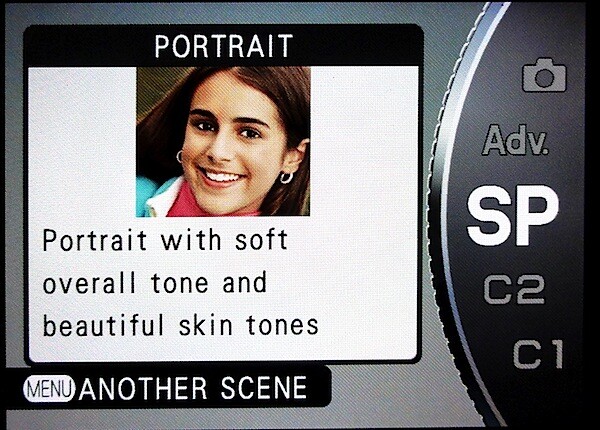
    SP.JPG

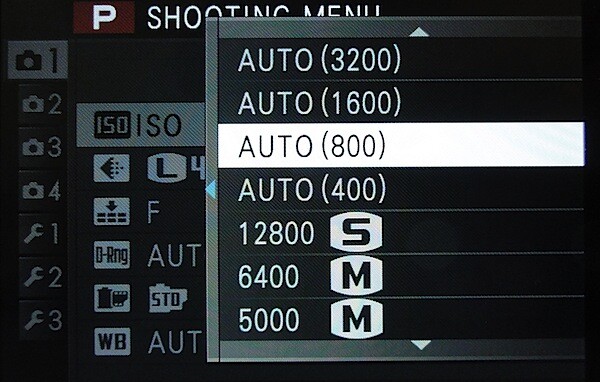
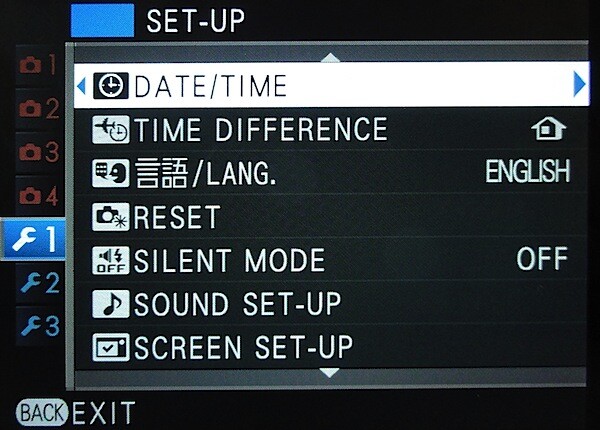
    The screen menus are displayed in large, clear text in a series of well laid out panels. One of the best menu sets I have seen.


    Beach group.JPG

    Beach people 5.JPG

    Shop mural 3.JPG

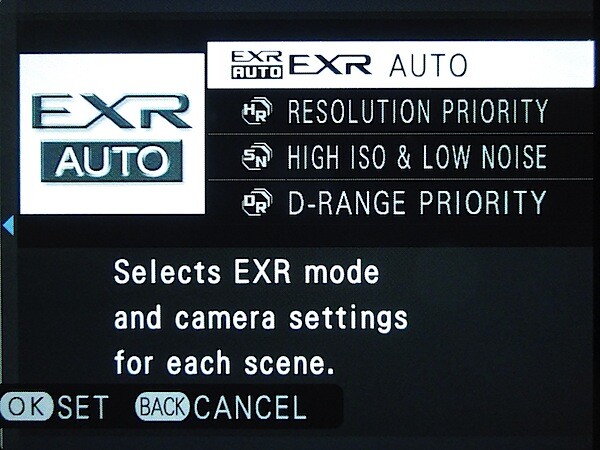
    A note on the EXR feature: in this mode the camera selects the optimum setting from 103 patterns; this helps you lift the quality of your image taking
    EXR.JPG

    Choose from an auto setting, or ones that place emphasis on resolution, high ISO and/or low noise or D-Range that will increase detail highlights. One worth exploring.

    Startup Time

    The camera is fast in departments other than the f1.8 lens: in less than a second I was ready to shoot my first shot with follow-ons coming in at a rate of less than a second each and as I became more practised in rolling the lens out obviously the startup figure would fall!

    Distortion

    Some evidence of barrel distortion at the wide end of the zoom; no problems at the tele end.

    Panoramas

    As with the XE-1, this model can shoot large motion panorama stills, with the camera capturing a run of individual frames, then stitching them in camera.

    Fujifilm XF1 ISO Tests

    Fujifilm XF1 ISO 100.JPG

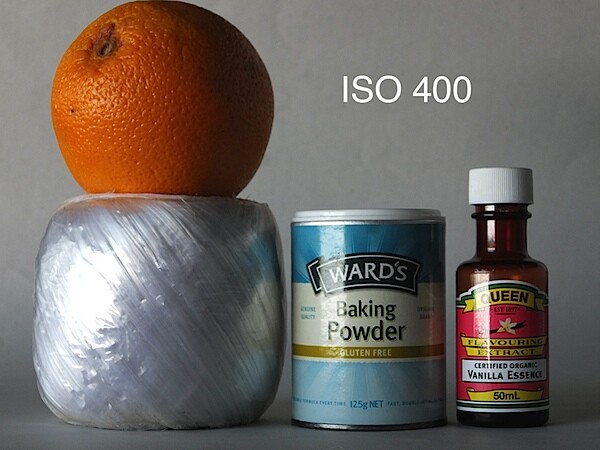
    Fujifilm XF1 ISO 400.JPG

    Fujifilm XF1 ISO 800.JPG

    Fujifilm XF1 ISO 1600.JPG

    Fujifilm XF1 ISO 3200.JPG

    Fujifilm XF1 ISO 6400.JPG

    Very interesting! The initial shot at ISO 100 revealed that the camera is not exactly razor sharp at close distances (ie 30cm).

    Higher ISO figures revealed that definition fell further, then noise became apparent at ISO 1600 and rose even more by ISO 6400 (2816×2112 pixels). No point in testing ISO 12800 due to an even smaller capture size (2048×1536 pixels).

    Fujifilm XF1 Review Verdict

    Quality: good at normal distances. Not the best for close up work.

    Why you’d buy the Fujifilm XF1: fast to get going; high quality snapping.

    Why you wouldn’t: you may find the startup routine unnecessarily fiddly … takes some time to get used to!

    There’s a lot to like in this camera, although I fell afoul of the startup routine when rolling the lens from wide to tele: if I ran the lens too hard against the tele end it shut down! Frustrating!

    I then figured out there were two startup configurations: travel mode, where the lens retracts fully inside the camera to minimise the camera size; pull the lens slightly away from the body, then (when ready to shoot) roll the lens to the desired focal length.

    An interesting camera for a number of reasons.

    Fujifilm XF1 Specifications

    Image Sensor: 12 million effective pixels.
    Sensor: 17mm EXR CMOS.
    Metering: Multi segment, averaging, spot.
    Lens: Fujinon f1.8-4.9/6.4-25.6mm (25-100mm as 35 SLR equivalent).
    Exposure Modes: Auto, Program AE, shutter and aperture priority, manual.
    Shutter Speed: 30 sec to 1/2000 second.
    Memory: SD/SDHC/SDXC.
    Continuous Shooting: Approx 3-16fps.
    Image Sizes (pixels): Stills: 4000×3000 to 1536×1536.
    Movies: 1920×1080, 1280×720, 640×480, 320240, 320×112.
    Viewfinders: 7.6cm LCD screen (460,000).
    File Formats: JPEG, RAW, JPEG+RAW, MPO (3D), MPEG4.
    ISO Sensitivity: Auto, 100 to 12800.
    Interface: USB 2.0, HDMI mini, AV.
    Power: Rechargeable lithium ion battery.
    Dimensions: 107.9×61.5×33 WHDmm.
    Weight: 225 g (inc battery, card).
    Price: Get a price on the Fujifilm XF1 at Amazon.

    Post originally from: Digital Photography Tips.

    Check out our more Photography Tips at Photography Tips for Beginners, Portrait Photography Tips and Wedding Photography Tips.

    Fujifilm XF1 Review


    Digital Photography School