Sony Corporation is to split the part of its business that makes imaging sensors away from the Devices segment that it currently comes under, to form its own company called Sony Semiconductor Solutions Corporation. Sony has said that the degree of autonomy that the new company will enjoy will allow it to react more quickly to changing market forces and will encourage the business to grow more quickly. Read more
Tag: Form
-
Colorful Cabs: Taxi Fabric Project is a New Form of Urban Art
[ By Steph in Design & Fixtures & Interiors. ]
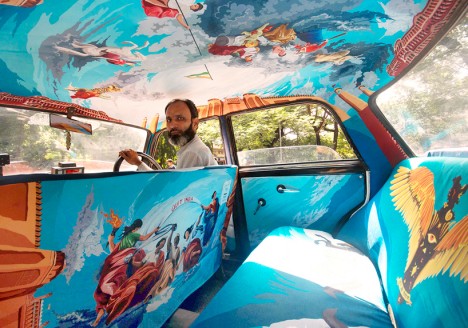
Thousands of people get to gaze at beautiful original artwork while taking a ride from one place to another in Mumbai, India, bringing exposure to local design talent through a new form of urban art. The Taxi Fabric Project beautifies this often impersonal mode of transport, making cabs stand out as individuals in a crowded sea of cars and creating mobile galleries that immerse riders in a particular artist’s imagined world.
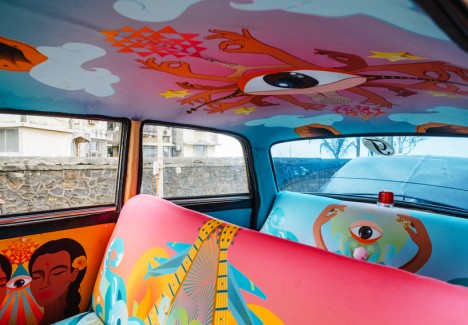

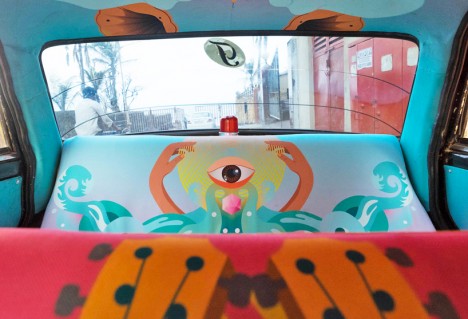
“Design – as a job or studied at school – is unfortunately not widely recognized in India,” say the creators of the project. “Older generations don’t understand it. Design to them just performs a function. Many people don’t know that design can create a real impact. With so few spaces for young people to show off their skills, it’s hard to change that perception.”
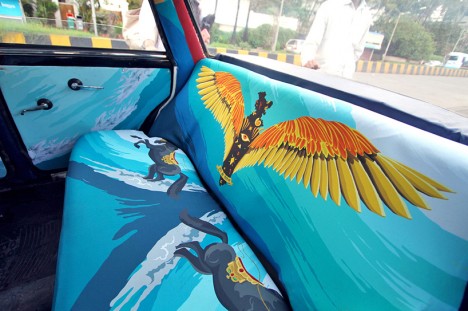
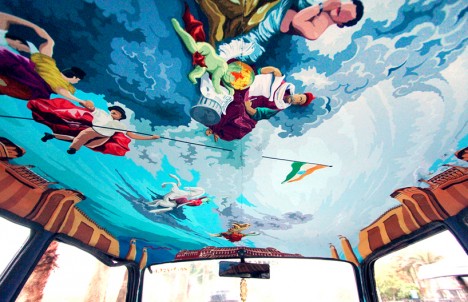

In a city where cabs are the most convenient and common way to get around, this unusual mashup of art and transportation has the potential to get a lot of people excited about design and curious about the artists. Up to 30 taxis will be made over for the project, printing colorful works onto fabric and stitching it directly to the interior surfaces of each car.
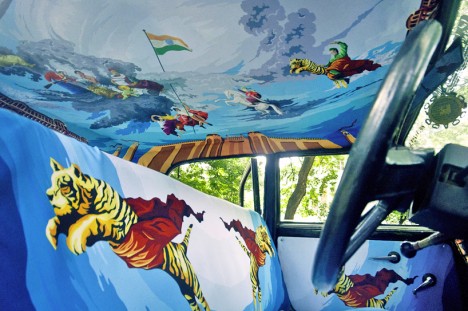
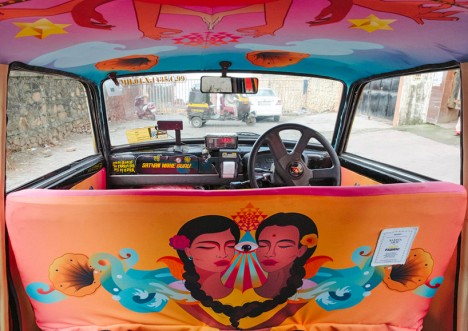
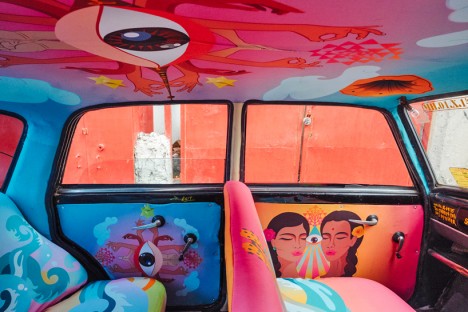
One notable example is ‘A Century of Revolt’ by Kunel Gaur, which illustrates the Indian Independence in a fresco-inspired style. Another – ‘Monad’ by Samia Arif – reminds Indians how similar their culture is to that of neighboring Pakistan, while conflicts continue to rage between the two countries.
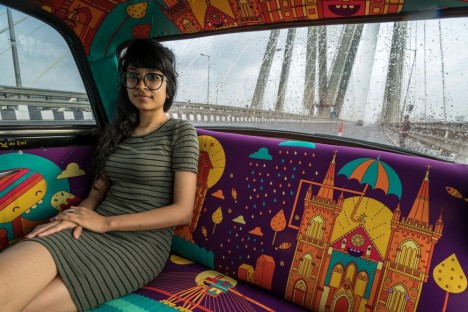
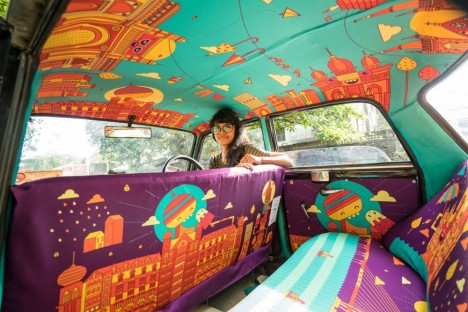
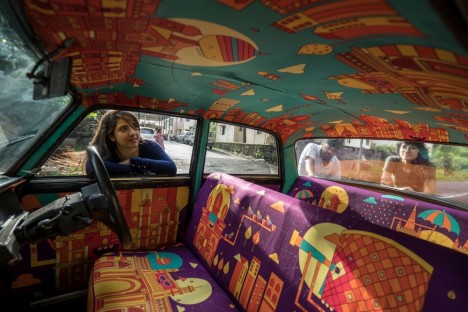
‘Happily Ever After’ by Shaivalini Kumar celebrates the landmarks of Mumbai. “The architecture of Mumbai blends Gothic, Victorian, Art Deco, Indo-Saracenic and contemporary architectural styles. Many buildings, structures and historical monuments remain from the colonial era. All these buildings coexist beautifully and are also as resilient as the amazing people of Mumbai.”
Want More? Click for Great Related Content on WebUrbanist:
Urban Fabric: Stretched, Stitched & Suspended Mobile Home
Imagine rooms that expanded and compressed depending on occupancy, then stretch your mind to conceptualize a whole home that works the same way – it …
Click Here to Read More »»
RedBall Project Takes Interactive Urban Art on Tour
A huge inflatable red ball travels around the world, showing up in cities like Toronto and Abu Dhabi, squeezed into entryways and hovering above the street.
Click Here to Read More »»
Juxtapositions: Luxury Skyscrapers in Seas of Blue Shanties
In some cities the slums run vertical while the rich build mansions on the precious ground, but in Mumbai, India, high-rise housing is considered premium real …
Click Here to Read More »»


[ By Steph in Design & Fixtures & Interiors. ]
[ WebUrbanist | Archives | Galleries | Privacy | TOS ]
-
Elinchrom, Phottix and Sekonic form wireless common standard partnership
Lighting manufacturers Elinchrom and Phottix are collaborating with the light meter brand Sekonic to establish a common standard for communication between wireless lighting devices. Read more
-
Form Follows Function: 18 Sculptural Home Furnishings
[ By Steph in Design & Furniture & Decor. ]

Turn your home into a gallery with functional furnishings that double as sculpture, like cabinets in the form of human torsos and beds shaped like roller coasters. These 18 designs blur the lines between furniture and art, blending gallery-worthy aesthetics with practical purposes.
Enignum Chairs, Tables and Beds by Joseph Walsh


Artist Joseph Walsh strips wood into thin layers to create incredibly delicate-looking sculptural forms that also function as an array of practical objects. “Using free form design allows the material to dictate the composition,” reads Walsh’s artist statement. “Tables, chairs, entire walls that don’t just straddle the universes of art, architecture and function but unify them into a beautiful equation.”
La Montaña Rusa Roller Coaster Bed


The shape of this communal bed and lounging area by artist duo ‘Los Carpinteros’ echoes that of a rollercoaster, the pink padded surfaces rising and falling in a reference to “the cycles of life, rest, dreaming, sexuality, birth and death.”
Human Figure Cabinets by Peter Rolfe


The nude human form becomes more than just a visual to admire in the hands of woodworker Peter Rolfe, who has created a series of figurative sculptures that are also cabinets. Drawers pull out of some unexpected places, the seams sometimes hidden so you have to paw around a bit to find them.
Next Page – Click Below to Read More:
Form Follows Function 18 Sculptural Home Furnishings
Want More? Click for Great Related Content on WebUrbanist:

Resource Furniture: Convertible Designs for Small Spaces
Multifunctional and convertible furniture solutions from Resource Furniture unfold and expand in unexpected ways, fitting lots of function into tiny rooms.
Click Here to Read More »»
Pop-Up Portfolio: Mobile Furniture Folds Flat Between Pages
It is not unusual to see art and design students walking around with portfolios under their arms, but few open up to reveal such creative results as these. …
Click Here to Read More »»

Funky Furnitures: 142 Creative Modern Furniture Designs
We sit on it during the day, sleep on it at night, eat off it and even look at our reflection in it – but how much thought do we really give our furniture?
Click Here to Read More »»
[ By Steph in Design & Furniture & Decor. ]
[ WebUrbanist | Archives | Galleries | Privacy | TOS ]
-
How to Form a Band of Cheerleaders for Your Photography Business
Let’s take a walk down memory lane with the song “One” written by Harry Nilsson. It was made famous by Three Dog Night in the late 1960’s. The song is particularly renowned for it’s opening line :
“One is the loneliest number that you’ll ever do.
Two can be as bad as one.
It’s the loneliest number since the number one.”I believe there is a lot to be learned from this song. The core message being, don’t go through your life without any social interaction. I am not taking about your Facebook fans or your Instagram followers, but of the actual social connections you make among the people you interact with on a daily and weekly basis. As humans we all crave connections and contact with others. Sad as it may seem, we photographers, in general, are introverts. For the most part, we love to hide behind the camera – one eye looking through the viewfinder and the other closed to the outside world. It can certainly get very lonely and depressing.
We all know and understand the value of friends and co-workers. However, often times we tend to only gravitate towards like-minded people or those in the same profession. I am not undervaluing the importance of having friends in the industry. Personally, I have a select group of fellow photographers whose opinion I really value, appreciate, and am honored to call my friends. Some are local to me while others are through an online community – we not only talk shop but also talk about our families, our kids, and even send holiday cards to each other . But I find it mentally stimulating when I interact with people from many other professions – either related to my genre of photography (weddings and family portraits) or of a completely different field. Trust me, they all are invaluable in your growth as an artist and as a professional.
Here are some tips on how to form your own sphere of influencers and well-wishers for your own personal and professional growth. Some of these tips may seems very technical or business-school like, but are actually very simple to follow and implement for your photography business.
#1 Conduct a social network analysis
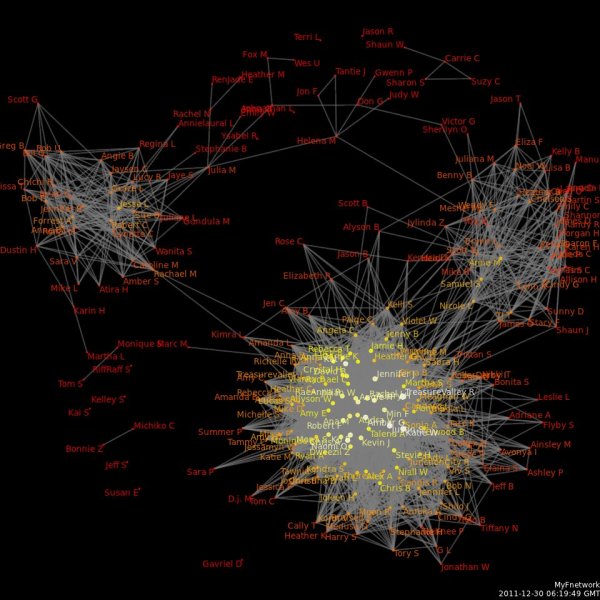
As per Wikipedia, Social Network Analysis is the study of network theory in a social analysis. Quite simply, network theory is the study of connectivity among different entities. In a social scenario, it is the mapping of “Who do you know?” also known as, “Who are your friends?” and “Who are your friends’ friends?”. Social media platforms like Facebook and LinkedIn actually have the underlining structure built already. When you friend someone, you can immediately see if you have any common friends or business acquaintances. Use your social media accounts as a starting point and map out who you know, and who those people know. Go as deep and wide as you can without getting confused or lost!
By Kenneth Freeman
#2 Narrow down your sphere of influencers
Once you have documented your social network analysis, narrowing your sphere of influencers is fairly easy to do. Look to your key friends, well-wishers and family as a starting point. Are there some people who are more invested in you than others? Distinguish those in some way. Are there people who are in the same field as you? What about completely different areas of expertise?
As a photographer, I love colors. A tip that works for me is to color coordinate the different groups. Warm colors like red/orange are people who are in my immediate circle (my core circle of trust). Cool colors like blue/green are people who are important but not as much as my sphere of direct influencers. Neutral colors like brown/peach are acquaintances. Also find a way to distinguish between local connections and online connections. Another tip is to keep your photography and business goals in mind while analyzing your network. This could help you focus on connections and contacts that could help you achieve your specific goals.

#3 Invest in meaningful engagement
Now that you have completed the technical part, take the time to engage on an emotional level. Connect with people with genuine intent. Take time to get to know the people you want to connect with. Find commonalities – either common interests, or common friends. Ask your friends to provide an introduction.
I cannot tell you the amount of times I have gotten a random friend request from someone – with or without mutual friends. If I don’t know you at all, chances are I am not going to respond. However if you send me an email, introduce yourself and let me know a bit about you and what exactly you want from the reach out, I am more likely to send a response back. Give me a reason to want to connect with you.

#4 Work out a mutually beneficial arrangement
Among the connections you make, some will be social, while others will be purely business and professional. That’s perfectly okay. You cannot be friends with the whole world, but you can certainly be cordial and pleasant with everyone you meet. When you are interacting with a vendor or a business peer, keep it professional and ensure that it is a mutually beneficial agreement. If you are reaching out to a small clothing boutique to do a styled shoot, ensure that you provide them with images from the shoot that they can use to promote their work. If you are asking acquaintances to model for you, provide them with images that they can use however they see fit. My personal rule is to provide watermark-free images, but to ask for image credit when they post the images online.

Invest in a core group of friends and wellwishers
#5 Give more than you receive
This one ties in with #4. Don’t forget to thank people for their time and effort – either for promoting you or for helping you in some way. Just because the job is done, does not mean you forget about them and move on. Keep in touch and keep the connection strong. You never know when you may need to reach out to them again. Make sure that your cheerleaders remain your advocates for a long time.
I know what you are thinking. Shouldn’t something like friendships and relationships come from the heart? Does it really need to be plotted and mapped like a cross-country road trip? There really are a lot of benefits to doing just that. We all know that time is limited, and often time is more valuable than money itself. So, why not use that time wisely? When you are strapped for time, engage in relationships that bring the most value. I am not equating value with money or business. Value is a very personal choice and decision, and can mean whatever you choose to matter most to you – true connections, selfless relationships and/or business transactions.
How do you build your team of cheerleaders? Please share in the comments below.
googletag.cmd.push(function() {
tablet_slots.push( googletag.defineSlot( “/1005424/_dPSv4_tab-all-article-bottom_(300×250)”, [300, 250], “pb-ad-78623” ).addService( googletag.pubads() ) ); } );googletag.cmd.push(function() {
mobile_slots.push( googletag.defineSlot( “/1005424/_dPSv4_mob-all-article-bottom_(300×250)”, [300, 250], “pb-ad-78158” ).addService( googletag.pubads() ) ); } );The post How to Form a Band of Cheerleaders for Your Photography Business by Karthika Gupta appeared first on Digital Photography School.
-
Caricature as Furniture: Pop Culture in Functional 3D Form
[ By Steph in Design & Furniture & Decor. ]

The Simpsons and other characters and pop culture figures are translated into minimalist chair designs in this eclectic collection from 56th Studio. Can you guess who the rest are supposed to be? The designers took the most recognizable features of each and distilled them to their most basic forms. Naturally, the exaggerated hairstyles of Bart, Marge and Lisa make them easy to spot, while the others are subtler.


“At the beginning, this project is an exploration of minimal illustration that has eventually expanded into pieces of furniture,” say the esigners. “We believe that objects possess power of communication, therefore, we decide to take a tongue-in-cheek look at investigating Pop and Hollywood Culture in tangible forms, in hoping that it would make the line that separates Graphic from Furniture become thinner.”


Inspired in part by the ‘cubical appearance’ of iconic singer Grace Jones, the project definitely blurs the lines between art objects and functional furniture. Jones is represented by one big pair of lips, and you might be able to spot Harry Potter and his owl, too.
Want More? Click for Great Related Content on WebUrbanist:
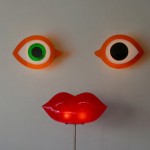
The Eyes Have It: Funky & Functional Occular Furniture Art
French artist Nicola L. has been producing mind-bending works for four decades. Her functional furniture art is among the most amazing and memorable.
Click Here to Read More »»

Origin III: Minimalist Furniture Inspired by Boat-Building
Designers BCXSY developed a line of minimalist furniture and home decor based on boat-building methods observed during an artist residency in Ireland.
Click Here to Read More »»
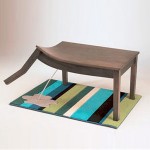
Absolutely Absurd: 18 Playful Furniture Pieces for All Ages
The humor starts with the name, but definitely does not end there. Straight Line Designs produces just about anything except works that are straightforward.
Click Here to Read More »»
[ By Steph in Design & Furniture & Decor. ]
[ WebUrbanist | Archives | Galleries | Privacy | TOS ]
-
Form Follows Footprint: Forest Retreat Just Fits Local Codes
[ By WebUrbanist in Architecture & Houses & Residential. ]

A creative response to a new legal loophole, this structure is designed specifically to test the limits of a Swedish planning law allowing buildings under a certain size to be constructed without prior structure-specific approval.


Jägnefält Milton of Stockholm worked with Arup engineers to work within the confines proposed by the legislation, which include dimensional limits of 25 square meters and 4 meters in height.


The intent, though, is not to push the limits but to respect their intent and create a low-footprint, eco-friendly pavilion that respects its environment.

The design calls for using the timber cleared from the site to construct the structure and use a tension system of structural anchors to maximize views, minimize outside materials and take advantage of a large stone on the site.


Supported off the ground, the lower platform is mirrored by a roof of the same organic leaf-like shape and a fabric cover can be deployed around the entire building to provide some privacy as well.
Want More? Click for Great Related Content on WebUrbanist:
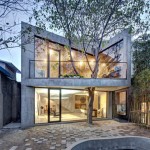
Fabled Forest Retreat: Twisted Tea Tree House
Tucked behind an architecture office in Shanghai, this serene building offers books, tea and nature to calm visitors and effortlessly melt stress away.
Click Here to Read More »»
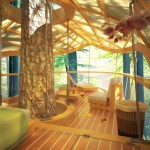
Hanging Hotel: Camp in a Trunk-Friendly Tree House Retreat
Without harming the forest that supports it, this streamlined tree house design is stabilized by a central trunk but ultimately suspended from the branches …
Click Here to Read More »»
Forest Pavilion is World’s First 3D-Printed Architecture
There has been a lot of competition to design and execute the first prototype of a 3D-printed architectural structure, including complex concepts for houses …
Click Here to Read More »»
[ By WebUrbanist in Architecture & Houses & Residential. ]
[ WebUrbanist | Archives | Galleries | Privacy | TOS ]
-
Intangible Data in Physical Form: 12 Scientific Sculptures
[ By Steph in Art & Sculpture & Craft. ]

Mathematical theorems, the physics of an object moving through space, and intangible scientific data are visualized three-dimensionally and made into works of art in these 12 sculptures and installations.
Kinetic Sculptures Based on Mechanical Waves


“Inspired in equal parts by math and nature,” Reuben Margolin’s kinetic sculptures use pulleys and motors to recreate the complex movements seen in nature. These mechanical installations capture the crawl of a caterpillar, the movement of waves and other physical phenomena in a way that’s entirely unexpected and beautiful to take in.
‘Cosmos’ Sphere Made of Scientific Data

If you were to happen upon this sphere while walking in the forest, you couldn’t be blamed for wondering whether you’d discovered an alien spaceship of some sort. But the reality of ‘Cosmos’ is just as interesting: it’s scientific data in three-dimensional form, a record of a year’s worth of carbon dioxide patterns and measurements from the trees of Alice Holt forest in Surrey, England. The grooves on the exterior of the sculpture contain the data, which was collected from a nearby tower.
Interactive Sound Tapestries


A series of capacitive sensors were applied to suspended fabric using conductive paint for ‘Contours,’ an interactive tapestry installation by creative laboratory Bare Conductive and designers Fabio Antinori and Alicja Pytlewska. As people pass nearby, the sensors gather data about their movements and translate it into ambient sounds, making reference to the relationship between science and the body.
Cell-Inspired Sculpture Made of 1200 Mirrors


An egg-like sculpture made of 1,200 mirrors hovered in a tree in the city center of Nantes, France, visually representing the creators’ research into cells. French studio Collectif Timée based the sculpture on the Voronoi Diagram in which a mathematical formula creates cells from halfway lines around random space points. As the cells converge, a kaleidoscopic effect is produced.
Next Page – Click Below to Read More:
Intangible Data In Physical Form 12 Scientific Sculptures
Want More? Click for Great Related Content on WebUrbanist:
In Orbit: Transparent Suspended Net Playground in the Sky
A suspension of transparent nets hovering 80 feet over the floor of an indoor courtyard makes for a surreal playground for the brave, and a terrifying sight …
Click Here to Read More »»

Dreamy Driftwood Horse Sculptures of Heather Jansch
Most people walk right by driftwood on the beach. Heather Jansch picks it up and sees its potential. Her driftwood sculptures are full of life and character.
Click Here to Read More »»
Stories Jump Out of the Pages with 3D Book Sculptures
Characters from iconic stories like Treasure Island and Bambi leap out of the pages of open books in whimsical book paper sculptures by Jodi Harvey-Brown.
Click Here to Read More »»
[ By Steph in Art & Sculpture & Craft. ]
[ WebUrbanist | Archives | Galleries | Privacy | TOS ]
-
Surreal Snippets: Gifs Elevated to Mind-Bending Art Form
[ By Steph in Art & Drawing & Digital. ]

Gifs are taking over the internet, and that’s not always a good thing. Entire conversations are carried out in the form of animated images, replacing words with snippets of out-of-context pop culture. But it’s hard to deny that they can be totally mesmerizing – especially when they’re as surreal as this. Science student Hugo Germain, known as Graphonaute, has truly elevated the gif to an art form of its own.

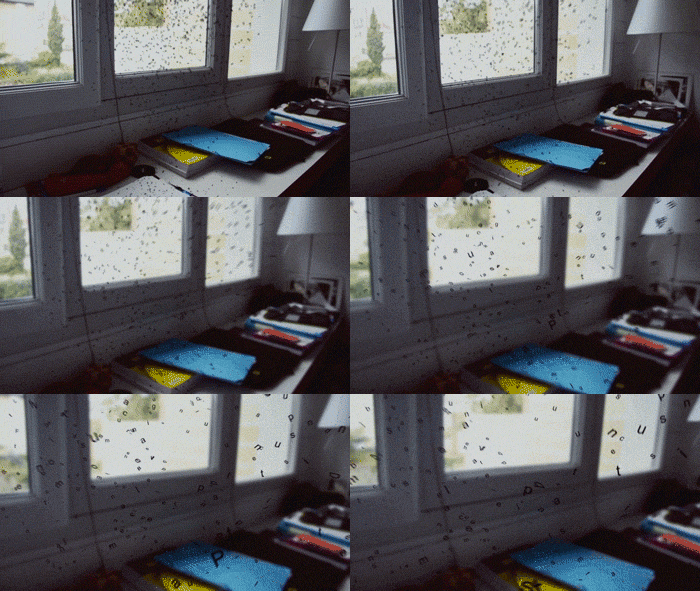
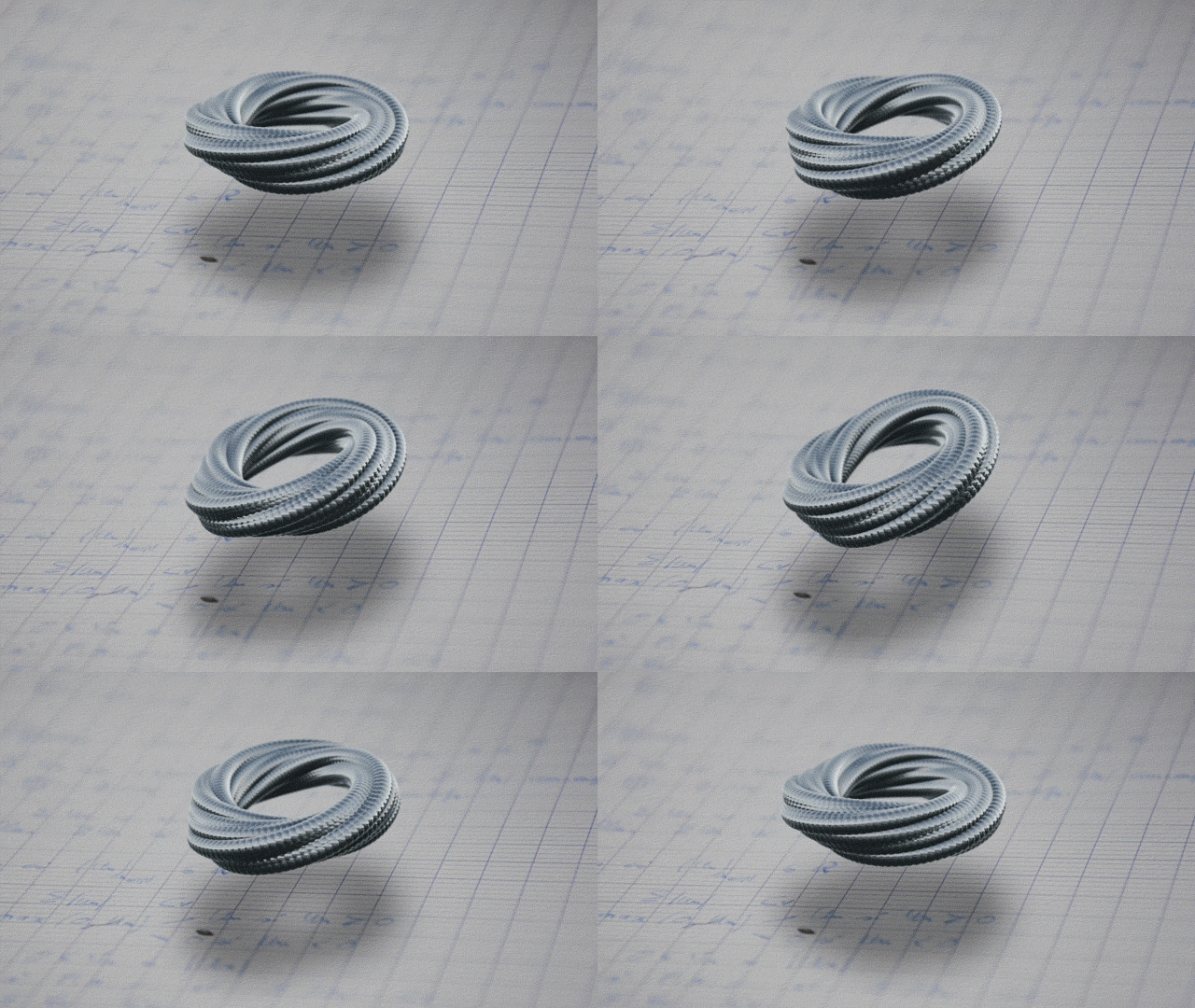
Objects spin in mid-air, liquid ink turns to gas, letters raise themselves off a page and float. The images defy all laws of physics, warping reality in totally unexpected ways.
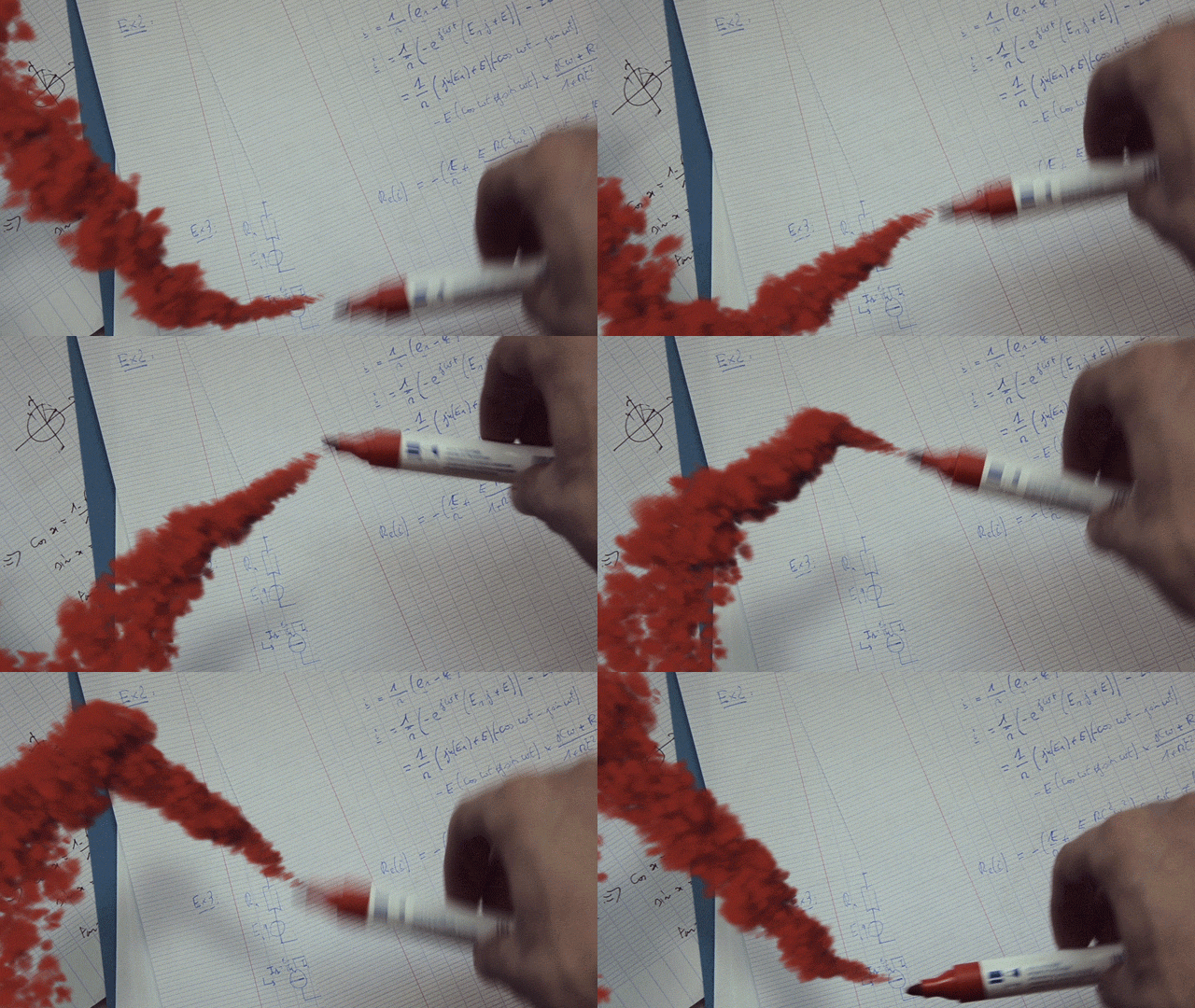



Germain creates the images using a combination of live-action footage and 3D tools. Most of the images are unexplained, but occasionally the designer offers a glimpse at what he was thinking during the creative process. “That awkward moment when a dementor bumps into you,” he clarifies in regards to the image above.
Want More? Click for Great Related Content on WebUrbanist:
Mind-Bending Digital Photo Manipulation by Erik Johansson
Roads unfurl like fabric and human faces are frighteningly elastic in the digitally manipulated photographs of artist Erik Johansson.
Click Here to Read More »»
20 Mind-Bending & Floor-Ripping Architectural Sculptures
Australian artist Robbie Rowlands masterfully blends architecture and art with his unique style. His art shakes our notions of stability and familiarity.
Click Here to Read More »»
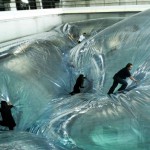
On Space Time Foam: Surreal Billowing Art Installation
PVC membranes provide a playground for visitors, requiring coordination between the people navigating its surface to keep them all from sliding to the center.
Click Here to Read More »»
[ By Steph in Art & Drawing & Digital. ]
[ WebUrbanist | Archives | Galleries | Privacy | TOS ]
-
Die ästhetische Form des Kapitals
Ein Beitrag von: Ingo Dammasch
Das Problem ist: Das Bankenviertel beeindruckt nur von oben. Zwischen den Türmen selber ist nichts los. […] Es gibt hier nichts zu sehen, wovon man später erzählen könnte. […] Touristen sieht man hier nicht, worüber man sich nicht wundert.
So beschreibt der Schriftsteller Wilhelm Genazino das Bankenviertel Frankfurts.
Und er hat Recht: Was einem stattdessen zuweilen begegnet, sind hektische Menschen, die abwechselnd einen Blick auf ihre Uhr und auf die Kamera des „Fremden“ werfen. Die Sterilität der Straßenzüge und Fassaden, deren Eingänge von modernster Kameratechnik überwacht werden, erinnern mehr an Orwells „1984“ als an die Möglichkeit, kreative Fotos zu machen.

Wer sich dagegen unbeeindruckt von der „Tristesse“ zeigt und sich den Details der Wolkenkratzer widmet, erfährt ein Gefühl der kühlen Faszination für diese Gebilde. Während man Panoramabilder der Skyline schon unzählige Male gesehen hat, gibt es nur wenige Arbeiten, die sich dieser abstrakt nähern.
„Abstrakt“ heißt für mich persönlich, bestimmte Details der Fassaden oder architektonische Besonderheiten hervorzuheben. Dabei geht es mir darum, mit dieser Reduktion die Ästhetik der Architektur zu zeigen.

Ob ins scheinbar Unendliche reichende Fensterfassaden oder sich darin spiegelnde Gebäude – bei jedem Spaziergang ergeben sich wieder neue Perspektiven und andere Lichtverhältnisse, die die Bildstimmung jedes Mal aufs Neue variieren lassen.
Die Motivation, ein und dasselbe immer wieder neu zu entdecken und mich bei der Motivwahl auf die Enge und das Beängstigende der Bauten einerseits und die Grenzenlosigkeit der in den Himmel ragenden Wolkenkratzern andererseits einzulassen, fasziniert mich.

So zeigen die Fotos eine Eindeutigkeit, die uneindeutig bleibt. Zusammen ergeben sie eine „fotografische Spurensuche“, wie Kröner die abstrakte Fotografie definiert. Eine Spurensuche der Struktur und Beschaffenheit des Bankenviertels.
Ganz besonders hat es mir dabei der „Silver Tower“ (auch: Dresdner-Bank-Hochhaus oder Jürgen-Ponto-Hochhaus) angetan, in dem die Deutsche Bahn zuhause ist.

Dieser ist architektonisch höchst reizvoll, da er als das „einzige Gebäude in Frankfurt mit runden Ecken“ gilt. Mit seinen 167 Metern Höhe war der Silver Tower bis 1991 sogar das höchste Gebäude in Deutschland.
Aufgrund der runden Ecken und der verschiedenen Bestandteile des Towers lassen sich hier unzählige lohnenswerte Perspektiven und Standpunkte ausmachen.

Am Ende eines jeden Fotospaziergangs sehe ich meine Fotos durch und freue mich schon auf die Sichtung am Rechner. Im Gegensatz zu den meisten verlasse ich also mit einem Gefühl der Zufriedenheit das Bankenviertel.
In diesem Sinne lässt sich am Ende Genazino vielleicht zustimmen, wenn er sagt:
Wer Frankfurt für ungenießbar hält, hat nicht verstanden […], dass die Dynamik des Kapitals eine Macht ausstrahlt, die selber längst ästhetische Formen angenommen hat.

Angefangen habe ich mit dieser Serie erst im September des vergangenen Jahres. Ich möchte das Projekt auf jeden Fall weiterführen und obwohl ich nicht sehr oft in Frankfurt bin, nutze ich doch jede Gelegenheit, einen Abstecher in diese Stadt der Gegensätze zu machen, in der urige Apfelweinwirtschaften und gewaltige Finanztürme in enger Nachbarschaft existieren.
Alle Zitate sind dem folgenden Buch entnommen: „Tarzan am Main – Spaziergänge in der Mitte Deutschlands.“ von Wilhelm Genazino. Ullstein Verlag. 2013.