Tag: Drop

  • Elegant Energy-Free Air Conditioner Can Drop Temperatures by 26 Degrees

    [ By WebUrbanist in Design & Fixtures & Interiors. ]

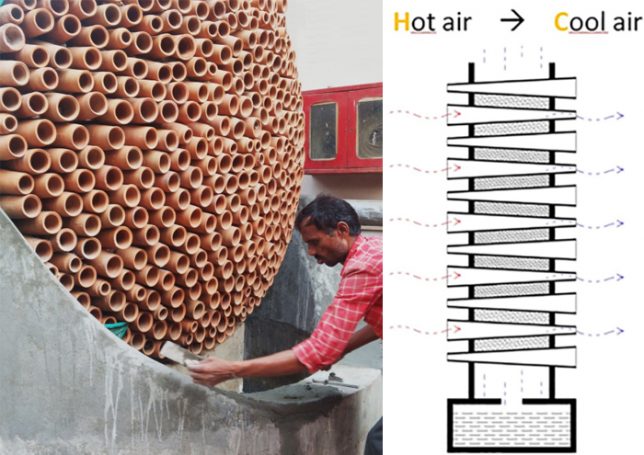
    At a glance, the honeycomb structure of terracotta tubes looks more like large-scale work of handmade sculpture than a highly designed air conditioner. Developed for an electronics factory in New Delhi, this evaporative cooling device requires no power to lower interior temperatures by as much as 26 degrees Fahrenheit.

    Designed by Ant Studio for DEKI Electronics in New Delhi, the low-tech strategy taps into a long history of passive cooling systems that employ water rather than power. Water passing through the clay pipes and falling into the basin below looks and sounds soothing, but it also lower air temperatures as it evaporates.

    The appearance of the system is also deceptively simple, looking like a hand-crafted work rather than something developed through advanced computational analysis and modern calibration techniques. The effect is astonishing: temperatures of 122 degrees can be brought down as low 96 degrees (perhaps not room temperature comfortable for everyone, but still a remarkable drop).

    The tubes are porous, absorbing water that slowly evaporates. Monish Siripurapu, founder of Ant Studio, says this project has “opened up a lot more possibilities … we can integrate this technique with forms that could redefine the way we look at cooling systems, a necessary yet ignored component of a building’s functionality. Every installation could be treated as an art piece,” he believes.

    Share on Facebook


    [ By WebUrbanist in Design & Fixtures & Interiors. ]

    [ WebUrbanist | Archives | Galleries | Privacy | TOS ]


    WebUrbanist

  • Make a Macro Lens with Just a Drop of Water

    Warning: preg_replace(): The /e modifier is no longer supported, use preg_replace_callback instead in /home/forge/content.photojojo.com/content.photojojo.com/wordpress/wp-content/plugins/ozh-better-feed/inc/feed.php on line 134


    Photojojo

  • Sony image sensor sales increase, camera and Xperia sales drop

    Sony has announced its financial results for Q4 2016 and the numbers show that the Japanese company’s image sensor division has performed well. Within the semiconductors segment, image sensor sales have increased by 40% year-on-year which is largely due to significantly increased sales of image sensors for mobile devices.

    Digital camera sales have slightly decreased from 1.8 to 1.6 billion units, resulting in a 9.6% revenue decrease. On the plus side, the company has noted a continued improvement in terms of product mix, with a shift to high value-add models.

    Sony upped its forecast for the financial year but the new figures would still mean a 34% fall in sales volume and a 17% fall in sales by value, compared with 2015.

    Things don’t look quite as good in the phone division. The company shipped a total of 5.1 million Xperia phones in the quarter, which is down by around 33% year-on-year. Total mobile revenue for the quarter was ¥249bn ($ 2.2bn). Sony blames lower than expected sales in Europe for the decrease. The forecast for the fiscal year, which ends in March, was also lowered from 17 million to 15 million units.

    You can find all of the details at Sony’s investor relations site.

    Articles: Digital Photography Review (dpreview.com)

  • Sony camera and sensor business units report drop in sales in 2015

    Sony Corp. released its third quarter 2015 earnings report [PDF], in which the company disclosed notable drops in both camera and image sensor sales. It has also lowered the forecast for both business units, though both are still expected to make a profit in the current fiscal year.

    Note the drop in camera sales but increase in operating income due to the shift to higher-end models.

    Sales in the Imaging Products unit dropped by 5%, due to decreases in unit sales of digital still and video cameras, reflecting ‘a contraction of the market, partially offset by an improvement in the product mix of digital cameras reflecting a shift to high value-added models.’ In other words, they’re selling fewer cheap compacts and more RX and a7-series cameras. Operating income went up by over 20%, however, due the aforementioned shift to higher-end digital cameras.

    Image sensor and battery sales are way down in Q3 2015 vs Q3 2014, and the forecast for FY2015 has been lowered considerably.

    The image sensor business took an even bigger hit. Sales in the Devices unit decreased by over 12% year-on-year due primary to a drop in sales of image sensors as well as batteries. Operating income dropped ¥65.5bn ($ 540m) to –¥11.7bn ($ 97m), due in large part to a write-down in assets related to batteries. While not specific to digital cameras, the company’s statement mentioned a 7.5% drop in sales to external partners.

    Sales in Q1 and Q2 2015 were down more than 500k units each year-on-year and the company’s forecast shows the gap widening in Q3 2015.

    Sony also revised its October forecasts downward for both business units. The Imaging unit’s estimated sales has been reduced by 1.4% and now stands at ¥710bn (compared to ¥724bn in FY2014), while the forecast for the Devices business has been brought down by 11.3% to ¥940bn (compared to ¥927bn in FY2014). Both units are still expected to make a operating profit in FY2015, however.

    On other item of note from the company’s earnings call mentions the Oita manufacturing facility it recently bought from Toshiba. Sony says that they are considering using a portion of the factory for producing ‘logic’ (processors) rather than photodiodes (sensors) in order to reduce the cost of its sensors. While the company is considering this change to ‘mitigate the downsized rate in [the sensor] business’, it is ‘confident in the long-term prospects of image sensors.’

    Articles: Digital Photography Review (dpreview.com)

  • Canon EOS-1D C sees $4000 price drop in North America

    New pricing for the Canon EOS-1D C will go into effect in North America February 1st, taking the retail price from $ 11,999 down to $ 7,999. The camera is coming up on its third birthday, introduced in April 2012. The 18MP full-frame sensor is capable of 4K video. Read more

    Articles: Digital Photography Review (dpreview.com)

  • 3 Creative Uses of the Drop Shadow in Photoshop

    Default-Drop-Shadow

    Default Drop Shadow applied to Text

    Layer styles are a great way to add effects to your images in Photoshop. In this article, you will learn about the Drop Shadow. A typical example of the drop shadow effect in Photoshop is to add a 3D look to your text. Another example is when working with multiple images in the same document, the cutout elements should appear seamless in the background. A drop shadow effect can also be used in a creative way to make your image stand out.

    You get into the layer styles in Photoshop, by clicking on the fx icon at the bottom of the layers palette. Then, click on Drop Shadow, this brings up the Drop Shadow Dialog Box.
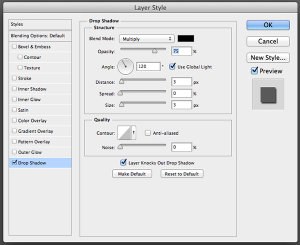
    Drop-Shadow-Dialog-Box

    Drop Shadow Dialog Box

    Let’s take a minute to look at some of the default settings:

    • The Blend Mode has been changed to Multiply.
    • Opacity has been reduced to 75%.
    • The distance of the shadow from the object is set to three pixels.
    • The Size is what blurs the shadow, it is set to three pixels as well.

    All of these settings can be modified within this Dialog Box. For example, you may want to change the angle to 90 degrees so that the drop shadow is directly underneath. If you are new to adding effects in Photoshop.

    Getting to grips with layer styles is a good start. These effects are applied non-destructively. I prefer to work with layers so that I have more control over any adjustments that need to be made. I use Gaussian Blur quite a lot which can be found under Filter on the Menu bar. Next, I’m going to show you how to put the drop shadow layer style on its own separate layer.

    Beginning with the Drop Shadow Dialog Box already open, click Ok, then go back up to the Menu Bar>Layer>Layer Style>Create Layer. A dialog box appears with ‘Some aspects of the Effects cannot be reproduced with Layers!’ Just click Ok again.

    Custom-Drop-Shadow

    Custom Drop Shadow

    What this does is put the drop shadow on its own separate layer. You can now make modifications non-destructively to the drop shadow using adjustments layers. By moving this layer around, you are creating the distance and the angle of the drop shadow in one movement. Changing this layer to a Smart Object will mean you can add Gaussian Blur or any other filter and this effect will also be applied non-destructively. In the layers Panel, go up to Opacity to reduce the intensity of the drop shadow.

    Create a custom creative shadow

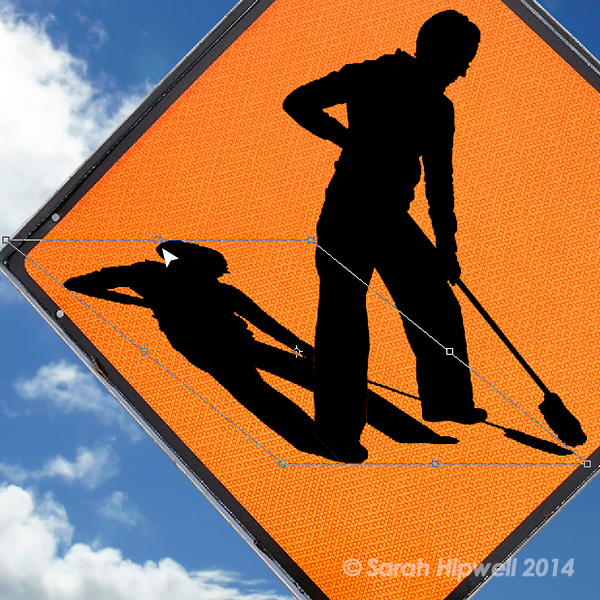
    You can also create a drop shadow without using the layer styles. When I am working with two or more images, (i.e. compositing) I import an image that has a clipping path or layer mask so that the subject or object has been already isolated or cutout from the background. For example, this image:

    Women-at-work

    Women at work

    The concept behind this image was a play on the men at work theme. Follow along the following steps:

    • Take a photo of your model.
    • The light isn’t important as will be turning your subject into a silhouette.
    • Create a clipping path with the pen tool, then open the destination (in this case the blank street sign) image and copy the path of the model into that image.
    • Next make a selection from the path and fill it with black.
    • Duplicate that layer and name it drop shadow.
    • Now you have two layers with the same black silhouette of your model.
    • Put the layer named drop shadow underneath the silhouette layer.
    • Next using the keyboard shortcut Cmd+T on a Mac(Ctrl+T on a PC), activate the Free Transform tool.
    • By holding down the Cmd key on the keyboard, hover your cursor over the top mid-point until the arrow turns white.
    • Click and drag the shadow out to the left and down.
    • Reduce the opacity to about 32%, convert this layer to a Smart Object, and apply a Gaussian Blur (I used four pixels).

    This is a creative drop shadow rather than a realistic one. See the resulting image below.
    Women-at-work-free-transform

    Women at work with free transform handles

    Shadows

    Shadows will play an important role when working on multiple images, especially if you want the cutout element to look as seamless as possible against the background. Let’s look at creating a more realistic shadow.

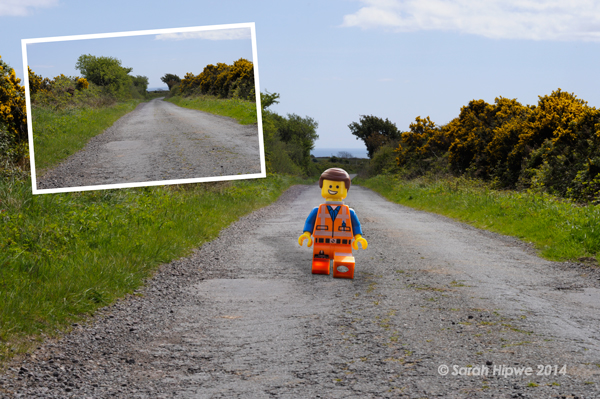
    In this image of a deserted road, I imported a cutout of the Lego figure. I used a combination of the method used above then created another drop shadow under his feet using layer styles. Follow along to create something similar using your images:

    • Duplicate the Lego figure (or your version of him) and fill it with black to give the long shadow cast by the sun.
    • Reduce the Opacity to about 22%.
    • Click on the fx icon at the bottom of the Layers panel to add the drop shadow layer style. In this image I wanted this drop shadow to be underneath the figure at its feet.
    • Put this shadow on its own layer (see description above) and convert it to a Smart Object.
    • Paint away the shadow on the body using a layer mask and then apply some Gaussian Blur, but not too much.
    • Reduce Opacity to 70%.
    • Shadows around the feet area will be darker and not as large as other shadows. The Lego figure now looks anchored to the image as opposed to floating in it.
    Lego-figure

    Lego figure

    In summing up, the drop shadow is a very useful effect and can greatly enhance your imagery. For realistic shadows take note of the direction and the type of light. Is the sun shining overhead or is it over to the right? Morning and evening light will have longer shadows than in the middle of the day. Gaussian Blur and Opacity will be your allies here.

    Do you have any other drop shadow tips or creative uses of them?

    The post 3 Creative Uses of the Drop Shadow in Photoshop by Sarah Hipwell appeared first on Digital Photography School.


    Digital Photography School

  • Canon confirms price drop on select EF lenses

    Canon US has confirmed several price drops across its range of lenses, including several L-series models. According to Canon the price reductions are in honor of reaching a milestone – the production of 100 million EF lenses. Price drops range from a modest $ 40 up to $ 1000 off the original retail price, depending on the lens. Read more 

    Articles: Digital Photography Review (dpreview.com)

  • Windows 8 – Bring Back the Mouse Pointer Drop Shadow

    Make the Windows 8.1 mouse pointer stand out by adding a drop shadow.

    As Windows 8.1 has adopted a flatter interface, gradients and drop shadows have been removed from a variety of places including the mouse pointer. If you feel that the mouse pointer drop shadow helps make it easier to spot on the Desktop, do the following:

    1. Access the “Mouse” Control Panel. One way to do this is by pressing Windows + R, entering main.cpl and pressing Enter….

    Read more at MalekTips.
    New Computer and Technology Help and Tips – MalekTips.Com

  • Do you Shoot in the Rain or Pack up at the First Drop?

    In line with this week’s photography challenge, weather, I want to do a quick survey to see if you shoot in the rain or not.

    I get a lot of questions from my students about shooting in the rain (or snow, or on the beach) and whether or not it will damage their camera. Of course that depends on the camera body you own (some are weather sealed, some are not – if you aren’t sure read your manual or check the manufacturer’s website), and the precautions you take.

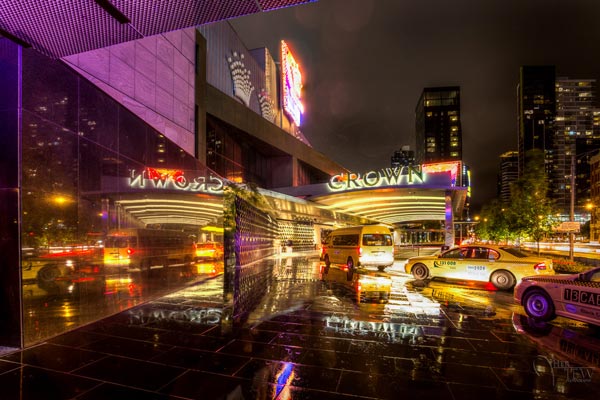
    Personally, I do get out in the rain and shoot. In fact this was done in the pouring rain in Melbourne (dPS headquarters) at the casino. I ducked under an overhang, covered up my camera and myself, and got puzzled looks from the passers by.

    Photography of the Melbourne casino in the rain

    So, my question for you is – do you brave it? Or do you play it safe?

    Note: There is a poll embedded within this post, please visit the site to participate in this post’s poll.

    Post originally from: Digital Photography Tips.

    Check out our more Photography Tips at Photography Tips for Beginners, Portrait Photography Tips and Wedding Photography Tips.

    Do you Shoot in the Rain or Pack up at the First Drop?

    The post Do you Shoot in the Rain or Pack up at the First Drop? by Darlene Hildebrandt appeared first on Digital Photography School.


    Digital Photography School

  • When Photoshop’s Content-Aware Fill Made My Mouth Drop Open

    When Adobe began demonstrating Content-Aware Fill in Photoshop CS5 it generated 2 reactions on average. The first fear about the removal of watermarks identifying the work of photographers and the second was an enthusiastic roar about the creative possibilities. Adobe of course was aiming for the later response.  Since the release of Content-Aware Fill I’ve often used it to fill in gaps when my canvas is rotated to straighten an image, remove objects creeping into the edge of my image, etc. With each subsequent version of Photoshop released Content-Aware Fill has seemingly been able to handle more and more complex scenes.

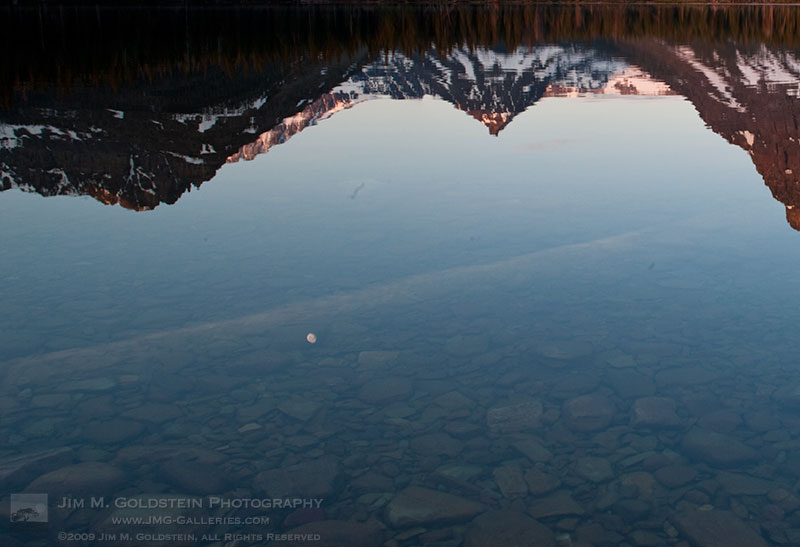
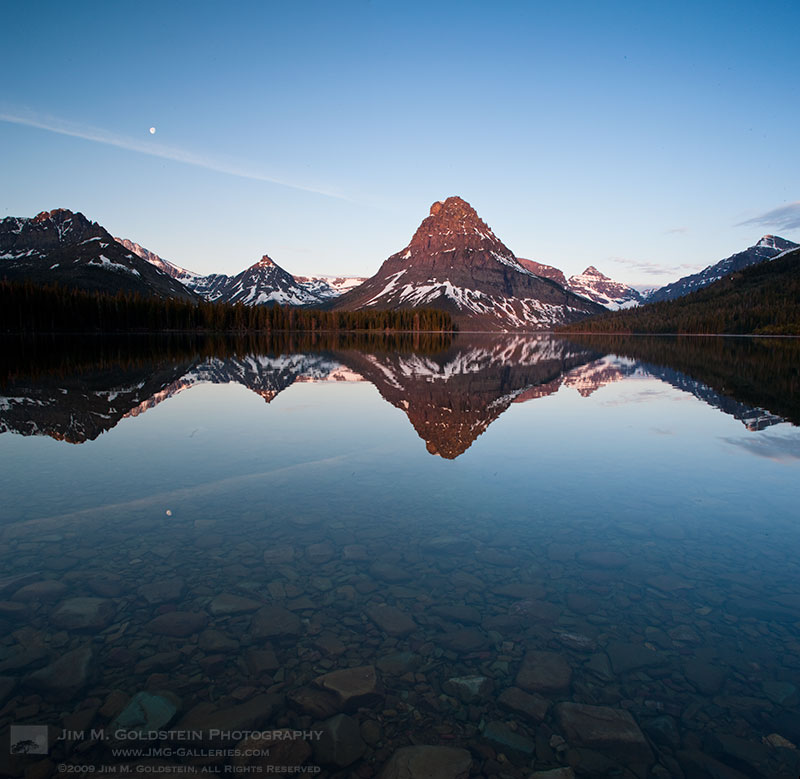
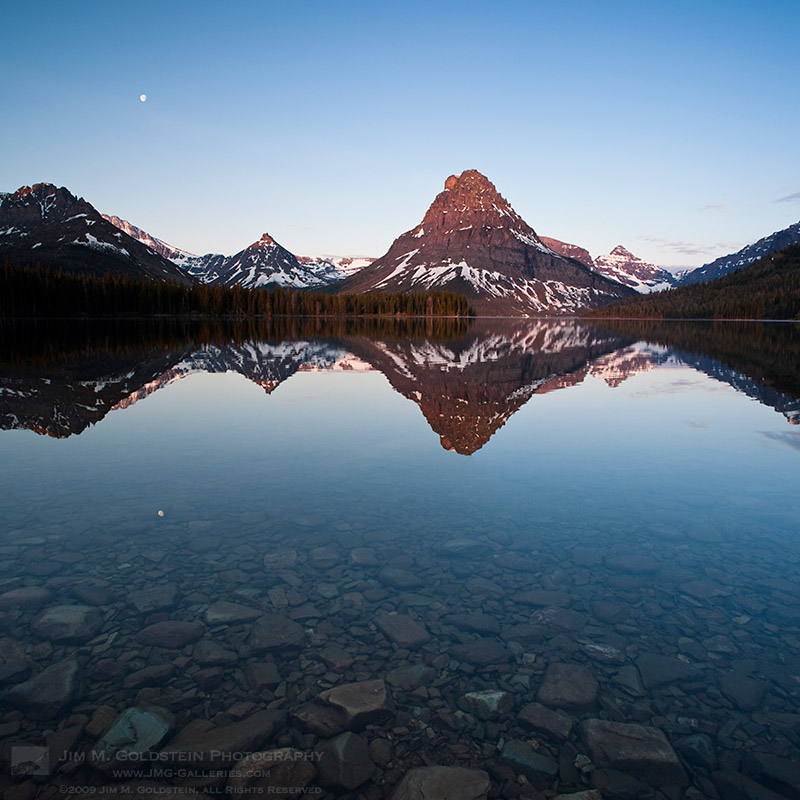
    During a recent edit using Photoshop CC I went back to work on some images with contrails reflected in water where the rocky bottom was still visible. At the time the photo was taken I thought it was ultimately unusable, as I wasn’t about to release an image with reflected contrails. For fun I decided to put Photoshop to the test to see how well it could fill in a complex pattern such as this. I was blown away that it took care of the contrails in a single shot.

    Unedited – Zoom View

    Content-Aware Fill Employed – Zoom View

    If you look closely in the zoomed version of the image, the rocks have an organic pattern while the contrail is completely removed. While I expected that the upper right section of the contrail would be handled easily due to its transition to a nearly pure colored gradient, the random rocky pattern on the left  I figured would be too complex to be addressed cleanly. I was pleasantly surprised when I zoomed in at 100% and 200% to see that all the rocks had continuous edges and didn’t have any obvious signs of being edited. It was at this point my mouth dropped open in amazement.

    Unedited  – Full Image 

    Content-Aware Fill Employed – Full Image

    Sunrise at Two Medicine Lake with Sinopah Mountain reflected in the calm water – Glacier National Park

    Adobe’s Original Content-Aware Fill Demo

    Copyright Jim M. Goldstein, All Rights Reserved

    When Photoshop’s Content-Aware Fill Made My Mouth Drop Open

    The post When Photoshop’s Content-Aware Fill Made My Mouth Drop Open appeared first on JMG-Galleries – Landscape, Nature & Travel Photography.


    Comments

    • nice content aware is mostly his and miss. often miss for me … by Tor Ivan Boine

    Related Stories

    • When Photoshop’s Content-Aware Fill Made My Mouth Drop Open – Enclosure
    • Talking Lightroom & Photography
    • Talking Lightroom & Photography – Enclosure
    Feed Ads by FeedBlitz
    powered by ad choices


    JMG-Galleries