Tag: Birthplace

  • Book-Shaped Pavilion in Korea Celebrates Historic Birthplace of Printing

    [ By WebUrbanist in Architecture & Public & Institutional. ]

    printed-word-book

    In 1377, nearly a century before the famous Gutenberg Bible was printed in Germany, the Jikji anthology was made using movable metal type, then bound and and protected for centuries to come.

    book-pavillion-exterior

    A new installation outside the Cheongju Art Centre in South Korea celebrates this historic achievement, acting as a shelter for public performances in the open plaza.

    It also hints at a larger exhibit inside: an array of architecture, art, design and digital media that traces the history and impact of movable type on literacy and publishing.

    book-art-stage

    The pavilion itself, folded and stitched together with red twine, forms a canopy that mimics the properties of an open book “being pushed down onto a flat surface,” explains its creator Ron Arad. The thickness increases where the pages fan out, and the metal binding of the structure is derived from a traditional spine.”

    movable-type

    The Jikji is the abbreviated title of a Korean Buddhist document, whose title can be translated “Anthology of Great Buddhist Priests’ Zen Teachings.” It collects teachings of Buddhism passed down for generations.

    Printed during the Goryeo Dynasty in 1377, it is the world’s oldest extant book printed with movable metal type. Prior printing techniques in China used ceramics to print volumes, but none of those works survive.

    book-design-interior

    book-monument

    book-shaped-stage

    book-space-deail

    While other versions survive thanks to wood engravings in temples, only the final volume of the metal-printed Jikji is preserved by the Manuscrits Orientaux department of the National Library of France. The process used to create the anthology was only rediscovered in the early 1900s in the West.

    Johannes Gutenberg, meanwhile, was the first to create his type pieces from an alloy of lead, tin, and antimony—and these materials remained standard for 550 years as printing evolved in Europe.

    Share on Facebook


    [ By WebUrbanist in Architecture & Public & Institutional. ]

    [ WebUrbanist | Archives | Galleries | Privacy | TOS ]

    WebUrbanist

  • Top Secret City: Oak Ridge, Birthplace of the Atomic Bomb

    [ By Steph in Culture & History & Travel. ]

    atomic oak ridge 1

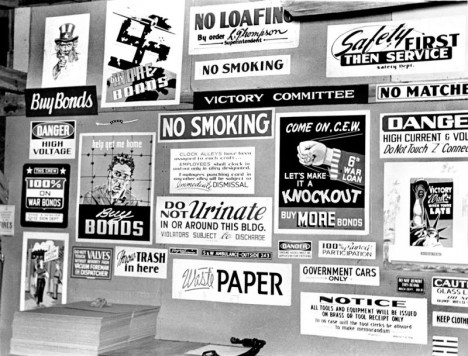
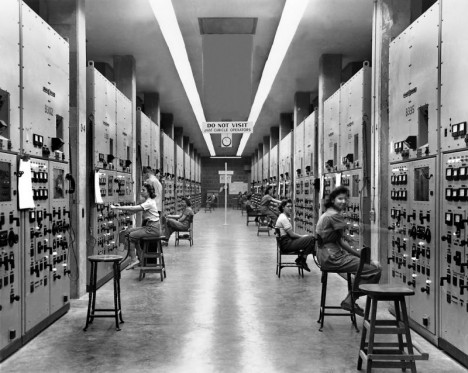
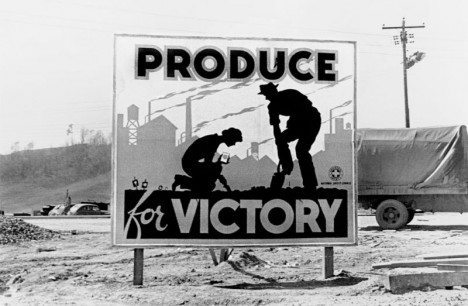
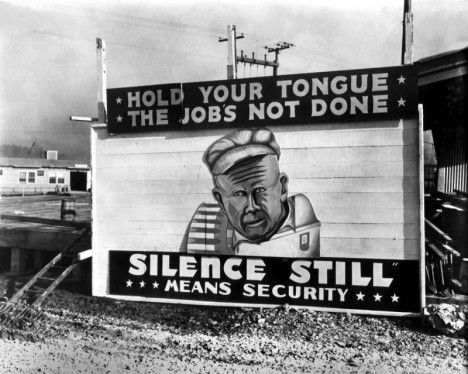
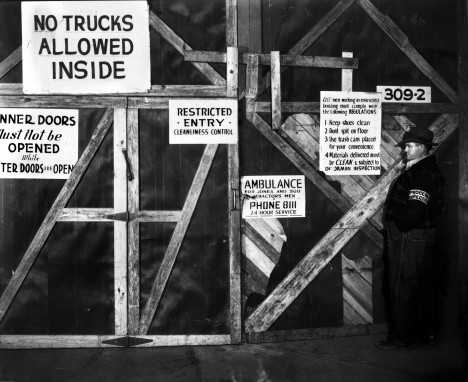
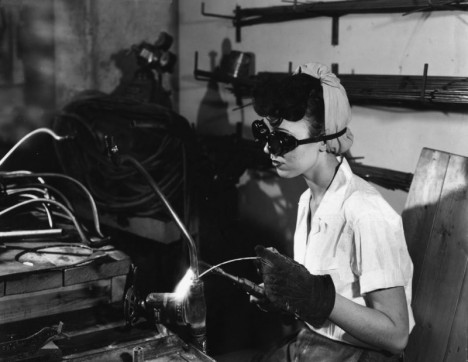
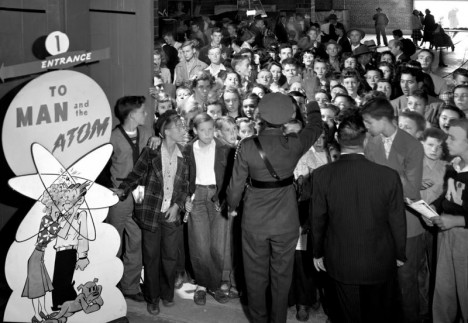
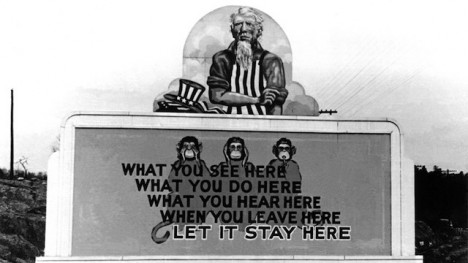
    Thousands of people who lived and worked in Oak Ridge, Tennessee during the 1940s had no idea what they were actually doing every day, performing their tasks as directed without asking questions, surrounded by constant reminders that they needed to keep their traps shut or else. It wasn’t until the United States bombed Hiroshima in 1945 that they learned they were processing uranium as part of The Manhattan Project, many of them exposed to radiation for years.

    atomic oak ridge 3

    atomic oak ridge 2

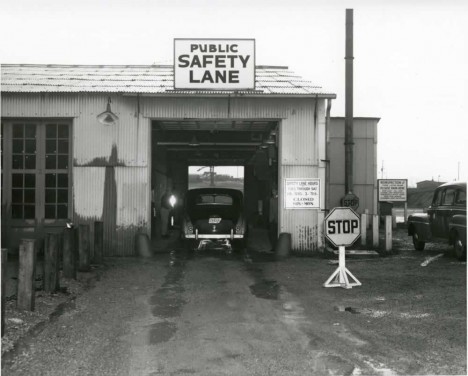
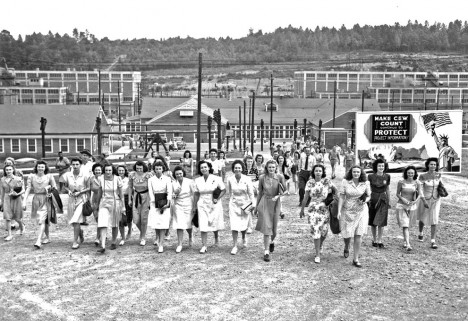
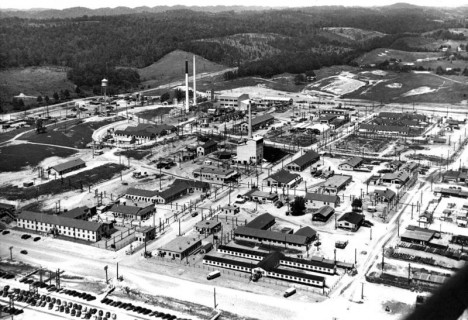
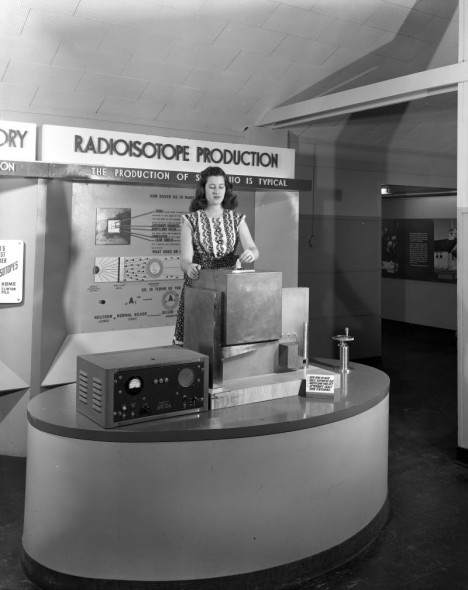
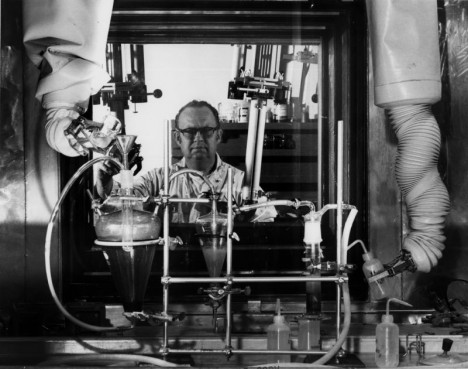
    Nicknamed the Secret City, the Atomic City and the City Behind the Fence, Oak Ridge was developed by the government on 56,000 acres of former farmland and remains a center of nuclear research and development today. In photos from the World War II era, published by the U.S. Department of Energy and taken by Oak Ridge’s only authorized photographer Ed Westcott, we see the many signs reminding residents that their discretion was paramount, even if they didn’t exactly know what they were keeping secret.

    atomic oak ridge 4

    atomic oak ridge 5

    atomic oak ridge 6

    atomic oak ridge 7

    While part of the city was open to the public, all visitors were required to go through military checkpoints on their way in and out. Other areas were strictly restricted. If anyone asked too many questions, they were out of a job and a home.

    atomic oak ridge 8

    atomic oak ridge 10

    atomic oak ridge 11

    atomic oak ridge 12

    In the decades that have passed since then, some workers have spoken publicly about their experience, talking about the strange clicking instruments they had to wave over all sorts of objects, including uniforms. That instrument, of course, was checking for radiation.

    atomic oak ridge 13

    atomic oak ridge 14

    atomic oak ridge 15

    In addition to its many official facilities, Oak Ridge became home to ten schools, seven theaters, 17 restaurants and cafeterias, 13 supermarkets, 17 churches, a symphony orchestra and enough prefabricated modular homes for its 75,000 residents.

    atomic oak ridge 17

    atomic oak ridge 18

    atomic oak ridge 16

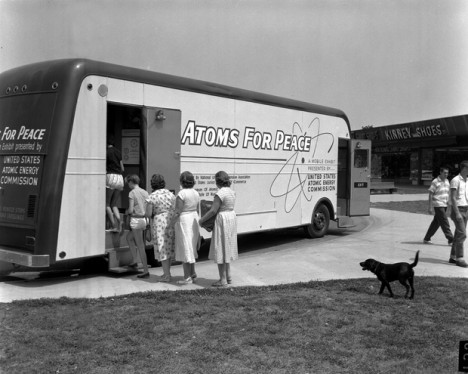
    Two years after World War II ended, Oak Ridge transitioned to civilian control, but retains the Oak Ridge National Laboratory, where the supercomputer Titan was developed in 2012. Tours of the original facility are offered, but there’s so much interest, you have to add your name to a waiting list if you want to get in.

    Share on Facebook


    [ By Steph in Culture & History & Travel. ]

    [ WebUrbanist | Archives | Galleries | Privacy | TOS ]

    WebUrbanist