Tag: Amphibious

  • Amphibious Folding Motorcycle from Russia Fits in the Trunk of a Car

    [ By SA Rogers in Technology & Vehicles & Mods. ]
    folding motorcycle 8

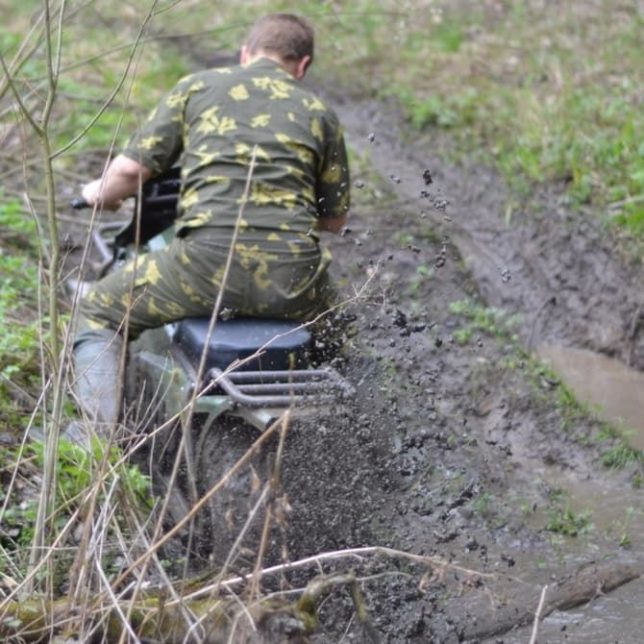
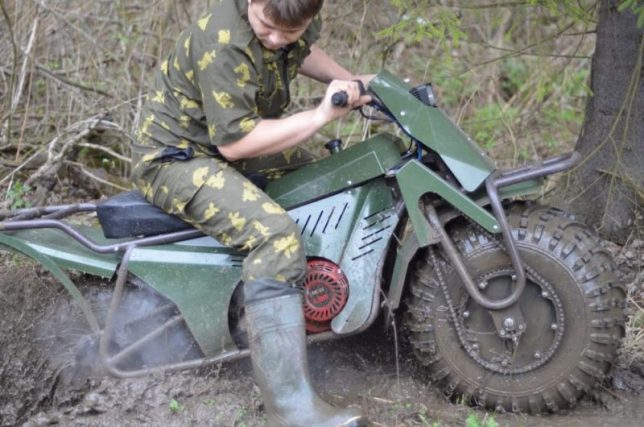
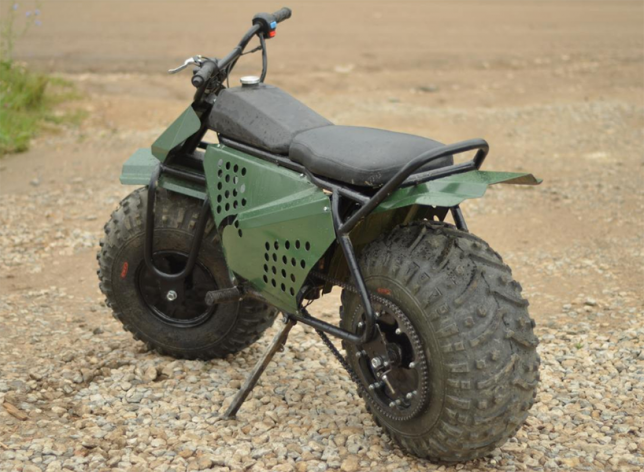
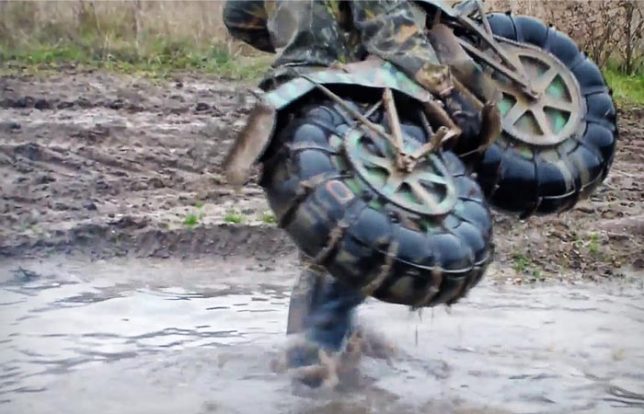
    “How long I’ve wanted this dream to come true,” wails Twisted Sister as a motorcycle zips through a mud pit that’s snatching the boots of its rider in this frankly ridiculous video of the Russian motorbike Taurus 2×2. The video shows the bike zooming through giant puddles, pulling a trailer piled with hay bales and even giving a second motorcycle a lift like it weighs next to nothing. Designed specifically for agricultural purposes and recreation in rural Russia, the bike definitely shows off what it can do, leaving no doubt that it can tackle some serious tasks.
    folding motorcycle 1

    folding motorcycle 4

    folding motorcycle 6

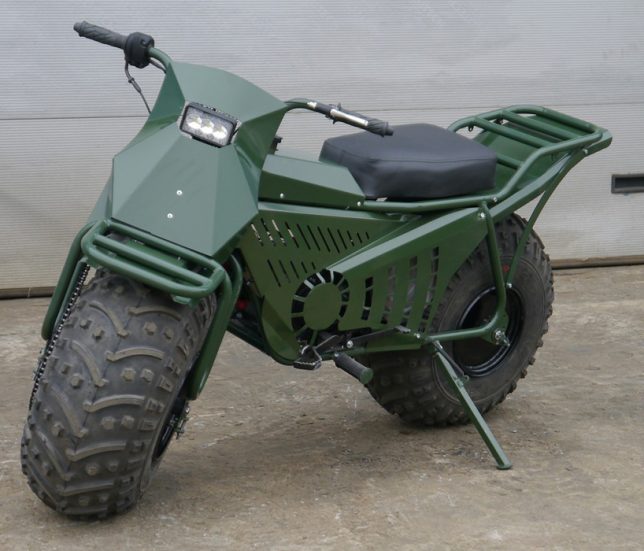
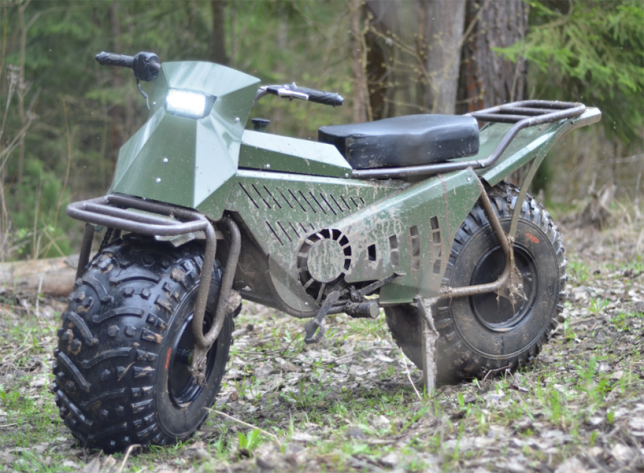
    Perhaps the most jaw-dropping moment is when the rider drops the Taurus right into a body of water and it gently bobs to the surface thanks to those bulbous tires and its mere 181-pound weight. It’s extra-light, amphibious and takes just five minutes to dismantle for transport inside another vehicle. It’s not street legal, however – riders have to stick to the back roads of Russia, but that’s really where the Taurus shines.
    folding motorcycle 3

    folding motorcycle 9

    It may not be pretty, but it’s impressively aggressive, navigating landscapes that even the toughest dirt bikes wouldn’t dare take on. Can’t you just imagine shirtless Vladimir Putin on the back of this thing? The Taurus is currently only available in Russia, but its creators say they’re hoping to sell it internationally sometime soon.

    Share on Facebook


    [ By SA Rogers in Technology & Vehicles & Mods. ]

    [ WebUrbanist | Archives | Galleries | Privacy | TOS ]


    WebUrbanist

  • Water Bed: Tow an Amphibious Mobile Shelter Behind Your Bike

    [ By WebUrbanist in Boutique & Art Hotels & Travel. ]

    mobile water bed

    Combining the cheap convenience of a hostel with the outdoor access of a tent, this wheeled micro-dwelling can be carted behind a bicycle then lowered into the water for a night of floating fun.

    wheeled bike nomadic

    bike bed trail

    Created by Royal College of Art (RCA) graduate Daniel Durnin, the shelter features a watertight bottom, canvass walls and operable wood-framed fenestration for viewing and circulation.

    water bed on wheels

    water bed nomadic

    The tent-on-the-water approach renders urban lakes, rivers and streams suddenly more accessible, creating alternative campgrounds that take up no space on land. It is designed with city’s like Durnin’s own (London) in mind, places where waterways are more prevalent than unused grounds.

    water tent floating

    bike bed in water

    “I hope that the work will reawaken our connection with nature using the waterways as a catalyst and restore balance to the more networked living space that we now inhabit, not just in London but across the globe,” says Durnin.

    Share on Facebook


    [ By WebUrbanist in Boutique & Art Hotels & Travel. ]

    [ WebUrbanist | Archives | Galleries | Privacy | TOS ]


    WebUrbanist

  • Amphibious Architecture: Foundations Float Above Floods

    [ By WebUrbanist in Architecture & Houses & Residential. ]

    floating homes

    Floodwaters rise, drench homes, then recede, leaving disaster in their wake – a temporary change renders many structures permanently uninhabitable. But what if houses could ride out the storms, rising with the tides, then settling back down to the ground when the water is gone?

    floating adaptive aquatic architecture

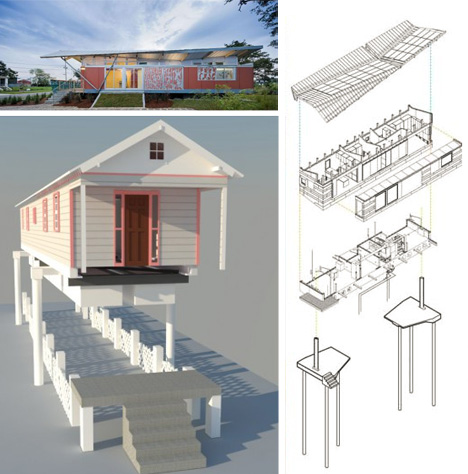
    Based on the tragedy of Hurricane Katrina in New Orleans, Morphosis (along with Brad Pitt’s Make it Right Foundation) has designs for new adaptive architecture, while the Bouyant Foundation Project proposes a system for retrofitting existing homes. Each approach would allow structures to do lift off the ground in an emergency and uses regional shotgun-style dwellings as their baseline typology.

    floating flood disaster design

    BFP outlines a process that involves attaching buoyancy blocks below the home, connecting them to the sub-frame, and installing four corner guideposts to keep the building in place along horizontal axes while allowing it to lift (and settle) vertically on demand.

    Connections to utilities (gas, water, power and so forth) would be either severable or extendable, so they could detach and reattach or simply expand and contract as needed. In plan, nothing changes – in elevation, predictable but periodic disasters are accommodated.

    Share on Facebook


    [ By WebUrbanist in Architecture & Houses & Residential. ]

    [ WebUrbanist | Archives | Galleries | Privacy | TOS ]


    WebUrbanist