RSS
 

Posts Tagged ‘4K/120p’

Sony announces its new FX6 full-frame cinema camera with 10-bit 4:2:2 4K/120p internal recording

22 Nov

Sony has announced the launch of its new FX6 full-frame 4K cinema camera, which merges Sony’s cinema technology and form factor with advanced imaging technologies taken from its Alpha mirrorless camera systems.

$ (document).ready(function() { SampleGalleryV2({“containerId”:”embeddedSampleGallery_8582380549″,”galleryId”:”8582380549″,”isEmbeddedWidget”:true,”selectedImageIndex”:0,”isMobile”:false}) });

At the core of the camera is a 4K 10.2-megapixel full-frame backside-illuminated CMOS Exmor R sensor powered by a Sony Bionz XR image processing engine — likely the same setup used in the Sony a7S III. Sony notes the sensor offers 15+ stops of dynamic range and has a maximum ISO of 409,600 for ultra-low-light shooting.

The FX6 captures 10-bit 4:2:2 full-frame footage at 120 frames per second (fps) at 4K and 240 fps in 1080. If you use the onboard 12G-SDI port, the FX6 can output 16-bit SDI Raw 4K/60p video. Sony has also added its S-Cinetone look profile, which is inspired by its Venice colorimetry and also found in the company’s FX9 cinema camera.

Footage is stored to one or both of the camera’s dual CFexpress Type A card slots, which are also backwards compatible with SD UHS-II cards. It’s worth noting though that any recording over 100 fps will require the use of the faster CFExpress Type A cards, as even UHS-II SD cards won’t have the bandwidth to get the job done.

Below are still frames pulled from footage captured with the FX6:

$ (document).ready(function() { SampleGalleryV2({“containerId”:”embeddedSampleGallery_6490417008″,”galleryId”:”6490417008″,”isEmbeddedWidget”:true,”selectedImageIndex”:0,”isMobile”:false}) });

The FX6 uses Sony’s E-mount for attaching lenses, making it compatible with more than 50 native lenses and countless dozens third-party lenses. The FX6 features the same 627-point Fast Hybrid AF system found in the FX9 and Sony’s Alpha mirrorless cameras, including advanced Face Detection and Real-time Eye AF. The FX6 also has internal electronic variable ND filters, which can be manually adjusted ‘in smooth increments from 1/4 to 1/128.’ Below is a video demonstration of the FX6’s electronic ND filter at work:

The FX6 is constructed of a magnesium alloy chassis that measures 11.6cm (4.6”) x 15.3cm (6”) x 11.4cm (4.5”) and weighs 890g (1.96lbs). The included 3.5” LCD viewfinder can be attached to various locations on the body, thanks to its modular design.

Other features include built-in Wi-Fi, four-channel audio recording and compatibility with Sony’s Catalyst Browse/Prepare software as well as Sony’s Content Browser mobile app that can be used to monitor video and control focus, iris and even zoom remotely.

The FX6 full-frame cinema camera from Sony will be available for $ 6,000 in December through Sony and authorized retailers. It will also be available as a kit with Sony’s FE 24–105mm F4 G E-mount lens for $ 7,200. Sony is also releasing a new FE C 16–35mm T3.1 G lens in December that will retail for $ 5,500.

Press release:

Sony Electronics Launches FX6 Full-frame Professional Camera to Expand its Cinema Line

FX6 Combines the Best of Sony’s Industry-leading Digital Cinema Technology with Advanced Imaging Features from Alpha™ Mirrorless Cameras

FX6 Product Highlights:

  • 4K 10.2 megapixel full-frame back-illuminated CMOS Exmor R™ sensor
  • Compact and lightweight body design for on-the-go shooting
  • Ultra-high sensitivity with ISO expandable up to 409,600 for very low light conditions
  • 15+ stops of dynamic range[i]
  • S-CinetoneTM look profile, also used in FX9 and inspired by VENICE colorimetry
  • BIONZ XR™ image processing engine, first used in Alpha 7S III
  • Fast Hybrid Auto Focus, also used in Alpha cameras and FX9
  • Recording up to 4K 120p / HD 240p, 10-bit 4:2:2 color depth in full-frame[ii]
  • Support for up to 12G-SDI and 4K at up to 60p 16-bit SDI RAW output
  • Compatible with more than 50 native E-mount lenses

SAN DIEGO – November 17, 2020 – Sony Electronics Inc. today officially announced the FX6 (model ILME-FX6V) camera, the latest addition to Sony’s Cinema Line, a series of products that brings the company’s expertise in imaging technology to a broad range of filmmakers and content creators.

Sony’s Cinema Line, which also includes the VENICE and FX9 cameras, delivers a coveted filmic look cultivated from extensive experience in digital cinema production, as well as enhanced operability thanks to an innovative body design, extensive durability and intuitive customizability.

As part of the Cinema Line, the all-new FX6 incorporates Sony’s core technologies of image sensor, processing engine, and AF (autofocus) performance. FX6 is also compatible with the wide range of Sony E-mount lenses for creative flexibility.

“The new FX6 is the latest example of Sony’s drive to continuously push the boundaries of imaging technology based on the needs of our customers,” said Neal Manowitz, deputy president of Imaging Products and Solutions Americas, Sony Electronics. “With the advancement of our Cinema Line, we are dedicated to enabling the extraordinary skills and talent of today’s content creators and cinematographers. The FX6 leverages technology from Sony’s industry-leading VENICE cinema camera and marries it with the best of Sony’s innovative Alpha mirrorless camera technology.”

Full-frame Cinematic Image Quality

The new camera features a 10.2 MP[iii] full-frame back-illuminated Exmor R™ CMOS sensor that delivers a 15+ stop wide dynamic range[iv] with high sensitivity and low noise. FX6’s base sensitivity is ISO 800 with an enhanced sensitivity setting of ISO 12,800[v] – expandable up to 409,600[vi] – for shooting in low and very low light conditions. It is capable of recording in XAVC All Intra 4:2:2 10-bit depth with stunning image quality in DCI 4K (4096 x 2160 – up to 60p), QFHD 4K (3840 x 2160 – up to 120p[vii]) and FHD (1920×1080 – up to 240p) for incredibly detailed slow motion. When more convenient file sizes are needed, FX6 can record in XAVC Long GOP 4:2:0 8-bit QFHD 4K (3840 x 2160 – up to 120pvii) and 4:2:2 10-bit FHD (1920×1080 – up to 240p). FX6 also includes a BIONZ XR™ image processing engine, first used in the new Sony Alpha 7S III camera, providing up to four times faster processing performance compared to the FS5 II.

Developed with the same expertise as Sony’s world-leading VENICE cinema camera, FX6 offers advanced cinematic color science including S-CinetoneTM for richer tonal reproduction right out of the box as well as S-Log3, S-Gamut3 and S-Gamut3.Cine for post-production flexibility. FX6’s cinematic color science is optimized for premium applications by capturing the maximum dynamic range from the sensor and providing creative freedom. Leveraging the color science of VENICE, FX6 also allows productions to easily match footage with other cameras in the Cinema Line.

Advanced Video Features

Pulling from Sony Alpha’s impressive AF features, FX6 offers Fast Hybrid AF by combining 627-point[viii] focal plane phase-detection AF with advanced Face Detection and Real-time Eye AF in high frame rates with continuous AF, allowing camera operators to effortlessly and precisely track fast-moving subjects in slow motion without losing focus. Fast Hybrid AF works with over 50 native E-mount lenses. The camera can also capture up to five times slow-motion with 4K (QFHD) 120fps.

The new FX6 also offers internal electronic variable ND filters for easy and seamless control of the camera’s filter density. Users can set variable ND to auto or adjust the filter density manually in smooth increments from 1/4 to 1/128 for perfectly exposed images without affecting the depth of field or shutter angle, even during changing lighting conditions. Combined with the camera’s ultra-high sensitivity, the electronic variable ND filter provides users with outstanding creative control in almost any shooting environment.

Made for Content Creators on the Go

Outstanding Mobility and Operability

Built with a durable magnesium alloy chassis, measuring just 4.6 inches x 6 inches x 4.5 inches (116 millimeters x 153 millimeters x 114 millimeters) and weighing just 1.96 pounds (0.89 kilograms), FX6 has a compact and lightweight design making it easy for users to grab and shoot at any time. The new camera includes a heat dissipating structure to keep the camera’s components within their normal operating ranges to prevent overheating, even during extended recording times. FX6 also features a modular design allowing users to easily pair accessories, such as grips and viewfinders, or attach the camera to other mechanisms, such as gimbals and drones.

FX6’s 3.5-inch LCD Viewfinder can be attached on multiple locations of the camera body for added freedom and easy menu control with touch operation. Using a quick access control menu for commonly accessed features, camera operators can change key settings with a single touch – including Codec, Imager Scan Mode, Picture Size and Frequency, Base ISO and Sensitivity, Shooting Mode and Audio Levels.

Professional-level Reliability

In line with professional workflows, FX6 includes a 12G-SDI output that also supports 16-bit RAW, HDMI output, timecode in/out, built-in Wi-Fi and four channel audio recording (via XLR Interface, Multi-Interface Shoe and built-in Stereo Mic). The new camera also features two media slots compatible with CFexpress Type A cards[ix] for higher overall capacity and faster read and write speeds in addition to SDXC UHS-II/UHS-I cards.

Additionally, Sony’s Catalyst Browse/Prepare[x] software facilitates fast and easy editing. Users can import FX6’s image stabilization metadata into Catalyst Browse/Prepare to transform handheld footage into incredibly smooth and stable visuals. FX6 also has a dedicated Clip Flag button to easily filter and locate preferred takes using Catalyst Browse/Prepare. This software also reflects metadata indicating when FX6 is rotated or in its normal position, eliminating the need to rotate footage beforehand. FX6 is also compatible with Sony’s Content Browser Mobile App to easily monitor and control focus, iris, and zoom remotely[xi].

About Cinema Line

Cinema Line is series of professional cameras that have a filmic look, cultivated from Sony’s long experience in digital cinema production, and enhanced operability and reliability that responds to the wide variety of creator’s high demands.

Cinema Line includes the digital cinema camera VENICE, which is highly acclaimed in the feature and episodic production industry, and the professional camera FX9, which is has been popular for documentary and drama production. With the new FX6, Sony brings versatile creative tools to all types of visual storytellers.

FE C 16-35mm T3.1 G E-mount Cinema Lens

The FE C 16-35mm T3.1 G (model SELC1635G) lens, announced at IBC 2019, will be available in December 2020 to pair with FX6, FX9 and other full-frame Sony cameras. This new lens supports intelligent shooting functions unique to E-mount cameras – such as fast and accurate AF within shallow depth of field – while also offering manual focus options in a form factor familiar to professional cinema creators.

The FE C 16-35mm T3.1 G delivers stunning bokeh and corner-to-corner resolution thanks to two XA (Extreme Aspherical) elements with extreme surface precision of 0.01-micron, circular 11-blade apertures in addition to three aspheric lenses that are positioned in a way that effectively reduces field curvature, astigmatism and, in combination with two ED (Extra-low Dispersion) glass elements, reduces color distortion. Additionally, floating focus provides outstanding resolution at every zoom position. The new lens also features Nano AR (Anti Reflection) coating, to reduce flare.

The focus ring offers a 140-degree large angle of rotation for fine control, with distance scale markers for consistent focus reset during multiple takes. Linear Response MF enables smooth manual focus, allowing users to adjust focus accurately and intuitively. Three independent rings for focus, iris and zoom enable users to get the exact creative results they desire. Each ring has the industry standard 0.8mm pitch gear for use of follow focus accessories, and the 114mm barrel diameter is compatible with industry standard matte box accessories. A two-speed servo provides smooth, accurate control of focal length and can be activated from a switch on the lens or a lever on the FX6 Smart Grip.

Pricing and Availability

The new FX6 full-frame Cinema Line camera will be available in December and will be sold for approximately $ 5,999.99 USD and $ 8,048.99 CAD, at a variety of Sony’s authorized dealers throughout North America.

A new kit featuring the FX6 full-frame Cinema Line camera and FE 24-105mm F4 G E-mount Lens will also be available in December and will be sold for approximately $ 7,199.99 USD and $ 9,658.99 CAD. It will be sold at a variety of Sony’s authorized dealers throughout North America.

The FE C 16-35mm T3.1 G lens will be available in December and will be sold for approximately $ 5,499.99 USD and $ 7,199.99 CAD, at a variety of Sony’s authorized dealers throughout North America.

Exclusive stories about Cinema Line, FX6, FE C 16-35mm T3.1 G and Sony’s other imaging products can be found at www.sonycine.com and www.alphauniverse.com, resources designed to educate and inspire all fans of Sony’s technology for content creation and photography.

Articles: Digital Photography Review (dpreview.com)

 
Comments Off on Sony announces its new FX6 full-frame cinema camera with 10-bit 4:2:2 4K/120p internal recording

Posted in Uncategorized


Sony Xperia 5 II is a smaller, slightly cheaper Xperia 1 II with 4K/120p recording

17 Sep

Sony has unveiled the Xperia 5 II, successor to the Xperia 5 and a notch below the flagship Xperia 1 II in the lineup. It includes many camera features of the Xperia 1 II, but in a smaller form-factor and at a slightly lower price point. Headline features include 4K/120p recording for high resolution slow motion video, 20 fps continuous shooting with autofocus and auto exposure and a 6.1″ OLED screen with 120Hz refresh rate. The Xperia 5 II will cost $ 950 when it ships in December – less pricey than the $ 1200 Xperia 1 II, but a notable increase over the Xperia 5’s $ 800 introductory MSRP.

The Xperia 5 mark II’s triple-camera array is borrowed from the Xperia 1 II (minus the time-of-flight camera), comprising 16mm, 24mm and 70mm cameras. The main 24mm module features a 1/1.7″ sensor and is capable of 4K/120p 10-bit recording for 5x slow-motion video at 24p. Like the flagship, it shoots up to 20 fps bursts with AE/AF, offers Eye AF for both humans and animals, and offers Raw + JPEG shooting.

Sony is also introducing support for USB tethering of the Xperia 5 and a7-series cameras, starting with the a7S III. The Xperia 5 can be tethered to the camera to transfer photos and videos to the user’s intended FTP, a feature designed to make life easier for sports shooters and photojournalists who need to transmit images quickly from the field.

The 6.1″ FHD+ HDR OLED maintains its unconventional 21:9 wide aspect ratio, and in addition to its 120Hz refresh rate, boasts a 240Hz touch scanning rate. The device offers IP65/68 dust and moisture protection, is powered by a 4000 mAh battery and includes a 3.5mm headphone jack.

The Xperia 5 II will be available for pre-sale on September 29th for $ 950; it is scheduled to ship on December 4th. The phone will not support 5G for customers in the U.S., but 5G will be supported in certain other regions.

Press release:

Introducing Xperia® 5 II – a Powerful, Compact Smartphone that Takes Gaming, Entertainment and Cinematography to the Next Level

  • Award-winning camera technologies from Alpha brand series cameras, including Real-time Eye AF1 and up to 20 fps2 burst shooting with continuous autofocus that performs AF / AE calculations at 60 times per second3.
  • World’s first 4K HDR 120fps slow-motion movie recording in a smartphone4 can capture and play back up to 5x slow-motion when recorded at 24fps, further expanding the possibilities of cinematic expression.
  • Immersive 21:9 CinemaWide™ 6.1” FHD+ HDR OLED display5 delivers unprecedented color accuracy with Creator mode “powered by CineAlta” technology.
  • Built for gaming with a 120Hz Refresh rate6 display and 240Hz Motion blur reduction7 for smooth action, plus 240Hz touch scanning rate5 and touch response improvements by 356 percent when compared to previous model for quick and accurate gaming control.
  • Next-Generation processing8 power with Qualcomm® Snapdragon™ 865, and high capacity 4,000mAh battery with fast charging for optimal speed and performance.
  • The perfect size and packed with the latest innovative Sony technology in a compact ergonomic design (W 2.68 in x D 0.31 in) that fits comfortably in a hand or pocket.

San Diego, CA – September 17, 2020 — Sony Electronics today announced the Xperia 5 II (mark two), the newest addition to the Xperia smartphone family, offering users a compact design with speed, innovation and industry-leading performance.

Xperia 5 II leverages many of the leading features from the Xperia 1 II, including a triple lens camera with ZEISS optics, calibrated specifically for the Xperia 5 II. Also included are the Photography Pro feature (with technology from Alpha brand series cameras), the Cinematography Pro feature (”powered by CineAlta” enabling parameters and color settings used by professional filmmakers), and a 21:9 CinemaWide display. Xperia 5 II boasts the World’s first 4K HDR 120fps slow-motion movie recording in a smartphone4 and can capture and playback up to 5x slow-motion when recorded at 24fps. Powerful audio features include High-Resolution14 Audio, a 3.5mm audio jack, and front-facing stereo speakers. All of these features are driven by the Qualcomm® Snapdragon™ 865 processor, in a slim, compact and beautiful design that easily fits in a pocket. The Xperia 5 II also adds a 120Hz refresh display rate and 240Hz touch scanning rate to give the smoothest and most accurate gaming experience.

Capture perfect shots and unmissable moments

Taking a page from of its sibling (Xperia 1 II)’s book, the Xperia 5 II is designed with technology from the award-winning Alpha brand series cameras, including Real-time Eye AF1, continuous Autofocus that performs AF / AE calculations at 60 times per second and up to 20fps shooting.

Powerful Visual Storytelling Tools, Exquisite Images

The versatile triple lens camera with three focal lengths: 16mm/24mm/70mm, lets you capture beautiful landscapes and portraits, and also zoom in on distant subjects. The ZEISS optics are specifically calibrated for the Xperia 5 II and feature the renowned ZEISS T* coating for reduced reflection, resulting in exquisite contrast and image rendering.

Like the Xperia 1 II, the Xperia 5 II offers Photography Pro, a user interface developed in collaboration with professional photographers to mirror many of the manual controls available in Alpha brand series cameras, including ISO, Shutter Speed and EV Indicator, while also providing RAW image capture and noise reduction support.

Leading Technology for Film and Video Storytelling

Cinematography Pro “powered by CineAlta” now enables more choice for story-telling with dramatic slow-motion cinematography creation, making it the world’s first 4K HDR 120fps slow-motion movie recording in a smartphone which can capture and playback up to 5x slow-motion when set at 24fps. It also records in 21:9 ratio at 24/25/30/60fps9, enhancing cinematic expression. Eight different Look color management pre-sets allow you to change the mood of your scenes to different cinema styles. In addition, Sony’s unique Intelligent wind filter technology uses award-winning audio separation technology to reduce wind interference for clearer audio recording.

Gaming on the Go

The combination of Xperia 5 II’s premium entertainment features allow it to transform into a mobile gaming powerhouse. Get deeper into the action with an immersive 21:9 display, Game enhancer-powered ultra-fast performance, 120Hz refresh rate display, and precise 240Hz touch scanning rate, meaning that the Xperia 5 II sets you up with a strong advantage to win whichever game you are playing. All features have been developed through close work with professional e-sports gamers to ensure the best features and gaming experience.

The 21:9 display is wider than conventional displays, revealing more of the action so you can see your opponents before they see you and take the advantage, especially in first-person shooter games. Not only do you get an unrestricted view of the gaming action on the native 120Hz refresh rate display, with even fast-moving objects rendered clearly and smoothly, but the Xperia 5 II also delivers 240Hz Motion blur reduction, meaning the display updates the image an incredible 240 times per second for blur-free action.

For games that require fast fingers, the Xperia 5 II gives you the edge. The device supports 240Hz touch scanning rate, a rate which is up to 4x higher than the previous model10 – meaning the action happens exactly as intended, with high-precision control. Touch response has been improved by 35 percent compared to the previous model, with the system recognizing your touch at the precise moment intended.

Game enhancer also offers a range of features and settings to help you improve your gameplay and secure more wins within your competitive set. You can also share your best moments, in the form of screenshots, and audio or video clips. Power management through HS Power Control also allows you to play longer while avoiding overheating.

To take your gaming to the next level, connect a PlayStation®4 DUALSHOCK®411 Wireless Controller and play Android games with an authentic gaming experience.

Xperia is the official smartphone of the Call of Duty®: Mobile World Championship Tournament 2020, and the Xperia 5 II is ready to answer the call. Whether you’re playing for fun or serious about winning the title, the Xperia 5 II provides an optimized, high-quality experience with its unique tuning in collaboration with Qualcomm® Snapdragon Elite Gaming™.

A Powerful “Pocket Perfect” Device for All Video and Music

Xperia 5 II is perfect for movie lovers, with its 21:9 CinemaWide 6.1” FHD+ HDR OLED notchless display, it puts the widescreen experience in the palm of your hand. The color reproduction of movies is unmatched, powered by Sony’s professional expertise and technology from leading Hollywood studio productions. The Creator mode “powered by CineAlta” brings content to life exactly as it was envisioned. The X1™ for mobile engine brings BRAVIA® HDR remastering technology to everything you watch, enhancing the contrast, color and clarity of any content, including streaming services. The 120Hz refresh rate also ensures smooth scrolling and internet browsing.

Xperia is known and loved for delivering great audio, and the Xperia 5 II delivers with a truly immersive entertainment experience. Watch a movie with Dolby Atmos® sound, tuned in collaboration with Sony Pictures Entertainment, for a multi-dimensional surround sound experience. Music also sounds better, with audio tuned in collaboration with Sony Music Entertainment, delivering a truly authentic listening experience. 360 Reality Audio hardware decoding optimizes sound quality when listening to music on the global music and entertainment platform such as TIDAL12. And new TIDAL subscribers will get 3 months of TIDAL Hi-Fi free when they buy an Xperia 5 II13, which includes the 360 Reality Audio experience.

High-quality music can be enjoyed through the front stereo speakers or when using headphones either wirelessly or with the 3.5mm audio jack. The jack provides clearer left and right audio separation to reduce signal noise to an imperceptible 20dB – over 90 percent lower than standard USB-C headphone connections.

Whatever the format, Xperia 5 II ensures you get the best experience out of music. With High-Resolution and High-Resolution Wireless Audio14, Xperia 5 II offers DSEE Ultimate, which enhances the quality of digital music using AI, including audio and video content on streaming services. It also automatically improves audio frequency and dynamic range in real-time, taking each track close to high-resolution audio.

Compact and Powerful

At just 2.68 inches wide and 0.31 inches in depth, the Xperia 5 II is tailor-made for one-handed use—It has even been designed with a less-pronounced corner shape compared to its predecessor, for a more comfortable feel, and a perfect fit for your hand or pocket.

Compact and powerful, Xperia 5 II is powered by a high-capacity 4,000mAh battery with a fast charge feature that charges up to 50 percent in just 30 minutes15. With a considerable heritage in developing cutting-edge battery technologies to extend battery lifespan, Sony is confident that the Xperia 5 II will have a healthy battery, even after two years of average usage16.

The Xperia 5 II includes the processing power of the Qualcomm® Snapdragon™ 865, Corning® Gorilla® Glass 6 on both sides and has an IP65/68 rating for water resistance17.

Availability

In the U.S., the Xperia 5 II will be available unlocked in black and comes equipped with Android™ 10. The Xperia 5 II will be available for pre-order for about $ 950 on September 29, 2020 and ships to customers on December 4, 2020.

Preorder Xperia 5 II by November 29, 2020 and receive a gaming bundle worth over $ 400 including a gaming headset, a 10,000mAh power bank and 21,600 Call of Duty Mobile Points at direct.sony.com/xperia or other participating Sony authorized retailers. Xperia 5 II will be compatible with Verizon, AT&T, T-Mobile, Cricket networks.

  1. Accurate focus may not be achieved with certain subjects in certain situations and this does not work with all types of animals.
  2. Maximum fps will depend on shooting environment and settings. Up to 20fps continuous shooting with AF/AE is available for 24mm camera. 16mm and 70mm camera can shoot up to 10fps AF/AE.
  3. Effective with a versatile 24mm lens. This function can be taken with “Photography Pro”. Effective when shutter speed is 1/60 second or faster. It may vary depending on the shooting environment.
  4. Xperia 5 II main camera feature 4K HDR 120fps slow-motion movie recording. Verified by Strategic Analytics´ SpecTRAX Service against the published camera specifications for over 17,500 smartphones. Correct as of the 17th September 2020. Recording time restrictions apply. 4K HDR 120fps available on Cinematography Pro on the 24mm camera.
  5. Display ratios may vary based on content formatting
  6. The feature may vary by content, game availability and compatibility.
  7. 240Hz Motion blur reduction is a Game enhancer feature. Taking the 120Hz display refresh rate, it inserts a black frame in between each frame to provide the equivalent visual effect of 240Hz refresh rate. The result is blur-free images with marginally decreased brightness. The feature may vary by content, game availability and compatibility.
  8. 5G network depends on market and operator
  9. Recording time restrictions apply.

Articles: Digital Photography Review (dpreview.com)

 
Comments Off on Sony Xperia 5 II is a smaller, slightly cheaper Xperia 1 II with 4K/120p recording

Posted in Uncategorized


Sony Announces the a7S III, With 4K/120p and a 9.44M-dot EVF

03 Aug

The post Sony Announces the a7S III, With 4K/120p and a 9.44M-dot EVF appeared first on Digital Photography School. It was authored by Jaymes Dempsey.

sony a7s iii announcement

After months of rumors, it’s finally official:

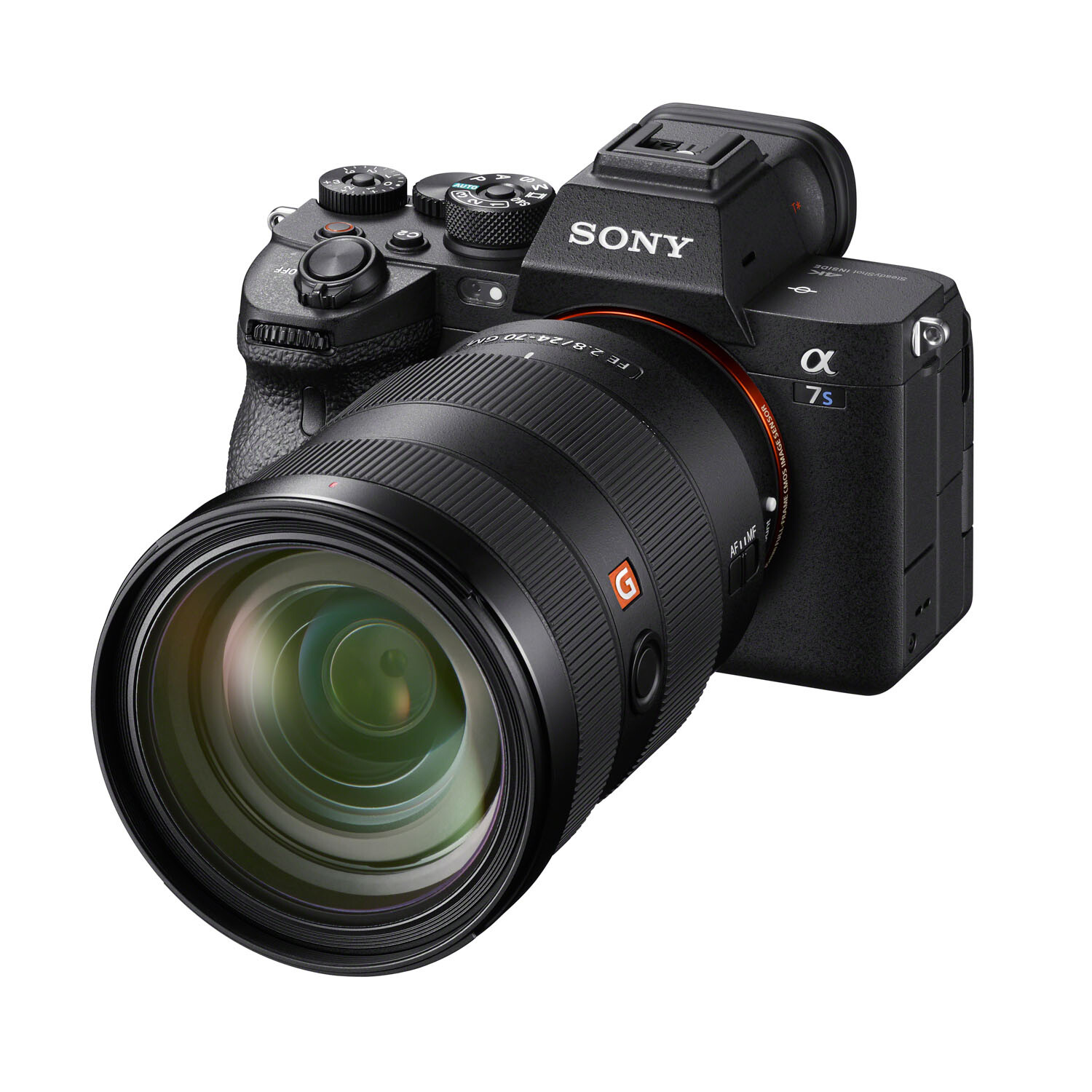
The Sony a7S III will hit the shelves in September, offering a whole host of brand new features, including a stellar autofocus system, a class-leading electronic viewfinder, pro-level video recording capabilities, and much more.

Let’s take a closer look.

What is the Sony a7S III?

The a7S III is Sony’s latest video/stills hybrid camera, which replaces the a7S II (a camera that debuted way back in 2015 and was long overdue for an upgrade).

The a7S III is a full-frame mirrorless model and technically designed to excel at both video and still shooting. But there’s a clear lean toward videographers, thanks to advanced recording capabilities such as:

  • 4K/120p video (with a 1.1x crop)
  • Internally recorded, uncropped 4K/60p video (with a recording limit of 1 hour)
  • Internally recorded, uncropped 4K/30p video (with no time limit)
  • 10 bit 4:2:2 recording
  • S-Log

As you can see, there’s quite a lot to satisfy serious videographers, such as the internal 4K/120p (for high-quality slow-motion footage), as well as unlimited 4K/30p shooting (for projects that require longer recording times).

You also get in-body image stabilization, as well as impressive high-ISO performance and at least 15 stops of dynamic range (according to Sony, anyway).

But while the a7S III is an impressive video contender, how does it look when arranged against more still-centric cameras? Can it hold its own?

Can the a7S III work for still photography?

At first glance, the a7S III is an extraordinarily capable camera for still photographers.

I mentioned the in-body image stabilization above, and that’s a boon for videographers and still photographers alike. You also get dual card slots, important for a select crowd of professional photographers, and a fully-articulating LCD for capturing images (or video) from awkward angles.

And the a7S III packs a 9.44M-dot electronic viewfinder, which is by far the highest resolution EVF currently available in a mirrorless camera (the former EVF champions sit at a still-respectable 5.76M-dot resolution). This should put to rest any claims by photographers that mirrorless EVFs just can’t compete with OVFs, because a near 10M-dot EVF is going to look insanely good.

The a7S III also features a new AF system, offering 759 phase-detection points, as well as 10 frames-per-second continuous shooting with a buffer of 1000+ RAW images.

All this seems extremely impressive, but for one major feature:

Resolution.

The a7S III only packs 12 MP, which is perfect for video but deeply disappointing for still photographers, especially in the current resolution-hungry market. These days, full-frame cameras offer a resolution of at least 20 MP, but often push higher, from 24 MP in the Sony a7 III to 61 MP in the Sony a7R IV.

Of course, there are photographers out there who aren’t caught up in the megapixel craze, and those folks might be willing to use the a7S III for still shooting, assuming they also have significant video needs. But megapixels aren’t just about marketing; a 12 MP camera does offer serious limitations in terms of high-resolution printing, as well as cropping in post-processing.

So while the a7S III is a truly impressive video camera, it (like its predecessors) sacrifices too much to be a serious still photography option for most shooters.

The a7S III will hit the shelves in September for an MSRP of $ 3500 USD, and is currently available for preorder here.

Now over to you:

What do you think about the a7S III? Are you pleased? Disappointed? And would you use it for still photography? Share your thoughts in the comments!

The post Sony Announces the a7S III, With 4K/120p and a 9.44M-dot EVF appeared first on Digital Photography School. It was authored by Jaymes Dempsey.


Digital Photography School

 
Comments Off on Sony Announces the a7S III, With 4K/120p and a 9.44M-dot EVF

Posted in Photography


Sony’s new a7S III brings 4K/120p video capture, extended shooting and improved AF

30 Jul

As expected, Sony has released the a7S III, its third-generation video-focused full-frame mirrorless camera. It includes a new 12MP BSI-CMOS sensor, the latest ‘Bionz XR’ processor, improved autofocus, an ultra-high resolution EVF and the ability to capture 4K/120p video.

In addition, Sony claims that the a7s III can also record up to ‘at least’ one hour of continuous 4K/60p footage. The company says that this was made possible be redesigning the heat dissipation system in the camera: no fan necessary.

The combination of the new sensor and processor allow for a native ISO range of 80-102400, which can expand to 40-409600, and the (claimed) ability to capture 15 stops of dynamic range. Sony says that the sensor reads out twice as fast as on the a7S II, which considerably reduces rolling shutter. The more-responsive autofocus system has 759 on-sensor PDAF points and offers person, eye and animal AF. Sony says that color reproduction has been noticeably improved, as well. The a7S III also have the distinction of being the first consumer camera to support the new CFexpress Type ‘A’ media.

The a7S III’s physical design is much like that of the a7R IV (including build quality and IBIS), with a few notable exceptions. The electronic viewfinder has the higher resolution we’ve seen yet, with 9.44 million dots. It’s also giant, with a magnification of 0.91x. This is Sony’s first Alpha-series camera with a fully articulating LCD, and nearly everything can be operated by touch (finally). The menu system has been refined and is easier to navigate. The camera has a full-size HDMI port along with headphone and mic sockets, dual-band Wi-Fi and support for USB Power Delivery. It has twin dual-format memory card slots, both of which can handle an SD or CFexpress Type A card.

There are too many video features to list here (our initial review has all the details), but the highlights include 10-bit 4:2:2 recording, your choice of H.264 or H.265 codecs, 16-bit Raw output at up to 60p, and support for S-Log2/3 and HLG. The a7S III does not support DCI or Super 35 capture.

The a7S III will be available in late September for $ 3499.

Read our initial review

Press Release

Highly Anticipated Sony Alpha 7S III Combines Supreme Imaging Performance with Classic “S” Series Sensitivity

New Alpha 7S III Empowers Creators with 4K 120P[i] Video, 10-bit 4:2:2 Recording, 15+ Stop Dynamic Range[ii], Improved AF Performance and More

  • Newly developed BIONZ XRimage processing engine with eight times more processing power[iii] and a brand new 12.1-megapixel (, effective) back-illuminated full-frame Exmor R™ CMOS image sensor, significantly reduced rolling shutter effect[iv]
  • Ultra-high sensitivity with ISO range expandable from 40 – 409,600[v], and improved image quality by approximately 1 stop noise reduction[iv] in the middle and high sensitivity ranges
  • Video recording capabilities include 4K 120p[i], 10 bit 4:2:2 color depth, All-Intra recording, XAVC HS format with H.265 codec and more
  • 15+ stop dynamic range for movies[ii]
  • 4K 60p 16-bit RAW video HDMI output for the first time in the Alpha™ series
  • Fast Hybrid AF system with 759 point phase-detection[vi] AF sensors covering 92% of image sensor
  • Enhanced Real-time Eye AF for movie recording[vii] and still image recording
  • New heat dissipating mechanism and dual slot relay recording enables over one-hour long 4K 60p 10-bit 4:2:2 movie shooting[viii]??
  • 5-axis optical in-body image stabilization supports handheld movie shooting, with added Active Mode [ix] to support especially difficult handheld movie shooting
  • World’s brightest[x] and largest[x] new 0.64-type 9.44 million-dot OLED electronic viewfinder
  • Side Opening variable angle LCD screen enhances shooting flexibility
  • Completely redesigned menu system with touch screen interface and touch operation
  • High-speed continuous still image shooting at up to 10fps[xi] for more than 1,000 consecutive uncompressed RAW images[xii] with full AF / AE tracking
  • Dual CFexpress Type A card slots that enable high speed data processing while keeping the compact size

SAN DIEGO – July 28, 2020 –Today, Sony Electronics Inc. announced the long-awaited addition to its acclaimed Alpha 7S full-frame mirrorless camera series? — the Alpha 7S III (model ILCE-7SM3).

Featuring a brand new 12.1MP (approx., effective) back-illuminated full-frame image sensor with ultra-high sensitivity and 15+ stop wide dynamic range[ii], a host of impressive video recording capabilities including 4K 120p[i] and 10-bit 4:2:2 color depth, a new heat dissipating mechanism, dual slot relay recording enabling over one-hour of 4K 60p movie shooting[viii], a new autofocus system, and touch screen interface and side flip LCD screen, the new Alpha 7S III will become the ultimate creative tool for video professionals and all types of hybrid still/video shooters.

“The Alpha 7S III is the ultimate representation of Sony’s passion to solve our customers’ pain points,”, said Neal Manowitz, deputy president for Imaging Products and Solutions Americas at Sony Electronics. “We are always listening to our customers’ feedback, pushing hard to deliver innovation that goes far beyond their expectations. There is no better example than this new camera. Combining classic S series sensitivity with a feature set, performance level and user experience that is simply unmatched in the market today — at any price level — the Alpha 7S III opens up a new world of possibilities for today’s creators.”

The system architecture for the new Alpha 7S III has been completely redesigned to deliver exceptional video and still shooting performance. The new 35mm full-frame 12.1MP (approx., effective) back-illuminated Exmor R™ CMOS image sensor reduces rolling shutter by up to three times[iv] and utilizes a variety of advanced light-gathering techniques to ensure high-sensitivity with low noise, allowing users to shoot in low-light situations without needing large-scale lighting setups. In addition to improved image quality, this new image sensor includes a focal plane phase-detection AF system for the first time in an S-series camera.

To compliment the new sensor, the Alpha 7S III also includes a new BIONZ XR™ image processing engine that provides up to eight times more processing power[iii], minimizes processing latency, and enables many of the hallmark still and imaging features of the camera. The new system also includes the world’s brightest[x] and largest[x] 9.44 million-dot (approx.) OLED electronic eye-level viewfinder and is the world’s first camera[x] with dual CFexpress Type A card slots, enabling high-speed data transfer in a compact size.

Professional Video Workflow Solutions

The Alpha 7S III offers in-camera 4K recording up to 120 frames per secondi, 10-bit depth and 4:2:2 color sampling, producing stunning video recording. The new camera offers a more flexible and efficient post-production workflow with a variety of advanced movie recording modes such as All-Intra[xiii] and MPEG-H HEVC/H.265 coding (XAVC HS™)[xiv]. The Alpha 7S III makes it easy to integrate video recordings with other professional camcorders by providing three color gamut settings S-Gamut, S-Gamut3, and S-Gamut3.Cine, allowing users to easily match footage shot on the Alpha 7S III with footage shot on the professional camcorders simplifying multi-camera post-production workflow. In addition to S-Log3 gamma curves, the Alpha 7S III supports an HLG (Hybrid Log-Gamma) picture profile with minimum post-production. The Alpha 7S III also allows up to 4K 60p 16-bit RAW output[xv] to an external recorder via HDMI Type-A[xvi] connector, offering additional post-production flexibility.

Improved Image Quality

The new CMOS image sensor and BIONZ XR™ image processing engine in the Alpha 7S III delivers legendary S-series sensitivity with significantly enhanced color reproduction and texture renderings for improved overall image quality. The base ISO has been lowered to 80, resulting in a normal range of 80-102,400 (expandable to 80-409,600 for video and 40-409,600 for stills) to provide more flexible ISO plus wide dynamic range with low noise at all settings. It offers improved image quality by approximately 1 stop of noise reduction[iv] in the middle and high sensitivity ranges.

The colors and textures of foliage, human skin, and more are ideally and consistently reproduced without dependence on light sources. Gradation rendering has also been refined for better looking skin tones and highlight roll-off in portraits. It also improves AWB (Auto White Balance) performance with a new “Visible light + IR Sensor” that helps to achieve more precise white balance under artificial lighting, including fluorescent and LED lights.

Versatile Operability

Advanced Autofocus Performance for Hybrid use

For the first time in an Alpha 7S series camera, the Alpha 7S III offers Fast Hybrid AF by combining phase-detection and contrast-detection AF, giving it the ability to track subjects over a wide area with outstanding speed, precision and smoothness, even when using a narrow depth of field. Fine focus expression is possible with Sony’s E-mount lenses.

For environments with a lot of movement, Real-time Tracking and Real-time Eye AF are available to maintain constant focus on the intended subject. Sony’s advanced Real-time Eye AF improves detection performance by 30% over the previous system[iii], thanks to the new image processing engine. It ensures accurate, reliable detection, even when the subject’s face looks away. Real-time Tracking is initiated simply by touching the subject on the screen. Real-time Eye AF is automatically initiated when an eye is detected.

Flexible Autofocus Settings for Movie Shooting

Based on customer feedback, the camera includes several AF features for professional users including AF Transition Speed in seven settings, to easily create rack-focus transitions, and five AF Subject Shift Sensitivity settings, which allows the user to customize how easily AF will switch or stay with the locked-on subject. Touch Tracking allows user to not only initiate Real-time Tracking, but also compose and shoot while using a gimbal or while shooting solo. It’s now possible to Touch Focus during manual focus mode on the LCD screen or remotely from the Imaging Edge Mobile application[xvii].

New Heat-dissipating Structure

The Alpha 7S III’s design has been updated to ensure effective heat dissipation and minimizes overheating — even during extended continuous recording sessions at 4K 60p 10-bit 4:2:2 video lasting an hour or more[viii]. A newly developed unique heat dissipating structure keeps the image sensor and image processing engine temperatures within their normal operating ranges, preventing overheating while maintaining compact body dimensions. The new heat-dissipating structure requires no fan or cabinet vents allowing Alpha 7S III to maintain dust and moisture resistance[xviii].

Movie Assist Functions

For video on-the-go, the Alpha 7S III is the first Alpha series camera to include Active Modeix with 5-axis optical in-body image stabilization to support especially difficult handheld movie shooting. It is also the first Alpha series E-mount body to feature a side-opening vari-angle rear screen, perfect for gimbal-mounted shots, complicated angles, handheld operation and more. The screen rotates sideways, up and down, and features a 3.0 type 1.44 million-dot (approx.) touch panel LCD monitor, for optimal visibility even in bright outdoor environments.

In addition, the Alpha 7S III provides a selection of new Creative Look with 10 presets that can be used for both photo and video shoots, making it easy to create interesting moods right in the camera to be used as is or customized by the user.

A digital audio interface has been added to the camera’s Multi Interface (MI) Shoe for clearer audio recordings from a compatible Sony external microphone. Used with Sony’s XLR-K3M XLR Adaptor Kit, the Alpha 7S III provides 4-channel 24-bit digital audio recording capability in an Alpha series camera for the first time. Like other MI shoe accessories, no cables or batteries are required, providing unrestrained freedom for Alpha system moviemaking.

Additional movie assist functions include a redesigned monitor display with a bold, clearly visible red frame that makes it clear when recording is in progress even when mounted on a rig or gimbal, custom zoom settings, adjustable white balance while recording, display rotation, interval recording, still extraction from movies and more.

Outstanding Still Image Photography

The Alpha 7S III includes a fast Hybrid AF system with 759 phase-detection AF points covering 92% of the image sensor. The camera can also achieve high AF precision to accurately and reliably focus in light down to EV-6[xix], where subjects are difficult to see clearly even with the naked eye. Users can continuously shoot more than 1,000 uncompressed RAW[xii] images at up to 10fps, or up to 8fps in live view mode, with either the mechanical or electronic shutter.

The Alpha 7S III also includes the world’s first[x] 9.44 million-dot (approx.), 0.64 type Quad-XGA electronic viewfinder with a high-definition OLED display and refined. The Alpha 7S III viewfinder offers a 0.90x viewfinder magnification[xx], 41° diagonal field of view, 25mm high eyepoint for clear, low-distortion corner to corner viewing. It is also dust, fog and moisture resistant[xviii], extremely responsive, and has switchable modes for different subject types. Every aspect of the Alpha 7S III viewfinder has been designed and refined for a professional workflow.

For the first time in one of Sony’s digital cameras, the Alpha 7S III includes HEIF (High Efficiency Image File Format) allowing for smooth 10-bit gradations and advanced compression technology to maintain image quality while significantly reducing file size and saving storage space. HEIF stills shot in this mode can be played back on a compatible Sony HDR (HLG) TV via a direct HDMI Type-A connection from the Alpha 7S III, delivering true-to-life dynamic range[xxi].

Versatile Design Made for the Pros

CFexpress Type A for High-speed Data Transfer

In another world’s firstx, the Alpha 7S III features two CFexpress Type A compatible media slots which also support UHS-I and UHS-II SDXC/SDHC cards, enabling high write-and-read speeds while keeping the camera body compact in size. CFexpress Type A cards are ideally suited to high-speed continuous RAW still image shooting as well as 4K 120pi movie recording at high bit rates[xxii], providing next-generation write speeds that can quickly clear the buffers of cameras that generate high volumes of still image and movie data. High-speed data transfer to a PC is possible at about 1.7 times faster[xxiii] than that of SD card. The dual slots can be set to relay mode for extended continuous recording of even the highest bit rate data as well as simultaneous recording and sort by format type recording.

Revised Menu System with Enhanced Touch Screen

The Alpha 7S III also features a revised menu structure for easier navigation and touch-responsive menu operation for faster, more intuitive control. For creators who shoot both stills and movies, separate settings can now be stored for stills and movie shooting for quick transition between the two.

High Reliability Gives Creators New Freedom

Professional users need more than just refined features and performance. They also need the reliability and durability demanded of any professional tool. The Alpha 7S III features a redesigned grip for greater comfort and a secure hold, an improved dust removal feature, plus dust and moisture resistance[xviii] that maximizes reliability in challenging environments. It includes a durable, reliable HDMI Type-A connector, and is the first Alpha series camera to support USB PD (Power Delivery), allowing higher power to be supplied from an external source so that users can continue to record for extended periods with minimal internal battery usage.

Advanced Connectivity for Professional Working Environments

The Alpha 7S III has been designed and configured to support photo and video journalists and sports shooters who need to deliver stills or movies as quickly as possible with several advanced connectivity options. The camera supports 5GHz[xxiv]/2.4GHz wireless LAN (IEEE 802.11ac) and offers MIMO (multiple-input and multiple-output) to improve communication quality by using multiple antennas, doubling in speed when compared to the Alpha7R IV. It also carries new USB tethering support[xxv]. When connected to a 5G (5th generation technology standard for cellular networks) compatible device via USB cable, it is possible to use 5G network for fast and stable FTP file transfer[xxvi]. USB to high-speed wired LAN connectivity[xxvii] also offers stable and fast FTP transfer for both movies and stills. A USB Type-C™ connector that supports fast SuperSpeed USB 5Gbps (USB 3.2) data transfer is provided, enabling high-speed PC Remote (tethered) data transfer available for smooth handling of large image files.

Pricing and Availability

The new Alpha 7S III Full-frame Interchangeable Lens Camera will be available in September 2020 for approximately $ 3,499.99 USD and $ 4,799.99 CAD. It will be sold at a variety of Sony’s authorized dealers throughout North America.

Exclusive stories and exciting new content shot with the new camera and Sony’s other imaging products can be found at www.alphauniverse.com, a site created to educate and inspire all fans and customers of Sony ? – Alpha.

For detailed coverage on the new product on Alpha Universe, please visit this LINK.

The new content will also be posted directly at the Sony Photo Gallery.

For detailed product information, please visit:

  • (US) – ILCE-7SM3
  • (CA) – ILCE-7SM3

[i] 10% of view cropped

[ii] S-Log3 movies, Sony internal tests

[iii] When compared to the BIONZ X™ image processor

[iv] When compared to Alpha7S II

[v] 40 to 409,600 for stills and 80 to 409,600 for movies. Sony test conditions

[vi] When shooting full-frame still images. The number of AF points used depends on the shooting mode.

[vii] This function does not track animal eyes

[viii] Sony test conditions. XAVC S-I 10-bit 4:2:2, 25 deg C (ambient, camera when recording started), Auto Power Off Temperature: High. The value will vary depending on the shooting conditions. Movie shooting past an hour will continue until battery ends.

[ix] In active mode, the shooting angle of view is slightly narrowed. If the focal length is 200 mm or more, it is recommended to set to standard

[x] As of July 2020, Sony survey. Among full-frame mirrorless cameras

[xi] Up to 10fps in continuous “Hi+” mode, and up to 8fps in continuous “Hi” mode Maximum fps will depend on camera settings

[xii] Requires CFexpress Type A memory card

[xiii] When XAVC S-I 4K or HD is selected via the file format menu

[xiv] Requires compatible memory card

[xv] Atomos Ninja V HDR monitor-recorder support planned. As of July 2020

[xvi] Sony’s Premium High Speed HDMI Cable DLC-HX10 recommended

[xvii] Imaging Edge Mobile Ver. 7.4 or later required

[xviii] Not guaranteed to be 100% dust and moisture proof

[xix] ISO 100 equivalent, F2.0 lens, AF-S mode

[xx] 50mm lens, infinity, -1m-1 diopter

[xxi] Desktop application “HEIF Converter” for displaying and editing HEIF format is planned to launch in September 2020

[xxii] 4:2:2 10-bit All-I, when recording slow motion

[xxiii] Sony test conditions.

[xxiv] 5 GHz communication may be restricted in some countries and regions

[xxv] Power Delivery supported smartphone is required

[xxvi] Does not guarantee connection with all smartphone. FTP file transfer by USB tethering that utilizes 4G network is also possible

[xxvii] A compatible USB-Ethernet adapter is required

Sony a7S III specifications

Price
MSRP $ 3499 (body only)
Body type
Body type SLR-style mirrorless
Body material Magnesium alloy
Sensor
Max resolution 4240 x 2832
Image ratio w:h 1:1, 4:3, 3:2, 16:9
Effective pixels 12 megapixels
Sensor photo detectors 13 megapixels
Sensor size Full frame (35.6 x 23.8 mm)
Sensor type BSI-CMOS
Processor Bionz XR
Color space sRGB, Adobe RGB, BT.2020
Color filter array Primary color filter
Image
ISO Auto, 80-102400 (expands to 40-409600)
Boosted ISO (minimum) 40
Boosted ISO (maximum) 409600
White balance presets 7
Custom white balance Yes
Image stabilization Sensor-shift
Image stabilization notes 5-axis
CIPA image stabilization rating 5.5 stop(s)
Uncompressed format RAW
JPEG quality levels Extra fine, fine, normal
File format
  • JPEG (Exif v2.32)
  • HEIF
  • Raw (ARW 4.0)
Optics & Focus
Autofocus
  • Contrast Detect (sensor)
  • Phase Detect
  • Multi-area
  • Center
  • Selective single-point
  • Tracking
  • Single
  • Continuous
  • Touch
  • Face Detection
  • Live View
Autofocus assist lamp Yes
Manual focus Yes
Number of focus points 759
Lens mount Sony E
Focal length multiplier 1×
Screen / viewfinder
Articulated LCD Fully articulated
Screen size 3
Screen dots 1,440,000
Touch screen Yes
Screen type TFT LCD
Live view Yes
Viewfinder type Electronic
Viewfinder coverage 100%
Viewfinder magnification 0.91×
Viewfinder resolution 9,440,000
Photography features
Minimum shutter speed 30 sec
Maximum shutter speed 1/8000 sec
Exposure modes
  • Program
  • Aperture priority
  • Shutter priority
  • Manual
Built-in flash No
External flash Yes (Multi-interface shoe)
Flash X sync speed 1/250 sec
Drive modes
  • Single
  • Continuous
  • Self-timer
  • Bracketing (AE/WB/DRO)
Continuous drive 10.0 fps
Self-timer Yes
Metering modes
  • Multi
  • Center-weighted
  • Highlight-weighted
  • Average
  • Spot
Exposure compensation ±5 (at 1/3 EV, 1/2 EV steps)
AE Bracketing ±5 (3, 5 frames at 1/3 EV, 1/2 EV, 2/3 EV, 1 EV steps)
WB Bracketing Yes
Videography features
Format MPEG-4, XAVC S, XAVC HS, XAVC S-1, H.264, H.265
Modes
  • 3840 x 2160 @ 120p / 280 Mbps, XAVC S, MP4, H.265, Linear PCM
  • 3840 x 2160 @ 100p / 280 Mbps, XAVC S, MP4, H.265, Linear PCM
  • 3840 x 2160 @ 60p / 200 Mbps, XAVC S, MP4, H.265, Linear PCM
  • 3840 x 2160 @ 50p / 200 Mbps, XAVC S, MP4, H.265, Linear PCM
  • 3840 x 2160 @ 30p / 140 Mbps, XAVC S, MP4, H.265, Linear PCM
  • 3840 x 2160 @ 25p / 140 Mbps, XAVC S, MP4, H.265, Linear PCM
  • 3840 x 2160 @ 24p / 100 Mbps, XAVC S, MP4, H.265, Linear PCM
  • 1920 x 1080 @ 120p / 100 Mbps, XAVC S, MP4, H.264, Linear PCM
  • 1920 x 1080 @ 100p / 100 Mbps, XAVC S, MP4, H.264, Linear PCM
  • 1920 x 1080 @ 60p / 50 Mbps, XAVC S, MP4, H.264, Linear PCM
  • 1920 x 1080 @ 50p / 50 Mbps, XAVC S, MP4, H.264, Linear PCM
  • 1920 x 1080 @ 25p / 50 Mbps, XAVC S, MP4, H.264, Linear PCM
  • 1920 x 1080 @ 24p / 50 Mbps, XAVC S, MP4, H.264, Linear PCM
Microphone Stereo
Speaker Mono
Storage
Storage types Dual SD/CFexpress Type A slots
Connectivity
USB USB 3.2 Gen 1 (5 GBit/sec)
USB charging Yes (USB PD supported)
HDMI Yes (Standard)
Microphone port Yes
Headphone port Yes
Wireless Built-In
Wireless notes 802.11ac (dual band) + Bluetooth
Remote control Yes (wireless or smartphone)
Physical
Environmentally sealed Yes
Battery Battery Pack
Battery description NP-FZ100 lithium-ion battery charger
Battery Life (CIPA) 600
Weight (inc. batteries) 699 g (1.54 lb / 24.66 oz)
Dimensions 129 x 97 x 81 mm (5.08 x 3.82 x 3.19)
Other features
Orientation sensor Yes
GPS None

Articles: Digital Photography Review (dpreview.com)

 
Comments Off on Sony’s new a7S III brings 4K/120p video capture, extended shooting and improved AF

Posted in Uncategorized


Canon announces the EOS C300 Mark III with 4K/120p dual gain output sensor, modular design

21 Apr

As part of today’s ‘Imaging Unleashed’ virtual press conference, Canon has announced the Canon C300 Mark III, its latest Super 35mm cinema camera with a new Dual Gain Output (DGO) sensor and a modular design based on the same frame as Canon’s C500 Mark II.

If the outside of the Canon C300 Mark III looks both different and familiar, there’s a reason why: it uses the exact same body as Canon’s C500 Mark II camera. This design not only allows for more modularity within the C300 line but also means all accessories designed for the C500 Mark II will also work with the new C300 Mark III. Canon has also added anamorphic desqueeze support for 2x and 1.3x lenses, as well as a user-swappable lens mount accessory that makes it easy to swap out lens mounts without the need to take it to a service center (it comes with an EF mount, but can also use EF cinema lock and PL mount lenses with the optional kits).

An illustration from Canon’s virtual press conference that shows how each pixel on the sensor is split into two different diodes.

At the heart of the C300 Mark III is a new 4K Super 35mm DGO sensor powered by Canon’s new DIGIC DV7 video imaging processor. The new DGO system allows the sensor to capture up to 16 stops of dynamic range by splitting each pixel into two diodes that simultaneously capture two images at different gain levels. Helpfully, this is a completely different ‘dual gain’ concept to the one used by most other camera makers, in which all the sensor’s pixels use one of two gain modes.

These two diodes within each pixel are also used to power the phase-detection of Canon’s Dual Pixel CMOS AF, which will now work at up to 120 frames per second (fps) with the new C300 Mark III.

Also new is support for Canon’s Cinema RAW Light format, which Canon first announced alongside the EOS C200. The Cinema RAW Light format is a more lightweight version of its Cinema RAW format that captures Raw video data in files as little as 1/5th the size of a standard Cinema RAW file. Canon Europe has a great breakdown of its Cinema RAW Light capture format.

The sensor is capable of recording 4K DCI/UHD video at up to 120fps, as well as 2K at up to 180fps with 4:2:2 10-bit XF-AVC recording. Canon has also included Canon Log 2 and Log 3 support, 12G-SDI output over a single BNC cable, timecode I/O, genlock input BNCs as well as User LUT support for applying custom LUTS in-camera and two CFexpress card slots.

Without the included grip, the modular frame measures in at 183mm (7.2”) for both width and height and 149mm (5.9”) deep with a weight of roughly 1750g (3.9lbs).

$ (document).ready(function() { SampleGalleryV2({“containerId”:”embeddedSampleGallery_2469912995″,”galleryId”:”2469912995″,”isEmbeddedWidget”:true,”selectedImageIndex”:0,”isMobile”:false}) });

Canon says the camera will be ‘available later in 2020’ with an estimated retail price of $ 10.999. The camera will come with 13 accessories, including a 4.3” LCD monitor, the GR-V1 grip, a BP-A60 battery, a battery charger and more. It is currently available to pre-order on Adorama and B&H.

Articles: Digital Photography Review (dpreview.com)

 
Comments Off on Canon announces the EOS C300 Mark III with 4K/120p dual gain output sensor, modular design

Posted in Uncategorized