This is Race 2, from the Starlight Express 2nd US Tour, 2004. The film portion of the race was directed by Julian Napier and also used in the 1st and 2nd UK tours as well as the New Zealand Arena Tour. The double/blurry image in the film that you see here is because the films were presented in stereoscopic 3-D, designed to be viewed with polarized 3D glasses which caused the images to push out beyond the confines of the flat screen and into the audiences faces. Video Rating: 5 / 5
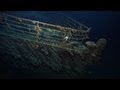
Breathtaking… Nearly 20 years after first finding the sunken remains of the RMS Titanic, marine explorer Robert Ballard returned in June 2004 helped by the National Oceanic and Atmospheric Administration (NOAA), Office of Ocean Exploration to study the ship’s rapid deterioration. The RMS Titanic team worked aboard the NOAA Ship Ronald H. Brown from May 30 through June 9 spending 11 days at the wreck site, mapping the ship and conducting scientific analysis of its deterioration. Using the Institute for Exploration (IFE) remotely operated vehicles (ROV’s) Hercules and Argus, to conduct a sophisticated documentation of the state of Titanic was not possible in the 1980’s. This “Look, don’t touch” mission utilized high-definition video and stereoscopic still images to provide an updated assessment of the wreck site at an enormous depth of 3840 meters (12600 feet). As the nation’s ocean agency, NOAA has a vested interest in the scientific and cultural aspects of the Titanic, and in its appropriate treatment and preservation. NOAA’s focus is to build a baseline of scientific information from which we can measure the shipwreck’s processes and deterioration, and then apply the knowledge we gain to other deep-water shipwrecks and submerged cultural resources. Video courtesy of the RMS Titanic Expedition Team 2004, ROI, IFE, NOAA-OE. Please visit source: oceanexplorer.noaa.gov Video Rating: 4 / 5