Month: December 2016

  • Lighting 103 Starts in January

    Are you busy in 2017? If not (or even if so!) we invite you to join Strobist's upcoming Lighting 103 course live, when it arrives in January.

    As with Lighting 101 and 102, L103 is completely free. There are some minimum gear requirements (sorry, I can't afford to give each of you gel packs.) But as with L101 and 102, there is nothing crazy expensive.

    The first section of the course will debut in mid-January, and new lessons will post bi-weekly after that. Expect the course to last for most (if not all) of the 2017, as there are already a couple dozen lessons planned.

    Are you in? Cool beans. Here's what you need to know. Read more »
    Strobist

  • Shooting in the Cold – Tips for Winter Photography

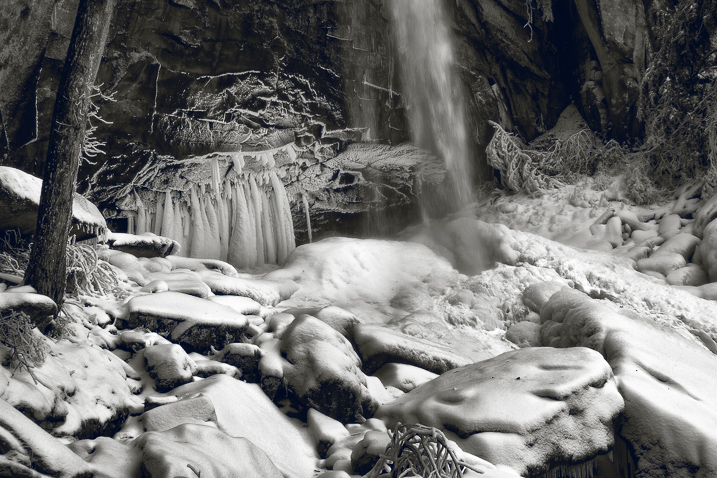
    Just because it’s cold doesn’t mean you should stop doing any photography. Winter photography can be magical, here are some tips for shooting in the cold to help you.

    The weather

    It’s easy to go out and shoot when the weather is nice and the weather God’s smile down with big fair sky grins. Summer, Spring, and especially Autumn are popular times for photography because there’s no shortage of photo opportunities – comfortable photo opportunities at that.
    Winter Photography 2

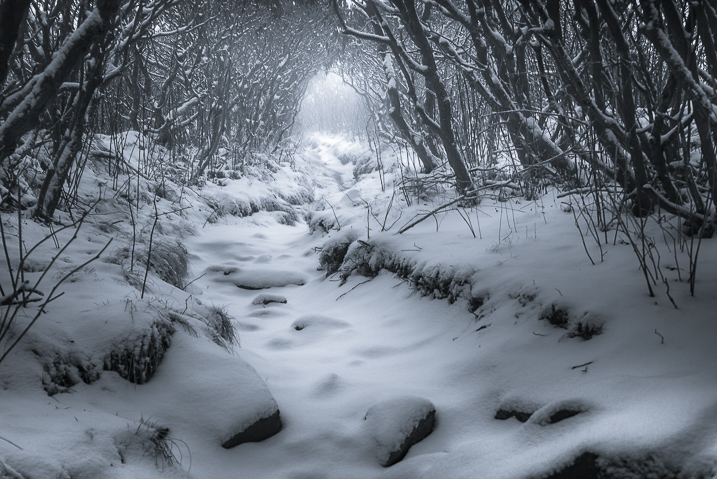
    Seasons change, though, but that doesn’t mean that you have to be discouraged, or worse, stop shooting just because winter comes around and the weather outside turns cold.
    Winter Photography 5

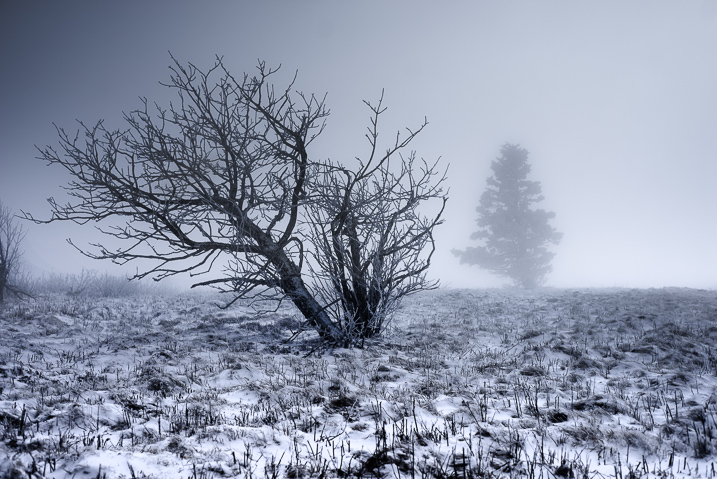
    That’s not to say that making photographs in winter doesn’t come with its own set of problems – well, not really problems. Let’s just say that making photos in the colder months is more challenging than it is when at warmer times of the year.
    Winter Photography 4

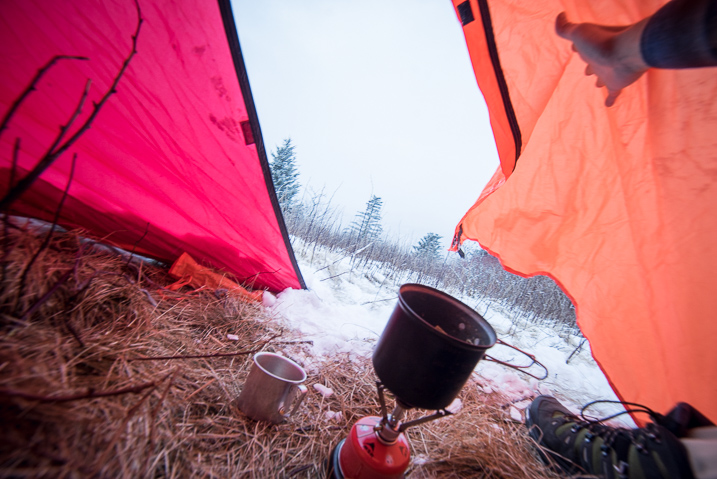
    There are still quite a few reasons to venture out into the cold with your camera. Here are a few tips that will help you stay productive (and safe) during those frosty months between Fall and Spring.
    Winter Photography 7

    Protect yourself

    All the know-how and skill in the world won’t do you much good if you’re too cold and miserable to actually make photographs. Always be aware that you and your well-being, above all else, is the most important thing to protect while shooting in frigid temperatures, doing winter photography.
    Winter Photography 6

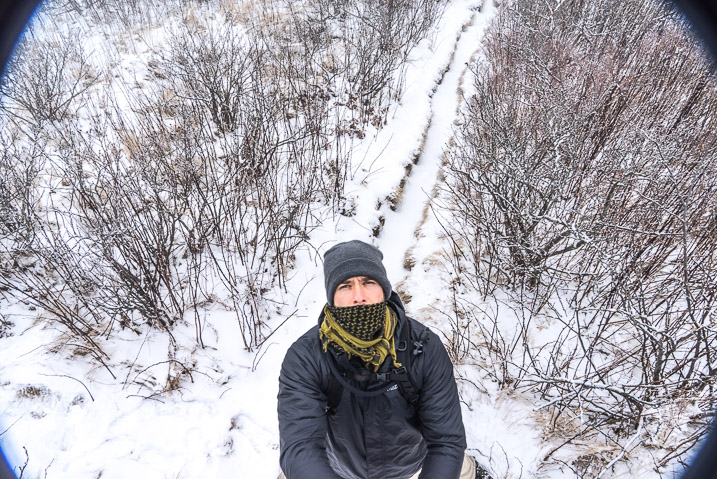
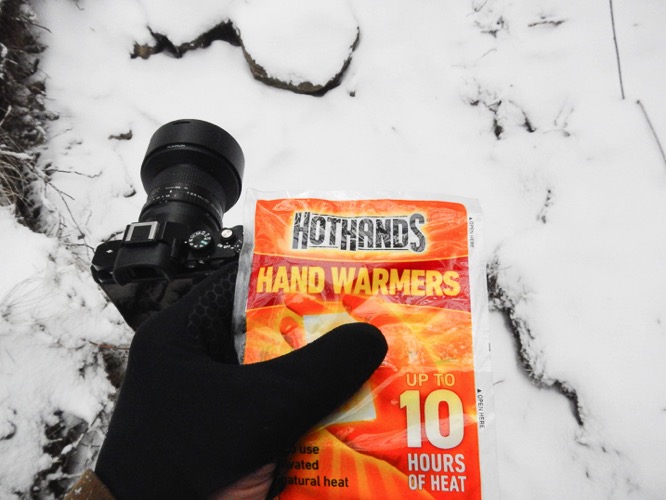
    Keep a well updated on current and future weather conditions and dress accordingly. Wearing layers of clothing will help you adjust your body temperature based on your level of activity while shooting, to prevent sweating which can lead to hypothermia. Protect your face, hands, and feet.
    Winter Cold Weather Protection

    This includes wearing warm gloves that allow good finger movement so you don’t have to constantly remove them before using your camera. Also, a face wrap or scarf goes a long way to shield your face from the wind but also to protect your camera from freezing condensation of your breath. More on that oh so wonderful phenomena a little later.

    Protect your batteries

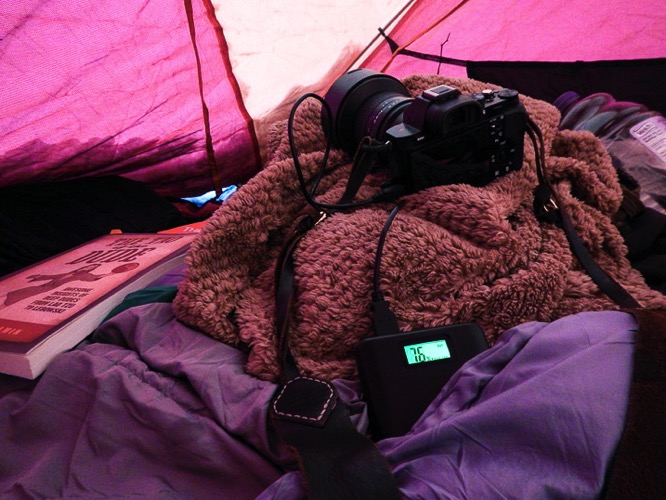
    Yes, we all know most of our cameras are electric and that means batteries. Batteries are essentially little chemical reactors that produce electricity. High or low temperatures affect batteries to varying degrees (temperature humor). Cold batteries discharge themselves faster than do warm ones. So basically, the cold temperatures faced when shooting winter photography can drain your batteries.
    Winter Batteries

    Take this into account and bring an extra battery or two when you venture out for some chilly winter shooting. If you can, carry your extra batteries in your pocket or closer to your body to keep them warmer and working more efficiently. There have been times when I was working in single digit temperatures when I put my battery in the camera only immediately before composing in order to maximize my shooting time.

    Don’t breathe

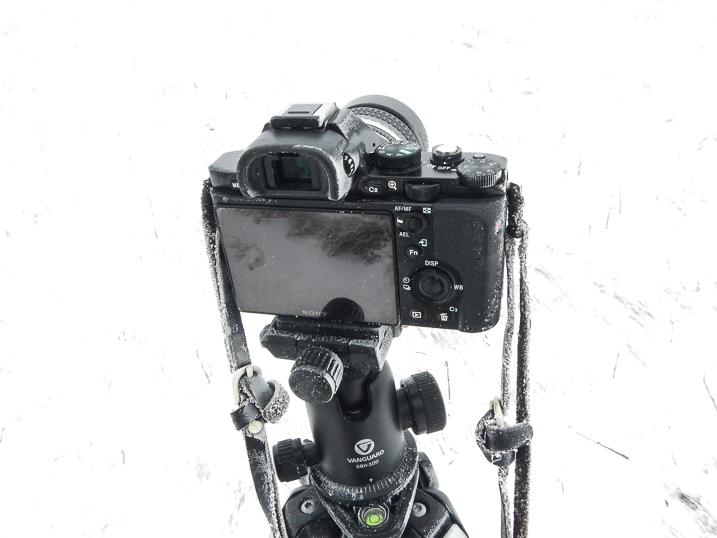
    Well, breathe of course, just not on your camera, or lens for that matter. Your breath contains a relatively high amount of moisture and heat. When the temperature outside drops, the very air you exhale can spell disaster for your winter photography. If you breathe directly onto your camera or lens condensation forms. Just like blowing your breath on a mirror. When it gets cold (below freezing), that condensation WILL FREEZE. This means that lens elements can glaze over with your own brand of self-made ice and viewfinders become unusable.
    Winter Frozen Camera 2

    To combat this frosting effect, remember to never carry your lenses close to your body and never blow your breath on them. For that matter don’t hold them in your hand for extended amounts of time because this too will warm them up which can lead to condensation. When composing your images, it’s a good idea to hold your breath.
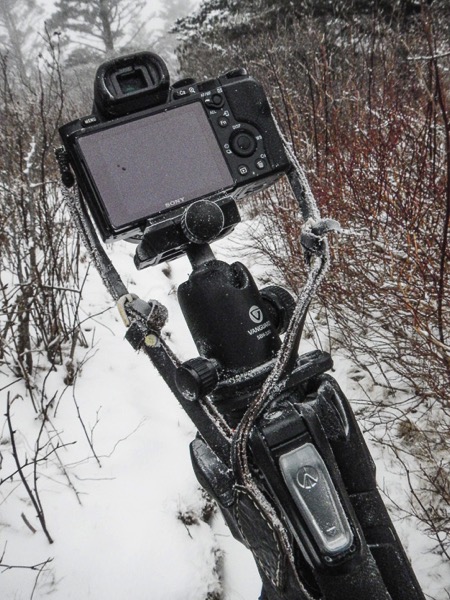
    Winter Frozen Camera 1

    It only takes a few moments and will prevent a buildup of frost and ice on your camera.

    Understand your tripod

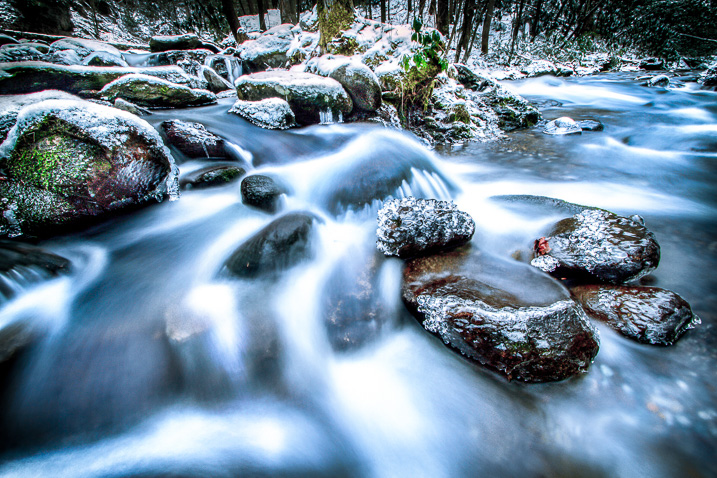
    I remember one late afternoon of shooting, a few winters back on a secluded stretch of a mountain stream. I was standing in the water with my tripod, making exposures until the light was gone and then packed everything up to drive back to the hotel. The temperatures were hovering somewhere in the lower twenties F (-4 to -6c). I carried my gear inside but left the folded tripod in the car.

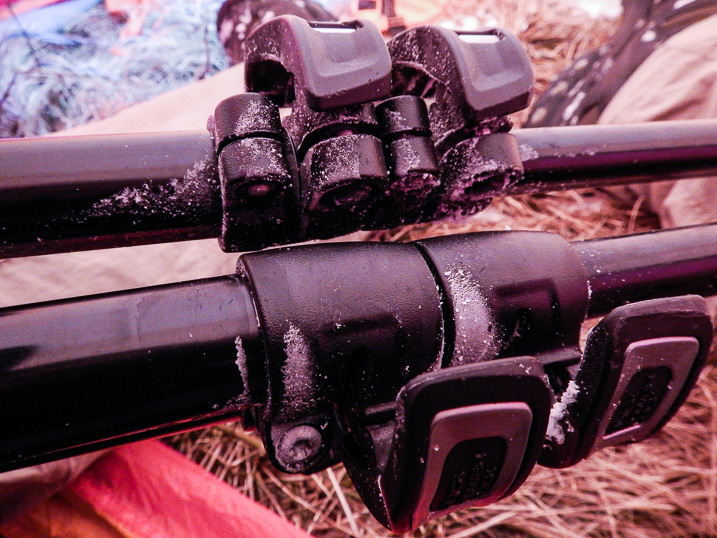
    The next morning found me beating on my now frozen tripod with a boot in order to break it free of the ice caused by leaving a wet tripod in a car overnight.
    Winter Photography 1

    I learned my lesson that day and there are a few things you can do to prevent my mistake from happening to you.
    Winter Frozen Tripod

    If your tripod gets wet, do what you can to remove as much water as possible. This will reduce the ice buildup. If you find yourself unable to store your tripod in a warmer place after shooting, leave the legs fully extended and be sure not to lock the legs. By leaving the legs unlocked you will have a much easier time making the tripod usable if it does freeze.

    Leaving the legs fully extended may be cumbersome but it will keep water from being introduced further into legs. The key factor to remember when using your tripod in winter is that water and moisture are your enemies. Anything you can do to reduce the moisture will help ensure your tripod functions more easily when things get really cold.

    Summary

    Cold weather shooting and winter photography can be an extremely rewarding experience. Winter time transforms landscapes and locations into dream-like scenes different from any other time of year.

    Winter Photography 3

    Be sure you understand how to cope with the winter temperatures so you can protect yourself and your gear. Here’s a quick recap of the things you can do to make your sure your winter shooting is a great experience.

    1. Dress yourself according to the conditions. If you feel you’re not adequately prepared don’t risk it.
    2. Bring extra batteries and keep them warm. Carry your batteries close to you in order to extend their life.
    3. Don’t breathe on your gear. The condensation from your warm breath will freeze on your camera and lens. Hold your breath when composing.
    4. Be mindful of your tripod. If it gets wet the water may freeze making it difficult to use. Keep it as dry as possible.

    Please share any other winter photography preparedness tips in the comments below. Of course, share your winter images as well!

    googletag.cmd.push(function() {
    tablet_slots.push( googletag.defineSlot( “/1005424/_dPSv4_tab-all-article-bottom_(300×250)”, [300, 250], “pb-ad-78623” ).addService( googletag.pubads() ) ); } );

    googletag.cmd.push(function() {
    mobile_slots.push( googletag.defineSlot( “/1005424/_dPSv4_mob-all-article-bottom_(300×250)”, [300, 250], “pb-ad-78158” ).addService( googletag.pubads() ) ); } );

    The post Shooting in the Cold – Tips for Winter Photography by Adam Welch appeared first on Digital Photography School.


    Digital Photography School

  • Strobist Location Workshops in 2017

    Are you more the "learn by doing" type? As in, "Don't tell me, show me?"

    Then you may be interested in one of the 2017 Strobist location workshops that are already planned. Or perhaps you would like to know how to schedule an in-person workshop of your own—for your photo exposition, camera club, or right in your damn living room.

    Keep reading to learn how to make the monkey dance… Read more »
    Strobist

  • GoPro Karma Grip gimbal now available as stand-alone product

    GoPro’s Karma Grip motorized gimbal mount was first released as part of the Karma drone kit.  Unfortunately, GoPro had to recall the Karma drone due to problems with its power supply, but now the company has made the Karma Grip available as a stand-alone product.

    The Karma grip is compatible directly with the GoPro Hero 5 Black and needs an adapter for Hero 4 Black and Silver models and the Hero Session 5. The motorized gimbal is used to stabilize video while walking or during other outdoor activities, when smoother footage is required than the cameras’ built-in electronic stabilization can produce. The camera can be charged and transfer data to a computer while mounted on the grip. 

    The grip can be handheld or attached to GoPro’s chest harness, Seeker backpack, helmet mounts and other camera supports. It’s available now for $ 300.

    Articles: Digital Photography Review (dpreview.com)

  • The ‘90s Are Calling: How to Hack a Payphone into a Boombox

    [ By SA Rogers in Gadgets & Geekery & Technology. ]

    payphone-boombox-hack-1

    When you pick up this bright yellow receiver, you won’t hear a dial tone on the other end – what’s waiting for you instead is some of the worst music the 1990s had to offer. The ‘90s are calling and they want their boomboxes, payphones, ugly neon colors and alt rock radio hits back, but maybe you want to keep them by completing this hack yourself. A ‘digital alchemist’ calling himself Fuzzy Wobble explains how to procure an old payphone and load it up with music so it can be two obsolete objects at once.

    payphone-boombox-hack-3

    “When I first started this project I suspected payphones would be hard to get, expensive, and a hassle to hack. I was wrong on all three! Online I was able to get city-grade cast-iron/stainless payphone for relatively cheap. And the hack, surprisingly, turned out to be quite elegant!”

    payphone-boombox-hack-gif

    payphone-boombox-hack-5

    Follow along step-by-step on Instructables to learn how to control the keypad, switches and audio on a payphone, whether you actually want to make your own ‘90s boombox or use it for some other audio project. The tutorial will tell you where to find a payphone and how to program the guts using modern electronic components like the Adafruit MP3 Maker Shield and the Arduino Mega, as well as offering the code and laser cuter templates.

    “I would so totally just use this to rick roll people,” says one Instructables commenter. Sure. That’s no less relevant to our current world than The Offspring, Semisonic and Coolio.

    Share on Facebook


    [ By SA Rogers in Gadgets & Geekery & Technology. ]

    [ WebUrbanist | Archives | Galleries | Privacy | TOS ]


    WebUrbanist

  • Hawkesmill launches new line of small luxury camera bags

    $ (document).ready(function() { SampleGalleryV2({“containerId”:”embeddedSampleGallery_2812556367″,”galleryId”:”2812556367″,”isEmbeddedWidget”:true,”standalone”:false,”selectedImageIndex”:0,”startInCommentsView”:false,”isMobile”:false}) });

    Hawkesmill England, a maker of luxury camera bags and accessories, has launched its new line of smaller bags designed to be used with mirrorless cameras, or smaller DSLRs with an attached lens. Like Hawkesmill’s larger models the new line comes with a removable camera insert and a rear sleeve for memory cards, documents and other smaller items and valuables. 

    The bags come in various styles and are made from premium materials, such as Scottish Harris Tweed and triple-layered waterproof canvas. A dual D-ring closing system allows for quick access to your gear while holding it safely. It also lets you slightly expand the bag’s capacity when some extra space is needed. All models of the new line come with the same overall dimensions of 10 x 8 x 5in (25.4 x 20.3 x 12.7cm). However, weight varies slightly between 2.5lb and 3.5lb (1.13kg to 1.58kg).

    All canvas models of the small bag are available now for £329 (approximately $ 420), the Regent Street model, which is made from leather, will set you back £469 (approximately $ 595). All Hawkesmill bags are handmade in England and come with a lifetime warranty.

    Press Release:

    Hawkesmill England Launches New Small Range of Luxury Camera Bags 

    West Sussex, England (December 5th 2016) – Today, Hawkesmill England, one of the leading high-end camera accessories brands, announced it is rolling out a line of smaller luxury camera bags. Currently, Hawkesmill makes a stylish large camera messenger bag, suitable for needed gear and a 15” MacBook Pro. These new bags are designed to be used with smaller cameras, i.e., mirrorless, Leica, or a DSLR and single lens attached.

    Hawkesmill utilizes superbly luxurious materials, such as Scottish Harris Tweed and triple-layered waterproof canvas, while the firm’s innovative dual-d ring closure and trigger hook system ensures that all of the gear it holds is safe and secure, while also being quick to access. A second d-ring acts as an overflow ring, for those occasions when a little too much has been packed.

    Similar to the large bags, the small line also includes a removable insert that is replaceable, ensuring a lifetime of use, as well as a rear sleeve that keeps valuables, such as passports, tickets, memory cards and money, against your body and safe.

    There are five models currently available: the classic all-black Bond Street; the olive Jermyn Street, sporting a traditional Harris Tweed design; the distinctive 18oz canvas Marlborough with English vegetable tanned leather; the black body with charcoal Harris Tweed flap Sloane Street; and, in a first for camera bags, the Regent Street, an all-Horween Chromexcel version, known as one of the finest leathers in the world.

    The overall dimensions of each of the new Hawkesmill bags are 10? wide x 8? high x 5? deep (25.4cm x 20.3cm x 12.7cm), while the weight varies slightly by model, from 2.5lbs to 3.5lbs (1.13kg to 1.58kg).

    All of the small canvas bags sell for £329.00, while the small leather Regent Street is £469.00. Along with the large bags, these are all handmade in England with a lifetime warranty against defects.

    The company also makes luxurious leather camera neck straps, card holders and passport holders.

    For further information about Hawkesmill England handcrafted bags and accessories, please visit www.hawkesmill.com.

    Articles: Digital Photography Review (dpreview.com)

  • Kodak Ektra ‘photography’ smartphone goes on sale

    A few weeks ago, Kodak announced the Ektra, its new ‘photography first’ smartphone designed to appeal to mobile photographers. Designed to look like a camera as much as a phone, the Ektra includes a 21MP rear camera, a 13MP front camera (for the obligatory selfies you’re sure to take), and features such as an F2.0 maximum aperture, phase detect autofocus and optical image stabilization. Additionally, Google’s Snapseed editing software is integrated directly into the photo gallery app.

    The Ektra is set to go on sale in Europe on December 9 at a cost of €499, but The Irish News is reporting that it has already gone on sale at a pop-up store in London’s Soho neighborhood for anyone who wants to get their hands on it a bit early.

    What do you think about the Ektra? Is this a have-with-you-all-the-time camera that you would use? Tell us in the comments.

    Articles: Digital Photography Review (dpreview.com)

  • Metz mecablitz M400 compact wireless flash unit now available

    German flash manufacturer Metz has launched a new compact sized flash unit that offers wireless TTL control and coverage to match 24-105mm lenses. First announced at Photokina, the Metz mecablitz M400 has a guide number of 40m/131ft at ISO 100 at the 105mm zoom setting, along with a tilt and swivel head for bouncing the light. The gun is compatible with Canon, Fujifilm, Nikon, Micro Four Thirds, Pentax and Sony multi-interface cameras and offers TTL metering with each. All but the Fujifilm model will support wireless TTL flash as well, with the M400 being used either as a slave or commander in a group. A USB socket is provided for future firmware updates.

    High speed sync mode is available, as is the choice of first and second curtain triggering, and 25 steps of manual control. The unit also has a 100 Lux/1m video light built-in that provides six stages of illumination.

    The Metz mecablitz M400 is available now and costs $ 280/£122. For more information visit the Metz website.

    Press Release

    M400 launched by Metz

    Compact and powerful flashgun

    Metz has launched the mecablitz M400, a compact system flash suited to mirrorless system cameras and is ideal for any photographer or film-maker looking for a convenient, compact flash unit. It is available in Canon, Nikon, Micro FourThirds, Pentax, Sony and Fuji fittings.

    Powered by four AAA sized NiMH, alkaline-magnesium or lithium batteries, the Metz mecablitz M400 has a zoom-swivel head covering a FOV range matching that of a full-frame 24-105mm lens, with a guide number of 40 (in metres at ISO 100/21°) at the 105mm position. Depending on your camera, the mecablitz M400 with master and slave mode also offers wireless TTL flash functionality. The M400 comes with an adjustable LED video/modelling light, bounce card and integrated wide-angle diffuser. Other highlights include high-speed flash synchronisation, second-curtain sync and red-eye reduction plus it can always be kept up-to-date via the USB interface for receiving firmware updates.

    Features / Tech Spec:
    High max. guide number 40m (131feet) for ISO100 and 105mm
    Vertical (+90°) and horizontal (360°) bounce/swivel head
    Clear OLED display
    Integrated high-performance LED video light (100 Lux @ 1m)
    Motorised zoom for 24–105mm illumination
    Integrated wide-angle diffuser (12mm) & flip-out reflector card
    Flash readiness indicator, correct exposure display on unit and on camera (camera dependent)
    Flash range shown in OLED display
    Automatic unit shut-off
    Dimensions: (W x H x D) 65 x 92 x 87mm
    Fittings available: Canon / Nikon / Fuji / Sony / Pentax / Olympus – Panasonic

    Prices & Availability
    Metz M400 Flashgun – all fittings. £121.99 inc VAT
    Available immediately

    Articles: Digital Photography Review (dpreview.com)

  • Cyclops 360 4K camera is designed for motorsport adventures

    Cyclops Gear has introduced its new Cyclops 360 (CG360), a camera designed to record your motorsport advenuters with a single super-wide lens for recording 360-degree horizontal panoramas. The CG360 can snap 16MP still images and record videos at resolutions up to 4K/30fps; content is saved to an included 32GB microSD card. A compatible waterproof housing allows the camera to be used underwater as deep as 50m / 164ft.

    Cyclops 360 features a total of 16 effects and modes, including time lapse, slow motion and loop recording, along with a driving mode that automatically starts recording when you start your engine. The camera can be remotely accessed and controlled via its built-in WiFi and the related CG360 mobile app for Android and iOS. Ten mounting accessories are included with the camera, among them being a magnetic mount for attaching the camera to vehicles for ‘vibration-free’ recording.

    Cyclops Gear is only offering the CG360 through power sports dealers, aiming the camera at off-roaders and others who want to record content by mounting the camera on a vehicle. The Cyclops 360 is currently available through Can-Am for $ 350.

    Via: Digital Trends

    Articles: Digital Photography Review (dpreview.com)

  • Holiday Gift Guide 2016: Gifts New and Old

    Happy gifting!

    Checkout these gifts, new and old, that are sure to make any photographer (new or old) smile.

    New camera straps, phoneography essentials, tacos and more.

    (…)
    Read the rest of Holiday Gift Guide 2016: Gifts New and Old (0 words)


    © laurel for Photojojo, 2016. |
    Permalink |
    No comment |
    Add to
    del.icio.us

    Post tags:


    Photojojo
