Month: November 2012

  • So jung kommen wir nie wieder zusammen

    Ein Beitrag von: Oliver

    Entwickeln mit uraltem Rodinal.

    In der Fotografie gibt es immer wieder Fabeln und Legenden, die von vielen gern nacherzählt und in allerlei Publikationen verbreitet werden. Das reicht von der Robustheit mechanischer Nikon-Kameras, die angeblich zwei Weltkriege überstehen, über lebensrettende Leica-Kameras, bis hin zum angeblich unverwüstlichen Filmentwickler Agfa Rodinal.

    Da kennt meist irgendwer immer irgendwen, der wen kennt, der aus sicherer Quelle weiß, dass in irgendeiner aufgelösten Dunkelkammer noch eine uralte, verstaubte und mit pechschwarzem Inhalt gefüllte Flasche Rodinal gefunden wurde und diese auch noch ganz normal entwickeln würde.

    Die meisten dieser Geschichten lassen sich mit etwas Recherche überprüfen, so gibt es durchaus Menschen, die auch heute noch mit einer über fünfzig Jahre alten Nikon F fotografieren. Ebenfalls befindet sich im Leica-Museum in Wetzlar eine Kamera, an deren Gehäuse tatsächlich eine Gewehrkugel abgeprallt ist und dem Fotografen das Leben gerettet hat. Und wie steht es mit der so legendären Haltbarkeit von Rodinal?

    Frisches Rodinal ist heutzutage leicht zu bekommen, die bekannten Versandhändler bieten das klassische Rodinal meist als R09 One Shot an und die Produktion wird wohl noch bis zum Sanktnimmerleinstag fortgeführt werden. Aber was ist mit altem, richtig altem Rodinal? Und damit meine ich nicht einmal Wiedervereinigungs- oder Flowerpower-Rodinal, sondern richtiges Weltkriegs- und Kaiser-Wilhelm-Zeugs. Vulgo: Echt alt halt.

    Bei einem bekannten Auktionshaus sind die berühmten Dunkelkammerauflösungen zwar schon wieder selten geworden, mit etwas Geduld und Glück finden sich dort aber immer noch wahrliche Schätze. So war es mir möglich, eine geöffnete und benutze Glasflasche und sieben Plastikflaschen Agfa Rodinal zu ersteigern.

    Die Plastikflaschen stammten aus den frühen neunziger Jahren und fristen nun ihr Dasein als mein normales Entwicklungs-Rodinal, die Glasflasche stammt aus den späten sechziger oder frühen siebziger Jahren. Schon gut alt, aber immer noch nicht wirklich meinen Vorstellungen entsprechend.

    So wollte es wohl der Zufall, dass ich kurze Zeit später über einen vierundvierzig Jahre abgelaufenen Orwo-NP27-Rollfilm sowie eine Flasche Rodinal stolperte, deren Etikett verdächtig nach Jugendstil aussah und deren Innenleben offenbar komplett mit Sediment gefüllt war.

    Kurzum, dies musste meine Flasche werden, auch auf die Gefahr hin, dass kein Tropfen Flüssigkeit mehr in der Flasche verblieben war. Um die Sache etwas abzukürzen: Die Flasche wechselte für einige kapitalistische Werteinheiten den Besitzer und die Vorfreude (oder Nervösität?) auf den Inhalt stieg mit jeder neuen Bearbeitung in einem Paketzentrum.

    Im gut verschnürrten Paket und einem halben Quadratmeter Luftpolsterfolie fand die Flasche Rodinal dann alsbald den Weg zu mir und ein erstes zaghaftes und gespanntes Schütteln erzeugte das in diesem Moment süßeste Klimpern meines Lebens. Es war also flüssig! Zwischen diesen beiden Sedimentbergen am Boden und dem Verschluss war tatsächlich flüssiges Rodinal.

    Jetzt drängte sich in mir natürlich ebenfalls die Frage nach dem Alter auf, für mich ja ein essentieller Bestandteil dieses Experiments. Man könnte ja einfach mal den Hersteller (oder was noch davon übrig ist… hüstel) befragen, aber meine Anfrage bei Agfa-Gevaert ist bis heute unbeantwortet und ich mag ihnen auch nicht sonderlich böse sein. Vermutlich wissen die für Anfragen zuständigen Halbtags-Studenten nicht einmal, was Rodinal überhaupt sein soll.

    Dann also selbst suchen. Erster Anhaltspunkt: Das auf auslaufenden Jugendstil hindeutende Etikett der I.G. Farben. Die I.G. Farben wurde 1945 nach dem Krieg von den Alliierten aufgelöst, die Flasche dürfte damit zumindest aus Zeiten des Dritten Reiches stammen. Aber ein Etikett im Jugenstil auf einem Produkt eines Vorzeigeunternehmens vermaledeiter und jämmerlicher Herrenmenschen?

    Wohl kaum, zumal ein Treffer im Forum eines bekannten Versandhändlers eine Flasche Rodinal aus dem Dritten Reich zeigte, die neben einem sachlicheren Etikett offenbar auch mit einem Schraubverschluß ausgestattet ist. Meine Flasche hatte entweder einen Gummipfropfen oder einen Korken als Verschluß.

    Nach weiterer Recherche dann eine alte Rodinal-Anzeige mit einem pompösen Adler im Etikett, einer völlig anderen Flaschenform und einer Jahresangabe um 1900, aber wirklich sachdienliche Hinweise waren es nicht. Aileen aus der hiesigen Redaktion half mir sehr mit einem Eintrag im Flickr-Forum der Rodinal-Gruppe und meine Vermutung wurde dort bekräftig: Die Flasche stammte aus den zwanziger oder dreißiger Jahren des zwanzigsten Jahrhunderts.

    Es konnte also gar nicht besser werden und mit allen zugedrückten Augen sowie etlichen mitgedrückten Hühneraugen war es also sogar Kaiser-Wilhelm-Zeugs.

    Der für diesen Versuch ausgewählt Rollfilm war weitaus unspektakulärer, ein im August 1968 abgelaufener Orwo NP27 mit 400 ISO aus der DDR. Die von Mäusen aus Berlin angeknabberte und leicht muffige Verpackung lies erahnen, dass dieser Film seine besten Tage schon hinter sich hatte.

    Wieviel Empfindlichkeit mag ein Film noch haben, der vermutlich über vierzig Jahre ungekühlt in irgendeinem alten Keller herumgelegen hat? In diesem Fall von einem Grauschleier zu reden, wäre sicher schon an der Grenze zur Obszönität, aber das sollte mich nicht davon abhalten, zu tun, was getan werden musste.

    Nun ein paar Worte zur Kamera für dieses Experiment: Da ich sehr wenig im Mittelformat arbeite und ein Spiegelreflexsystem daher für mich wenig Sinn macht, ist meine Mittelformatkamera eine Adox Golf 63 S aus den fünfziger Jahren. Prontoverschluss, 75mm f/6.3 Adoxar-Objektiv und ein winziger, nur wenige Milimeter kleiner – naja – Sucher.

    Optisch zwar schon etwas mitgenommen, aber sie funktioniert einwandfrei und liefert erstaunlich scharfe Bilder. Welche sechzig Jahre alte Kamera kann das schon von sich behaupten? Drahtauslöser und Stativ sind in diesem Fall per se obligatorisch, mehr als ISO 50 traute ich der Emulsion nun wirklich nicht mehr zu und selbst da quoll mein unbändiger Optimismus bereits links und rechts aus allen Poren heraus.

    Zählt man einmal das Alter des Entwicklers, der Kamera und des Films zusammen, so dürften die drei insgesammt um die einhundertneunzig Jahre alt sein. Da drängt sich doch etwas der Gedanke auf, die zwölf Belichtungen des Films in einer ebenfalls betagten Umgebung zu verschießen.

    Wie es der Zufall so will, liegt quasi vor meiner Haustür eine zu Beginn des zwanzigsten Jahrhunderts gebaute und seit vielen, vielen Jahren stillgelegte Eisenbahntrasse. Alte überwucherte Gleise, modrige Prellböcke, ein verkommener Bahnhof und ein über einhundertdreißig Jahre alter Tunnel schienen mir ein überaus passender Rahmen für die ganze Aktion zu sein.

    An einem Sonntag im April wurde der Film schließlich in einigen Stunden auf der eben genannten Eisenbahntrasse und unter Zuhilfenahme einer Nikon D3 als Entfernungs- bzw. Belichtungsmesser belichtet. Wieder in meinen vier Wänden angekommen, ging es alsbald daran, an das kostbare Rodinal zu gelangen, ohne die Flasche zu zerstören. Ein erster Versuch, den Verschluss durch Drehen und Ziehen zu öffnen war erfolglos, ein zweiter ebenfalls.

    Schnell wurde mir bewusst, dass der Stopfen nicht aus Kork, sondern aus Gummi war und er mit dem sedimentierten Rodinal bombenfest zusammenklebte. Die einzig sinnvolle Lösung schien mir zu sein, mit einem kleinen Bohrer ein Loch durch den Verschluß und durch die feste Sedimentschicht zu bohren, die für eine Standentwicklung benötigte Mindestmenge tropfenweise zu entnehmen, diese zu filtern und die Flasche dann wieder luftdicht mit Wachs zu verschließen.

    Das äußerst mühselige Bohren durch das alte Gummi ging nur sehr langsam voran, in meinem Hinterkopf war auch weiterhin die Sorge, der Bohrer könnte vielleicht verkanten und die Flasche oder den Flaschenhals sprengen. Nach einigen Minuten stieß der Bohrer aber unfallfrei durch das Sediment und der Entwickler konnte in Zeitlupe durch die winzige Öffnung tropfen.

    Bei der von mir gewählten Standentwicklung brauchte ich 4,85 ml Rodinal. Da durch das Bohren und das schiere Alter der Entwickler allerdings sehr mit Gummiresten und Kristallen verunreinigt war, würde ich alles vor der Verwendung filtern müssen und dabei etwas Verlust erzeugen. Mit 10 ml sollte ich auf der sicheren Seite sein, lieber etwas zu viel als zu wenig.

    Trotz kräftigen Schüttelns setzte sich das kleine gebohrte Loch immer wieder rasch mit Sediment und Bohrresten zu, sodass ich am Ende über jeden kleinsten Tropfen froh war und ich nach etwa zwanzig Minuten knappe 10 ml Rodinal aus der Flasche gewinnen konnte.

    Für die anschließende Filtrierung spaltete ich ein Papiertaschentuch in seine einzelnen Lagen und ließ den Entwickler dadurch in einen Messbecher laufen. Aus 10 ml Entwickler wurden so knappe 6 ml reines Rodinal.

    Nicht viel, aber es langte für eine Entwicklung. Das Loch in der Flasche verstopfte ich grob mit einem zurechtgeschnittenen Ohrenstöpsel, später versiegelte ich noch alles mit Kerzenwachs, auf dass es das alte Zeug noch weiter konserviere.

    Die Entwicklung verlief ohne Zwischenfälle, nur meine Anspannung und Nervosität stiegen nach dem Stoppen, Fixieren und Wässern in quasi astronomische Höhen. Dose auf, Spule raus, Spule öffnen, Film raus und ich sah nichts. Ein tropfnasser, blanker Streifen Rollfilm? Sollte etwa alles für die Katz gewesen sein? Noch einmal ganz, ganz genau hinschauen: Was ist das, was sind das für Schemen?

    Im Gegenlicht meiner Badezimmerlampe und unter Zuhilfenahme eines weißen Blattes Papier erkannte ich schwach, ganz schwach die Orte und Motive der Eisenbahntrasse! Die ersten Belichtungen waren kaum zu sehen, die späteren, weitaus längeren Belichtungen sind vor einem hellen Hintergrund als schwache Schatten erkennbar. Es hatte tatsächlich funktioniert! Jetzt in Ruhe trocknen lassen, abfotografieren und schauen, was mit moderner Bildbearbeitung noch aus diesen Negativen zu machen ist.

    Das Digitalisieren des störrischen und sperrigen Films entwickelte sich zu einer größeren Aufgabe, der Autofokus konnte kaum Strukturen finden und ein optimaler Fokus erwies sich mehr als reine Glückssache. Eine geschlagene Stunde später ging es dann per Photoshop weiter, Farben invertieren, spiegeln und dann die Tonwerte grob zurechtschieben. Aus den fast komplett grauen Bildern schälte sich langsam ein Bild heraus, in der Bildmitte sogar von ganz passabler Qualität.

    Der letzt Feinschliff erfolgte dann per Lightroom und die Aufnahmen sehen am Ende wunderschön kaputt, zerstört und alt aus, aber trotzdem detailliert und lebendig. Der Film hatte einfach eine Menge Zeit und Folter hinter sich, Battlescars, wenn man so möchte.

    Für mich aber ein voller Erfolg und ein weiterer Grund für das Erlebnis der analogen Fotografie. Kein Photoshop-Filter, keine Lightroom-Vorgabe und kein Hipstamatic-Filter wird so etwas optisch simulieren können. Und erst recht nicht das Gefühl dabei.

    Der Mythos des unkaputtbaren Entwicklers hat für mich seine Bestätigung gefunden. Wären alle Rodinal-Vorräte der Welt aufgebraucht, ich würde keine Sekunde zögern, wieder zum Bohrer greifen und es Tropfen für Tropfen aus der alten Flasche heraustropfen lassen.

    Aber jetzt entschuldigt mich, ich habe da noch einen 1951 abgelaufenen Eichelberger, bei dem ich nicht einmal die Empfindlichkeit weiß, laut Hersteller aber völlig lichthoffrei und feinkörnig. — Pah, das werden wir ja sehen!


    kwerfeldein – Fotografie Magazin

  • Olympus US gives $500 price and December date for 17mm f1.8

    17mmF1-8.png

    Olympus USA has announced its M.Zuiko Digital 17mm f1.8 for Micro Four Thirds will be available in December for around $ 500. The lens features the same premium build quality and snap-focus manual focus mode as the company’s 12mm F2.0. The snap-focus mode is engaged by pulling the focus ring on the lens back, which reveals a distance scale and engages end-stops on the focus travel, applies firmer damping and switches the camera to manual focus mode.

    News: Digital Photography Review (dpreview.com)

  • Tokina 11-16mm f/2.8 lens review and video test on canon 7d. – DSLR Film NOOB

    The Tokina 11-16mm f/2.8 lens if often recommended for crop sensor cameras. But I’ve had a hard time finding video footage of the lens in use. So Along with a short review I’ve taken the time to demonstrate the Tokina 11-16 in video mode on my canon 7d. Equipment used: Canon 7d, Sigma 24 1.8, tokina 11-16, and zoom h4n

  • New in CINEMA 4D R13 – 7. Collision Deformer

    The Collision Deformer in CINEMA 4D Release 13 makes it easy to deform one object based on its interaction with another. This multipurpose deformer is perfect for creating subtle interactions between surfaces without requiring the calculation time of a full dynamics engine. www.cineversity.com Note CINEMA 4D R13 is due to ship in September. For more info see www.maxon.net
    Video Rating: 5 / 5

  • Moon Phase – Mother Came to See Me! Happy!

    The mysterious Count Kinkel has abandoned the confines of his castle and come to Japan in search of Mistress Luna. Deception flies thick in the night as false hope draws Hazuki out of Mido family protection. An awful truth comes to light and loyalty is tested, as Kouhei and his grandfather charge into a hopeless battle. But when the Master is foresworn, so shall be the servant… Where does Elfriede’s loyalty lie, now that the photographer has set her free?
    Video Rating: 0 / 5

    Henry Joost and Ariel Schulman document the strange series of events that unfolds when a gifted 8-year-old artist named Abby contacts Nev, a 24-year-old photographer (and Schulman’s brother), through Facebook.
    Video Rating: 4 / 5

  • JAXPORT Gallery: “The Art of the Steel Crane” by Barbara Holmes and Deborah Reid

    A few nice visual art images I found:

    JAXPORT Gallery: “The Art of the Steel Crane” by Barbara Holmes and Deborah Reid
    visual art
    Image by JAXPORT
    Opening reception at JAXPORT Gallery, December 2011

    “The Art of the Steel Crane” is centered around a recurring theme and in the duo’s art: the self, a spirit that is also all powerful. The persona is representative of how we present to the world, the child inside everyone and acts as a self-reflective tool for the viewer to connect to the art. The exhibition consists of glass sculptures, a series of photographs, including some exclusive edition prints, an animation video piece, and a menagerie of paintings. “The Art of the Steel Crane” will be showing at JAXPORT Gallery from November 21, 2011 until January 5th, 2012. Find out more information on Barbara’s barbarafryefield.blogspot.com/

    Barbara Fryefield
    Barbara Fryefield, is an expressive artist, fine artist, and teacher. She holds a B.A. in Psychology and a Certificate in Art for Education. Barbara is owner of the Artist Palette Florida LLC. She has a gift for working with children and has been a k-12 art teacher for three years. Barbara applies knowledge of creative art, painting, drawing, and visual art to her work with children and adults. She facilitates using each of these processes in a non-threatening, spontaneous, and fun way that helps participants construct a new understanding of themselves and those around them. She works with adults, children, and families focused on self-expression, communication, and wellness.

    Deborah Reid
    Deborah R. Reid is a lifelong painter and a practicing attorney. Her work is largely based on her own photographs which she interprets in a combination of oil, acrylic, egg shell, ink and now aerosol.Deborah curates monthly art shows at the Zodiac Grill on Adams Street as a fundraiser for Jacksonville Area Legal Aid. Her work can be seen there, at Fireflies on San Jose as well as regional galleries.

    Deborah is a seasoned admiralty practitioner. Prior to joining the Florida Bar, she practiced in California, New Jersey and New York. She is now with the commercial litigation firm of Rumrell & Brock, P.A. Commencing in 2012; Deborah will be conducting workshops on Intellectual Property and Law for Artists.

    For additional information and/or images, please contact Meredith Fordham Hughes by email or by phone at (904) 357-3052.

    JAXPORT Gallery
    Located on the first floor of JAXPORT Headquarters, the Gallery features local artists rotating on a bi-monthly basis. JAXPORT Gallery is open during normal JAXPORT Headquarters hours and admission is free.

    Photo credit: JAXPORT, Meredith Fordham Hughes

    JAXPORT Gallery: “The Art of the Steel Crane” by Barbara Holmes and Deborah Reid
    visual art
    Image by JAXPORT
    Opening reception at JAXPORT Gallery, December 2011

    “The Art of the Steel Crane” is centered around a recurring theme and in the duo’s art: the self, a spirit that is also all powerful. The persona is representative of how we present to the world, the child inside everyone and acts as a self-reflective tool for the viewer to connect to the art. The exhibition consists of glass sculptures, a series of photographs, including some exclusive edition prints, an animation video piece, and a menagerie of paintings. “The Art of the Steel Crane” will be showing at JAXPORT Gallery from November 21, 2011 until January 5th, 2012. Find out more information on Barbara’s barbarafryefield.blogspot.com/

    Barbara Fryefield
    Barbara Fryefield, is an expressive artist, fine artist, and teacher. She holds a B.A. in Psychology and a Certificate in Art for Education. Barbara is owner of the Artist Palette Florida LLC. She has a gift for working with children and has been a k-12 art teacher for three years. Barbara applies knowledge of creative art, painting, drawing, and visual art to her work with children and adults. She facilitates using each of these processes in a non-threatening, spontaneous, and fun way that helps participants construct a new understanding of themselves and those around them. She works with adults, children, and families focused on self-expression, communication, and wellness.

    Deborah Reid
    Deborah R. Reid is a lifelong painter and a practicing attorney. Her work is largely based on her own photographs which she interprets in a combination of oil, acrylic, egg shell, ink and now aerosol.Deborah curates monthly art shows at the Zodiac Grill on Adams Street as a fundraiser for Jacksonville Area Legal Aid. Her work can be seen there, at Fireflies on San Jose as well as regional galleries.

    Deborah is a seasoned admiralty practitioner. Prior to joining the Florida Bar, she practiced in California, New Jersey and New York. She is now with the commercial litigation firm of Rumrell & Brock, P.A. Commencing in 2012; Deborah will be conducting workshops on Intellectual Property and Law for Artists.

    For additional information and/or images, please contact Meredith Fordham Hughes by email or by phone at (904) 357-3052.

    JAXPORT Gallery
    Located on the first floor of JAXPORT Headquarters, the Gallery features local artists rotating on a bi-monthly basis. JAXPORT Gallery is open during normal JAXPORT Headquarters hours and admission is free.

    Photo credit: JAXPORT, Meredith Fordham Hughes

    Eddo Stern discusses Dark Game hardware at Art Center Media Design Program Design Dialogues
    visual art
    Image by G A R N E T
    Design Dialogues Fall 2010: Computation After New Media

    Guest Curator: Garnet Hertz

    This lecture series explores key concepts in computational media to empower individuals to imagine, collaborate, provoke, and prototype through computing.

    As a result of its widespread adoption, digital media has transitioned from "new media" to a ubiquitous part of contemporary life. This shift from novelty to familiarity has considerable ramifications for academic institutions working in the fields of media arts and digital culture. Exploring the formal potentials of information and networked technologies is no longer of significant interest: information technologies need to be understood as an embedded part of culture and history. Digital cultural practices must also work to extend their parent disciplines, including the studio arts, media history and theory, design, computer science and engineering.

    Each speaker in the "Computation After New Media" series will focus on one word— a single term they feel is a core part of their work within the framework of computation. These lectures will be aimed at exploring the underlying structures of computationalism, providing an important leverage into the philosophy, languages, and principles of digital media.

    SCHEDULE:

    – October 1: Sharon Daniel, UCSC
    – October 8: Eddo Stern, UCLA
    – October 22: Paul Dourish, UCI
    – October 29: George Legrady, Experimental Visualization Lab, UCSB
    – November 19: Casey Reas, UCLA, author, Form + Code in Design, Art, and Architecture
    – December 3: Celia Pearce, Georgia Tech, author Communities of Play: Emergent Cultures in Multiplayer Games and Virtual Worlds

    Design Dialogues brings provocateurs from the worlds of design, art, academia, and technology into the MDP Studio. Each term, a guest curator is invited to build a series around a theme of their choosing.

    Meetings: 12-2 pm. Talks: 3-6 pm in the Wind Tunnel Gallery. Open only to Media Design students, alumni, and faculty.

    October 1: Sharon Daniel

    Sharon Daniel is Professor of Film and Digital Media at the University of California, Santa Cruz where she teaches classes in digital media theory and practice. Her research involves collaborations with local and on-line communities, which exploit information and communications technologies as new sites for "public art." Daniel’s role as an artist is that of “context provider”—assisting communities, collecting their stories, soliciting their opinions on politics and social justice, and building the online archives and interfaces that make this data available across social, cultural and economic boundaries. Her goal is to avoid representation—not to attempt to speak for others but to allow them to speak for themselves.

    Daniel’s work has been exhibited internationally at museums, festivals including the Corcoran Biennial, the University of Paris, the Dutch Electronic Arts Festival, Ars Electronica and the Lincoln Center Festival as well as on the Internet. Her essays have been published in books and professional journals such as Leonardo and the Sarai Reader. Daniel has recently presented “Improbablevoices.net” at the Fundacion Telefonica in Buenos Aires and at the conference “contested commons” in New Delhi, India. Her current research is supported by grants from the Daniel Langlois Foundation, the UCIRA, UCSC Arts Research Institute, and the Creative Work Fund.

    October 8: Eddo Stern

    Eddo Stern works on the disputed borderlands between fantasy and reality, exploring the uneasy and otherwise unconscious connections between physical existence and electronic simulation. His work explores new modes of narrative and documentary, experimental computer game design, fantasies of technology and history, and cross-cultural representation in computer games, film, and online media. He works in various media including computer software, hardware and game design, kinetic sculpture, performance, and film and video production. His short machinima films include "Sheik Attack", "Vietnam Romance", "Landlord Vigilante" and "Deathstar". He is the founder of the now retired cooperative C-level where he co-produced the physical computer gaming projects "Waco Resurrection", "Tekken Torture Tournament", "Cockfight Arena", and the internet meme conference "C-level Memefest" He is currently developing the new sensory deprivation game "Darkgame". Stern’s work can be seen online at www.eddostern.com/

    October 22: Paul Dourish

    Paul Dourish is a Professor of Informatics in the Donald Bren School of Information and Computer Sciences at UC Irvine, with courtesy appointments in Computer Science and Anthropology. He teaches in the Informatics program and in the interdisciplinary graduate program in Arts Computation and Engineering. His primary research interests lie at the intersection of computer science and social science; he draws liberally on material from computer science, science and technology studies, cultural studies, humanities, and social sciences in order to understand information technology as a site of social and cultural production. In 2008, he was elected to the CHI Academy in recognition of his contributions to Human-Computer Interaction.

    Dourish is the author of "Where the Action Is: The Foundations of Embodied Interaction" (MIT Press, 2001), which explores how phenomenological accounts of action can provide an alternative to traditional cognitive analysis for understanding the embodied experience of interactive and computational systems. Before coming to UCI, he was a Senior Member of Research Staff in the Computer Science Laboratory of Xerox PARC; he has also held research positions at Apple Computer and at Rank Xerox EuroPARC. He holds a Ph.D. in Computer Science from University College, London, and a B.Sc. (Hons) in Artificial Intelligence and Computer Science from the University of Edinburgh.

    November 19: Casey Reas

    Casey Reas lives and works in Los Angeles. His software, prints, and installations have been featured in numerous solo and group exhibitions at museums and galleries in the United States, Europe, and Asia. Casey’s ongoing Process series explores the relationship between naturally evolved systems and those that are synthetic. The imagery evokes transformation, and visualizes systems in motion and at rest. Equally embracing the qualitative human perception and the quantitative rules that define digital culture, organic form emerges from precise mechanical structures.

    Casey is a professor at the University of California, Los Angeles. He holds a masters degree from the Massachusetts Institute of Technology in Media Arts and Sciences as well as a bachelors degree from the School of Design, Architecture, Art, and Planning at the University of Cincinnati. With Ben Fry, Reas initiated Processing in 2001. Processing is an open source programming language and environment for creating images, animation, and interaction.

    Reas and Fry published Processing: A Programming Handbook for Visual Designers and Artists, a comprehensive introduction to programming within the context of visual media (MIT Press, 2007). In 2010, they publishing Getting Started with Processing, a casual introduction to programming (O’Reilly, 2010). With Chandler McWilliams and Lust, Casey has just published Form+Code in Design, Art, and Architecture (PAPress, 2010), a non-technical introduction to the history, theory, and practice of software in the arts.

    Casey is the recipient of a 2008 Tribeca Film Institute Media Arts Fellowship (supported by the Rockefeller Foundation), a 2005 Golden Nica award from the Prix Ars Electronica, and he was included in the 2008 ArtReview Power 100. His images have been featured in various publications including The New York Times, The International Herald Tribune, Print, Eye, Technology Review, and Wired.

    December 3: Celia Pearce

    Celia Pearce is a game designer, author, researcher, teacher, curator and artist, specializing in multiplayer gaming and virtual worlds, independent, art, and alternative game genres, as well as games and gender. She began designing interactive attractions and exhibitions in 1983, and has held academic appointments since 1998. Her game designs include the award-winning virtual reality attraction Virtual Adventures (for Iwerks and Evans & Sutherland) and the Purple Moon Friendship Adventure Cards for Girls.

    Celia received her Ph.D. in 2006 from SMARTLab Centre, then at Central Saint Martins College of Art and Design, University of the Arts London. She currently is Assistant Professor of Digital Media in the School of Literature, Communication and Culture at Georgia Tech, where she also directs the Experimental Game Lab and the Emergent Game Group. She is the author or co-author of numerous papers and book chapters, as well as The Interactive Book (Macmillan 1997) and Communities of Play: Emergent Cultures in Multiplayer Games and Virtual Worlds (MIT 2009). She has also curated new media, virtual reality, and game exhibitions and is currently Festival Chair for IndieCade, an international independent games festival and showcase series. She is a co-founder of the Ludica women’s game collective.

    Curator: Garnet Hertz
    Doctor Garnet Hertz is a Fulbright Scholar and contemporary artist whose work explores themes of technological progress, creativity, innovation and interdisciplinarity. Hertz is a Faculty Member of the Media Design Program at the Art Center College of Design in Pasadena California, a Postdoctoral Research Scholar at the Institute for Software Research at UC Irvine and is Artist in Residence in the Laboratory for Ubiquitous Computing and Interaction at UC Irvine. He has shown his work at several notable international venues in eleven countries including Ars Electronica, DEAF and SIGGRAPH and was awarded the prestigious 2008 Oscar Signorini Award in robotic art. He is founder and director of Dorkbot SoCal, a monthly Los Angeles-based DIY lecture series on electronic art and design. His research is widely cited in academic publications, and popular press on his work has disseminated through 25 countries including The New York Times, Wired, The Washington Post, NPR, USA Today, NBC, CBS, TV Tokyo and CNN Headline News.

  • FYF 2011 – DESCENDENTS – Hope & Rotting Out – LIVE

    Descendents perform live at FYF 2011. “Hope” segues into “Rotting Out”

  • Getting Down Low in Wildlife Photography

    When photographing wildlife, the images that most resonate with the viewer are those that evoke emotion and offer an insight into the world of a particular animal.  There are numerous tips and pieces of advice that can be given to help improve your wildlife photography but the one tip that is the easiest to implement, and will show immediate benefit, is to get down low when taking your wildlife images.

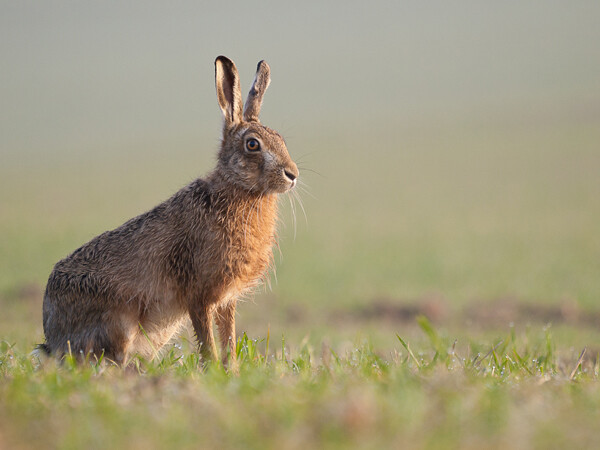
    Brown Hare (Lepus europaeus)

    Brown Hare (Lepus europaeus)

    Here are three reasons to persuade you to try it next time you are out taking photos of wildlife:

    1. Getting closer

    If you are shooting wild animals, as soon as they become aware of your presence, they will often retreat in the opposite direction.  You typically can’t just walk up to wildlife and expect it to pose for you and getting down low is only part of the good field craft required to get closer to wild animals.  By lying down, you will be far less noticeable than by standing upright or crouching, allowing you to crawl much closer to your subjects before they either become aware of you, or feel threatened.  Often, good field craft is better than the longest telephoto lens for capturing frame-filling shots.

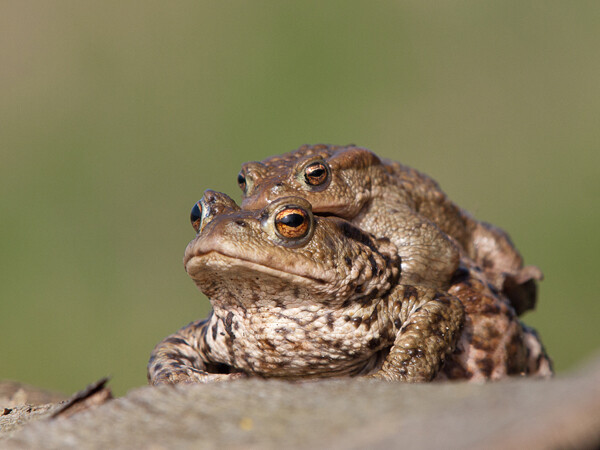
    European toad (Bufo bufo)

    European toads (Bufo bufo)

    2. Isolating your subject

    If shooting an animal at ground level from a standing position, you will be looking down on it, meaning that the ground or plants behind it will form the immediate background of the shot.  As this background isn’t very far away, it will be difficult to render it out-of-focus, even with the largest aperture, causing the background to distract the attention of the viewer away form the subject, in the final image.  Getting down low will often result in the background of the shot being much further away, meaning that you can capture the entire subject in sharp focus whilst ensuring that both the foreground and background are soft and blurred, isolating your subject in a fine plane of focus.

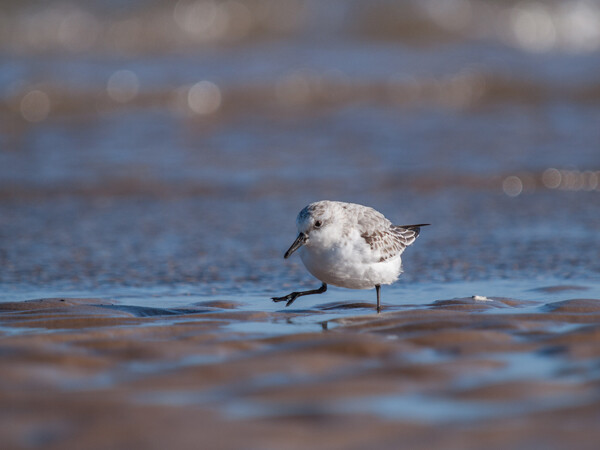
    Sanderling (Calidris alba)

    Sanderling (Calidris alba)

    3. Eye level

    By getting down low, you can take photos of animals at their eye level.  Typically in wildlife photography, if the face of the animal has been captured, it is key for the eyes to be the point of focus as that is where the eyes of the viewer will immediately be drawn.  If the eyes are soft or out of focus, you will lose the viewers attention, however if the eyes are sharp you create a relationship between the subject and the viewer.  This relationship is made all the more intimate by being down at eye level with the subject as the viewer feels like they are looking at the animal from within its world.  If you take a photograph looking down on an animal, the perspective gives the animal a sense of vulnerability (which can be used creatively in some circumstances) however by getting down low this is easily avoided, and much more powerful portraits an be captured.

    You may find that you initially feel awkward crawling around on your front after wildlife and that you get much muddier than if you stay on our feet, but once you start doing it and see the results, you won’t be able to stop.

    Post originally from: Digital Photography Tips.

    Check out our more Photography Tips at Photography Tips for Beginners, Portrait Photography Tips and Wedding Photography Tips.

    Getting Down Low in Wildlife Photography


    Digital Photography School

  • Retrospective Shoulder Bag Rain Covers

    How to properly attach the rain covers of the Retrospective 10, 20 and 30 and the Retrospective Lens Changer 2 and Lens Changer 3. The seam-sealed rain covers included with each bag protect the enclosed photo equipment from rain, blowing sand and other harsh elements. For more information about the Retrospective Series of shoulder bags and other Think Tank Photo products, please click on the links below: Retrospective Series: www.thinktankphoto.com Think Tank Photo homepage: www.thinktankphoto.com
    Video Rating: 4 / 5

    My new channel: www.youtube.com KZ-Rabbits, the first siberian KZ community, was founded in November, 11th, 2007. Web support: kz.tomck.net Players Vyacheslav “fReelaN” Spasenko Alexey “Gho5tface” Pavlov Evgeni “jenioZ” Maltsev juhx Anton “KiZZek” Lebedev Alexey “Kr1Zo” Dmitrov Denis “minicLix” Bembel’ nukk Oleg “Shoks” Polumogin Movie properties: Size: 393 Mb Bitrate: 6000 Kbps Length: 9:04 FPS: 240/60 Uncompressed size: 70,2 Gb Soundtrack: Karl Jenkins – Sanctus Vortex Involute – Sun Swallen Members – Watch This Kosheen – Suicide Eminem – Beautiful Download www.megaupload.com kz.tomck.net (registration required)

  • 2 Pay-to-Sit Projects: Privately Monetizing Public Amenities

    [ By WebUrbanist in Architecture & Cities & Urbanism. ]

    The privatization of public spaces is a contentious issue – suburban malls have turned many main streets into ghost towns. At the same time, there are legitimate difficulties when it comes to open seating . If you leave benches wide open, people may sleep in them. If you don’t nail chairs to the sidewalk, people will walk off with them.

    Consider shopping carts: in the United States, you see them strewn around parking lots, or gathered by tireless employees. In many parts of the world, including Europe, a coin is inserted, allowing you to detach the card, but encouraging you to return it and get back the money you put in. Could the same system be used for seats? Vincent Wittenberg gained permission from Bat Yam, Israel, to perform a real-world test.

    “We proposed to the municipality to replace existing public benches with benches that consist of individual seats. The bench itself is a docking station: using a five Shekel coin one can release a seat and place it in a different spot. The deposit is returned when one brings the seat back. The chairs introduced by the municipality cross the border between public and private and move between the sunny sidewalks to the shadow under the arcades.”

    Meanwhile, Fabian Brunsing, a Berlin-based artist and designer, took a different approach to a related problem: coin deposits (but in this case non-refundable) that allow you to use a public bench. But beware: when your time is up, a warning sound signals you should stand or get spiked from below. Perhaps this project takes things too far, but, on the other hand, is it that different from toll roads and other pay-to-use amenities offered by cities or states?


    Want More? Click for Great Related Content on WebUrbanist:

    15 Cool Urban Art Projects and Dreamy Product Designs

    Chilean artist and designer Sebastian Errazuriz creates fantastical designs and urban art. His product designs and guerrilla art are original and amazing.
    6 Comments – Click Here to Read More »»


    Big Screens, Big Fun: 2 Simply Silly Public Art Projects

    The power of fun is often lost on grownups, but these two public art projects helped put some fun back into the daily lives of UK pedestrians.
    3 Comments – Click Here to Read More »»


    Share on Facebook


    [ By WebUrbanist in Architecture & Cities & Urbanism. ]

    [ WebUrbanist | Archives | Galleries | Privacy | TOS ]


    WebUrbanist