Category: Photography

  • Love At First Heist – A Short Film

    Love At First Heist is a short film made of still images by director Elizabeth Anweis (Hung, Southland) and shot by Bryan Koss (Discovery Channel, Director of Photography)

    The interview below was submitted by Guy Birtwhistle, producer of the film.

    We tracked down actress, Elizabeth Anweis in Los Angeles to ask her about her new short film, ‘Love At First Heist’, which uses a blend of still photography and live footage.

    You’re a working actress in Hollywood, where the heck did you learn how to edit?

    A book. Books are amazing.

    For our techie reeaders what did you shoot and edit on?

    I think Bryan [Bryan Koss, Director of Photography] used the 5d and 7d. The video footage of the stabbing being shot on the 5d. Post consisted of PS 5 and FCP 7.

    We associate LA with sunshine and palm trees, yet you chose to show us rain and downtown, can you talk about your reasoning behind this?

    Downtown LA was written into the script almost as it’s own character. As for the rain, we were lucky with it.

    Still from Love At First Heist

    Still from Love At First Heist

    How many photos did you shoot?

    Roughly 2600 photos. We were attempting to capture a lot in one day and moving quickly. It was incredible of Bryan to get all the coverage we needed in addition to the stylized experiments I wanted, most of which didn’t make the cut in the end.

    What was the shooting photo count to editing photo count ratio?

    2600 photos were shot of which 500 were then processed. I’m not sure how many ended up in the film as there were two different edits. The final one being scaled back and more simple.

    Please talk about the process of editing all those photos, what was your criteria for selecting the photos in the video?

    Pretty basic. The first pass involved separating out my favorites which were then edited in Photoshop to inspire the look and feel. Next came forming the skeleton of the story and then it was a matter of filling it in with the music in mind.

    There is minimal sound design, no voiceover, can you talk about your decisions with respect to sound?

    It’s good to hear that it sounds minimal as it’s not meant to stand out much and there’s actually quite a bit going on. I think the music acted as more powerful an agent than any true dialogue or voiceover could have in 3 min. It also, I think, allows a more individualized experience for a viewer to fill in who the characters are.

    Still from Love At First Heist

    Still from Love At First Heist

    Why did you chose black and white?

    It’s less distracting and offers more control over the focus of an image. I didn’t want the difference between all the lighting situations to stand out and detract from the short story. Within the three minute time frame I think the black and white images provided a stronger and faster emotional impact.

    Can you talk about the challenges of shooting on the street, were you hampered by weather, light, police?

    We weren’t stopped or questioned at any point which was surprising to me. Security guards watched us but never said anything. At one point we were even standing in front of a jewelry store as I was pulling a knife from my bag while masked, and nothing. The weather was the biggest challenge for me. On the one hand it was great for lighting because it was overcast all day but on the other it was freezing with the added rain. Some burly men (ahem, Bryan and Guy [Guy Birtwhistle, actor/ writer/ producer]) might disagree but as the day progressed my limbs and hair froze with icicles, I was shaking uncontrollably and by the end I could barely communicate. The words were stumbling off my tongue and tripping over my lips. Thank god Guy and Bryan are both proficient mind readers.

    Learn more about the film at Guy Birtwhistle‘s website


    dslrBlog

  • Freezing Water on the Cheap: Einstein Answers Broncolor

    Remember that Broncolor-sponsored "shootout" video a little ways back, in which the high-end pack-and-heads systems competed to freeze water droplets in a concept shot?

    A few of you were like, "Yeah, cool, but couldn't you also do that with an Einstein?"

    Yeah, turns out you could. And who better to prove that than Jarek Wieczorkiewicz, who specializes in conceptual sculpted-liquid portraiture. His results, along with a (slightly NSFW-ish) vid, inside. Read more »


    Strobist

  • Using Tight Framing to Create a Sense of Infinity

    CroppingThe way you frame and crop your shots has power to give a sense of size to a scene that may not actually be there.

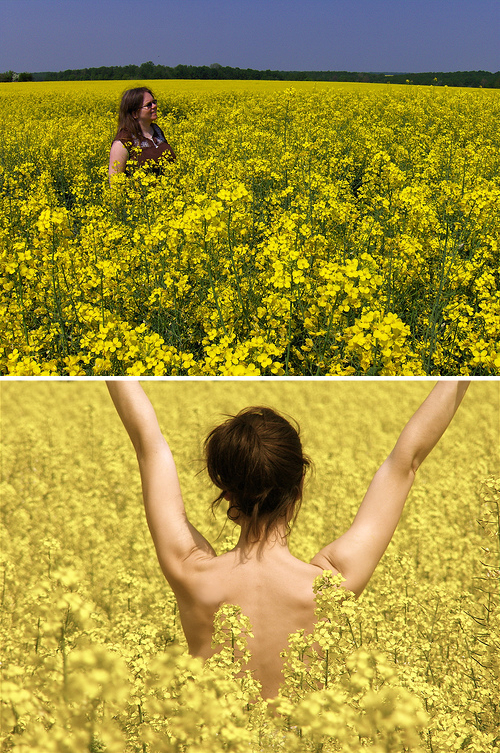
    For example – the shot to the left of a field of tulips is framed in such a way that there is not beginning or end to the tulips anywhere inside the frame.

    While the field tulips may in fact end just beyond the edge of the frame in any direction – the feeling that this framing gives is that of a never ending sea of tulips.

    To get the effect the photographer has managed to get the angles right so that there’s no horizon and they’ve filled the frame with their subject.

    To see the same principles illustrated again – check out the two following images. The first shot actually contains a lot more flowers than the second one – but because there’s a break in the flowers with the horizon there’s a sense that the flowers are limited to a certain area. Whereas the second scene could actually have a lot less flowers in it – but they go on and on in the mind of those viewing the shot.

    Infinity

    The same principles can be applied to numerous other situations. For example the same thing is done in the following image of a sailing boat:

    Sailing

    The boat is seemingly in the middle of an ocean – as there’s no end to the water in the frame. However the inclusion of land in any direction or even a horizon would have interrupted the water and given the image a different feeling.

    Again it is a combination of the angle that the photographer is shooting from (from slightly above) and the framing of the subject.

    Post originally from: Digital Photography Tips.

    Check out our more Photography Tips at Photography Tips for Beginners, Portrait Photography Tips and Wedding Photography Tips.

    Using Tight Framing to Create a Sense of Infinity


    Digital Photography School

  • Nifty Fifties – Why I Love 50mm Prime Lenses

    This article was written by Andrew S Gibson, the author of Understanding Lenses: Part II, and is part of a series of lessons about camera lenses. Links to the others are at the bottom of the article.

    01

    Before zoom lenses became the norm most cameras came with a 50mm lens as standard. Since then, the humble 50mm prime has fallen somewhat out of favour. Which is a shame, because 50mm prime lenses can give you high quality and versatility at a low price point. On an APS-C camera it’s one of my favourite focal lengths. Let’s take a look at why.

    50mm prime lens vs. kit lens

    If you own a kit lens or zoom that covers the 50mm focal length you may be wondering why you would buy a 50mm prime. After all, you already have that focal length covered. The answer is that 50mm lenses have some advantages that kit lenses don’t:

    Better image quality

    50mm lenses are simple beasts from a design point of view. Lens designers figured out a long time ago how to make a good quality 50mm lens, and the result is that the optical performance of even the least expensive 50mm prime outshines many zooms.

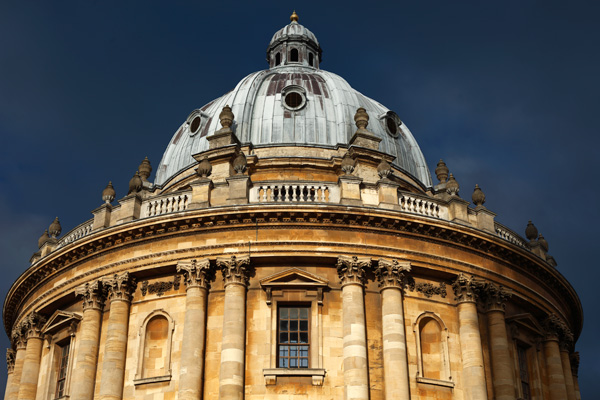
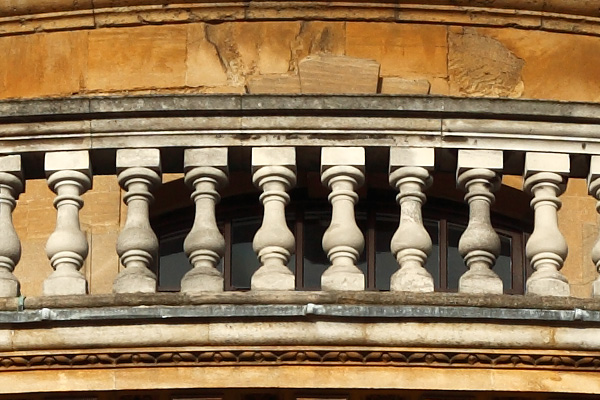
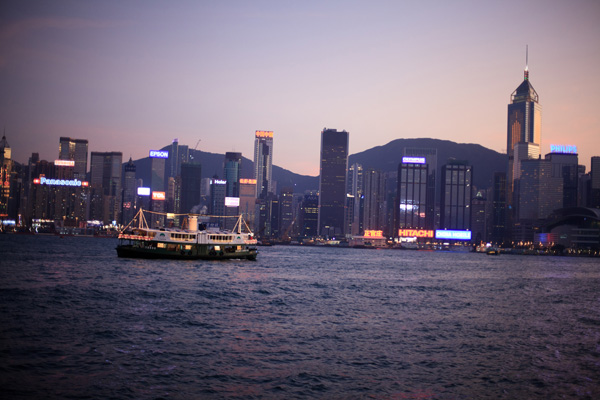
    I used a Canon EF 50mm f1.8 II lens (Canon’s cheapest) on a full-frame camera to take the photo below, my first time using it for photographing architecture, and I was amazed at the detail it captured when I enlarged it to 100%.

    02

    03

    Price

    50mm lenses are simple. They tend to have six to eight elements inside – zoom lenses may have more than double that. That means manufacturing costs are lower. It is likely that the cheapest lens in your camera manufacturer’s range is a 50mm prime. Most 50mm lenses represent excellent value for money.

    However, when making a purchase (of any lens, not just a 50mm) it is wise bear in mind that more expensive models of the same lens have better build quality, autofocus performance, weatherproofing and maybe a wider maximum aperture.

    Canon, for example, has three 50mm prime lenses (plus a 50mm macro lens) in its current range. You may not notice much difference in image quality between the 50mm f1.8 II and 50mm f1.2L – but you will notice the difference in build quality and autofocus performance. I opted for the middle option and bought the mid-range 50mm f1.4.

    Wide maximum apertures

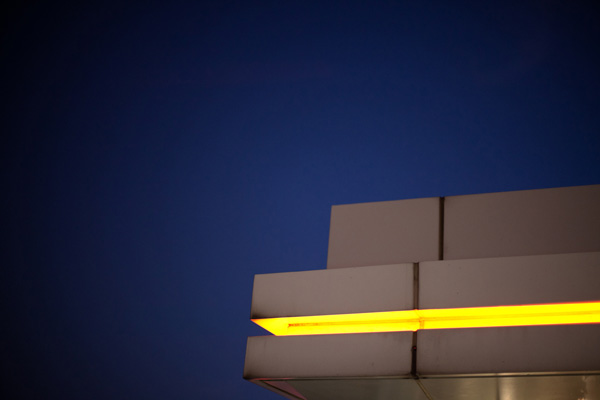
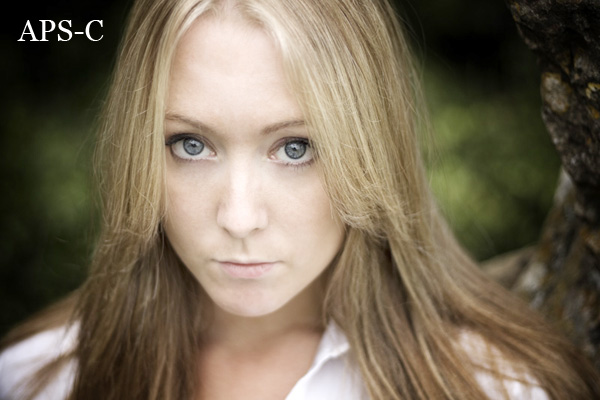
    For me this is the most exciting aspect of 50mm primes (indeed, any prime lens). If you have a kit lens the long end (around 55mm) has an aperture of f5.6 or thereabouts. A prime 50mm lens has an aperture of f1.8 or wider. That’s over three stops. It makes a difference when shooting in low light as you can open up the lens rather than increasing ISO. It also helps you take photos with shallow depth-of-field.

    This photo was taken at f1.8 with a 50mm lens:

    04

    Getting the best out of a 50mm prime lens

    Once you have a 50mm prime lens the next step is learning to get the best out of it. These are the things that I use my 50mm lens for:

    Walk-around lens

    A 50mm lens is a nice walk-around lens to take on a day out. I took these photos with my 50mm f1.4 lens in China. On a full-frame camera it’s a convenient focal length for this very casual style of photography. On an APS-C camera it will help you close in on interesting details.

    05

    06

    Portraits

    On an APS-C camera a 50mm prime lens effectively becomes a short telephoto lens, ideal for portraits. It works well on a full-frame camera as well, as long as you don’t mind a little distortion. The photos below show a couple of portraits taken with an 85mm lens.

    07

    08

    Close-up photography

    You can use a close-up lens or extension tubes with a 50mm lens to take close-up photos. You can also reverse mount it onto another lens to take macro photos (the techniques are covered in detail in the linked articles). This greatly increases the versatility of the lens. If you already own a 50mm lens these are cheaper options than buying a macro lens.

    09

    Previous articles

    These are the previous articles in the series:

    Why your Kit Lens is Better than You Think

    7 Ways to Get More Out of a Wide-angle Lens

    Why Lens Quality Doesn’t Matter Quite as Much as You Think it Does

    How to Prevent Lens Flare

    How a Humble 85mm Lens Became my Favourite

    Understanding Lenses: Part II

    10

    If you liked this article then take a look at my latest eBook, Understanding Lenses: Part II – A guide to Canon normal and telephoto lenses. If you hurry, you’ll get a discount – scroll down for details.

    Post originally from: Digital Photography Tips.

    Check out our more Photography Tips at Photography Tips for Beginners, Portrait Photography Tips and Wedding Photography Tips.

    Nifty Fifties – Why I Love 50mm Prime Lenses


    Digital Photography School

  • 7 Reasons to Get my New eBook “Beginner’s Guide to Landscape Photography”

    Greetings everybody! As you may have noticed, we now offer to download my new eBook – “Beginner’s Guide to Landscape Photography”. So, why would you want it? Firstly, because it is 100% free and is still awesome 🙂 Secondly, I don’t believe a photographer can be totally indifferent to landscape photographs. Even if you shoot commercial lifestyle or fashion, you Continue Reading
    Photodoto

  • Winter Reads: Secrets of Great Portrait Photography

    Looking for a good book to curl up with this winter? You're in luck. There is a stream of great choices hitting Amazon this season. I'll be highlighting a few of them as we head into the holidays.

    Because, you know, you gotta put something reasonable on your wish list, right? It can't all be $ 30,000 Hasselblad/Ferrari limited edition cameras.

    This week: Secrets of Great Portrait Photography, by Brian Smith.

    Short version: Don't let the generic-sounding title put you off. This book is dynamite—chock full of valuable info and experience. Read more »


    Strobist

  • Ways to Redesign Flickr Groups to Make Them More Social, Addictive and Powerful

    Flickr is currently in the process of redesigning the Groups section of their site. Initial comments by some beta testers have suggested that more emphasis will be placed on photos and less on discussion threads. I’m not a part of this new beta group, but I thought I’d share a list of ways that Flickr could improve Groups anyways. I believe that Groups represent Flickr and Yahoo’s greatest chance at making progress in social — an area increasingly being dominated by Google+, Facebook, Twitter, Instagram, Pinterest and other Yahoo social competitors.

    Although I have not been as active in Groups over the past year, I’ve literally spent thousands of hours in Flickr Groups and feel like I understand how they work and their dynamics very well.

    1. It cannot be overstated. The power of Groups are in the discussion threads. The power of Groups are in the discussion threads. The power of Groups are in the discussion threads. Discussion threads, positioned correctly, can be like crack. They can be terribly addictive. Flickr should be doing everything that they possibly can to push people to the discussion threads in Groups. This is how you turn a casual user into a hardcore top 1% Flickr user. If you can suck someone into the discussion threads you can get 100x the use of Flickr out of them. These are the most valuable members on Flickr. These are the biggest Flickr evangelists. These are the ones who will promote the site more than everyone else. Every design decision around groups should be made with the idea of how can we suck more users into the group discussion threads.

    2. Toxic people are like cancer. Toxic people will drive people away from Flickr. Toxic people are the single biggest impediment for Flickr Groups to overcome today. The answer to protecting Flickr members from toxic people is simple. Create a more robust blocking mechanism which allows users to block each other. Online harassment that turns into real life harassment will drive even the most hardcore Flickr Group addict away from social. The best way to prevent this harassment is to allow users the ability to block each other. This seems so basic. Google got this super right a long time ago with Google+.

    If I choose to block you then you should be made completely and entirely invisible on the site. Poof. Gone. Vanished. It’s not that you still can’t harass, but it makes it harder to harass someone when you are invisible to them in any profile they create that gains momentum on the site. This would encourage people to behave more civilly towards each other if such a tool existed.

    Civility will help social for groups.

    3. The goal for Flickr should be to create a page of discussion threads that are irresistible to me — an entire page of threads that I simply can’t help myself but click and converse. Any thread that is not of interest is a waste of space. Allowing me to mute or hide threads will ensure that I will be more social because I will see more opportunities to be social. There is no reason for me to see a thread about baseball that keeps popping to the top if I don’t care about baseball.

    Muting threads also helps with trolling.

    4. Flickr already has a super powerful tool that they are using in their help forum that they are not using in their Groups. If they’ve already coded it for the help forum it seems like a total non-brainer to simply port it to other Group discussions. This is the button that shows me posts that I’ve posted in. Obviously I care more about the threads that I’ve posted in than the threads that I haven’t.

    5. Flickr needs to allow me to subscribe to threads that I’m particularly interested in and aggregate these threads on a single page sorted by recent activity. If you want people to be active in multiple groups (and you do, trust me) you want them to be able to easily follow the conversations that they care about in multiple groups. This does not happen today. Instead you have to go to group by group by group by group to hunt around for the conversations that you care about. Alternatively you can bookmark them all and go back and check them manually over and over and over again. You quickly tire of bookmarks because you are only interested in a Group conversation if there is new activity. Having a page to view subscribed threads could become the most powerful page for social on the web.

    6. Flickr can’t fight anonymity at this point. It’s too late. Google and Facebook forced this issue early on by requiring users to use names that they are commonly known by. There would be too much of a revolt if Flickr even tried to institute anything like this. However, they can allow verified profiles. By allowing users to opt in to verified profiles they would give these accounts more credibility. Verification could be done similar to how Google used to do it by having users submit a Government ID or simply enter in a credit card number on a credit card. NOTE: I’m suggesting this be made voluntary and OPT IN. If people want to opt in, why not let them? If someone wants to keep their hackerboy6969 anonymous ID this is fine too.

    7. Groups need to be promoted more heavily by Yahoo and Flickr across other sections of the site. Yahoo especially and Yahoo search especially, should be driving traffic to Group discussions. Although Yahoo probably has to talk to the boss (Bing/Microsoft) at this point to try to have any input on the search algorithm, if I were Yahoo I’d try to get multiplier algorithm weightings for public group conversations and general group pages. If someone is searching for information on a new Canon 5D Mark III, by all means, Yahoo should try to route them to a Canon Group on Flickr where they can find discussion about this. It’s relevant and invites them to be more social on a Yahoo property.

    8. Group invitations should be super easy. New blood is vital to ensuring Group success. Flickr should make it as easy as possible both to invite other Flickr members to your Groups and also equally important to invite people outside of Flickr to your Groups. A Group invitation section should be made which will invite Facebook friends, people in your address book, etc. to your Group. A few years back Flickr made it actually harder to invite people to Groups. They probably did this due to criticism about people spamming Group invitations. Instead of making Group inviting harder, they should simply allow users to mute these notifications by category.

    9. Flickr needs to come out with a super easy way to consume and converse in Group discussion threads on both iPhone and Android.

    10. Create a +/@ mentioning system for Groups. If someone +/@ mentions me in a Group (or on a photo page discussion as well), I should receive a notification. This is smart and will invite and encourage me to respond.

    Flickr Group discussion threads represent the future for social at Yahoo not just for the photo community that is Flickr. Group discussion threads represent the future for social ideally for millions of other topics. To this end, Flickr Photo Groups should be considered as much a social lab as anything for Yahoo. Thoughtful consideration should be made as to how to push this Group format out to the rest of the social web, inviting people to create and manage groups about everything from knitting to hang gliding. Yes, photos are important. Every Group should have a photography function, but the discussion threads really are the power.

    By making Groups more about photos and less about discussions Yahoo squanders this important opportunity.

    I also believe that Yahoo should consider hiring some people to live in Groups for a while. They should hire some super smart people who understand psychology and just have them live in Groups. Their entire job should just be to participate in Groups all day long and then thoughtfully consider how to make them more and more social.

    Although Yahoo staffers are in some Groups today, I can’t think of any who are particularly hyperactive there. It’s hard to be social in Flickr Groups when you’re so busy writing code all day, but Yahoo does need some talent to really get in there and understand what they have — because today I don’t think they really do and I’m not sure there’s ever any HOPE that senior management at Yahoo will ever truly understand what they have with social in the form of the seedling that is Flickr Groups.


    Thomas Hawk Digital Connection

  • Photography With Bad Weather – Challenge Accepted!

    If you have a photo camera (DSLR or a film one) then you’ve definitely took photos outdoors at least once, twice or even regularly. When capturing landscape photography or portraits you could notice that weather and lighting do matter greatly. You can take photos of the same object with a few minutes time interval and get different results. And you Continue Reading
    Photodoto