Make someone young again! De-aging with photoshop.
Video Rating: 4 / 5
 Dies ist ein Gastartikel von Sebastian Kierner aka Grauverlauf (flickr). Sebastian ist 20 Jahre alt und kommt aus der Nürnberger Umgebung. Er fotografiert seit etwa 1,5 Jahren überwiegend Landschaften.
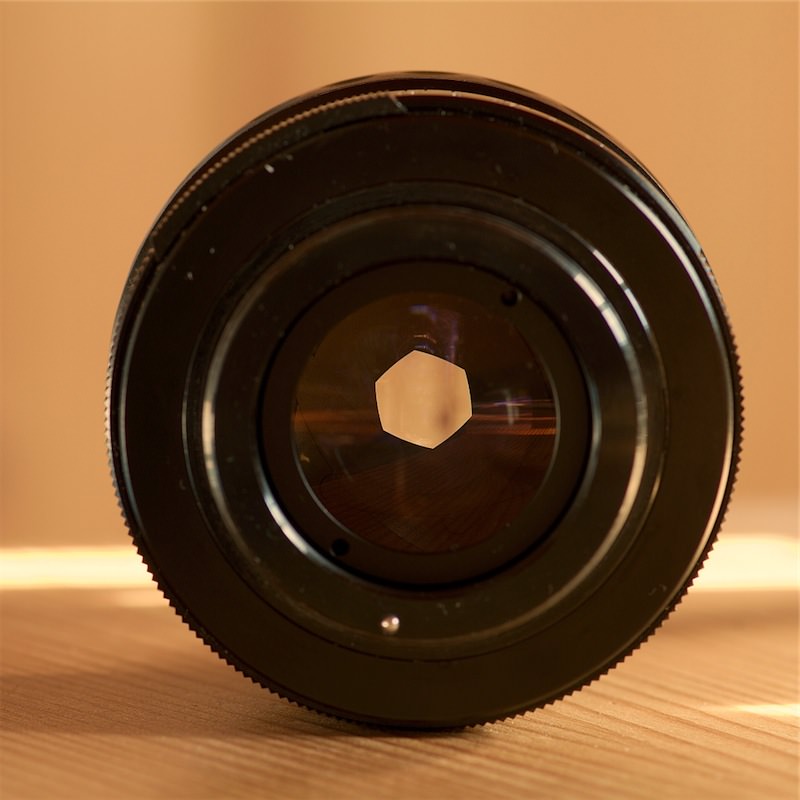
2.8; 3.5; 4; 5.6; 6.3 – um nur einige zu nennen – sind alles Blendenzahlen, die dem Fotografen in Fleisch und Blut übergehen, sobald er mal einige Zeit ernsthaft fotografiert. Wir alle Wissen natürlich, dass das runde Loch im Objektiv (auch Blende genannt) kleiner wird, wenn man die Blendenzahl höher einstellt, so dass weniger Licht bis zum Sensor durchkommt.
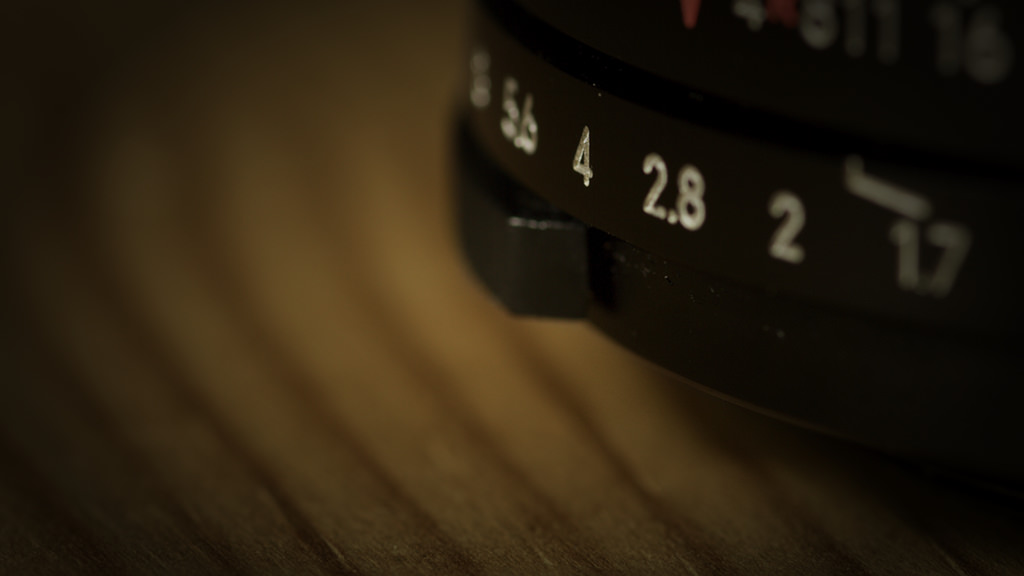
Als ich gerade mit dem Fotografieren angefangen hatte, hab ich in einem Forum gelesen, dass es von Blende 5.6 bis Blende 8 nur eine einzige Blende Unterschied ist. Das heißt, dass bei Blende 5.6 genau doppelt so viel Licht auf den Sensor (oder auch Film) fällt, wie bei Blende 8. Demnach braucht man bei Blende 8 eine doppelt so lange Belichtungszeit wie bei Blende 5.6.
 Damals hab ich die Welt nicht mehr so recht verstanden und war ehrlich gesagt total perplex. Mir schwirrten Gedanken im Kopf herum wie: “Blende 5.6 + 1 Blende = Blende 6.6 und nicht 8″ oder “nach 5.6 kommt doch erst mal 6.3″.
ABER: Ganz so dumm wollte ich natürlich nicht bleiben und deshalb hab ich über die Sache nachgedacht und recherchiert und dieses Wissen möchte ich jetzt mit Euch teilen. Noch mal zur Erinnerung: Die Blendenzahl hat keine Einheit, sie ist schließlich nicht die Angabe des Durchmessers in Millimeter, sondern der Quotient aus Brennweite und Durchmesser der Kreisöffnung. Das heißt:

Damit sich von Blendenstufe zu Blendenstufe die Belichtungszeit verdoppeln bzw. halbieren kann, muss logischerweise halb bzw. doppelt so viel Licht auf den Sensor fallen. Die Fläche des Kreises, durch den das Licht fällt muss also verdoppelt bzw halbiert werden.
Das würde man aber nicht erreichen, wenn man den Durchmesser der Blendenöffnung verdoppeln oder halbieren würde. Die Blende ist im angenommenen Idealfall kreisrund. Um die Fläche des Kreises, durch den das Licht fällt zu verdoppeln bzw. zu halbieren muss man den Durchmesser des Kreises mit der Wurzel aus 2 (also rund 1,4) multiplizieren/dividieren.
Und jetzt ein Beispiel
Na? Klingelts? 1,4 hab ich doch schon mal irgendwo gehört!! Na klar! 1,4 ist natürlich eine Blende in der Blendenreihen. Blende 1.0 würde bedeuten, dass die Brennweite des Objektivs (also zum Beispiel 50mm) genau dem Durchmesser der Blendenöffnung entspricht. Die Fläche, durch die das Licht auf den Sensor fällt wäre 19,63 cm².
Wenn man jetzt den Durchmesser der Blendenöffnung durch 1,4 (Wurzel aus 2) teilt, hätte die Blendenöffnung nur noch ca 36 mm Durchmesser und die Fläche, durch die das Licht scheint wäre mit 9,82 cm² halb so groß wie vorher es kommt deshalb auch genau halb so viel Licht durch. Wir haben jetzt eine Blende von Blende 1 auf 1,4 abgeblendet. (Puh, man kann sich das abblenden aber auch ganz schön schwer machen 😉 )
Daraus ergibt sich folgende Reihe der ganzen Blenden:

Die Reihe lässt sich natürlich beliebig fortsetzten.
Und woher kommen jetzt die Zwischenschritte?
Die Zwischenschritte sind schnell verstanden, wenn man den Rest schon kapiert hat. Bei Blende 4,5 ist die Fläche, durch die Licht auf den Sensor fällt um ein Drittel größer als bei Blende 4. Deshalb kommt natürlich auch ein Drittel mehr Licht durch. Bei manchen Objektiven hat man keine Drittelblenden-Rasterung sondern eine Halbblenden-Rasterung bzw. man kann das in der Kamera umstellen. Ältere Linsen kann man nur auf ganze Blendenstufen einstellen.
Für mich ist dieses Wissen nur ein Nice-to-know-Wissen, aber wenn jetzt jemand fragt: “Du bist doch Fotograf, erklär doch mal…”, muss ich nicht mehr ratlos mit den Schultern zucken. An den Fotos, die man macht, ändert es aber meiner Meinung nach nichts, wenn man es weiß. Mich hats nur irgendwie gezwickt, weil ich da was nicht kapiert habe.
Ich hoffe, dass ich diese extrem trockene und seit langem erste technische Thematik einigermaßen verständlich vermitteln konnte. Wenn Ihr noch Fragen habt, könnt Ihr diese gerne als Kommentar hinterlassen!
***
Werbepause: Buchtipp – Vom Alltäglichen zum Besonderen!

The history of photography is Beaumont Newhall! Throughout most of the 20th century he has seen a central figure in the movement to have photography recognized as an art form. It might also be said that he created the “history of photography” as a distinct and respected field of study. As a founder and father of the history of photography, photographer, curator, art historian, writer, scholar, teacher and administrator it seems as if there has been more than one Beaumont Newhall. Beginning in 1938 at the Museum of Modern Art, he created the first retrospective exhibition of the 100-year-old art of photography. This documentary highlights some of Beaumont’s experiences of being a lifelong friend, mentor and confident of many photographers now in the annals of history. For more New Mexico PBS content visit KNME.org
3D Animation set in 2064 AD. Adventures in futuristic urban life. Sci Fi Funk – 3D Animated Music Video. Get the music: apps.facebook.com Get the sounds: www.audiomicro.com This series features Electronic Funk Music set to futuristic 3D Animation. It showcases my own ideas which come from the kind of Blade Runner/ Dystopia / CyberPunk worlds that we seem to be heading towards. In 2064 Ad the World’s major cities will be over crowded and highly cosmopolitan, to the extent that a kind of world English will emerge, which borrows words from many languages, this is starting to happen now. It is possible that the earth’s atmosphere may have deteriorated to such an extent that many people seek the shelter of the big City domes with their controlled weather environments. Of course some people go it alone in the country risking skin cancer, but many flock to the Domes, where there is relative safety and where the work is. The big cities house the average person in huge skyscrapers, the tallest of which is 270 floors built in Peking. The average height is 190 floors. The rich / poor divide is very evident and with living space at a premium only the very rich own houses and land, or live at the top of the skyscrapers. The rest of the population fight over the size of apartment they can afford, the higher you go the better the “class” of apartment. “violence is prohibited”. This is a global law, passed just a year ago. The nanny state has gone mad and to “protect” its citizens …
We recently scanned the whole of the Museum’s Great Hall and its objects with a 3D laser scanner. As the resulting animation was so startling (& slightly unnerving) we thought you’d like to see it. It’s not of broadcast quality (no sound in the clip for example), however it’s well worth watching just to see how close to the actual, physical Great Hall this animation looks. None of this is actual film footage, it’s simply points of data built up by firing beams of lasers at the objects (and the visitors, who you might spot as ‘spindles’ walking around the exhibits) in the Museum, and then transferred to a computer to build 3D models.
I wanted to make a video showing my new camera. I purchased the Nikon D60 three months ago and have been taking lots of pictures. I wanted a camera with 10 mega pixels and something that would last a couple of years without many extra upgrades. It has proven to be a very good camera for amateur photographers and is very easy to navigate. I do recommend reading the instruction booklet thoroughly before using the camera though. Enjoy the video!
Unboxing my Nikon D60
If there's a need for you to know how much time you spent on a given project, or during a certain time period, then I've got a great little free program for you.
This software enables anyone to track time spent using various programs, such as graphics programs, in the case of a digital photographer, which makes it easier to determine how much to bill a client.
You can also use this program to track time spent researching a project which could be …
Dual LCD stereoscopic monitor using beam-splitter mirror offering full HD per eye.
Video Rating: 5 / 5

This is a HD-POV from my NoLimits-Coaster Fuarukee. It’s recorded in stereo-3D. You don’t need any glasses! To properly view it, you have to cross your eyes until you can see a third image in the middle. Now try to focus on this image without uncrossing your eyes. For users that are new to this technique I recommend this site: www.starosta.com Fuarukee HD High Definition HighDefinition POV point of view coaster rollercoaster tycoon nolimits no limits simulation 3d cross eye crossed eyed cross-eye crosseye side by side technique stereo stereoscopic without w/ow/out any glasses
Created by Douglas MacKrell with 2 Flip Ultra HD Camcorders and a self built stereoscopic rig. Effect achieved in Adobe After Effects, and edited in Final Cut Studio. (Requires Red/Cyan glasses to view in full 3D)
Unlike my usual posts, this is an off-the-cuff post spurred by a recent experience with some clients. We did a shoot with a young lady, an equestrian, along with her horse. We worked hard to make it not just a photo shoot, but an experience. They loved it, and loved the photos, and never blinked about the price. In interacting with the clients afterward, I realized what a unique and special experience it was for them.
Pricing is often one of the hardest areas of the business for photographers. New photographers are sensitive about their lack of experience, afraid they don’t merit a large fee and can’t compete with more established professionals. But even for established professionals, a certain sense of guilt is common when it comes to talking price. Many professionals are almost apologetic when quoting a price, and are much to willing to come down.
I’m no exception.
I recently had a revelation that has helped me a great deal with the psychological aspect of pricing. It has to do with the difference between how photographers and clients perceive any given photo shoot. What many photographers, enthusiasts and pros, often forget is that a photo shoot is a rare and big event for a client. While we do shoots every week, most people might do a professional photo shoot a few times in their lives. A FEW TIMES IN THEIR LIVES.
If you charge cheap, cut corners, or otherwise short-change your clients, you really are depriving them of something special. You are depriving them of the opportunity they may only have a few times to experience a professional photo shoot – to be the center of attention during the shoot, the recipients of small gestures that make them feel like valued clients, and ultimately the recipients of truly beautiful professional images.
Instead of skimping on the price, go ahead and price high. And then make it worth it. GIVE YOUR CLIENTS THE UNIQUE AND MEMORABLE EXPERIENCE OF WORKING WITH A TRULY PROFESSIONAL PHOTOGRAPHER. Dress like a pro, act like a pro, project confidence. Do your homework before the shoot. Go the extra mile to make your clients feel valued before, during, and after. Do everything necessary to create the ambiance of an idealized “photo shoot” as well as produce great images.
Think of yourself as selling an EXPERIENCE, not just a set of photos. If you can do that, I guarantee your clients will be happy to pay for your services. And they’ll remember the experience for a long time to come.